
Sherry Tasting at Bodegas Dios Baco, Jerez de la Frontera
Jerez was one of the stops on our Explore tour, and this was the day I finally understood why the city gives its name to sherry. I had never tasted it before, and it felt right to start where it all began. Inside the reception area, the walls were lined with old posters and black-and-white photos that told stories of another time. Rows of barrels stood behind them, each marked and stained with age. The air smelled faintly of oak and sweetness, like time moving slowly.
Our guide, a woman whose calm confidence made everything easy to follow, began with a short history lesson. Jerez has been making wine since Roman times, long before the drink was called sherry. When the Moors ruled Andalusia, they cultivated the vineyards and refined techniques that shaped its winemaking. After the Christian reconquest, the wines travelled across Europe, carried by ships bound for England and beyond. The British merchants loved them and began calling the drink “sherry,” their version of “Jerez.”
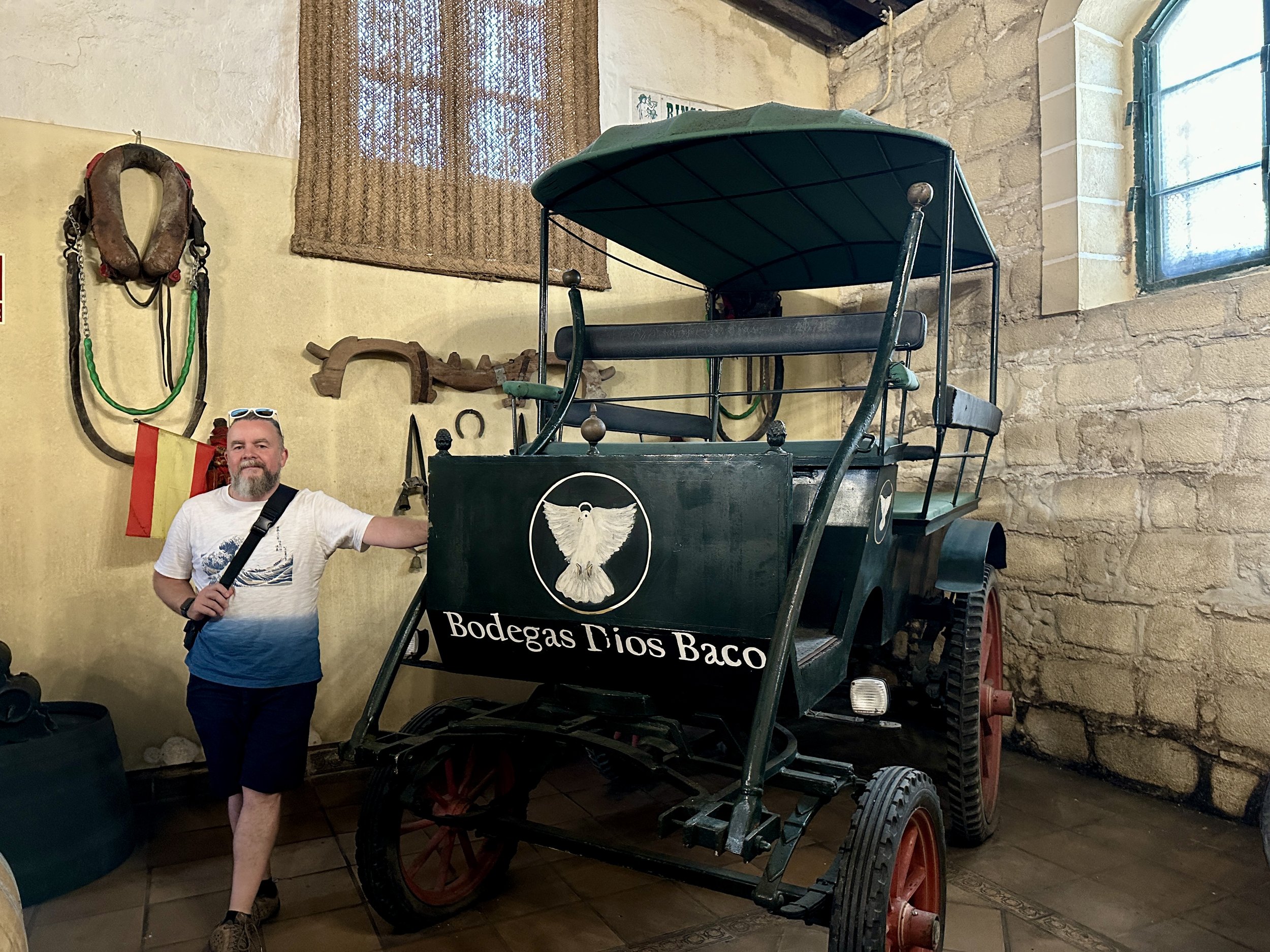
Bodegas dios Baco, Jerez de la Frontera
She explained that all true sherry comes from one small area of Andalusia known as the Sherry Triangle, formed by the towns of Jerez de la Frontera, Sanlúcar de Barrameda, and El Puerto de Santa María. The winds, the chalky albariza soil, and the coastal humidity work together here in a way that cannot be replicated elsewhere. This triangle is where the solera system was perfected, where sherry became more than a drink — it became a craft.
Bodegas Dios Baco was founded in 1848, during the height of that sherry boom. It began under Don Pedro Domecq, one of the great names of Jerez, whose family shaped much of the city’s wine heritage. The bodega still operates on a smaller, more personal scale today, keeping to the solera method, where young and old wines are blended over time to build depth and consistency.
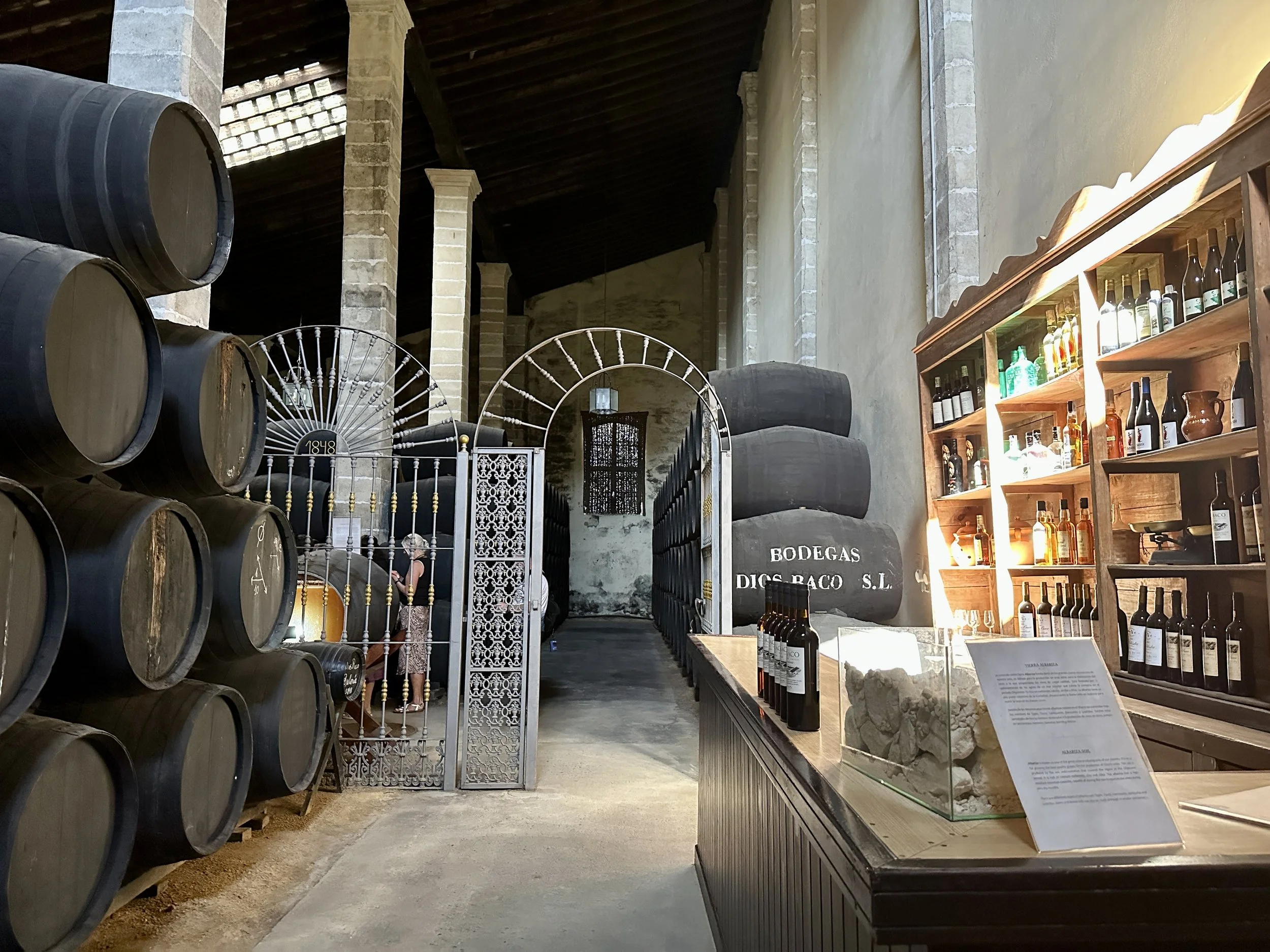
Bodegas dios Baco, Jerez de la Frontera
We walked into the ageing hall. The guide called it the cathedral — not for worship but for design. The building rose high with arched ceilings, thick stone walls, and small windows that let in only slivers of light. The temperature stayed cool even in the Andalusian heat. It was built this way to protect the sherry, keeping it steady through the seasons. Rows of barrels stretched into the distance, each marked with chalk symbols and dates.
One barrel had a transparent side so we could see the colour of the sherry inside. It caught the light, showing shades from pale gold to dark amber. The guide pointed to it and explained how the wines change colour as they age, deepening like old honey. Across another courtyard, we saw the section where they age sherry brandy. The scent there was stronger, sweet and woody, almost like caramel.
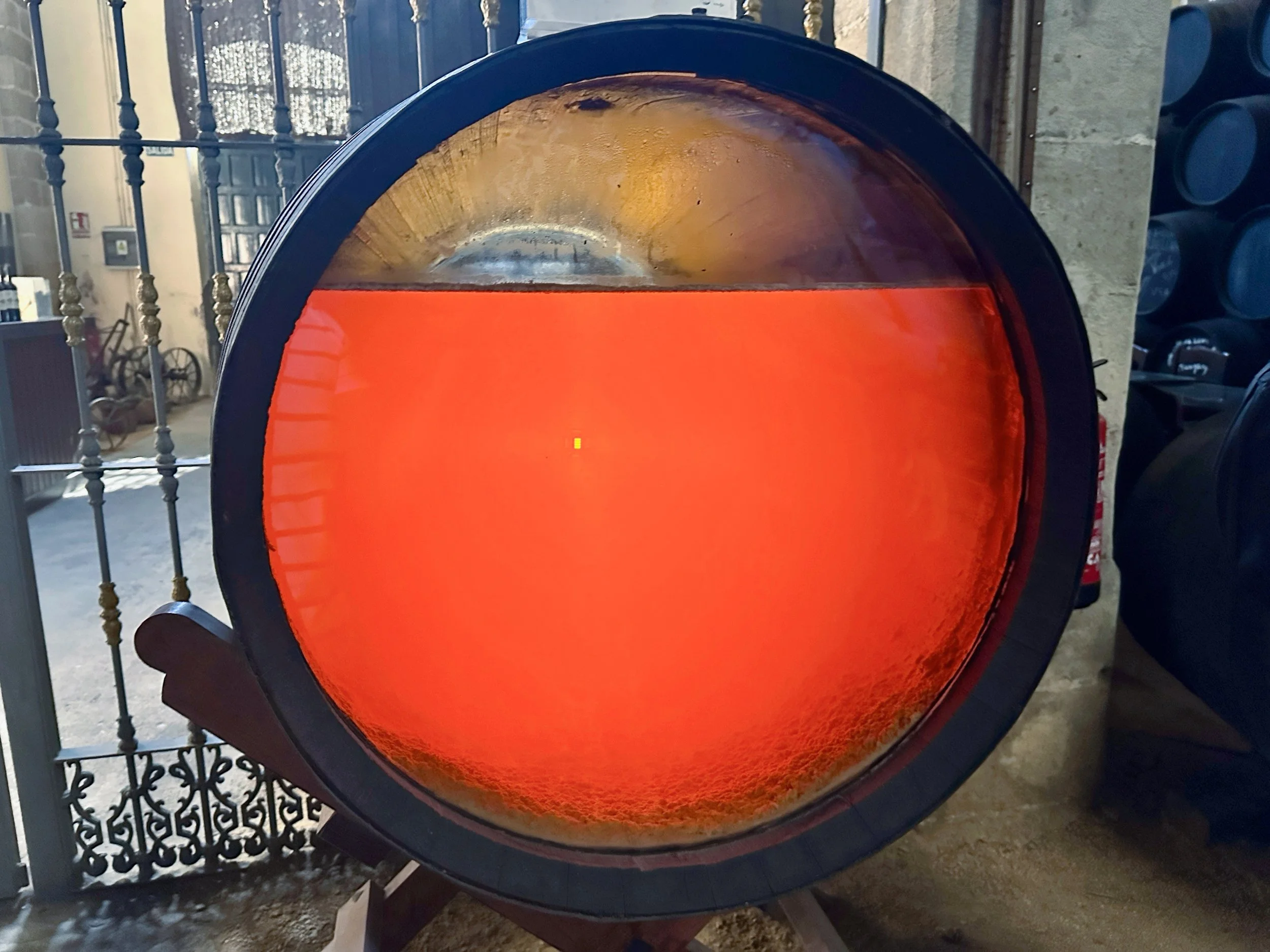
Sherry, Jerez de la Frontera
Then came the tasting. Five glasses were laid neatly in front of me, each with an information card tucked underneath explaining what it was. It was like a liquid lesson — Fino Bulería, Amontillado Dios Baco, Oloroso Medium Élite, Cream Dios Baco, and Pedro Ximénez Oxford 1970.
The Fino was pale and sharp, made from Palomino grapes, best served with seafood or olives. The Amontillado was richer, nutty, and smooth, a bridge between dry and deep. The Oloroso Medium Élite leaned darker, warm with notes of toffee and wood. The Cream, blended with Pedro Ximénez, had the velvety sweetness of dessert. And the Pedro Ximénez Oxford was dark as syrup, heavy with the taste of raisins and caramel. Reading as I sipped made me slow down, tasting with understanding rather than curiosity.
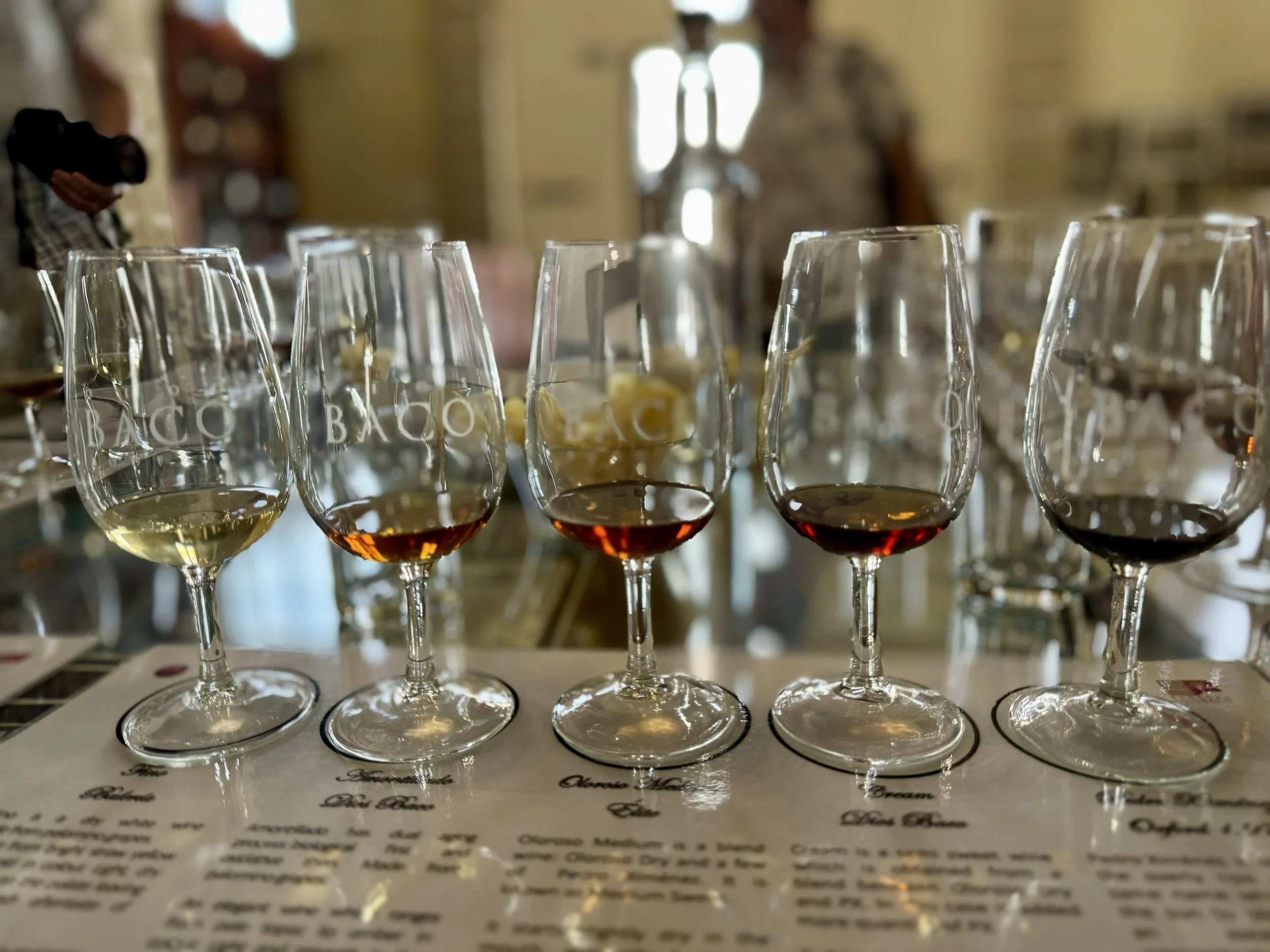
Sherry Tasting, Bodegas Dios Baco, Jerez de la Frontera
The Fino was too dry for my liking, and the Pedro Ximénez too sweet, but the Oloroso and Cream struck the perfect balance. They were smooth, round, and comforting. I could see how each sherry fit into a meal — Fino for tapas, Amontillado for savoury dishes, Oloroso for hearty food, Cream and PX for dessert.
By the end of the tasting, I understood what makes sherry unique. It is not one drink but a spectrum. Each type carries its own character, shaped by time and air. The flavours come from patience, not speed. Everything here ages slowly, in silence, until it finds balance.
I left Bodegas Dios Baco with the taste of Oloroso still on my tongue. I could see why the people of Jerez call their bodegas cathedrals. They are not just cellars; they are temples of tradition, guarded by the scent of oak and the soft sound of time passing. My first glass of sherry could not have had a better setting.
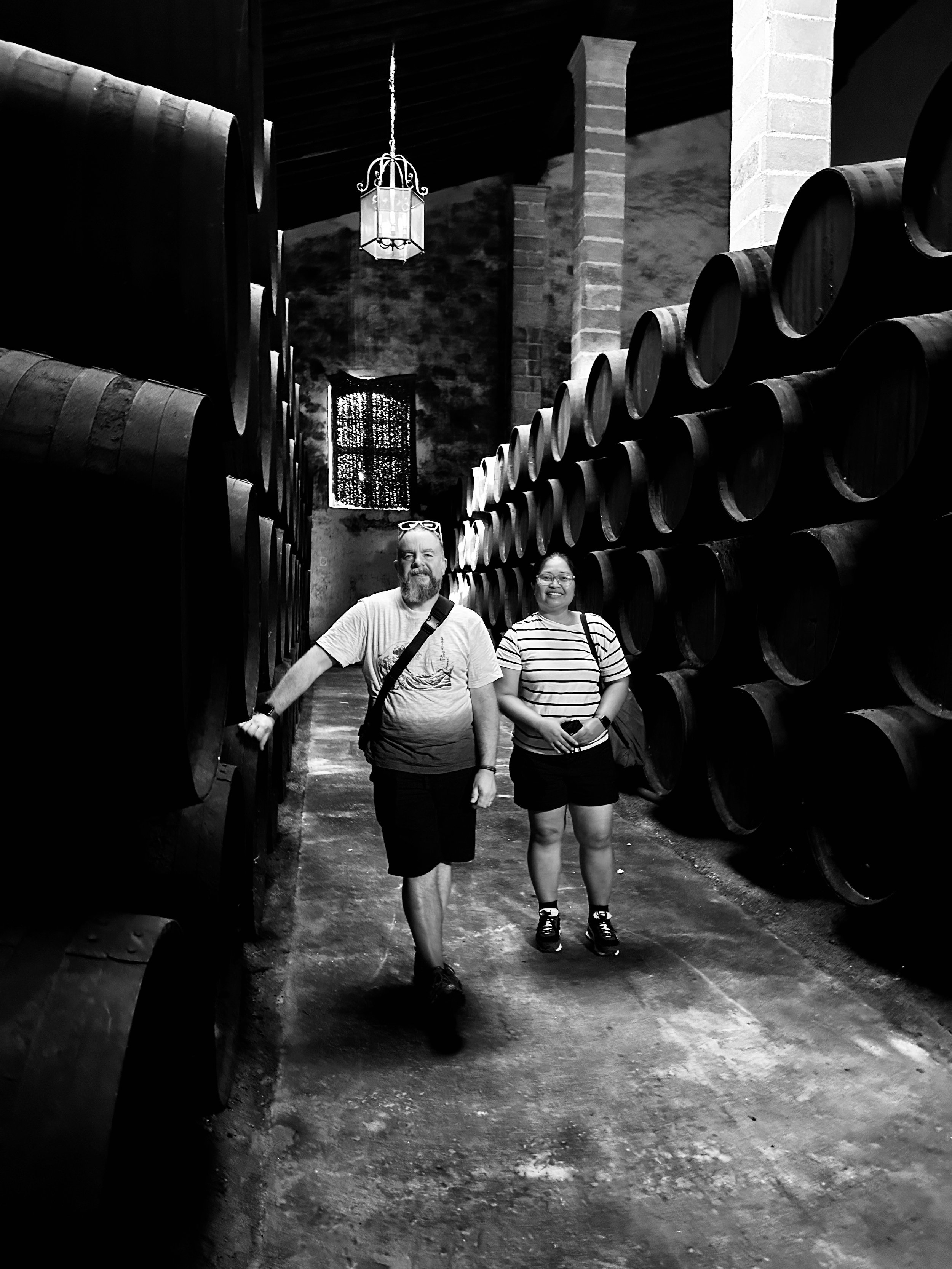
Bodegas Dios Baco, Jerez de la Frontera
