
Seville: Arches, Gardens and the Guadalquivir
Our Seville walk began at Hotel Exe Sevilla Macarena, across from the ancient city walls. From there, we wandered south through the historic streets, tracing a route that passed Roman ruins, Moorish arches, Gothic towers, and riverfront legends. Seville is a city that wears its layers proudly. Every turn reveals a new era, every plaza tells a story. This loop took us through the city’s timeless heart, from the old Macarena district down to the Guadalquivir River, ending in the calm of Cabildo Square.
⏱️ Seville Walking Route
Route: Arco de la Macarena > Calle Feria > Alameda de Hércules > Setas de Sevilla > Iglesia Colegial del Divino Salvador > Seville Cathedral > Real Alcázar (exterior) > Barrio Santa Cruz & Plaza Doña Elvira > Murillo Gardens (Flamenco stop) > Plaza de España > Torre del Oro > Nao Victoria > Plaza de Toros de la Real Maestranza > Cabildo Square
Style: Loop, flat with light cobbles
Good for: First-time visitors, history lovers, culture seekers
🏰 Arco de la Macarena (00:00–00:10)
We began at the Arco de la Macarena, a bright yellow 12th-century city gate that once protected Seville’s northern entrance. The Virgin of Hope of Macarena, one of the city’s most beloved icons, is housed nearby in the Basilica de la Macarena. Standing before the arch, we could already sense the mix of faith and tradition that defines Seville.
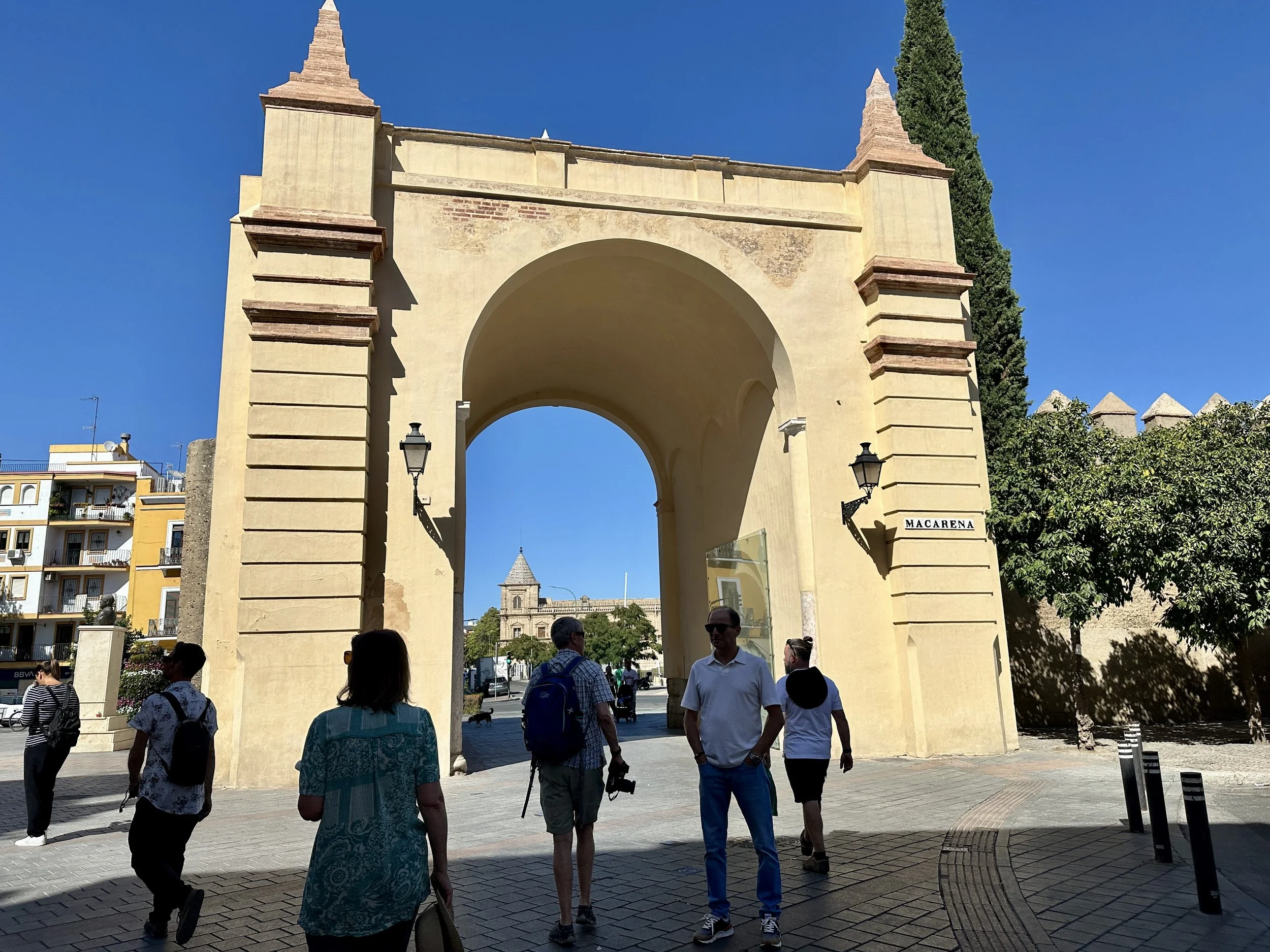
Arco de la Macarena
🛍️ Calle Feria (00:10–00:25)
From the arch, we walked down Calle Feria, one of Seville’s oldest streets and home to a bustling Thursday market, one of Europe’s oldest flea markets dating back to the 13th century. The street’s energy captures local life perfectly: chatter, tapas bars, and a rhythm that feels purely Andalusian.
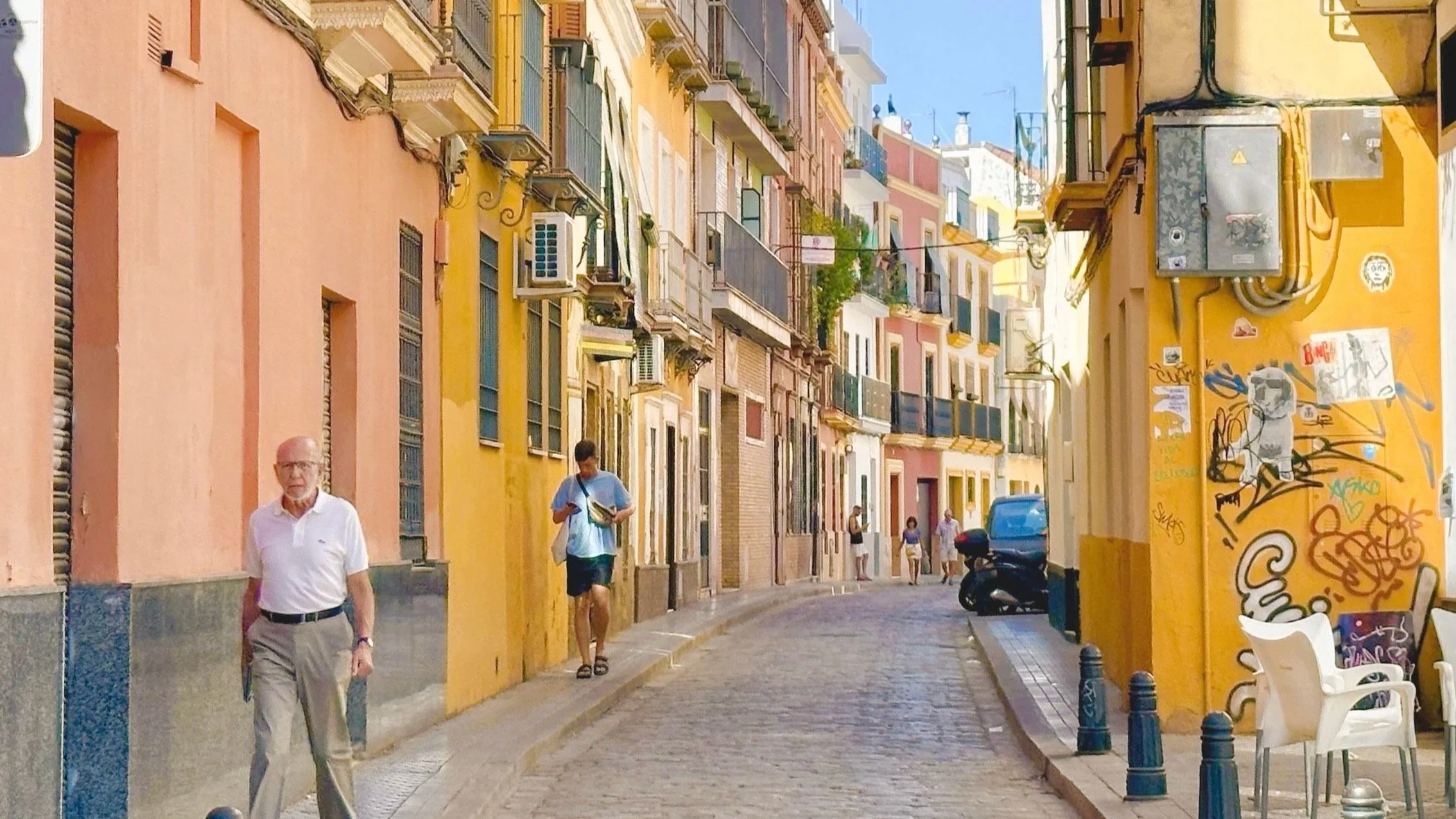
Calle Feria
🌳 Alameda de Hércules (00:25–00:35)
A short stroll led us to the Alameda de Hércules, a grand boulevard laid out in 1574, one of Europe’s earliest public parks. Two tall Roman columns topped with statues of Hercules and Julius Caesar anchor the space. Locals fill it day and night – families, buskers, and friends meeting for coffee.
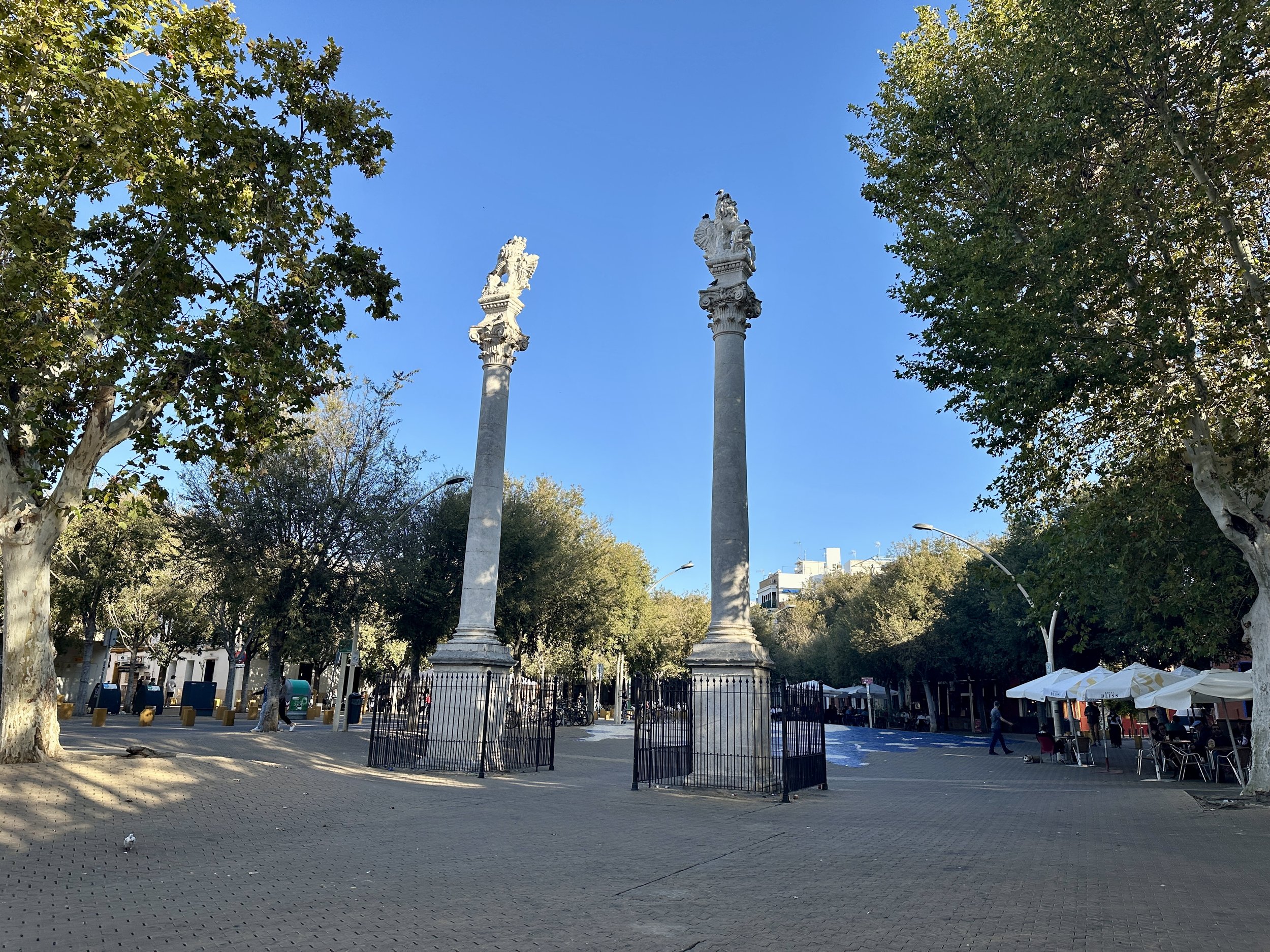
Alameda de Hercules
🌆 Setas de Sevilla (00:35–00:45)
Next came the modern marvel of Metropol Parasol, affectionately called the Setas de Sevilla (Mushrooms of Seville). Opened in 2011, this wooden structure rises over Plaza de la Encarnación, bridging Roman ruins below and panoramic walkways above. We admired it from the square, its honeycomb canopy against the skyline felt surreal amid centuries-old architecture.
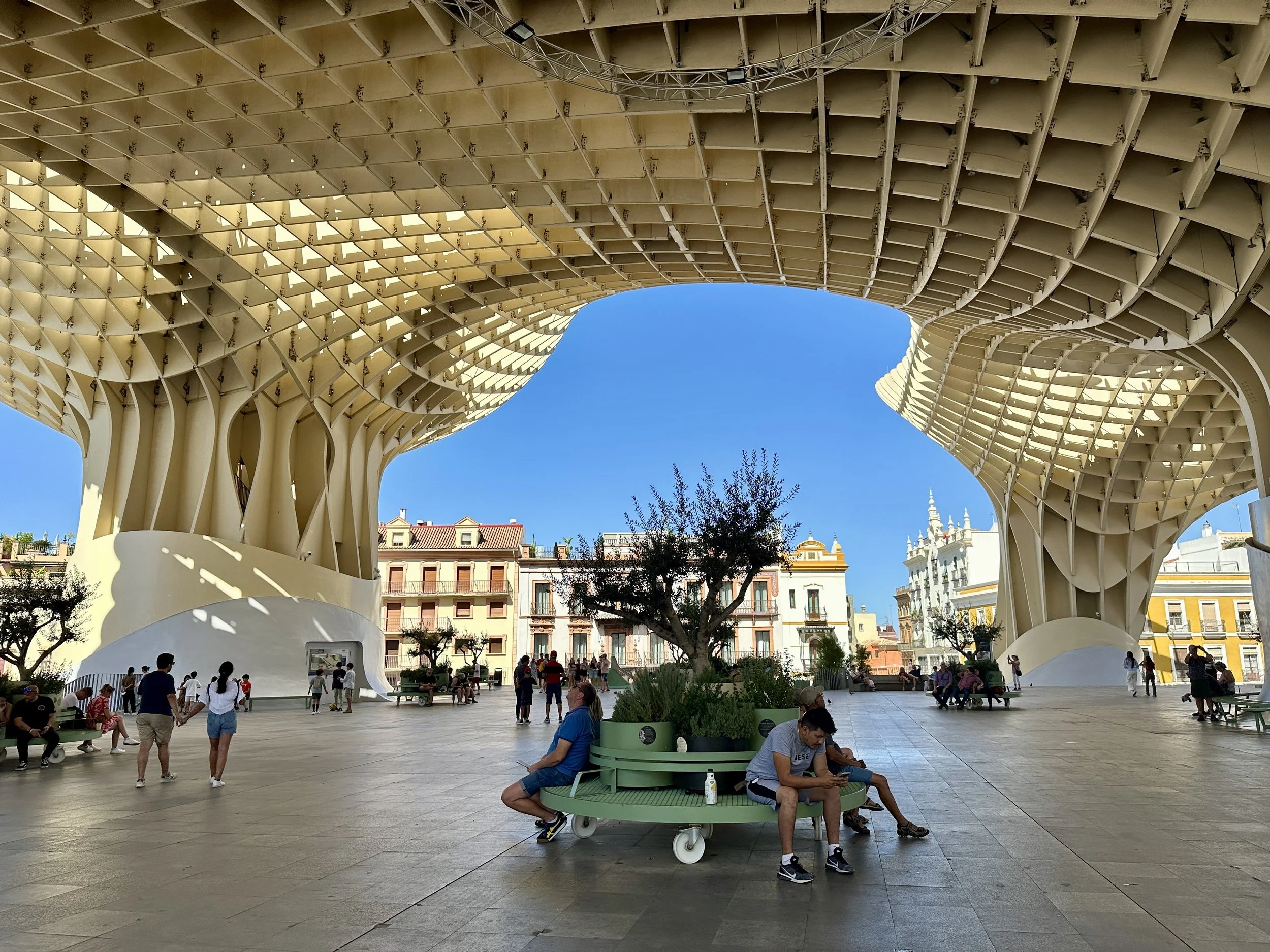
Setas de Sevilla
⛪ Iglesia Colegial del Divino Salvador (00:45–01:00)
Just a short walk away, the pink-and-white façade of Iglesia Colegial del Divino Salvador stood glowing in the sunlight. Built on the site of a former mosque, this 17th-century Baroque church is Seville’s second most important after the cathedral. Its interior is ornate, its history deep, and its peaceful courtyard offered us a welcome pause.
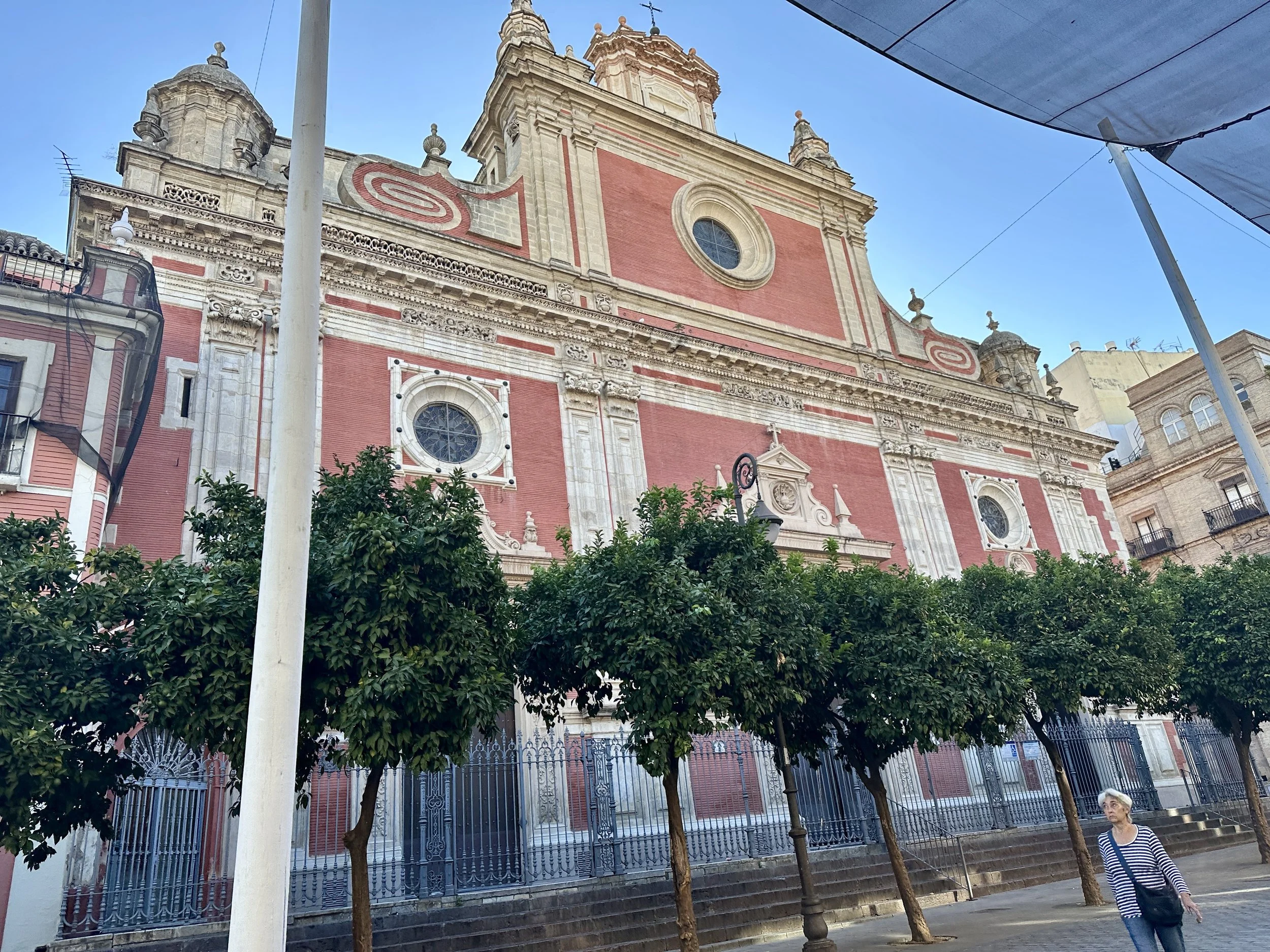
Iglesia Colegial del Divino Salvador
⛪ Seville Cathedral (01:00–01:25)
A few minutes south, we reached the magnificent Catedral de Santa María de la Sede, the largest Gothic cathedral in the world and a UNESCO site. Completed in 1507, it was built over a former mosque, keeping the original La Giralda minaret as its bell tower. We didn’t climb up, but standing beneath its immense arches was enough – a reminder of Seville’s power during the Age of Exploration.

Inside the Sevilla Cathedral
🕌 Real Alcázar (01:25–01:40)
We didn’t go inside, but even from the gates, the Real Alcázar radiates grandeur. Originally a Moorish fortress, it became a royal palace still used today by Spain’s monarchy. Its Mudejar arches and lush courtyards echo the palaces of Al-Andalus. Across the street, orange trees perfumed the air – a scent that seems to follow you through the whole city.
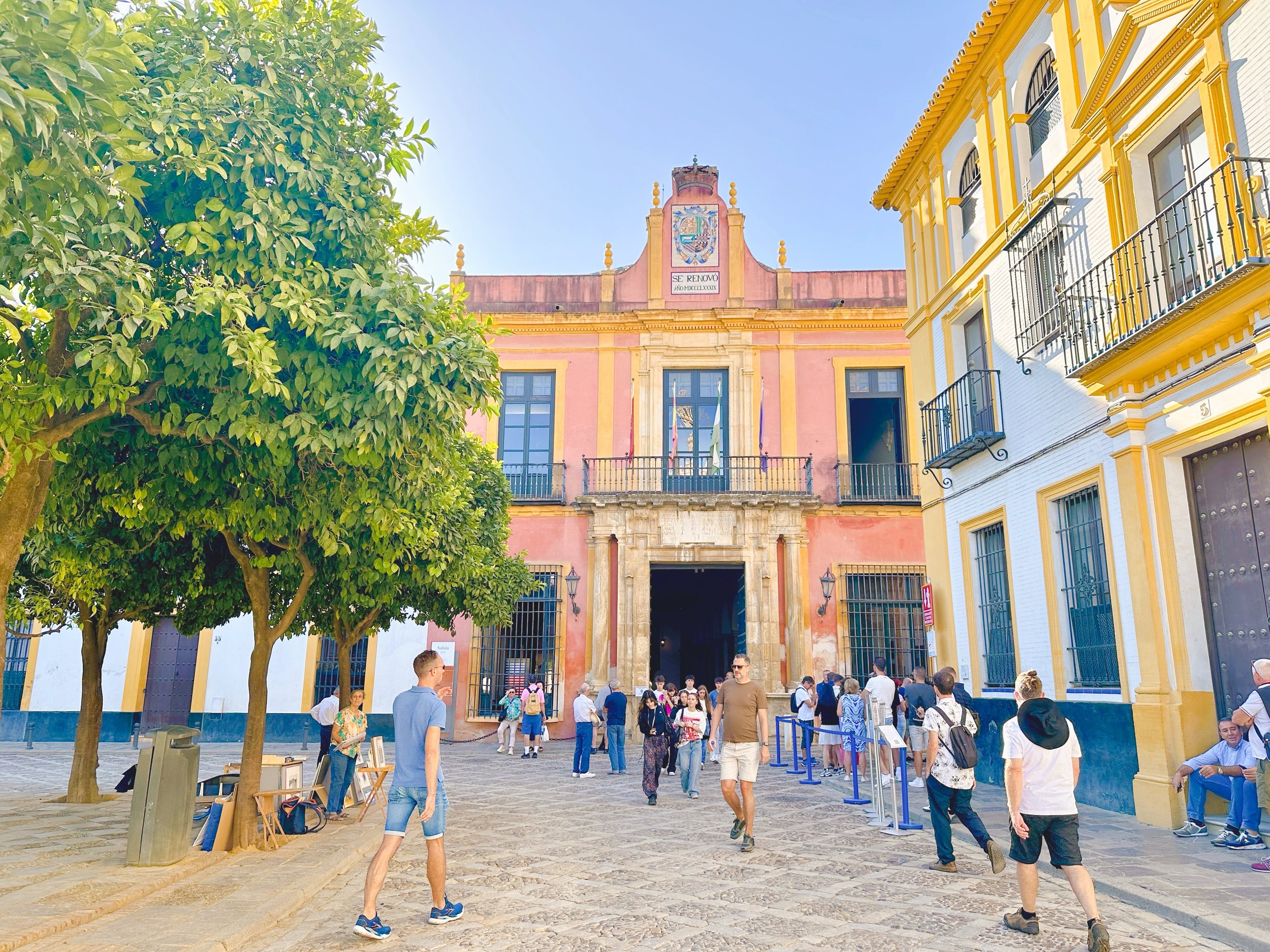
Real de Alcazar
🏘️ Barrio Santa Cruz & Plaza Doña Elvira (01:40–02:10)
From the Alcázar, we entered Barrio Santa Cruz, Seville’s old Jewish Quarter. Narrow lanes twisted between whitewashed walls and flowered balconies. In Plaza Doña Elvira, azulejos benches surrounded a quiet fountain, once part of the palace of the legendary Doña Elvira. Nearby, we spotted Rosina’s Balcony, linked by locals to The Barber of Seville. Whether myth or truth, it’s easy to imagine the music lingering here.
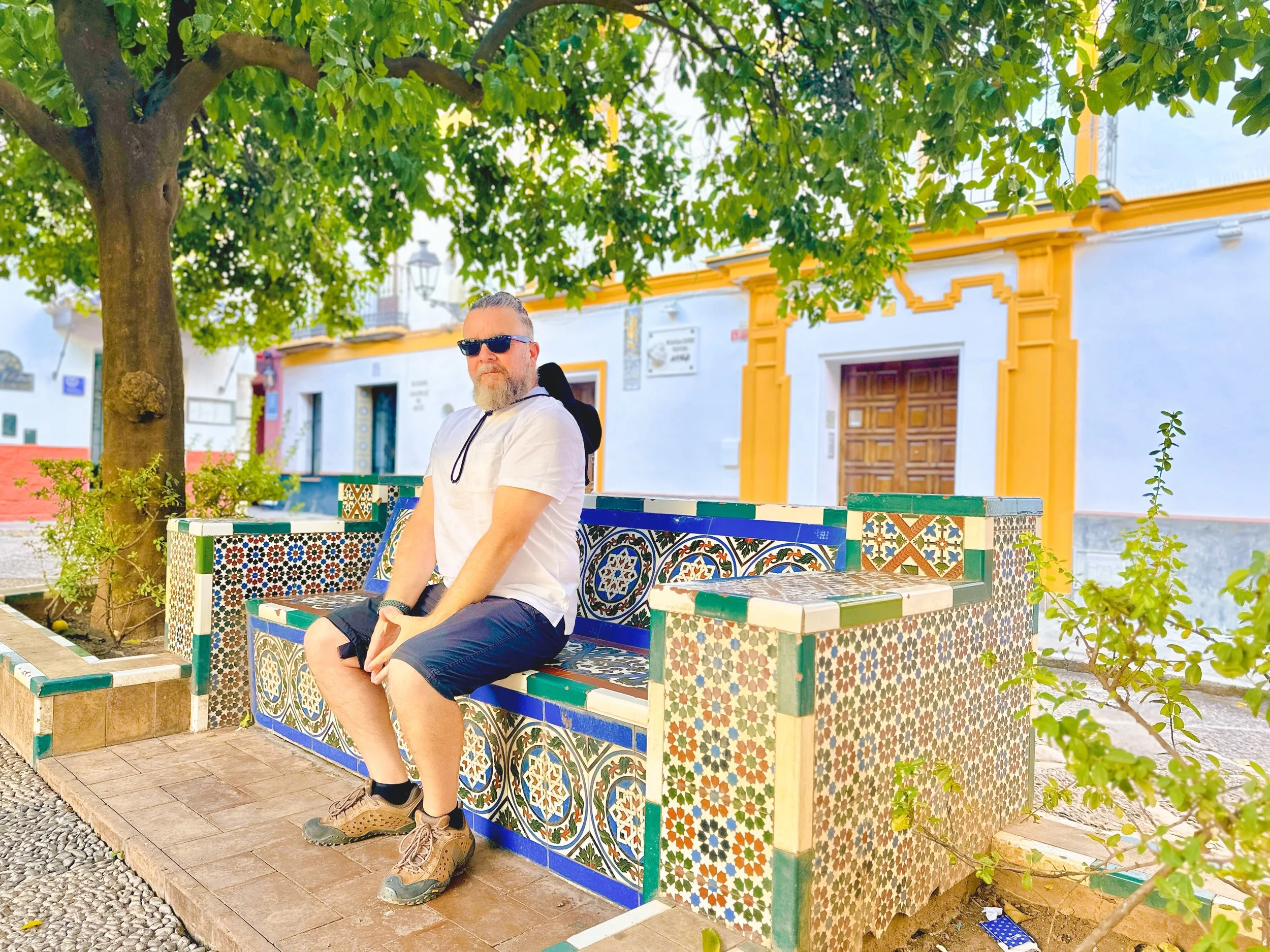
Azulejos benches in Plaza Doña Elvira
🌺 Murillo Gardens (02:10–02:25)
Just beyond Santa Cruz lie the Jardines de Murillo, created in the late 19th century and named after the painter Bartolomé Esteban Murillo. Palms, fountains, and tiled benches fill the park with calm. This was where we paused to watch a street flamenco performance – raw, passionate, unforgettable.
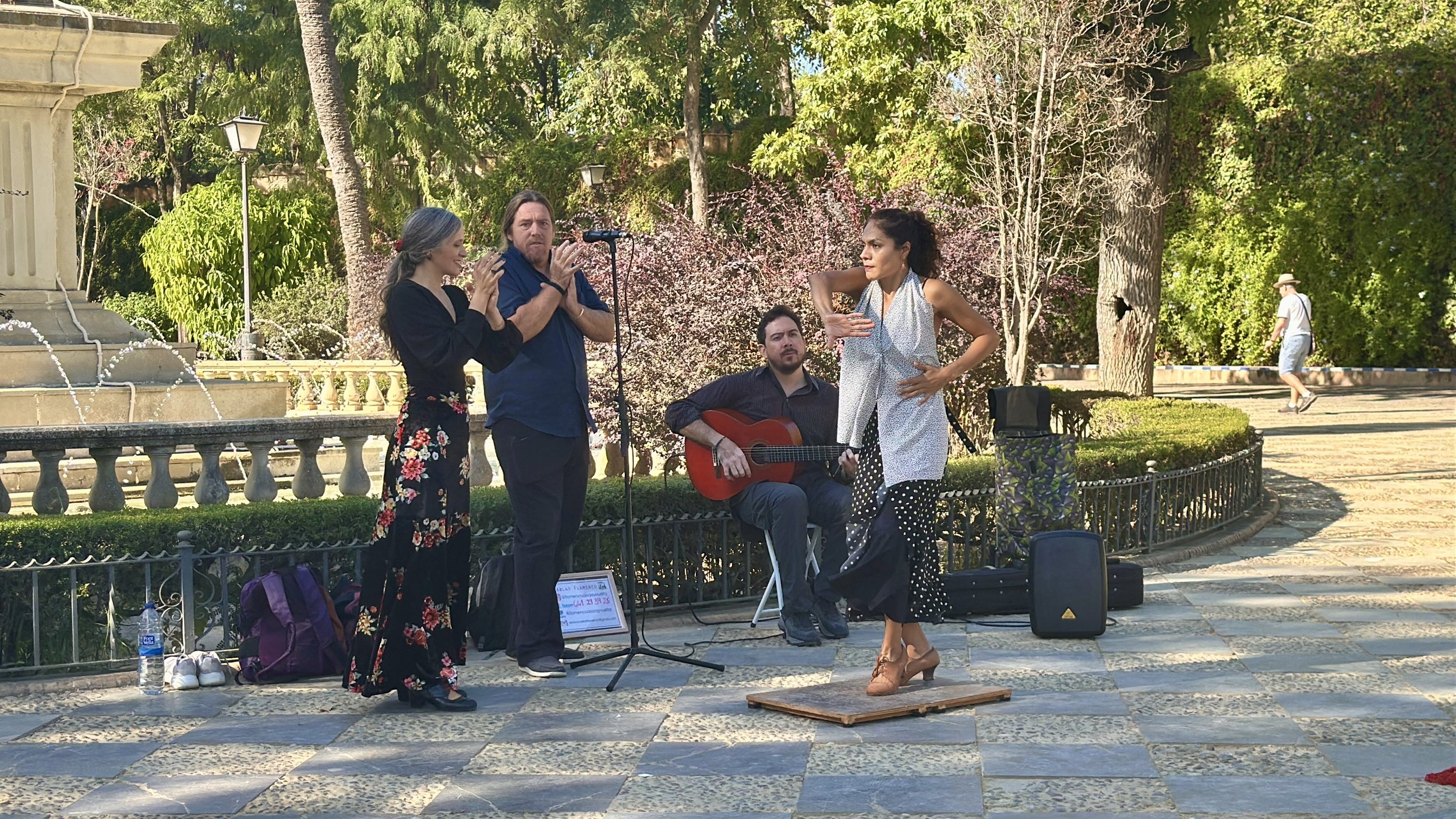
Flamenco in Jardines de Murillo
🏛️ Plaza de España (02:25–02:50)
Our route curved toward Plaza de España, the crown jewel of Seville’s 1929 Ibero-American Exposition. The semicircular palace, tiled alcoves, and bridges over a canal make it one of Spain’s most photogenic spots. Each alcove represents a Spanish province, all framed by Renaissance-Revival design. We lingered here, soaking up the grandeur.
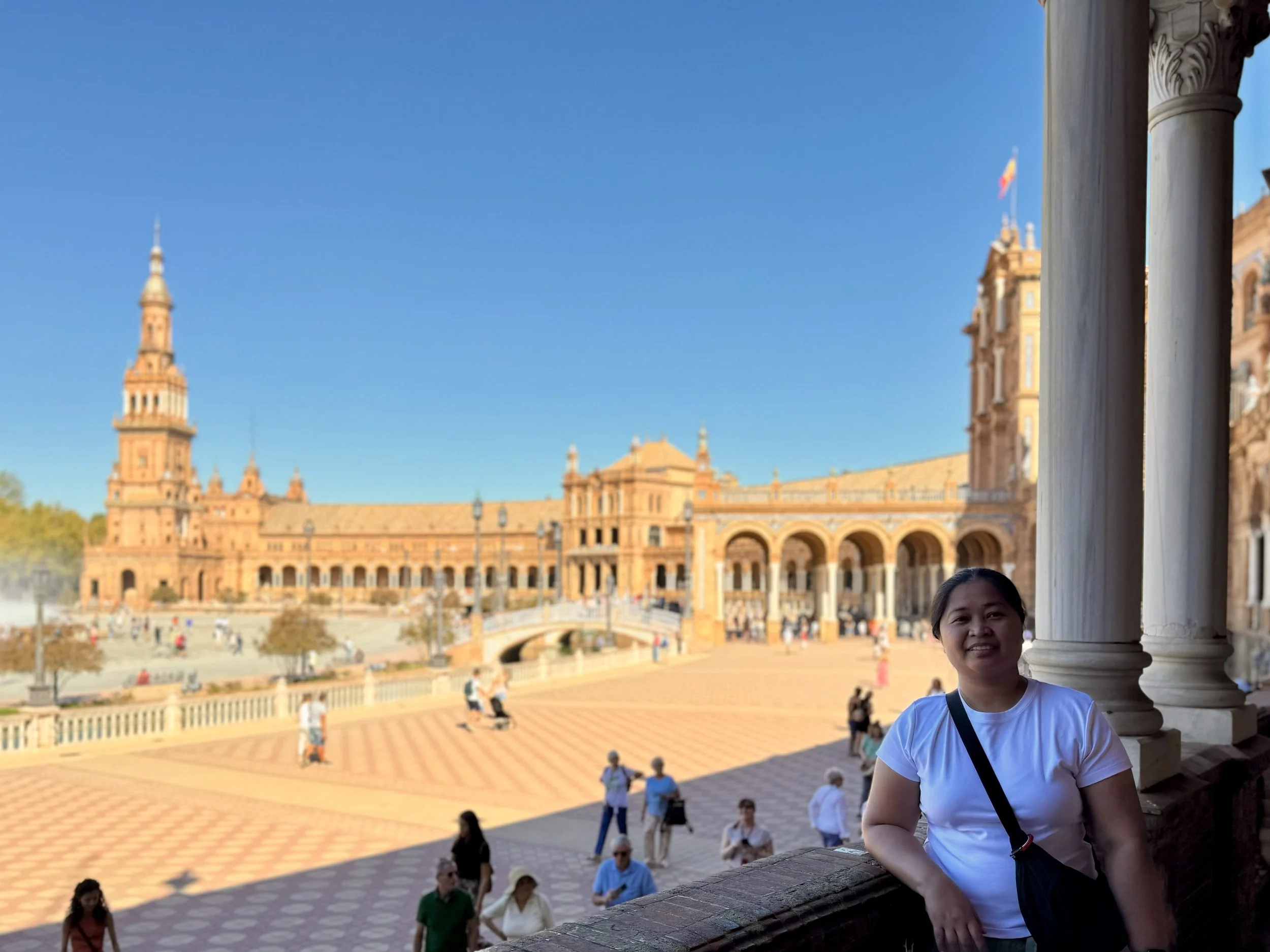
Plaza de España
⛵ Torre del Oro (02:50–03:00)
Following the Guadalquivir River, we reached the Torre del Oro, the 13th-century watchtower built by the Almohads. Its name, “Tower of Gold”, refers to the golden tiles that once covered it. It once guarded the port where fleets from the Americas docked, heavy with treasure. The river breeze here carried centuries of stories.
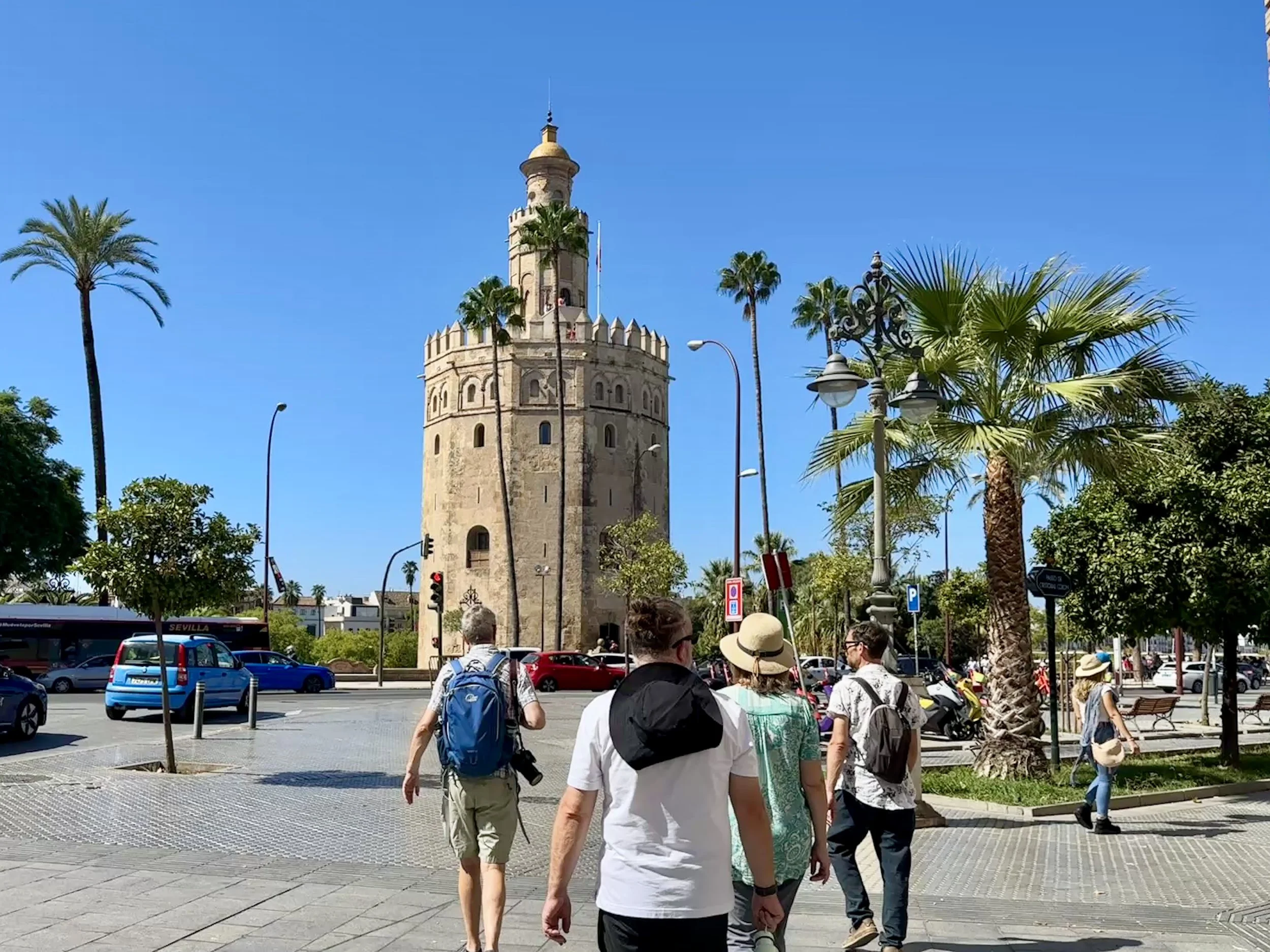
Torre del Oro
🚢 Nao Victoria (03:00–03:15)
Moored nearby was the Nao Victoria, a replica of the ship that completed the first circumnavigation of the world in 1522. It’s smaller than you’d expect, yet world-changing in its legacy. The original expedition departed from Seville under Ferdinand Magellan and returned under Juan Sebastián Elcano – the true beginning of global exploration. As a Filipino, standing before it felt oddly full circle. Magellan’s voyage led him to the islands that would later become my homeland, centuries before I found myself here in Seville, staring at the same kind of ship that changed our history forever.
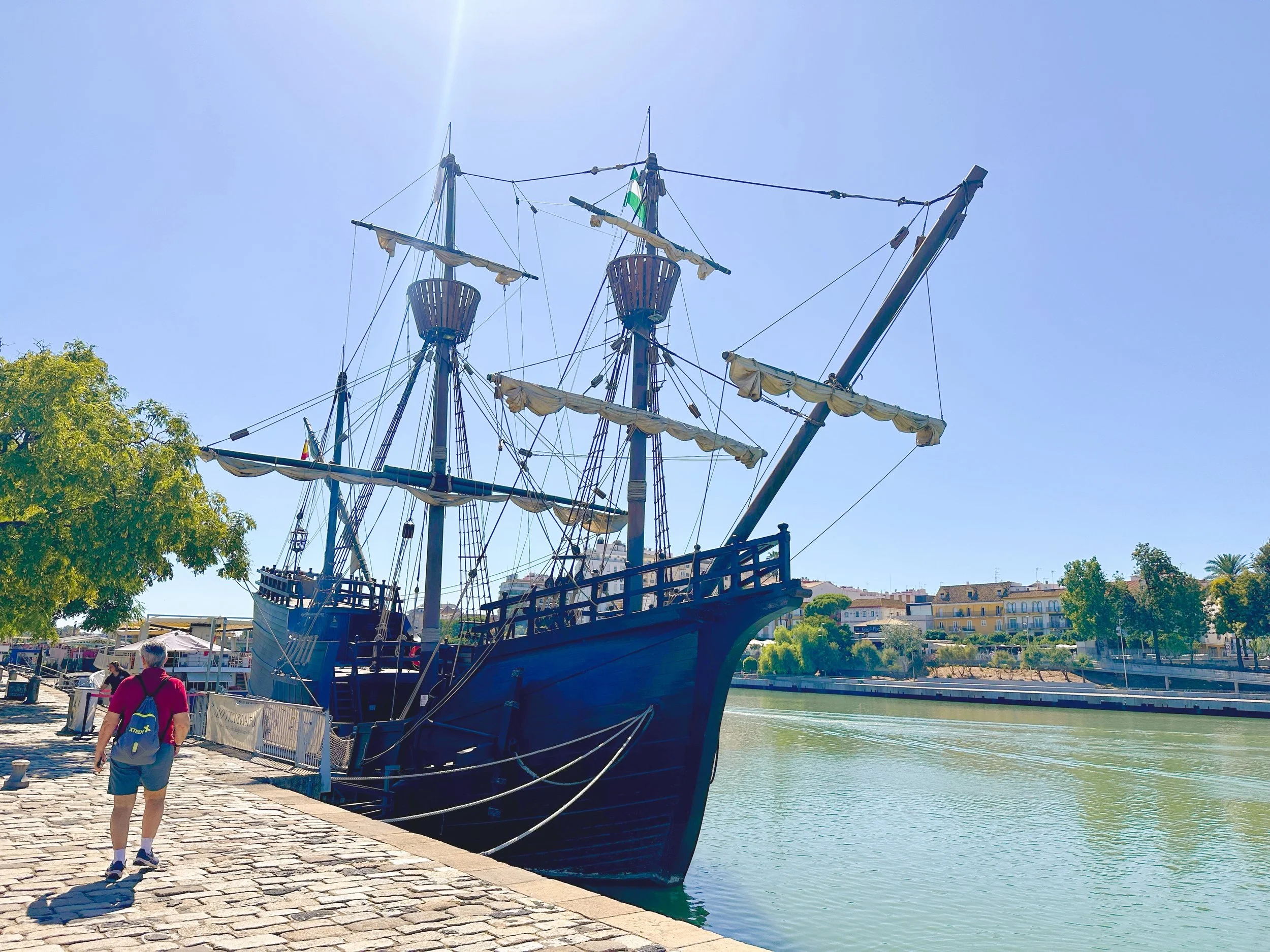
Nao Victoria
🎯 Plaza de Toros de la Real Maestranza (03:15–03:30)
Our last major stop was the Maestranza, Spain’s oldest active bullring. Built between 1761 and 1881, it remains one of Seville’s defining icons. We admired its white-and-yellow façade from the outside. The nearby museum tells the story of bullfighting as both art and controversy, shaping Andalusian identity for centuries.
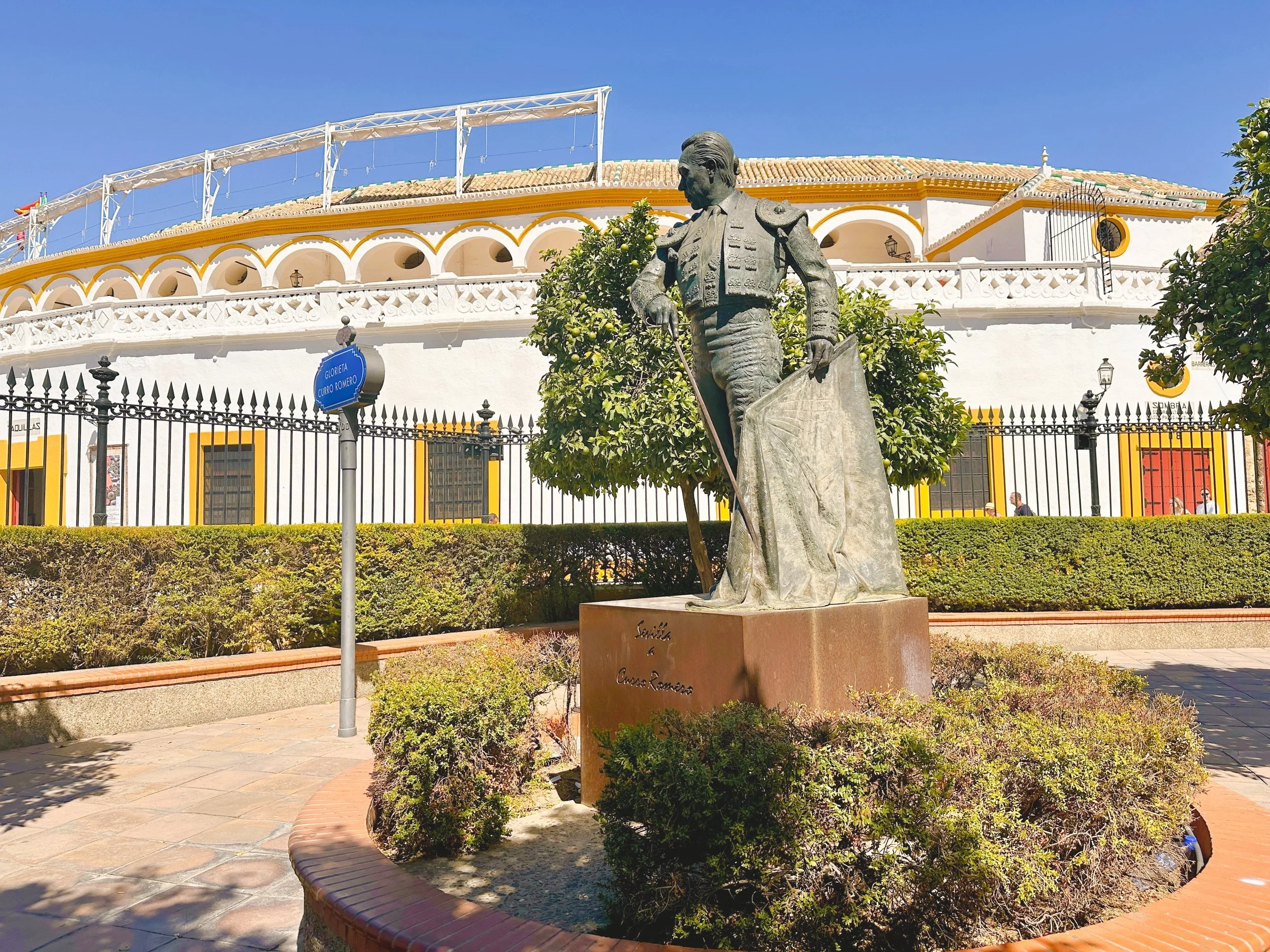
Plaza de Toros de la Real Maestranza
🏛️ Cabildo Square (03:30–03:45)
We ended the walk in Cabildo Square, tucked behind the cathedral. Once part of a convent, its elegant arches curve around cafés and antique shops. The perfect finale to a long walk through Seville’s living history.
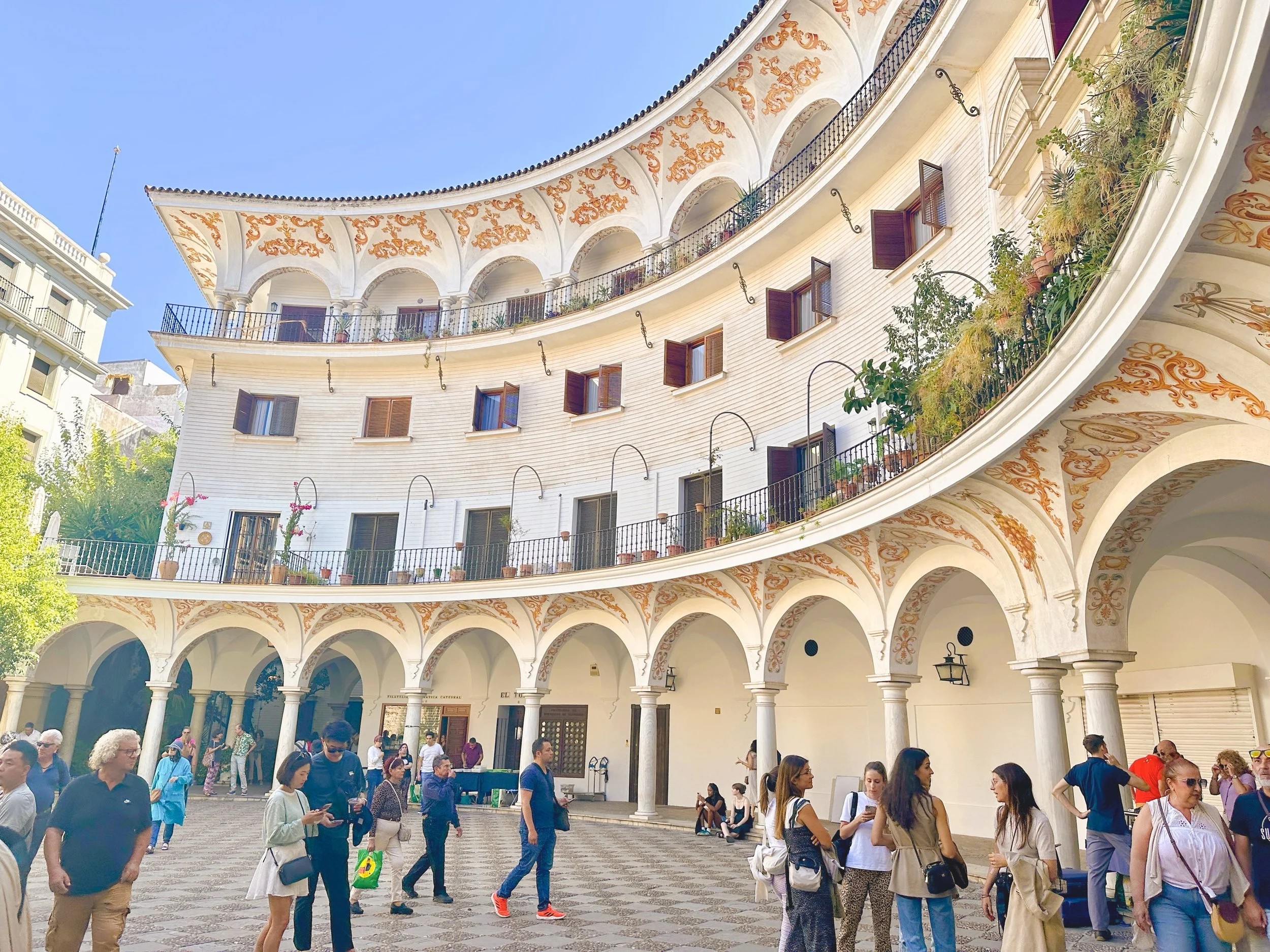
Cabildo Square
📸 Best Selfie Spots
Plaza de España – tiled alcoves and canal bridges
Setas de Sevilla – panoramic background from below
Seville Cathedral – La Giralda tower framing your shot
Plaza Doña Elvira – azulejos and flowers in perfect symmetry
Torre del Oro – golden light at sunset
💡 Pro Tips
Start early to enjoy cooler air and quieter streets
Comfortable shoes are essential, especially on cobbles
Many churches close mid-afternoon, so plan accordingly
Bring cash for small cafés and markets
Don’t skip flamenco – even a short street performance captures Seville’s soul
🕰️ More to See If You Have a Full Day
Casa de Pilatos – a mix of Gothic, Renaissance, and Mudejar styles
Archivo General de Indias – key documents from the Age of Exploration
Triana District – across the river, known for flamenco and ceramics
Hospital de los Venerables – baroque masterpiece hidden in Santa Cruz
Museo de Bellas Artes – one of Spain’s best art museums
Final Thoughts
Our walk through Seville felt like stepping through the pages of a history book that still breathes. From Moorish arches to Renaissance palaces, quiet courtyards to grand plazas, every corner of the city hums with art, music, and memory. By the time we sat down in Cabildo Square, we realised that Seville doesn’t just preserve its past, it performs it every day.
