
Pergamum: Walking Through Power, Knowledge and Healing
After the crowds of Troy and the weight of Canakkale, Pergamum felt quieter, but no less significant. Here, ruins tell stories of innovation, power and healing.
Once the capital of the Attalid dynasty in the 3rd century BCE, Pergamum rose to become one of the most important cities of the ancient world. It was known for its centre of learning, with a library said to rival Alexandria, for its advances in medicine at the Asklepion, and for its commanding position high above the valley. Pergamum became closely associated with the use of parchment, a small detail that would go on to shape how knowledge was recorded and shared.
The first thing that hit us was how easy it is to reach the ruins today. Instead of a tough climb, we took a cable car over hills and olive groves, dropping us right at the Acropolis. As soon as you step off, you’re met with the familiar mix of small shops selling drinks, snacks and souvenirs, a reminder that even places like this sit firmly in the present. Imagine ancient travellers hauling themselves up narrow paths on foot or mule, carrying weapons, scrolls and hopes. That lift isn’t just convenient, it quietly rewrites what was once a demanding journey into something almost effortless.
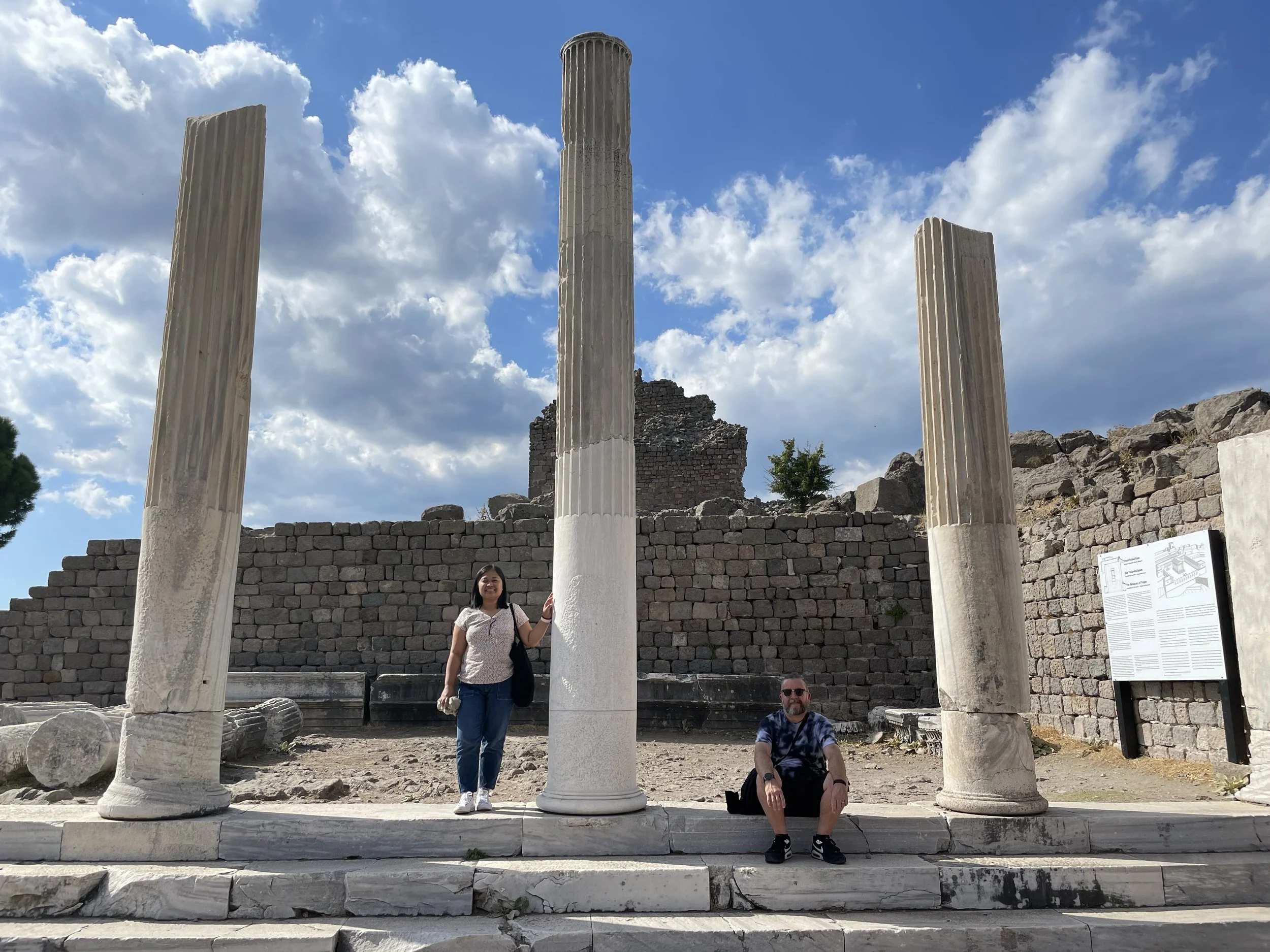
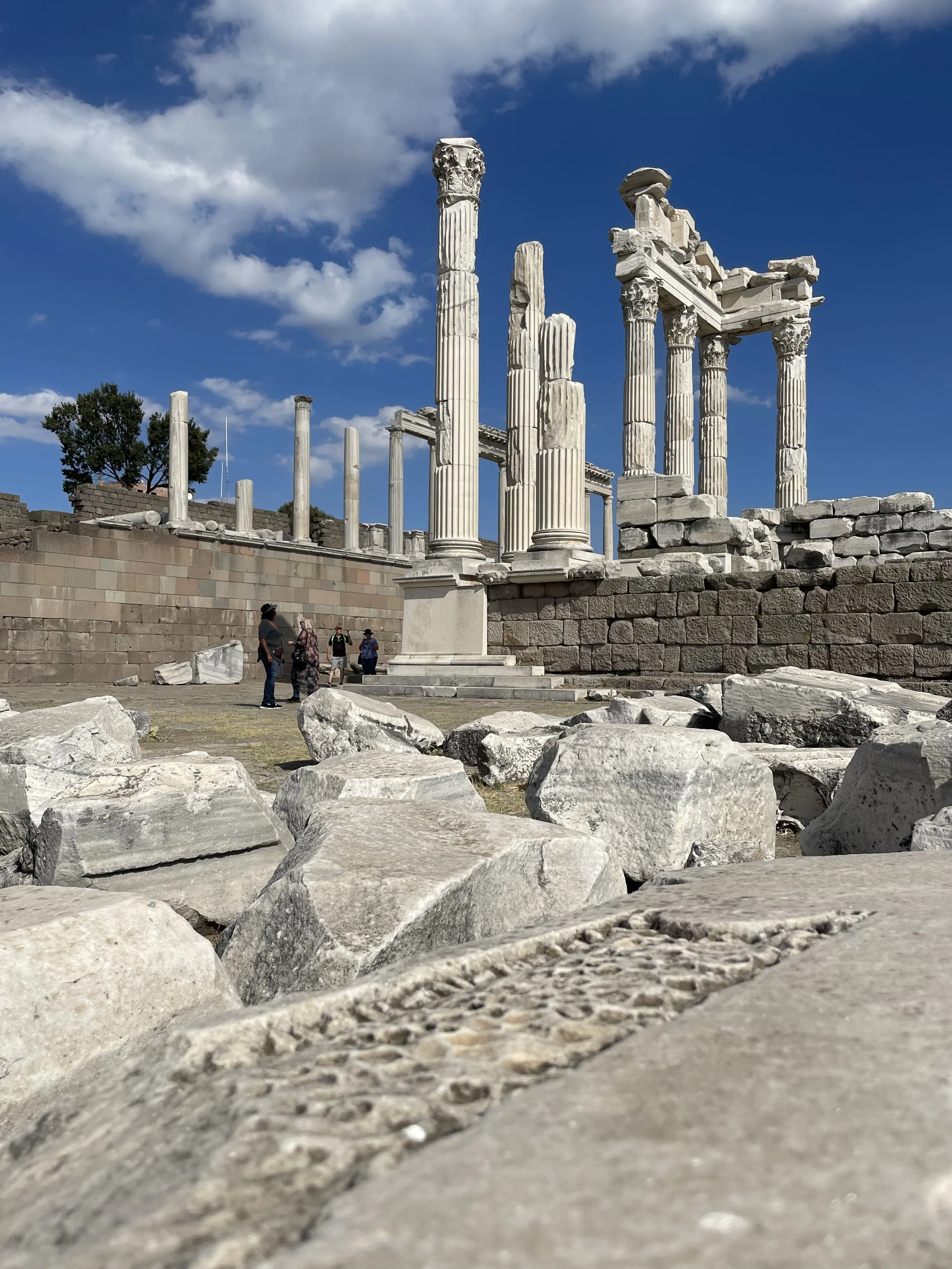
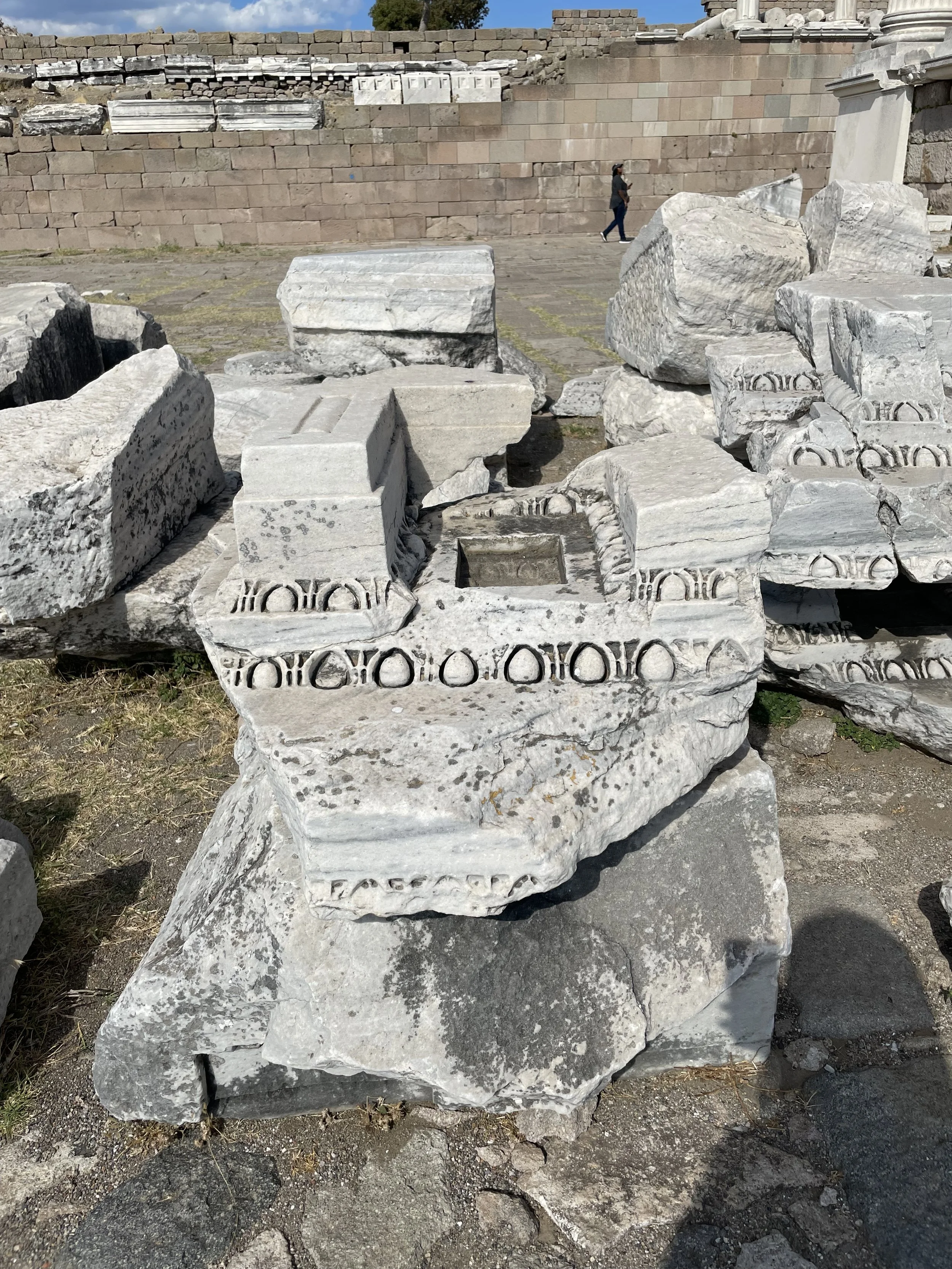
Stepping onto the Acropolis, you begin to understand how the city was laid out. It’s not one open space but a series of terraces, each revealing something different as you move through it. You pass the remains of the Upper Agora, where daily life once played out, trade, conversations, the rhythm of the city. From there, the path leads you past the outlines of what was once the great library, a place that rivalled Alexandria and helped shape Pergamum’s reputation as a centre of knowledge.
Further along, the Temple of Trajan rises into view, its remaining columns still standing with a kind of quiet authority. It feels different from the rest, more Roman, more deliberate, a reminder that the city didn’t stand still but evolved over time.
Then the theatre of Pergamon comes into view. Carved into the hillside, it dates back to the 3rd century BCE and is one of the steepest in the ancient world, once holding around 10,000 people. Standing there, looking down towards the valley, you feel how exposed it is. This wasn’t just built for performance, it was built to impress.
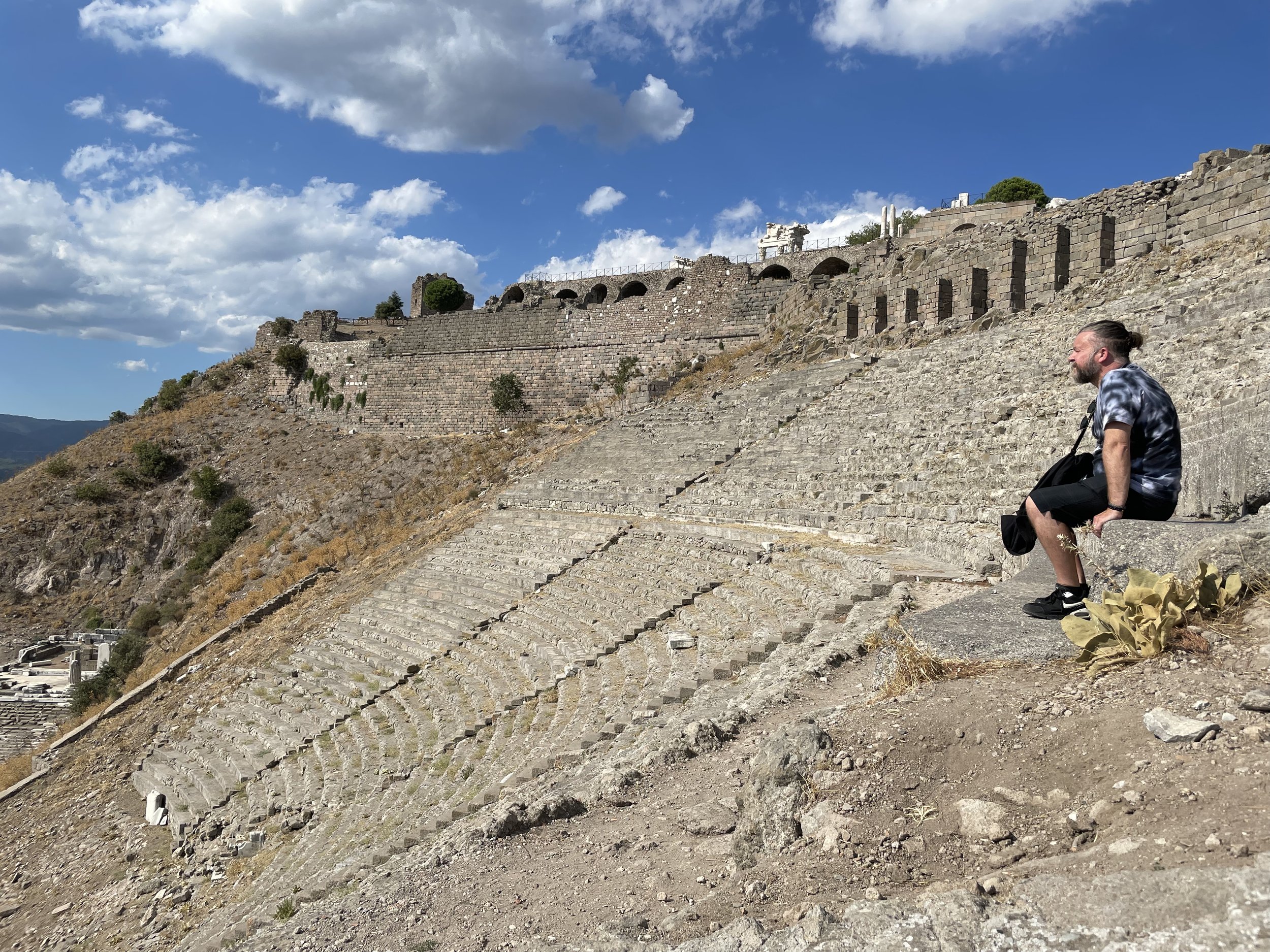
Theatre of Pergamum
But Pergamum isn’t just about power. A short journey away, the Asklepion reveals another side of the city entirely. This was an ancient healing centre, where treatments combined medicine, ritual and belief. Patients walked through sacred tunnels, underwent dream therapy and sought cures in a place that feels, even now, calmer and more human. It’s one of the few places in Pergamum that feels less about empire and more about people.
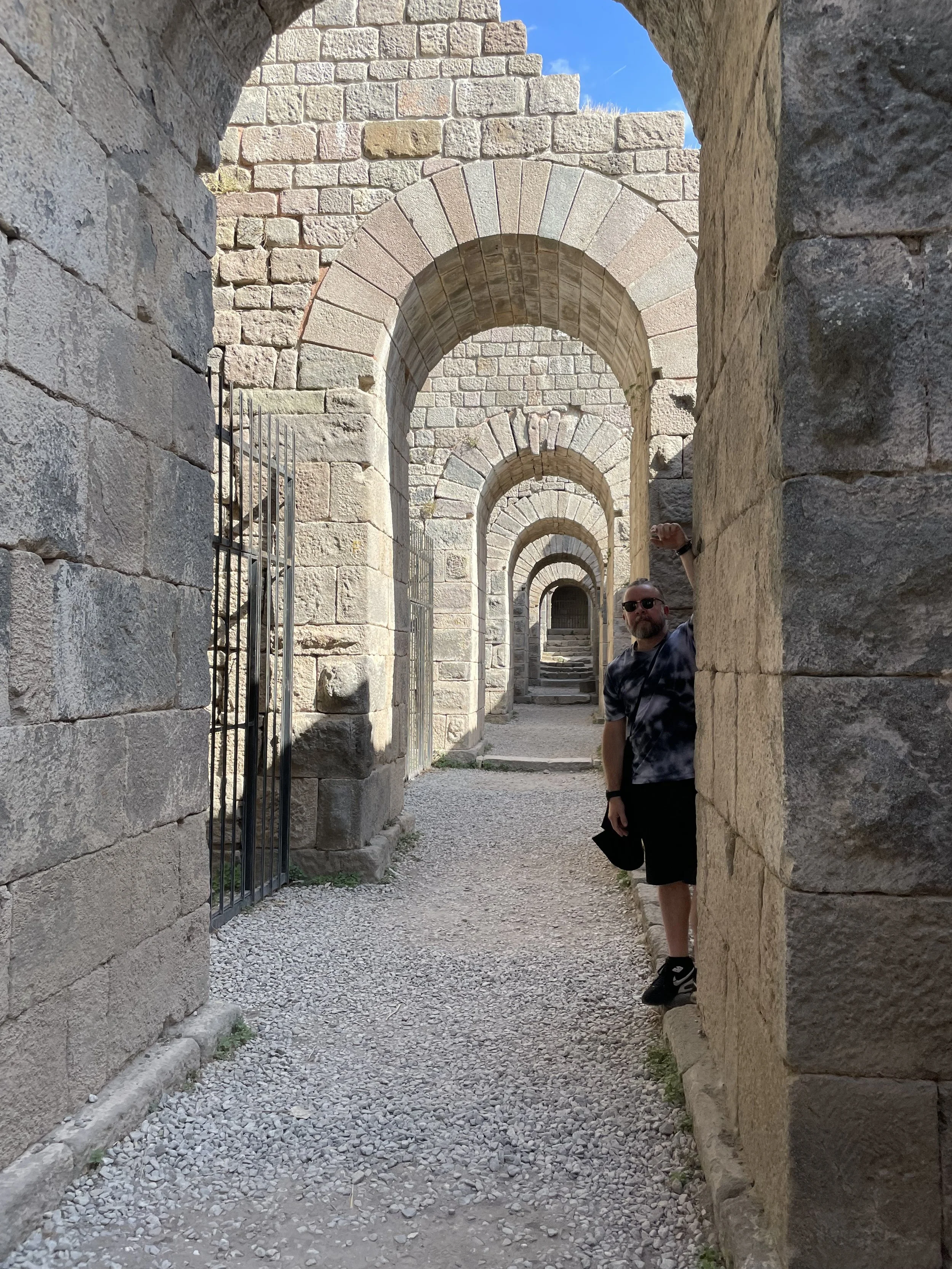
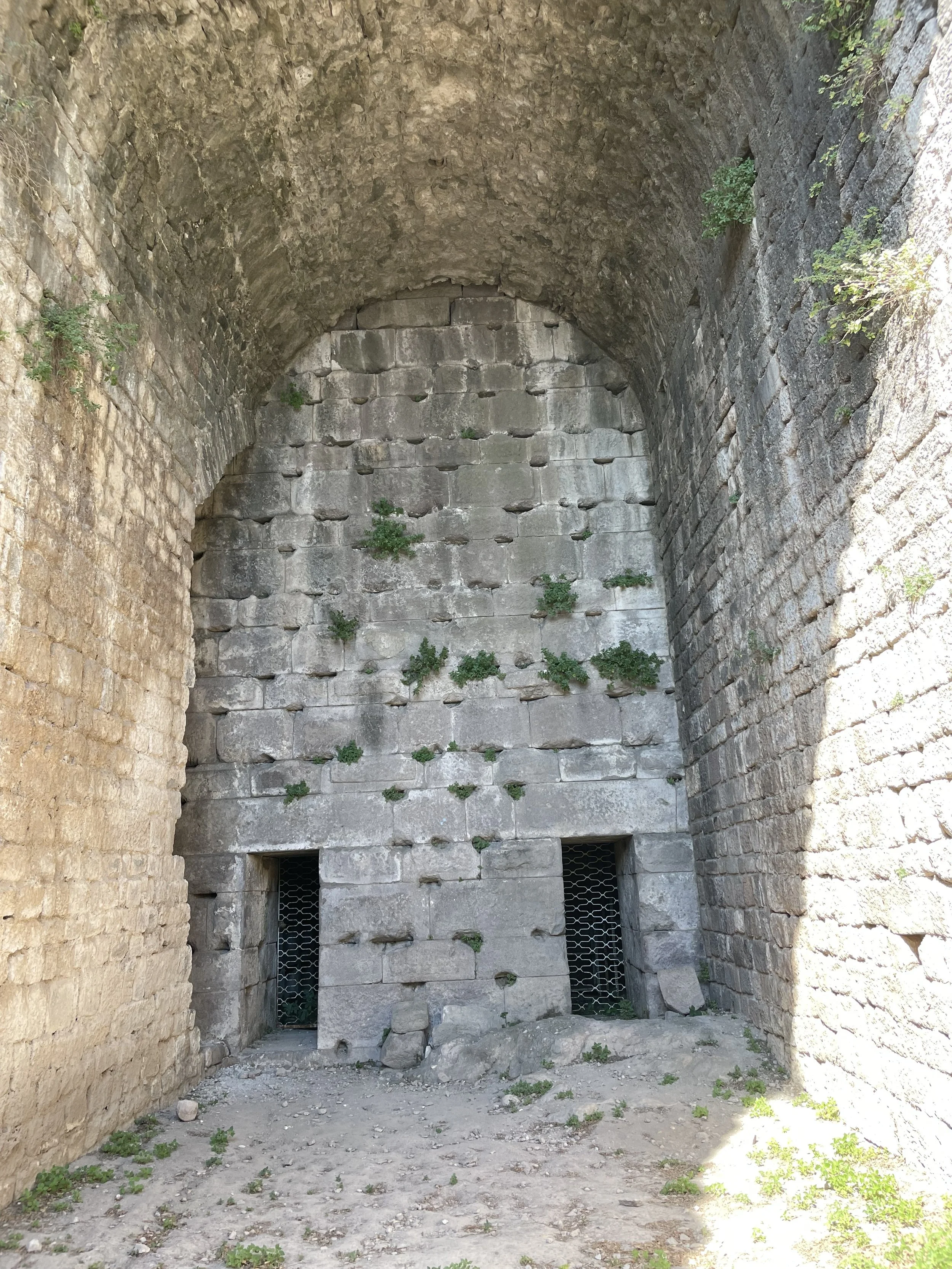
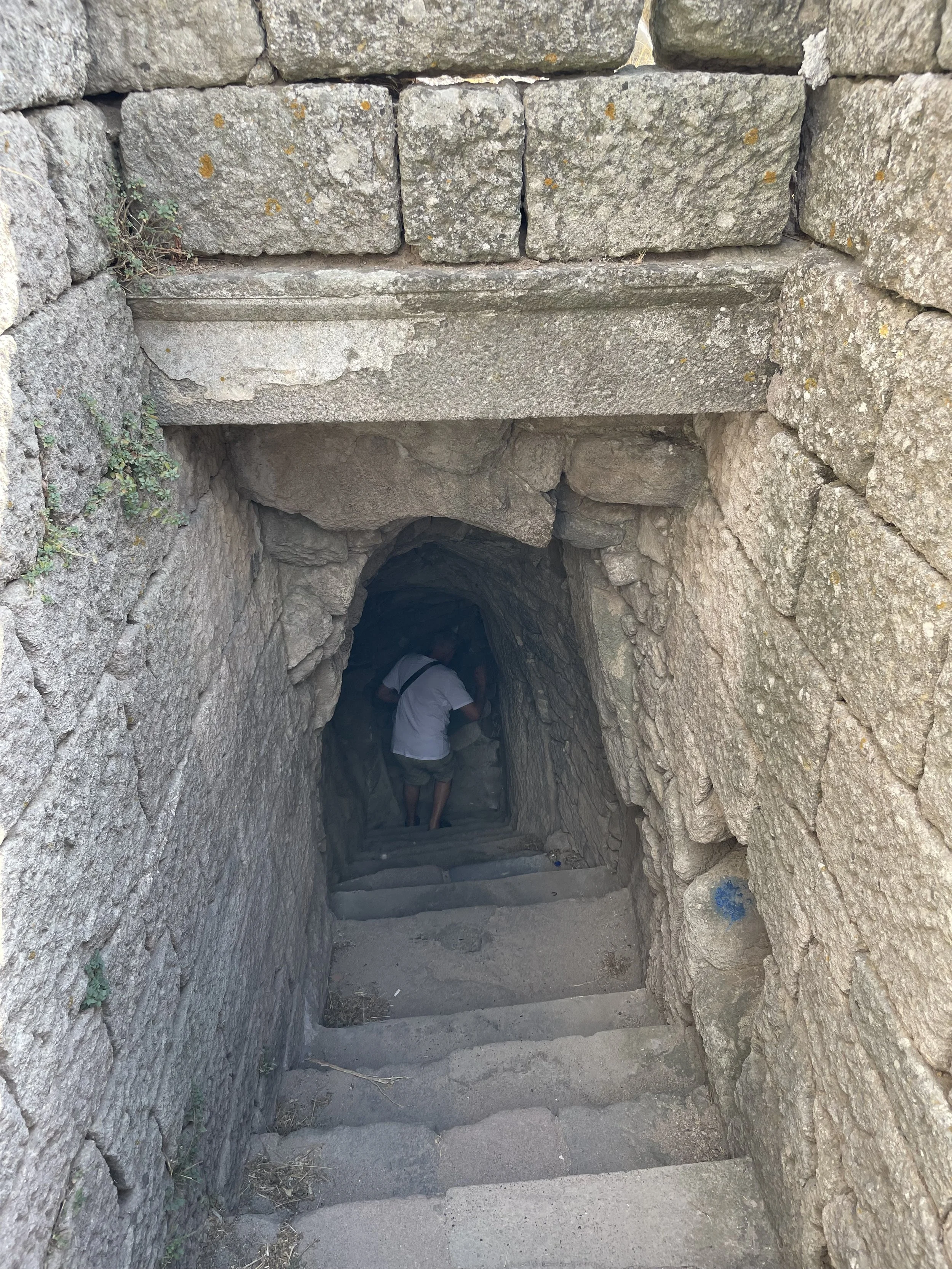
Back on the Acropolis, nearby stood the Great Altar of Zeus, once one of the most celebrated monuments of the ancient world. Today, most of it is no longer here, but displayed in the Pergamon Museum in Berlin, far from the hillside where it was built to dominate the skyline. What remains in Pergamum is little more than its footprint. I found myself sitting on what looked like a simple stone platform, shaded by trees, only later realising it was the exact spot where the altar once stood. What was once a towering structure covered in dramatic carvings of gods and giants now feels almost understated, as if history quietly stepped aside and let nature take over.
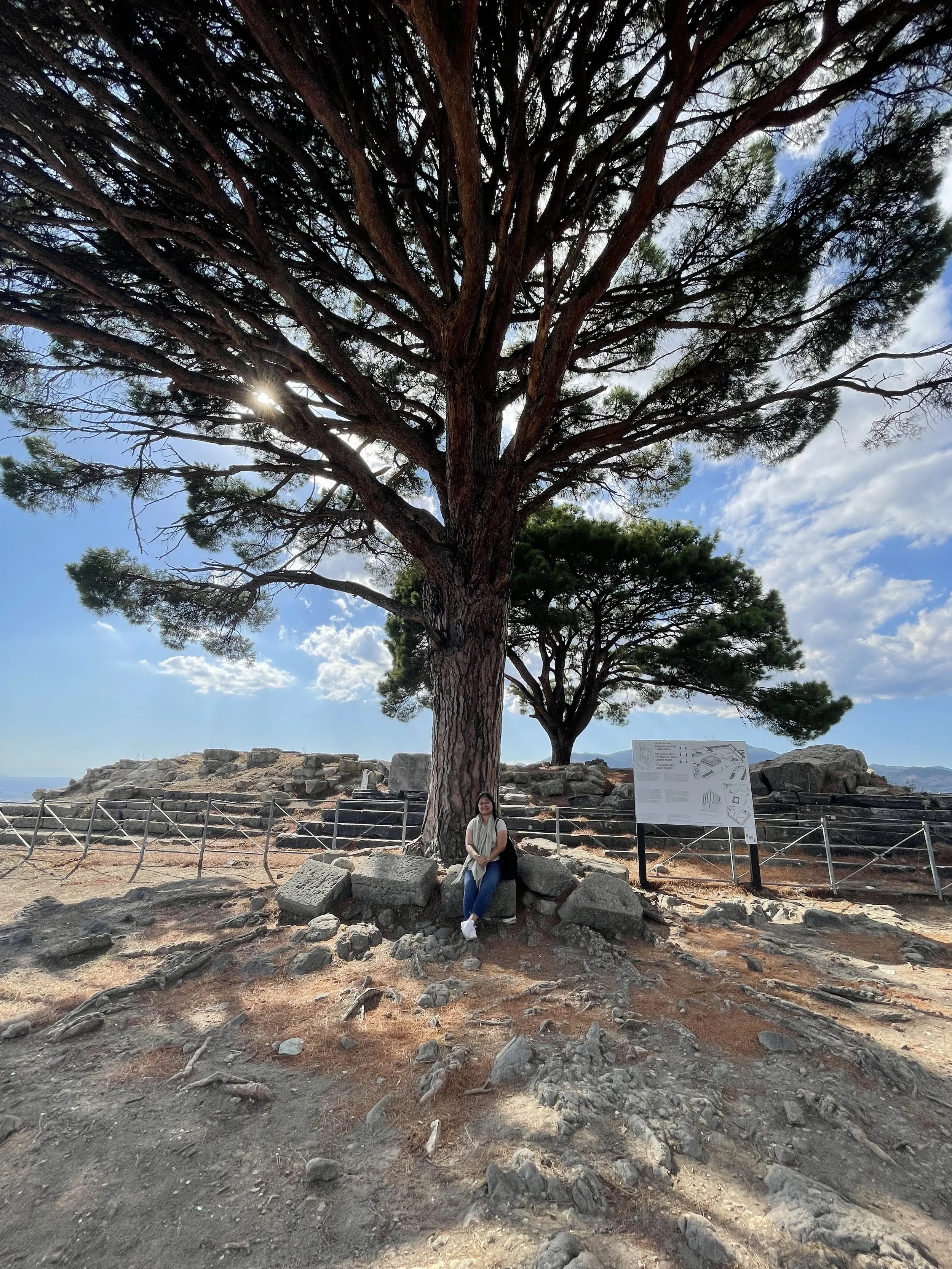
The Great Altar of Zeus
When you visit Pergamum, take the cable car up to the Acropolis to save time and energy, the views over the olive groves are worth it alone. Wear sturdy shoes as the terrain is uneven, and bring water and sun protection because shade is limited. Don’t rush the theatre, it’s easily the most striking part of the site. Make time as well for the Asklepion, which offers a quieter but equally fascinating perspective. Afterwards, head into Bergama town to wander the bazaars and get a feel for local life. If you can, go early or later in the day to avoid the heat and crowds.
Today, Pergamum, now Bergama, is a working town of around 80,000 people. It’s quieter than Turkey’s headline sites, which gives it something they often lack, space to take it all in. Olives and cotton shape local life, while bazaars and festivals keep tradition alive.
There’s something poetic about ancient and modern living side by side. You glide up by cable car, move through terraces where a city once thrived, stand on a theatre carved into a cliff, then find yourself sitting on the remains of an altar that once symbolised power and belief. The ruins don’t move, but your perspective does.
Pergamum isn’t just a stop. It’s a place that stays with you.
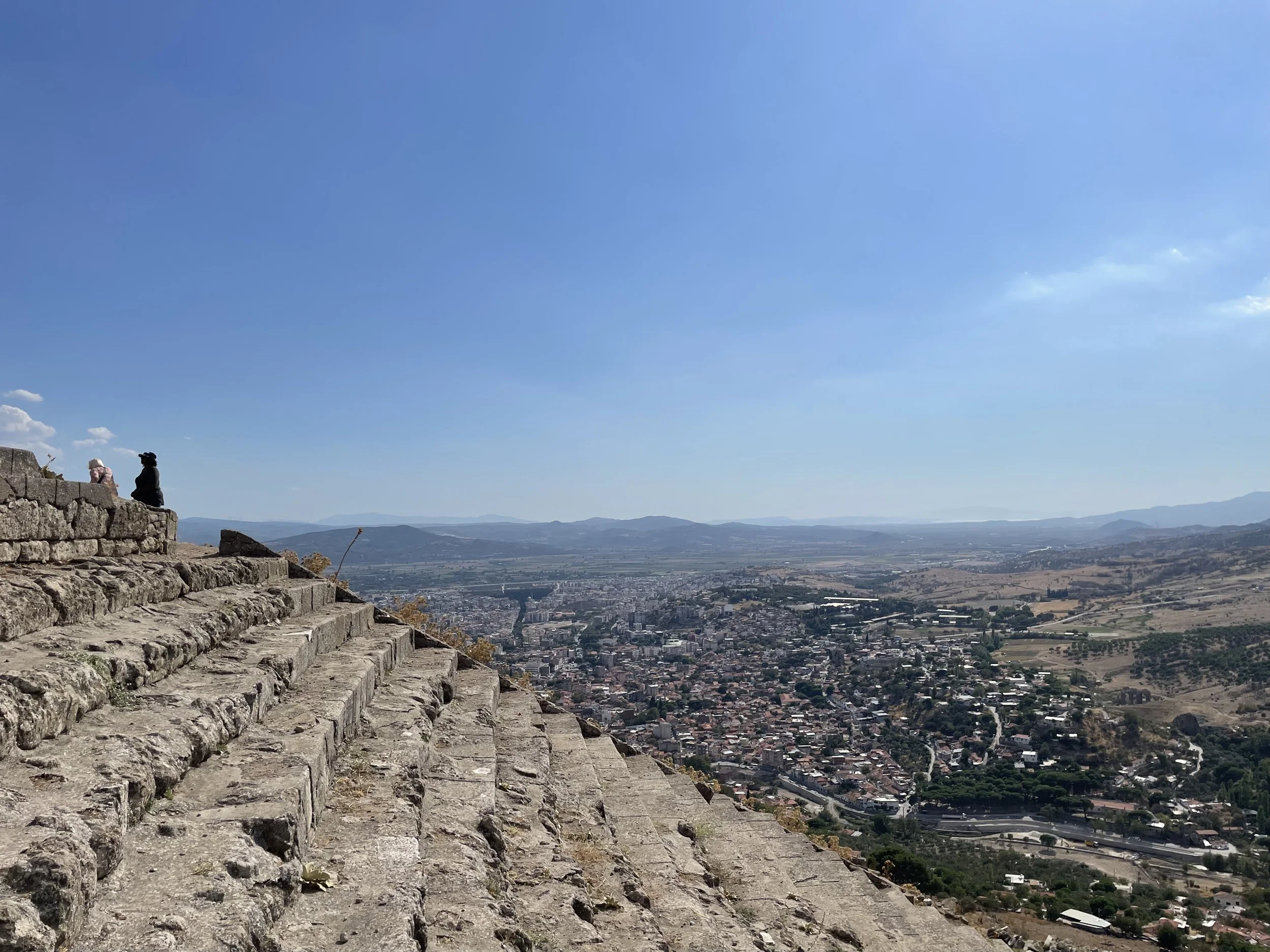
Bergama from the Acropolis
