
Classic Istanbul: The Sultanahmet and Eminönü Walking Loop
Our walk began along Divan Yolu, the old imperial road of Constantinople, where trams glide past cafés and street stalls while ancient monuments quietly stand among the crowds. It didn’t take long to realise that in Istanbul history isn’t tucked away behind museum glass. It lives directly in the streets.
I had seen the city countless times in documentaries and travel programmes, but standing here felt completely different. Istanbul sits between two continents, and that unique position has shaped its story for thousands of years. Roman emperors, Byzantine rulers, and Ottoman sultans all left their mark here, and the traces of those eras are still visible as you walk through the Old City.
This Sultanahmet and Eminönü walking loop became my way of exploring those famous landmarks while also soaking up the everyday rhythm of the city around them. It’s one of those walks where almost every few minutes another layer of history reveals itself, often in places you might easily walk past without realising their significance.
Istanbul Walking Route
Route: Column of Constantine → Hippodrome → Blue Mosque → Hagia Sophia → Topkapı Palace → Sirkeci Station → Germanya Han → Yeni Valide Camii → Galata Bridge viewpoint → Spice Bazaar → Rüstem Pasha Mosque → Nuruosmaniye Mosque → Grand Bazaar
Style: Compact historic loop with bustling market vibes
Good for: Travellers who want Istanbul’s iconic core in one walk
🗿 Column of Constantine
Standing in the middle of busy Çemberlitaş Square is the Column of Constantine, one of the oldest surviving monuments from Roman Constantinople.
It was erected in 330 AD by Emperor Constantine the Great to celebrate the founding of his new imperial capital. At the time the column carried a statue of Constantine depicted as the sun god Apollo, symbolising imperial authority and reinforcing the idea that the emperor ruled with divine favour.
Over the centuries fires and earthquakes damaged the structure, and metal bands were added to stabilise it. Those rings gave the monument its Turkish name Çemberlitaş, meaning “hooped stone”. The original statue disappeared long ago, but the column still stands as a powerful reminder of the moment Constantinople became the centre of the Roman world.
Today the column rises above tram tracks, shops, and cafés. People hurry past on their way to work or the nearby markets, but once you realise how old the monument is, the setting suddenly feels very different. What looks like an ordinary city square today was once part of an imperial ceremonial route used by Roman emperors.
From here we followed Divan Yolu, the historic road that once led directly toward the heart of Constantinople.
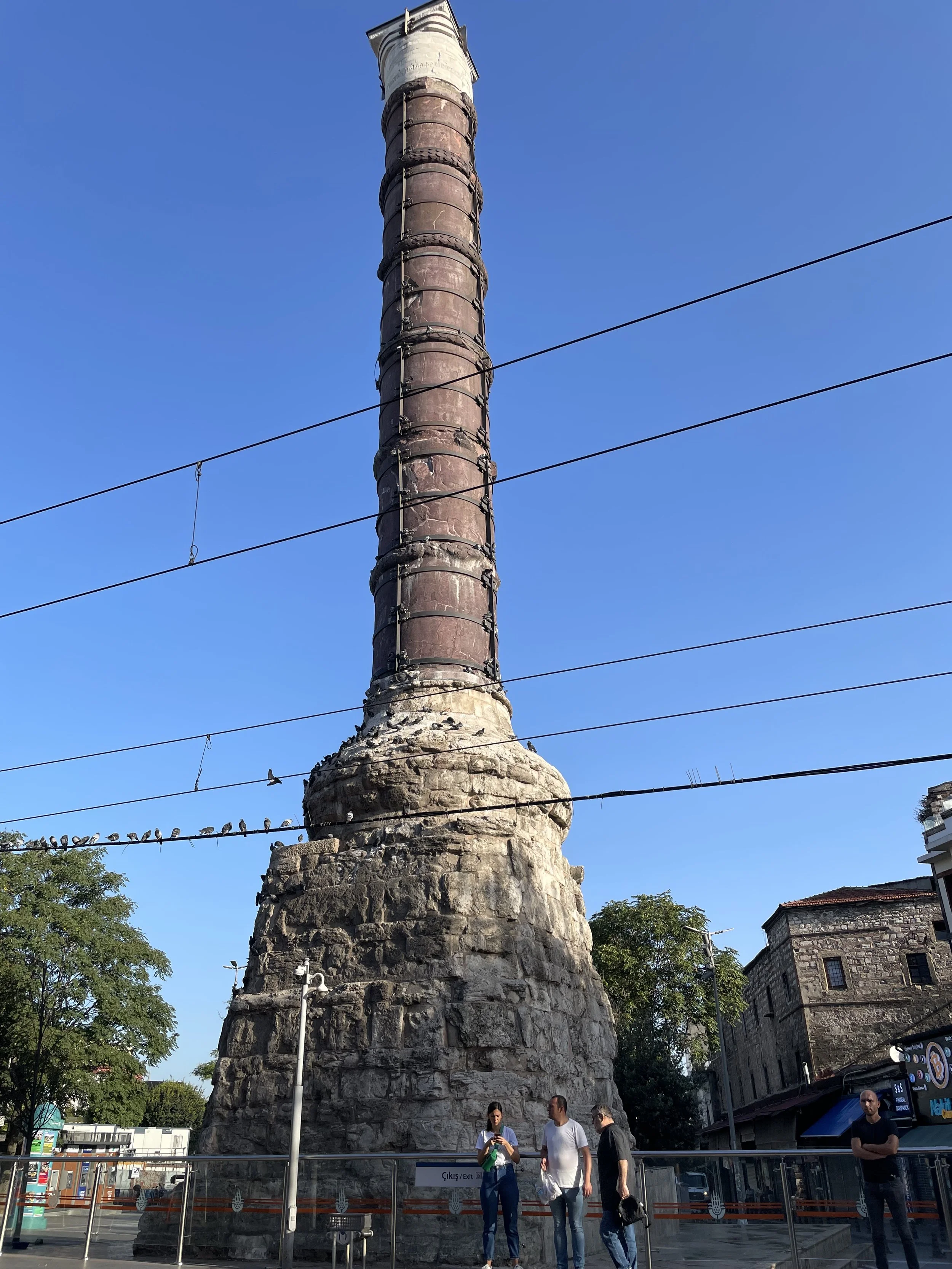
Column of Constantine
🟥 Hippodrome
The road opens into the wide space of the Hippodrome, once the roaring centre of Byzantine Constantinople. Built in the 3rd century and later expanded by Emperor Constantine, the stadium could hold tens of thousands of spectators who gathered here for chariot races that were part sport and part political spectacle.
These races were serious business. Rival factions known as the Blues and Greens often turned competitions into riots that shook the city. The Hippodrome was where emperors appeared before the people, and where the crowd could voice their approval—or their anger.
The stadium itself has long disappeared, but several monuments still stand along the central line of the old racetrack.
The towering Obelisk of Theodosius, brought from Egypt in the 4th century, once stood proudly in the middle of the arena. Nearby rises the twisted Serpent Column, originally cast in bronze to commemorate a Greek victory over the Persians before being moved here centuries later.
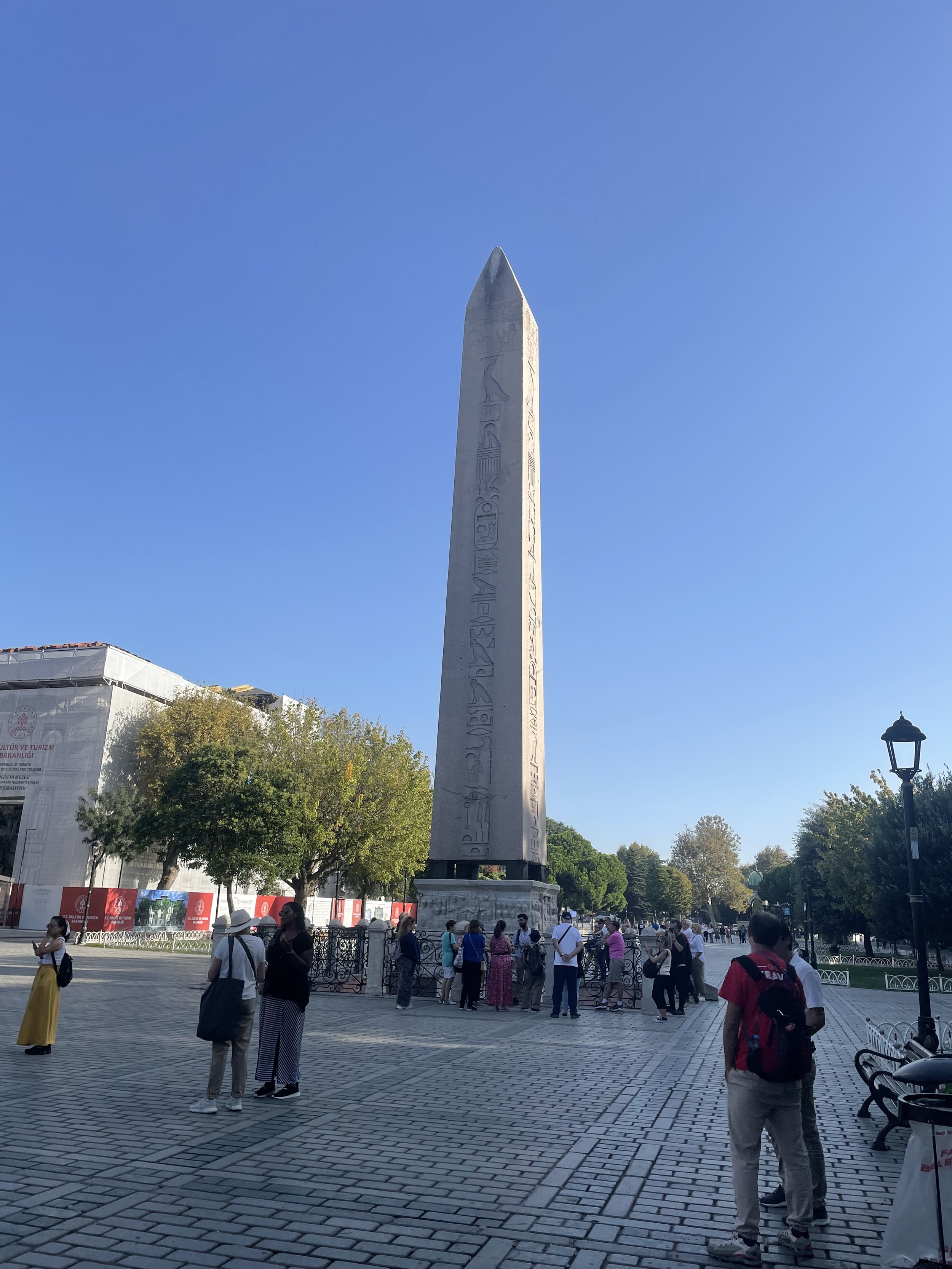
Obelisk of Theodosius
Further along stands the Walled Obelisk, built in the 10th century by Byzantine Emperor Constantine VII. The structure was once covered in bronze plates that reflected sunlight across the stadium. Those plates were stripped away during the Fourth Crusade in 1204, leaving the rough stone tower that survives today.
At the northern end of the square sits the German Fountain, an ornate domed fountain gifted by Kaiser Wilhelm II to the Ottoman Empire in 1901. Its colourful mosaics and elegant arches feel almost delicate compared with the heavy Byzantine monuments nearby.
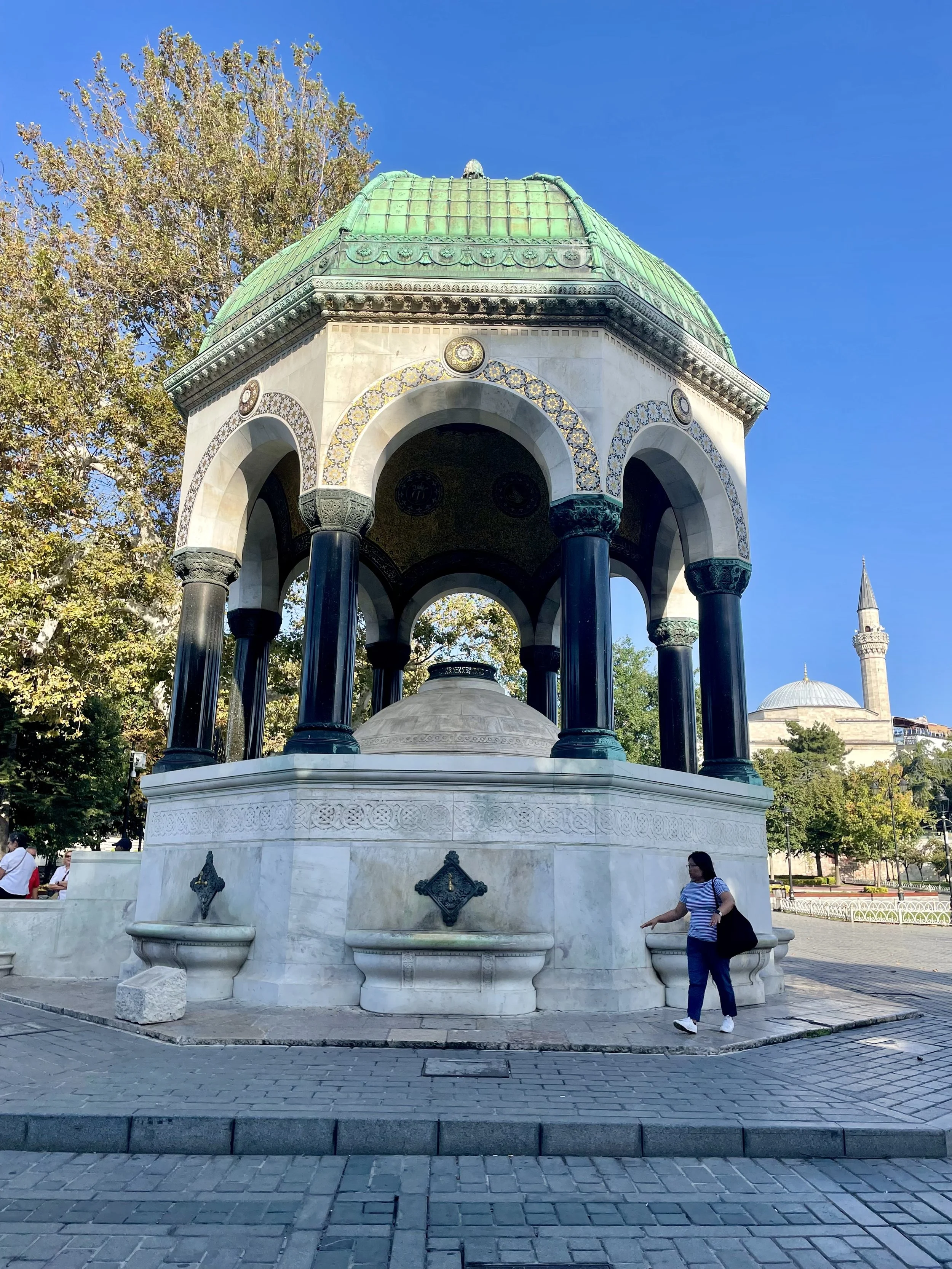
ShortStops German Fountain
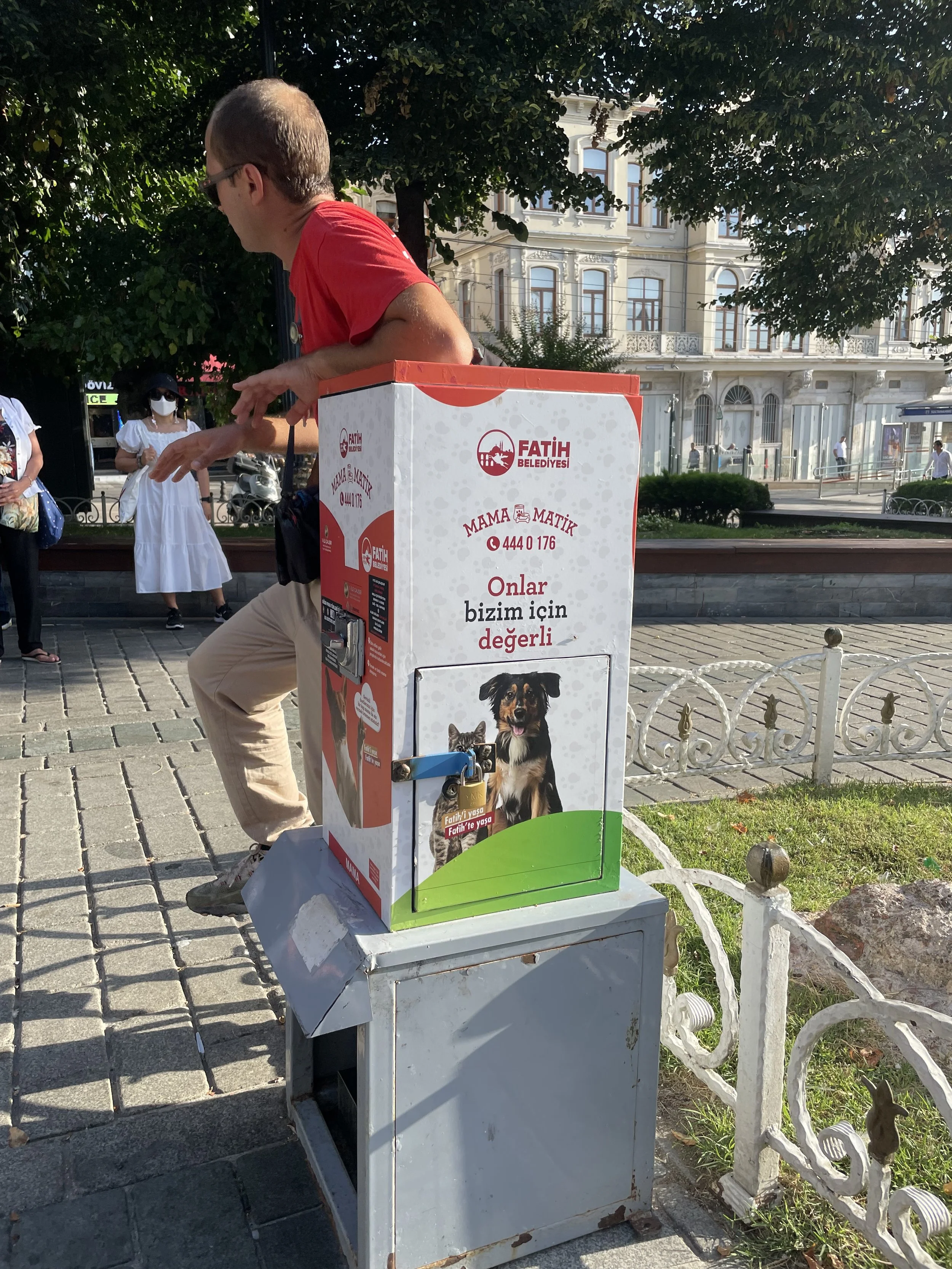
Our guide Ege also pointed out a small feeding station where Istanbul’s famous street cats and dogs find food. For all the imperial spectacle that once filled this place, it was that quiet moment that made the square feel most alive.
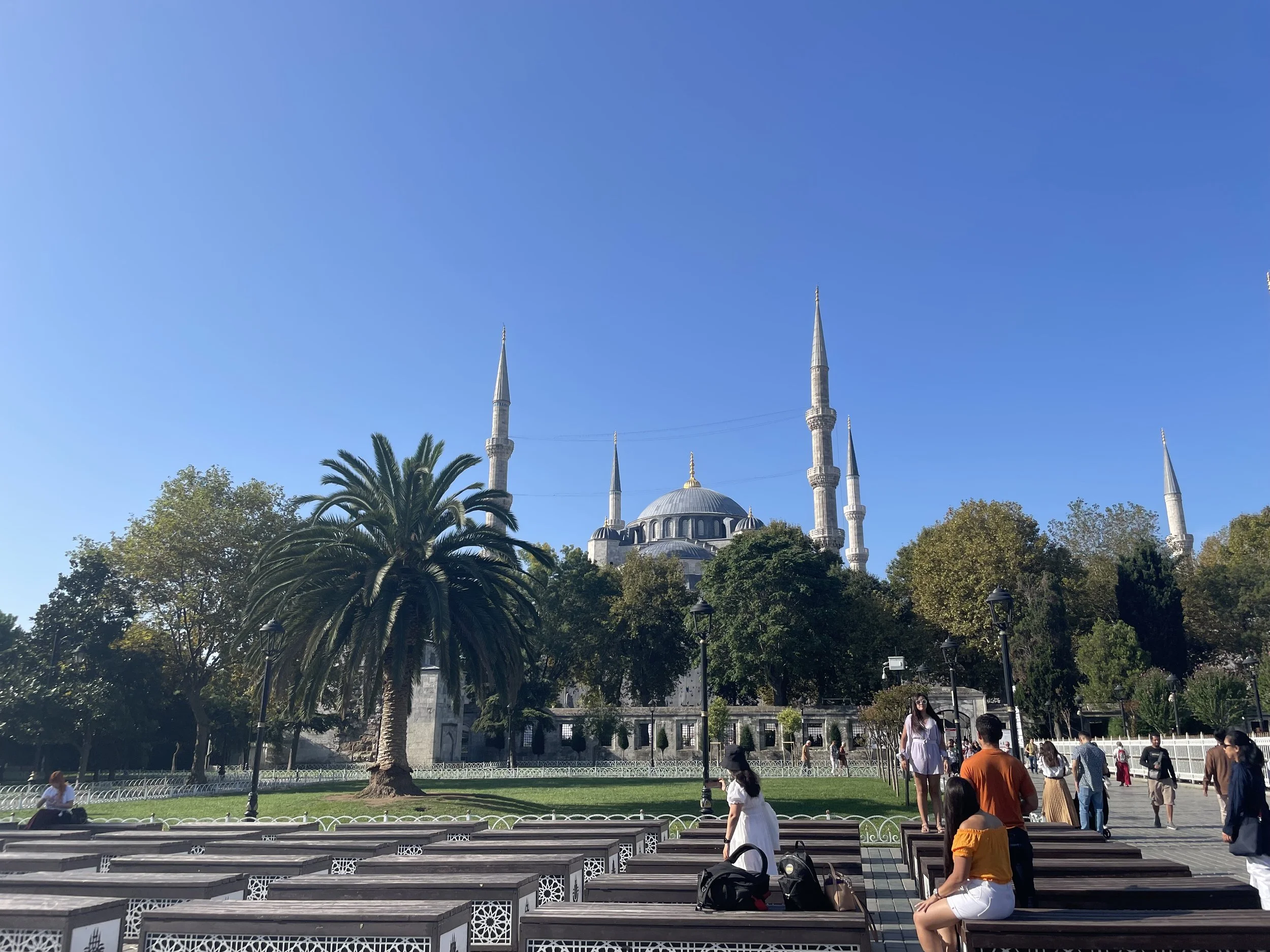
Ahead, the domes and minarets of the Blue Mosque rise dramatically above the skyline.
🕌 Blue Mosque
Officially known as the Sultan Ahmed Mosque, this Ottoman masterpiece was completed in 1616 during the reign of Sultan Ahmed I. The mosque was deliberately built opposite Hagia Sophia, creating one of the most recognisable historic squares in the world.
Its six minarets famously caused controversy at the time because only the mosque in Mecca had the same number. According to popular stories, the Sultan resolved the issue by funding the construction of an additional minaret in Mecca.
When we visited in 2022, restoration work meant scaffolding covered much of the exterior. Instead of admiring the famous silhouette from outside, we mostly found ourselves looking up at the vast dome inside.
Even with the renovations, the space still felt serene. Soft light filtered through the high windows while visitors moved quietly across the carpeted floor. You could easily imagine the full beauty of the famous Iznik tiles that give the mosque its nickname.
Blue Mosque
⛪ Hagia Sophia
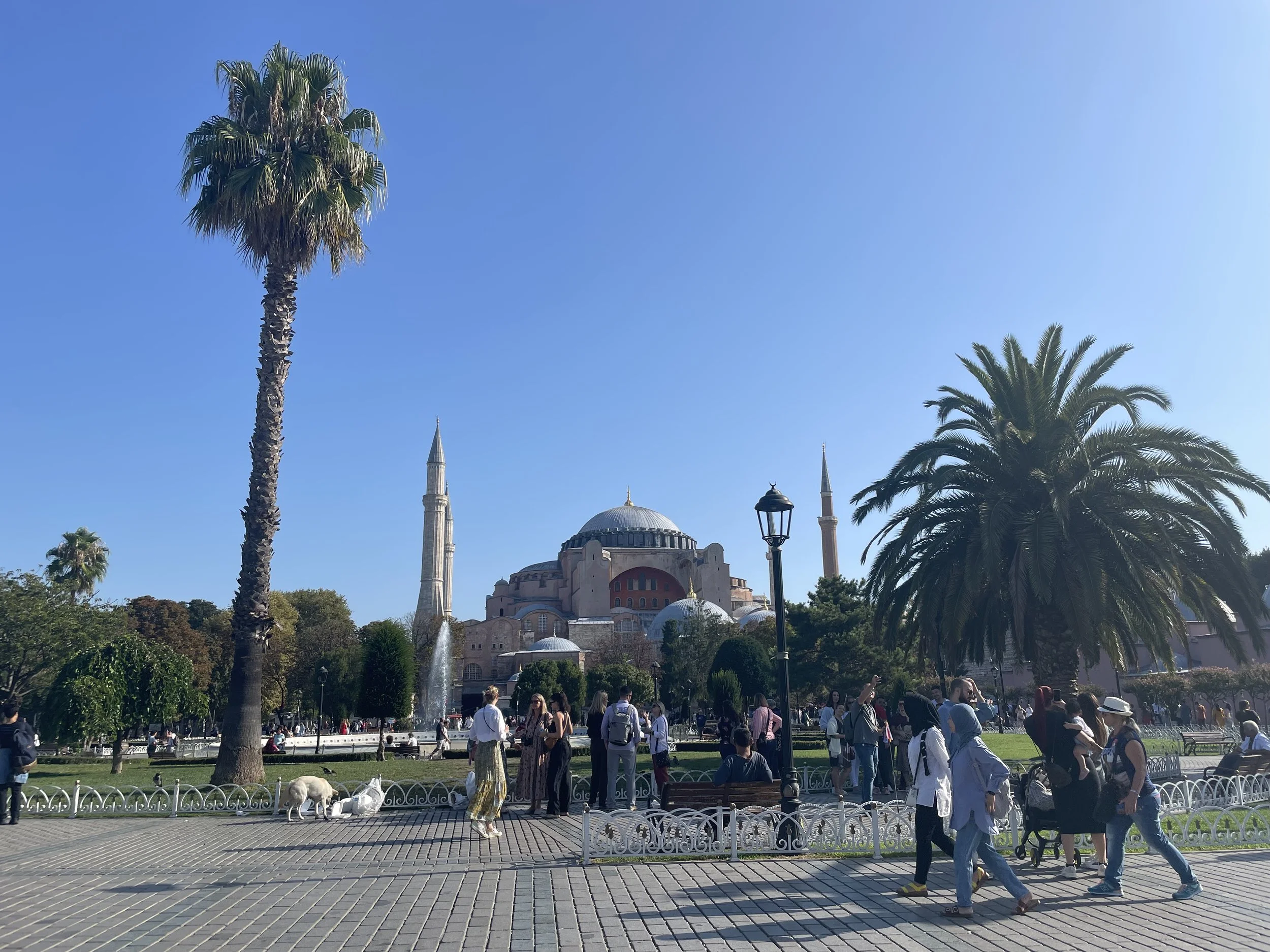
Few buildings carry as many identities as Hagia Sophia. Built in 537 by Byzantine Emperor Justinian, it served as the largest cathedral in Christendom for nearly a thousand years.
After the Ottoman conquest of Constantinople in 1453, it became a mosque. In the 20th century it was turned into a museum before returning to mosque status again in 2020.
Standing outside, the layers of history are visible in the architecture itself. Byzantine domes sit beside Ottoman minarets, while centuries of additions have created one of the most recognisable silhouettes in the world.
The queue to enter was enormous when we arrived. Ege suggested returning later in the afternoon when the crowds had thinned, which turned out to be a very good call.
Hagia Sophia
🏰 Topkapı Palace
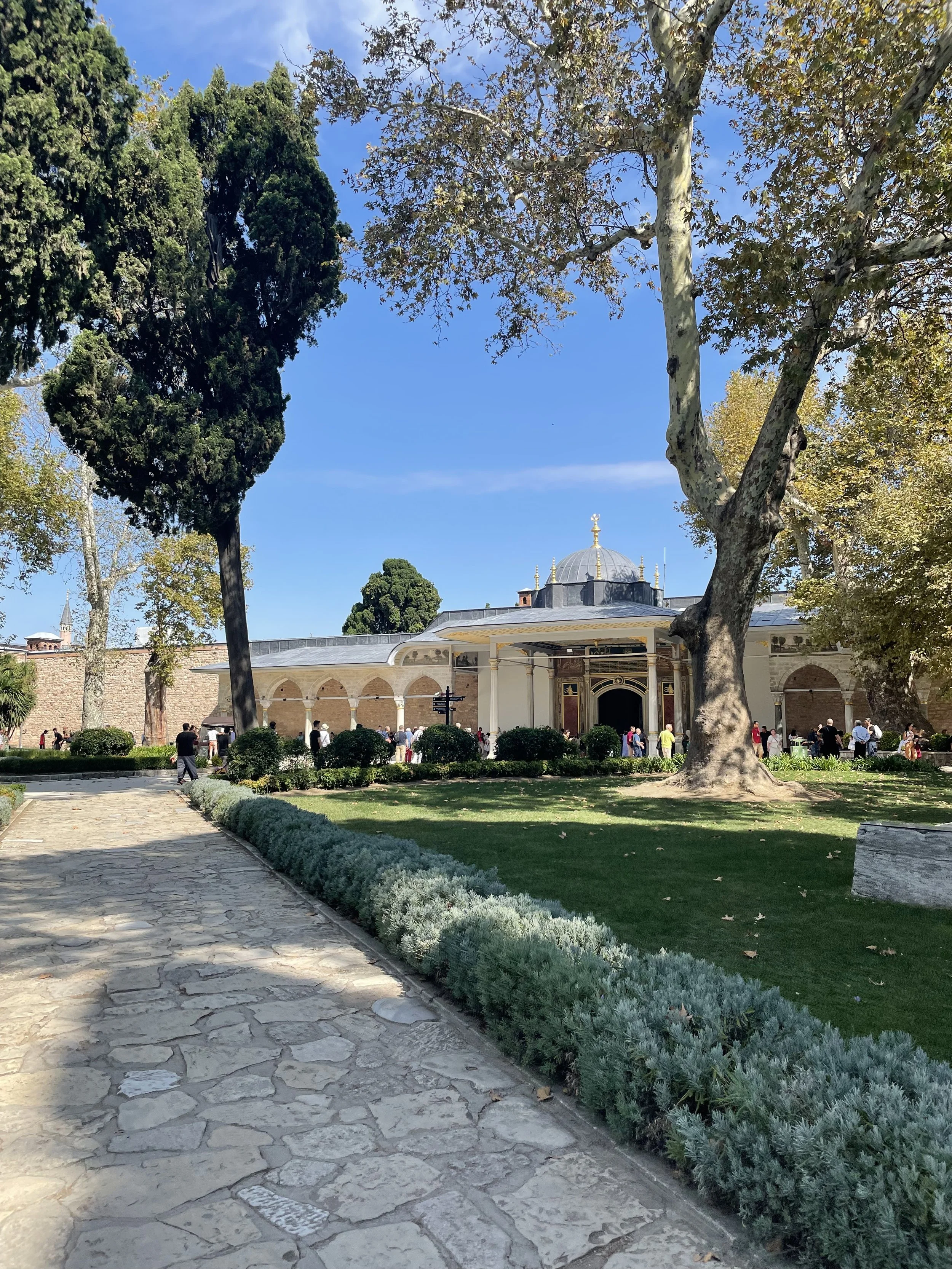
For almost four centuries, Topkapı Palace served as the administrative centre of the Ottoman Empire. From here the sultans governed a vast territory stretching across Europe, the Middle East, and North Africa.
Rather than a single palace building, the complex is made up of courtyards, pavilions, gardens, and ceremonial halls overlooking the Bosphorus.
Walking through the palace grounds offers glimpses into imperial life, from halls where political decisions were made to quieter courtyards where the palace residents once lived their daily lives.
We only had a short visit during this walk but returned later to explore more thoroughly. It’s the kind of place where every courtyard seems to reveal another story.
Leaving the palace grounds, the streets slope gently toward the waterfront.
Topkapı Palace
🚂 Sirkeci Station
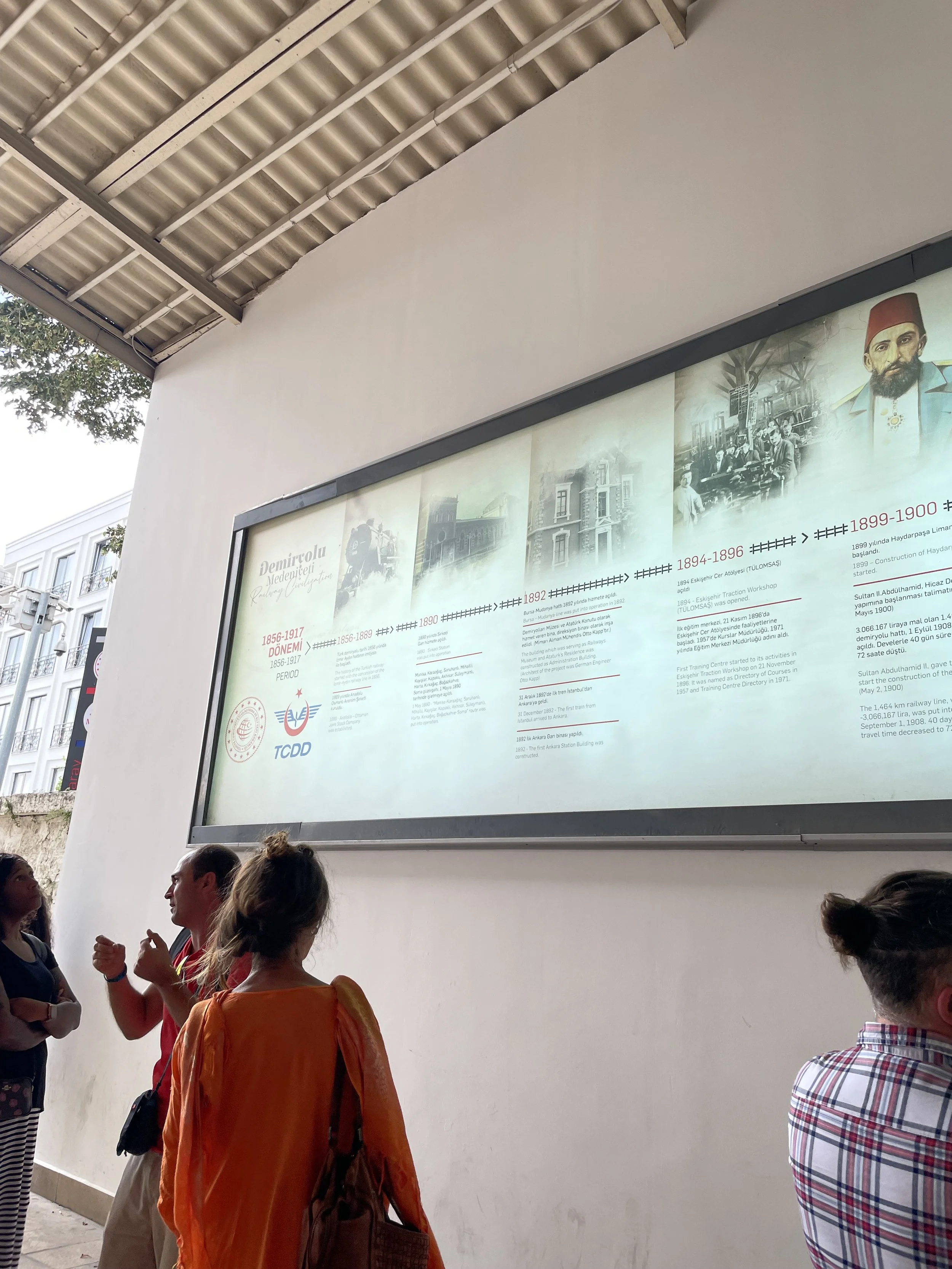
Sirkeci Station opened in 1890 as the eastern terminus of the famous Orient Express, the railway line that once connected Paris with Constantinople. For travellers arriving from Europe, this station marked the dramatic end of a journey across the continent.
Designed by German architect August Jasmund, the building blends European architectural elements with touches that echo Ottoman design. Its grand entrance and decorative façade were meant to reflect the importance of the railway at a time when Istanbul was becoming more connected to the rest of Europe.
I didn’t take many photos here because I found myself reading the historical panels lining the walls instead. The stories of travellers arriving from distant cities made it easy to imagine the excitement people must have felt stepping off the train and into Istanbul for the first time.
Leaving the station behind, the streets begin to slope gently toward the waterfront, where the character of the city shifts from imperial landmarks to busy trading districts.
🏢 Germanya Han
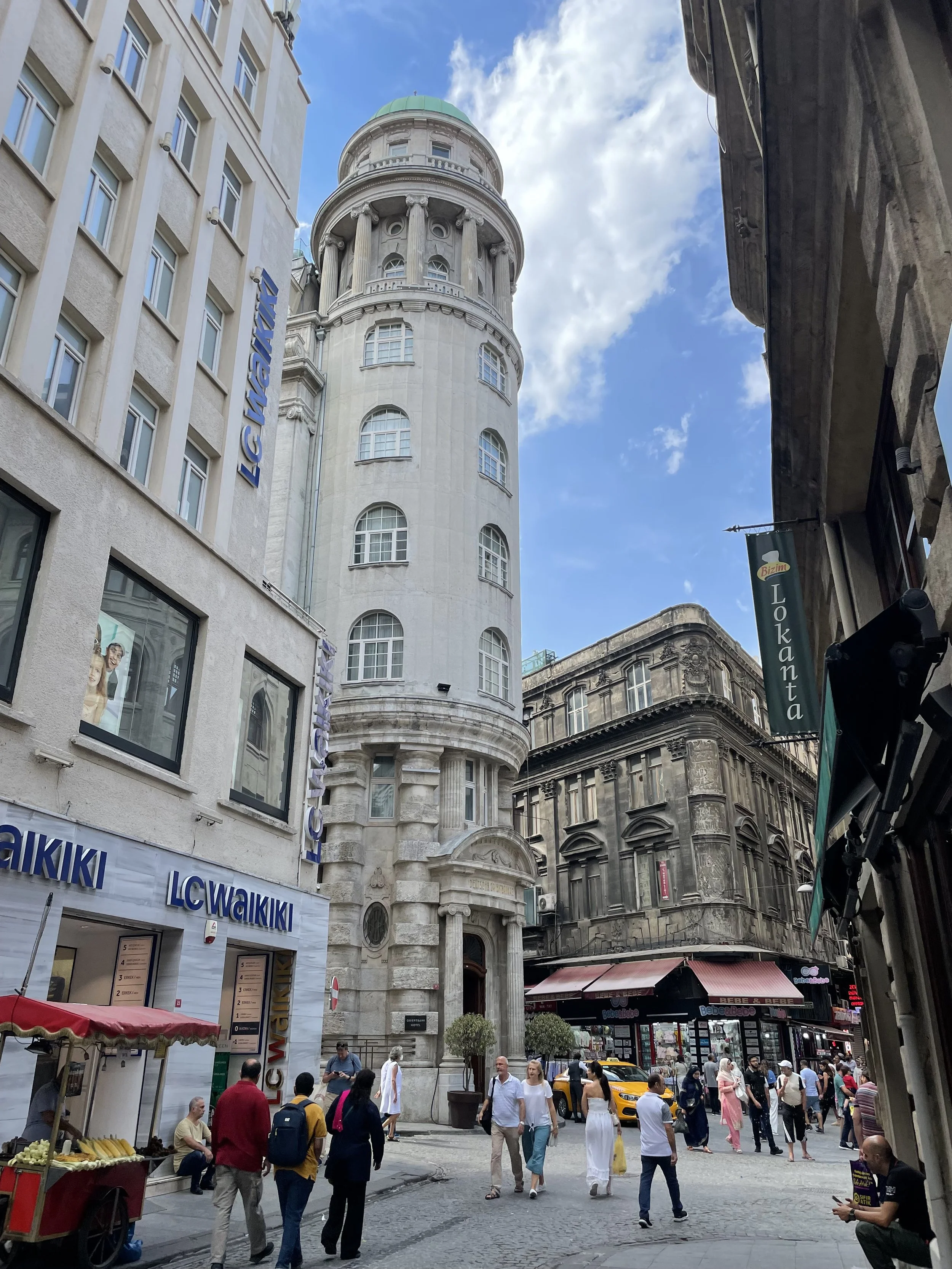
A short walk from Sirkeci Station stands Germanya Han, once home to the Deutsche Orient Bank. The building reflects the close economic ties between Germany and the Ottoman Empire during the late 19th and early 20th centuries.
Designed again by August Jasmund, the structure has a solid European character that contrasts with the surrounding Ottoman buildings. It’s one of those quiet reminders that Istanbul has always been a crossroads of international trade and influence.
It’s easy to walk past without noticing, but once it’s pointed out, the building reveals another layer of the city’s history—one shaped not only by empires but also by commerce and global connections.
🕌 Yeni Valide Camii
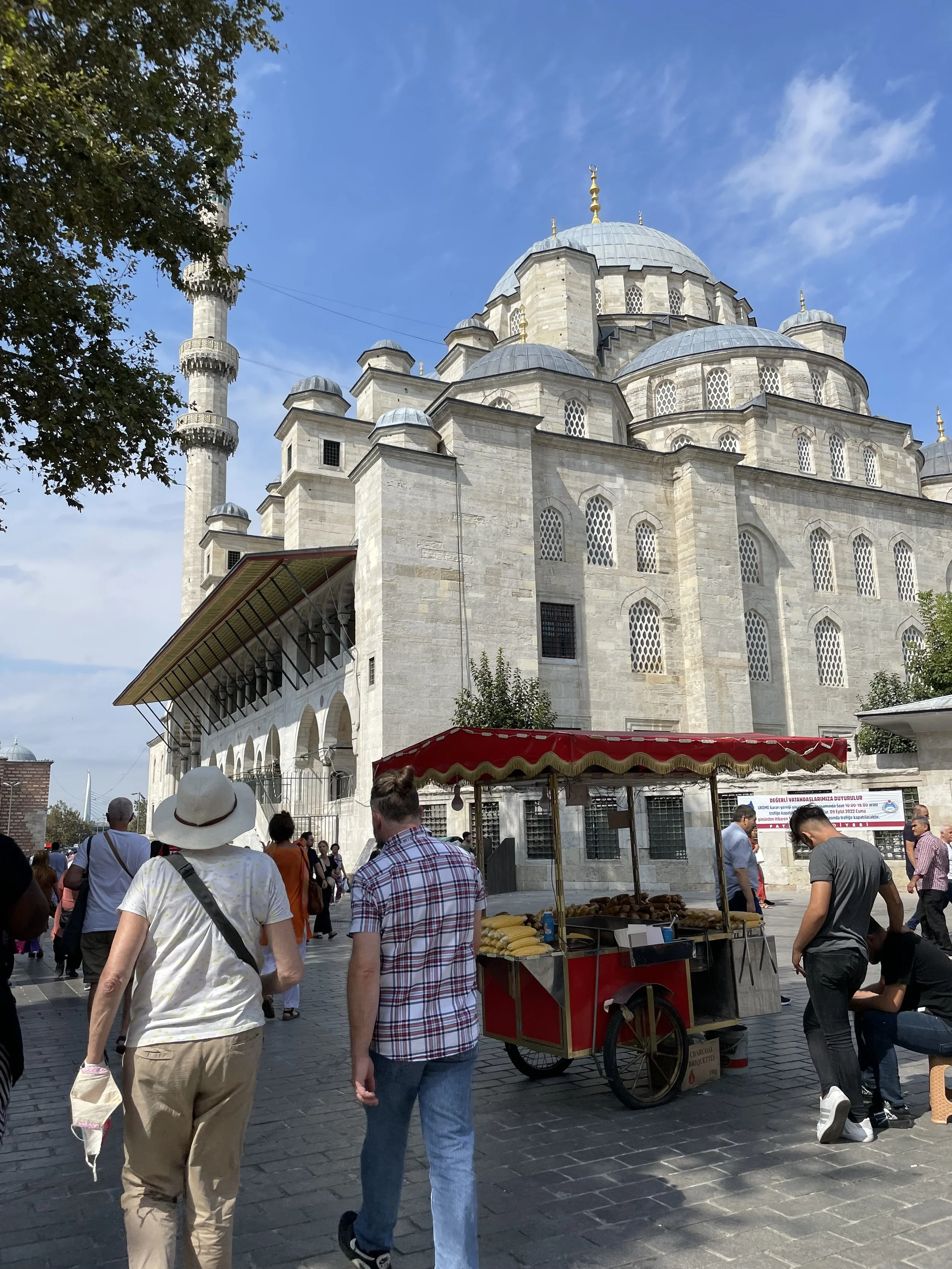
Passing through the surrounding streets, we caught sight of Yeni Valide Camii, an elegant Ottoman mosque built in the early 18th century.
It was commissioned by Gülnuş Sultan, the mother of Sultan Ahmed III. Women of the Ottoman imperial family often sponsored major architectural projects, and their influence can still be seen in many of the mosques scattered throughout the city.
Even though we only passed by briefly, the domes and slender minarets rising above the nearby buildings were enough to catch the eye. It’s another example of how Ottoman architecture quietly appears throughout Istanbul, sometimes in places visitors might not expect.
As the streets grow busier, the walk begins to move toward one of the city’s most lively waterfront crossings.
🌉 Galata Bridge Viewpoint
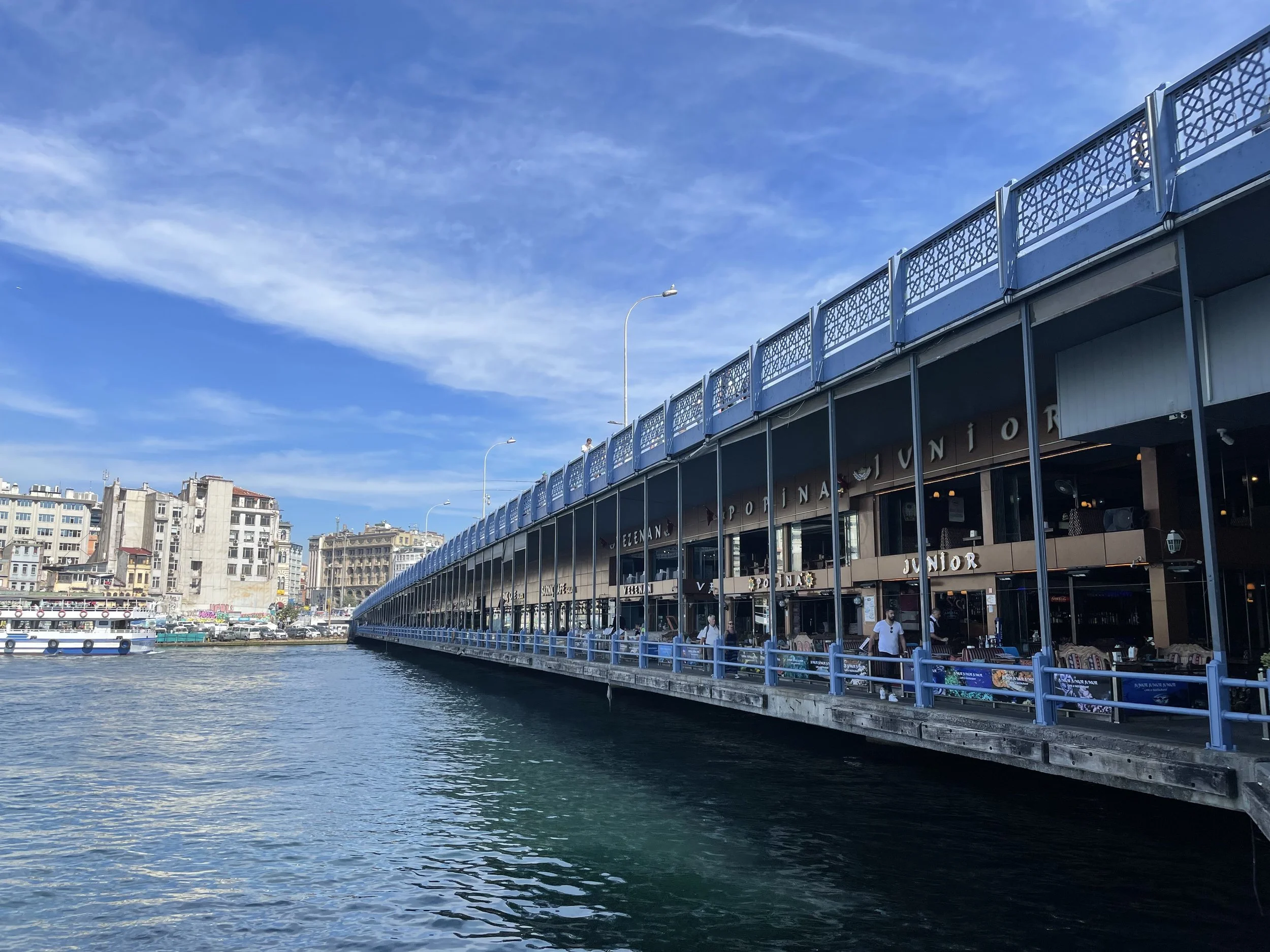
Standing near the Galata Bridge, the atmosphere suddenly changes. The calm spaces of Sultanahmet give way to a scene full of movement and noise.
Fishermen line the railings with rods stretching out over the Golden Horn while ferries glide across the water connecting the different parts of the city. Beneath the bridge, restaurants fill with people eating grilled fish while the smell drifts up to the street above.
Boat tour operators call out their offers, vendors weave through the crowd, and the whole place buzzes with energy. It honestly felt like stepping into a scene from the Turkish dramas I’ve watched—lively, chaotic, and unmistakably Istanbul.
Just beyond the bridge, the scent of spices begins drifting through the nearby market streets.
🛍 Spice Bazaar
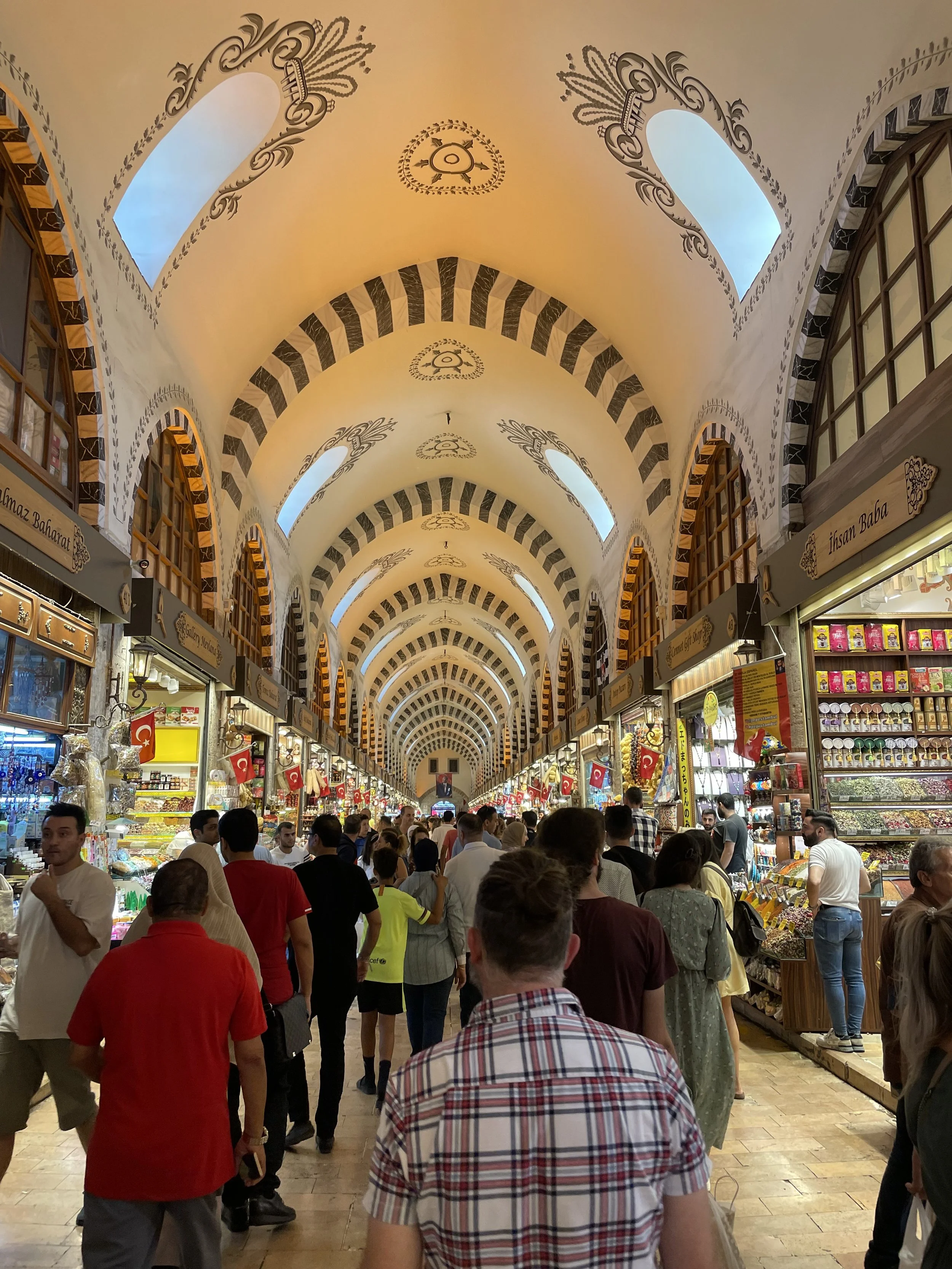
Built in the 1660s, the Spice Bazaar was originally part of the New Mosque complex and served as a trading hub for goods arriving across the Ottoman Empire.
Historically known as the Egyptian Bazaar, many of the spices sold here came from Ottoman territories in Egypt and other parts of the eastern Mediterranean.
Inside, colourful stalls overflow with saffron, cinnamon, dried fruits, nuts, sweets, and Turkish delights. The smell alone makes it impossible not to slow down and wander.
Compared with the massive Grand Bazaar, this market feels more compact and slightly easier to navigate, though the atmosphere is just as lively.
🕌 Rüstem Pasha Mosque
Tucked above the surrounding market streets, the Rüstem Pasha Mosque is one of Istanbul’s quieter architectural gems.
Designed by the legendary Ottoman architect Mimar Sinan, the mosque is famous for its intricate Iznik tiles, which cover the interior walls in vivid blues and reds.
Finding it felt like a small adventure in itself. The entrance sits slightly hidden among the market streets, and climbing the steps suddenly leads to a peaceful courtyard above the busy shops below.
Inside, the detailed tilework creates a calm, almost intimate atmosphere compared with the larger mosques elsewhere in the city.
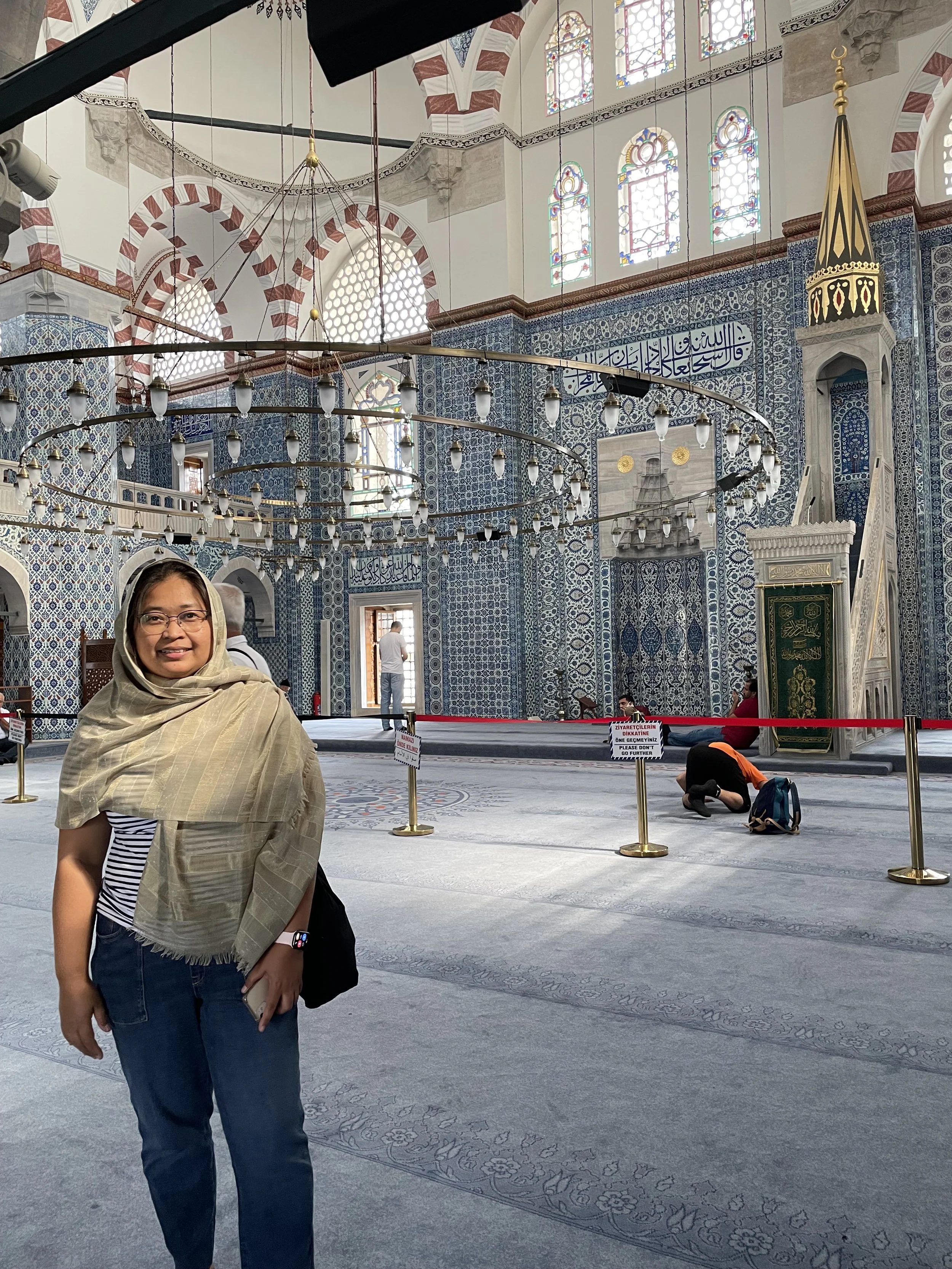
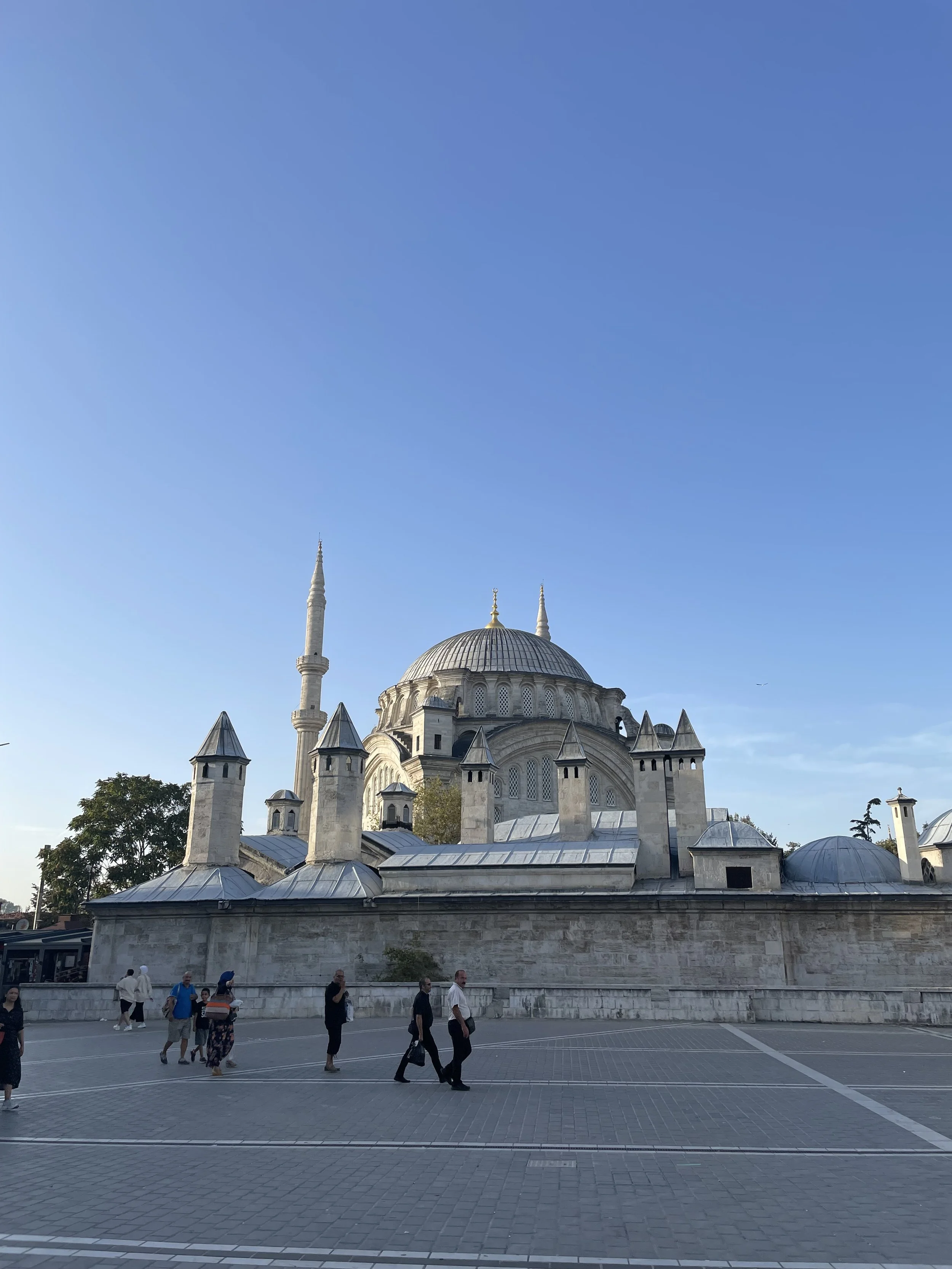
🕌 Nuruosmaniye Mosque
Completed in 1755, the Nuruosmaniye Mosque reflects a period when Ottoman architecture began incorporating European influences.
Unlike earlier mosques built in the classical Ottoman style, its sweeping curves and decorative details show strong Baroque inspiration. The large courtyard and dramatic entrance give it a grand presence beside the Grand Bazaar.
Standing here almost feels like arriving at a gateway to the market district.
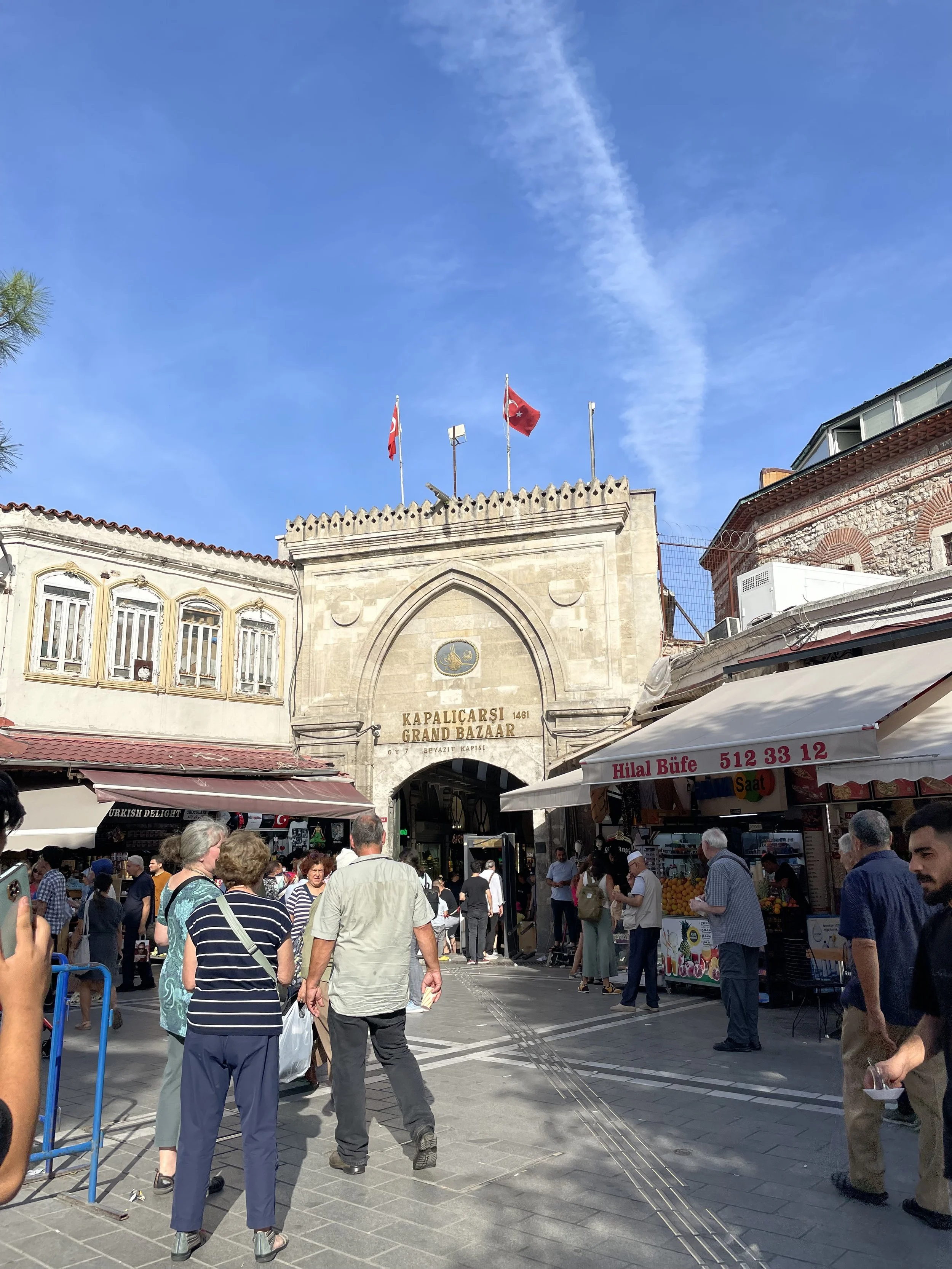
🛒 Grand Bazaar
Dating back to the 15th century, the Grand Bazaar grew into one of the largest covered markets in the world and an important trading centre of the Ottoman Empire.
I expected relentless sales pitches when we stepped inside. Instead, the atmosphere felt surprisingly relaxed.
Shopkeepers mostly let people browse in peace, and the maze of colourful stalls buzzed with conversation rather than pressure. Carpets, ceramics, jewellery, lanterns, and textiles spill from shop windows while visitors wander through the endless corridors.
It’s easy to lose track of time inside, and it felt like the perfect place to end the walk.
📸 Best Selfie Spots
• Hippodrome monuments
• Blue Mosque courtyard
• Hagia Sophia exterior
• Sirkeci Station façade
• Spice Bazaar stalls
• Rüstem Pasha Mosque tiles
💡 Pro Tips
• Start early to beat crowds at the Blue Mosque and Hagia Sophia
• Wear comfortable shoes for the cobblestone streets
• Carry water in warmer months
• Allow time to wander through the Grand Bazaar
🌿 More to See if You Have Time
• Beyoğlu & Istiklal Street
• Galata Tower
• Dolmabahçe Palace
• Balat & Fener neighbourhoods
Final Thoughts
Few cities allow you to walk through so many layers of history in a single afternoon. In just a few kilometres this route passes Roman monuments, Byzantine relics, Ottoman mosques, and lively markets that still feel very much alive today.
Istanbul doesn’t simply preserve its past. It carries it forward in the middle of everyday life.
Next Stop: Gallipoli
From the vibrant streets of Istanbul, our journey continued to Gallipoli, where the energy of the city gives way to one of the most poignant historical landscapes in the region.
