
Fez el-Bali - The Living Labyrinth
Step off the beaten path and into Fez el-Bali’s ancient heart. From towering palace gates and centuries-old medinas to hypnotic tanneries, bustling blacksmiths’ squares, and the colourful artistry of Art Naji, this guided walk is a whirlwind of sights, smells, and stories you’ll never forget.
Our day in Fez began with a pickup from the hotel and a local guide who seemed to know every alleyway by heart. First stop: the Fez Dar al-Makhzen or the Royal Palace or Fez. Visitors aren’t allowed inside, but the doors alone are worth the detour. Massive bronze gates framed by zellige tiles in every shade of blue and green were so striking that even the non-photographers in our group suddenly turned into influencers.
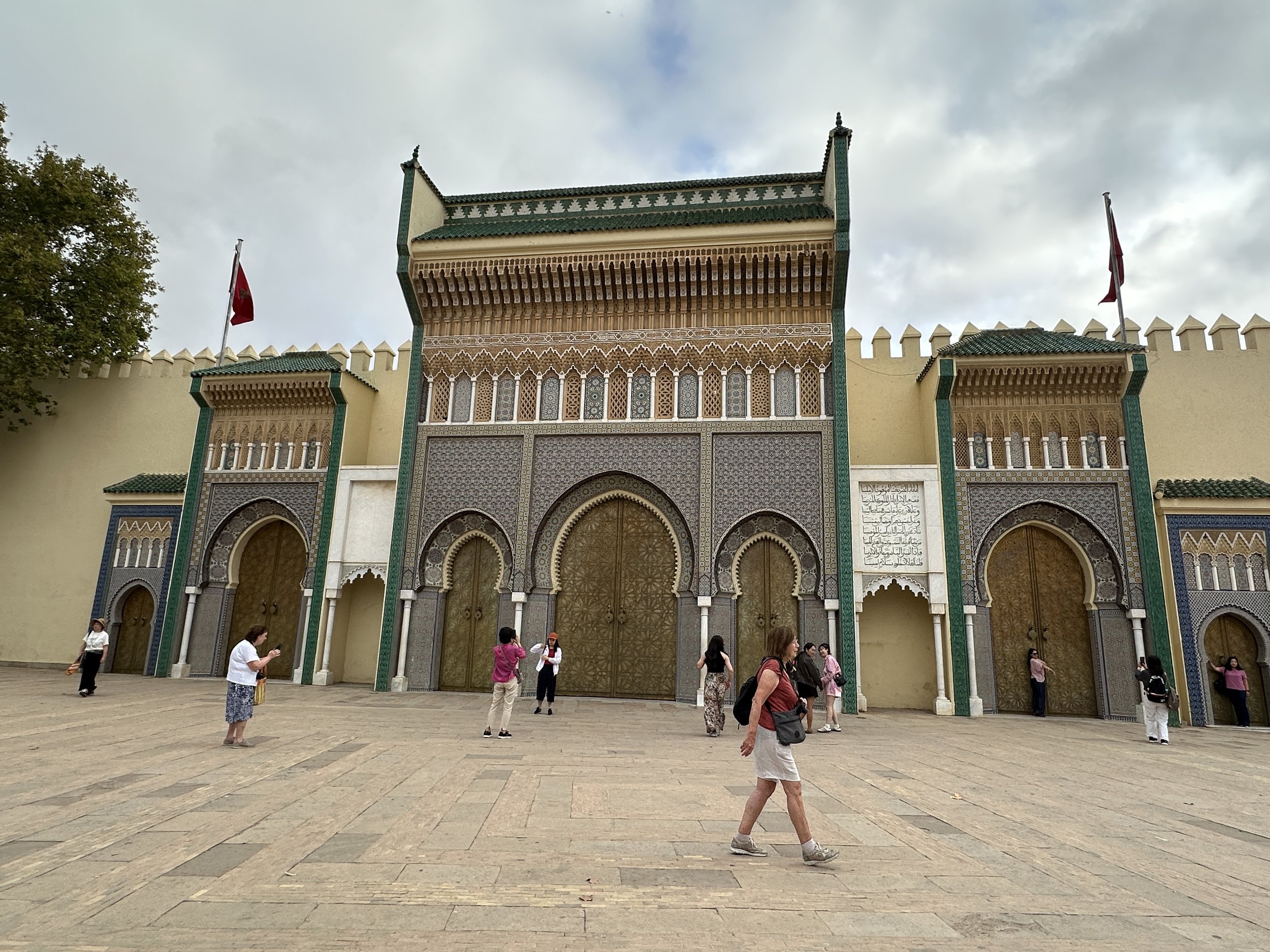
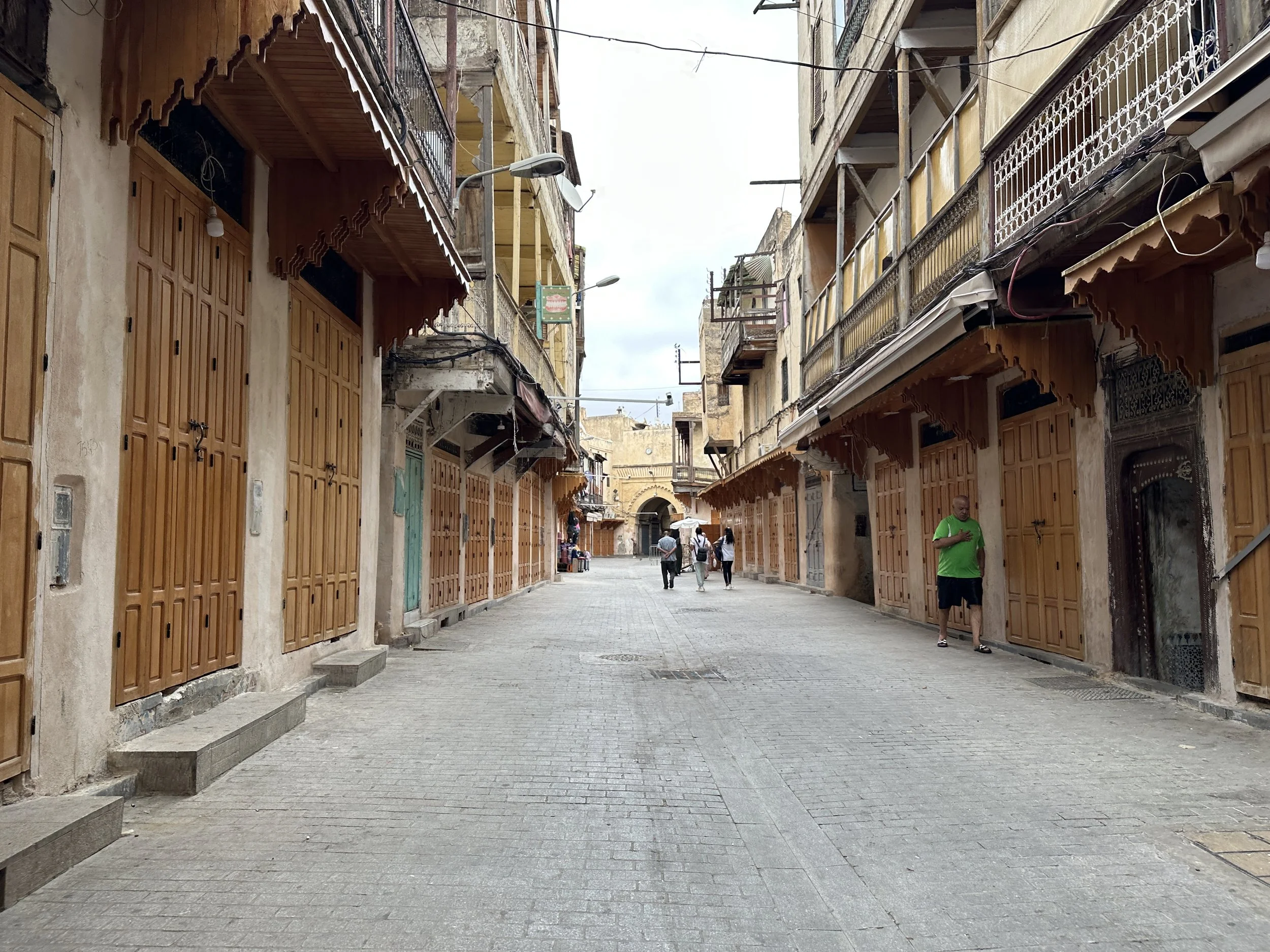
We followed a quiet street beside the palace, part of the Mellah, the old Jewish Quarter. Quieter and more elegant than the medina, the Mellah features wooden balconies and wider streets, a sharp contrast to the maze of Fez el-Bali. Hidden within are gems like the Ibn Danan Synagogue, a reminder of the city’s rich and layered past.
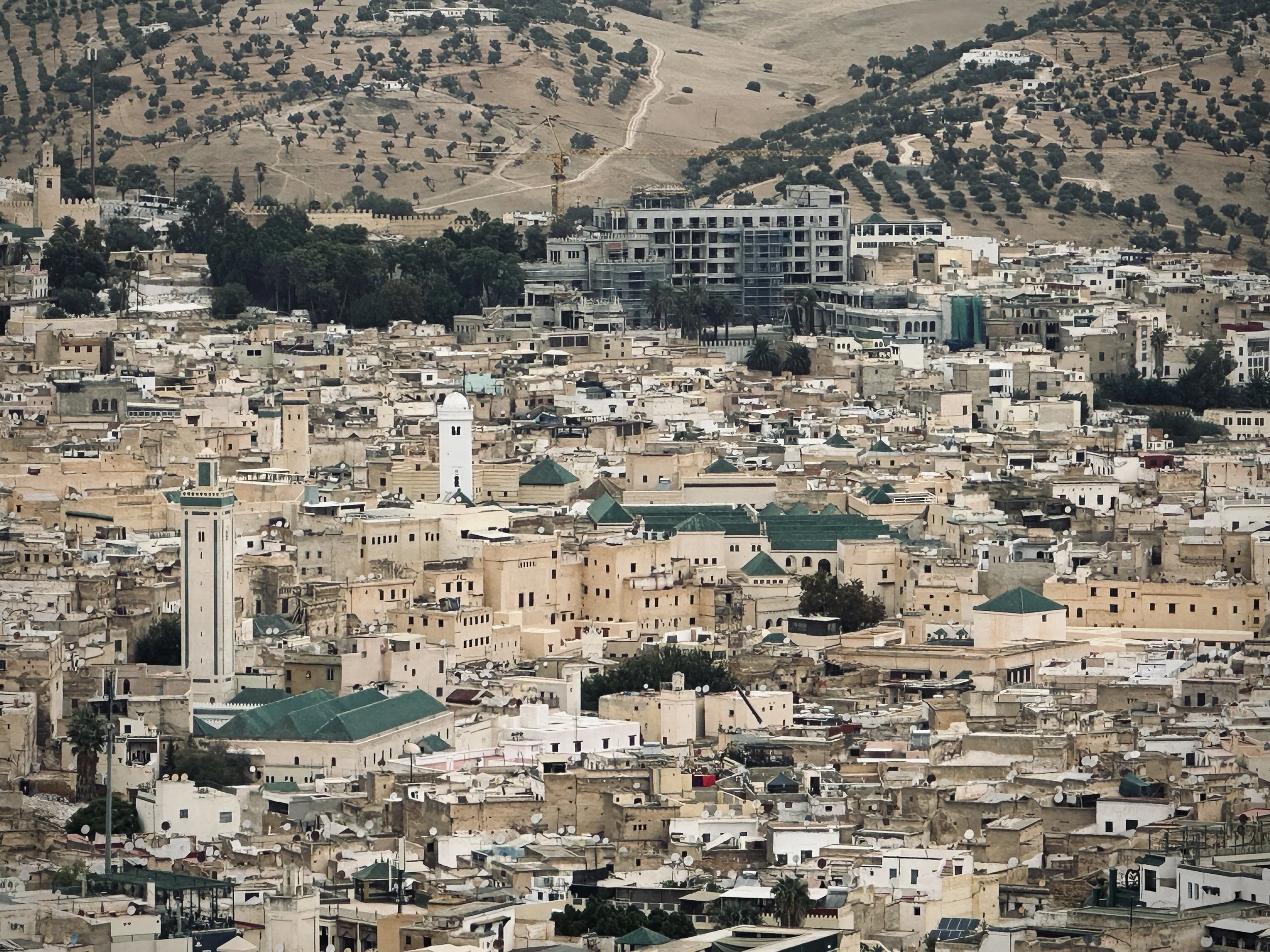
Just beyond Bab Semmarine, we climbed into the car and headed to Borj Sud, a 16th-century fortress perched high above the city. From its terrace, Fez stretched endlessly with honey-coloured rooftops, minarets, and winding lanes fading into the hills. Our guide pointed out how Fez el-Bali and Fez el-Jdid meet, tracing the city’s slow expansion through the centuries.
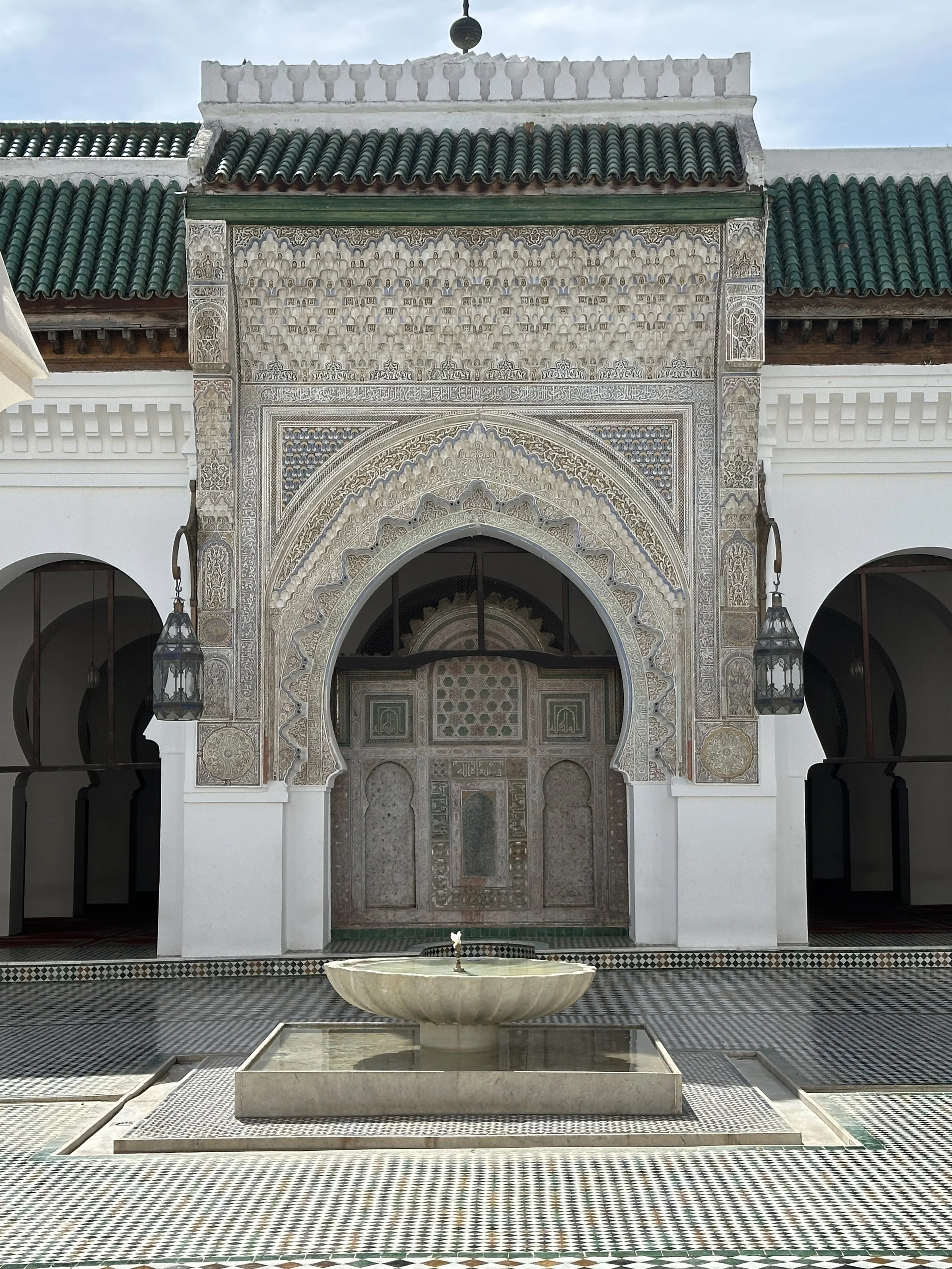
Back in Fez el-Bali, we continued on foot through alleys so narrow only pedestrians and donkeys could pass. We reached the Al-Qarawiyyin Mosque and University, founded in 859 and recognised as the world’s oldest continually operating university. Non-Muslims aren’t allowed inside, but glimpsing the whitewashed courtyards, green-tiled roofs, and intricate carvings was enough to feel the weight of history pressing in.
A few steps away stood the Al-Attarine Madrasa, a 14th-century school rich with carved cedar ceilings, zellige tiles, and delicate stucco work. Its courtyard, with a marble fountain at the centre, offered a rare pocket of calm amidst the medina’s buzz. It was easy to imagine centuries of students debating and dreaming within these walls.
From there, we plunged into the souks, a blur of colour, scent, and sound. Narrow lanes wound past stalls overflowing with spices, leather, brass lamps, and textiles. Vendors called out in rhythmic chants, blacksmiths hammered metal in dim workshops, and cats prowled between baskets of olives. The sharp scent of mint battled the tanneries’ intensity as we reached the Chouara Tanneries, where men stood waist-deep in vats of colour, turning raw hides into supple leather using techniques unchanged for centuries.
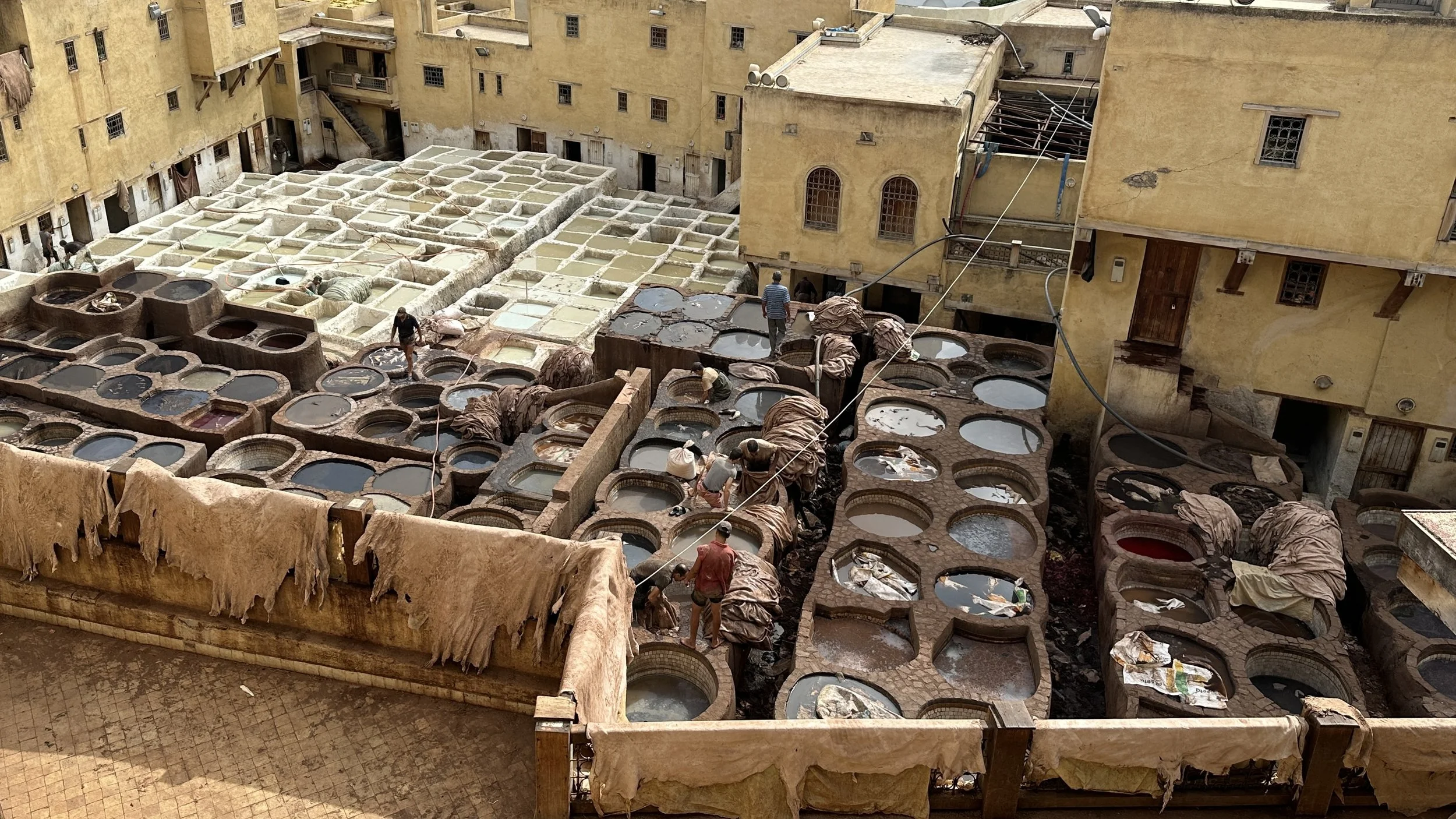
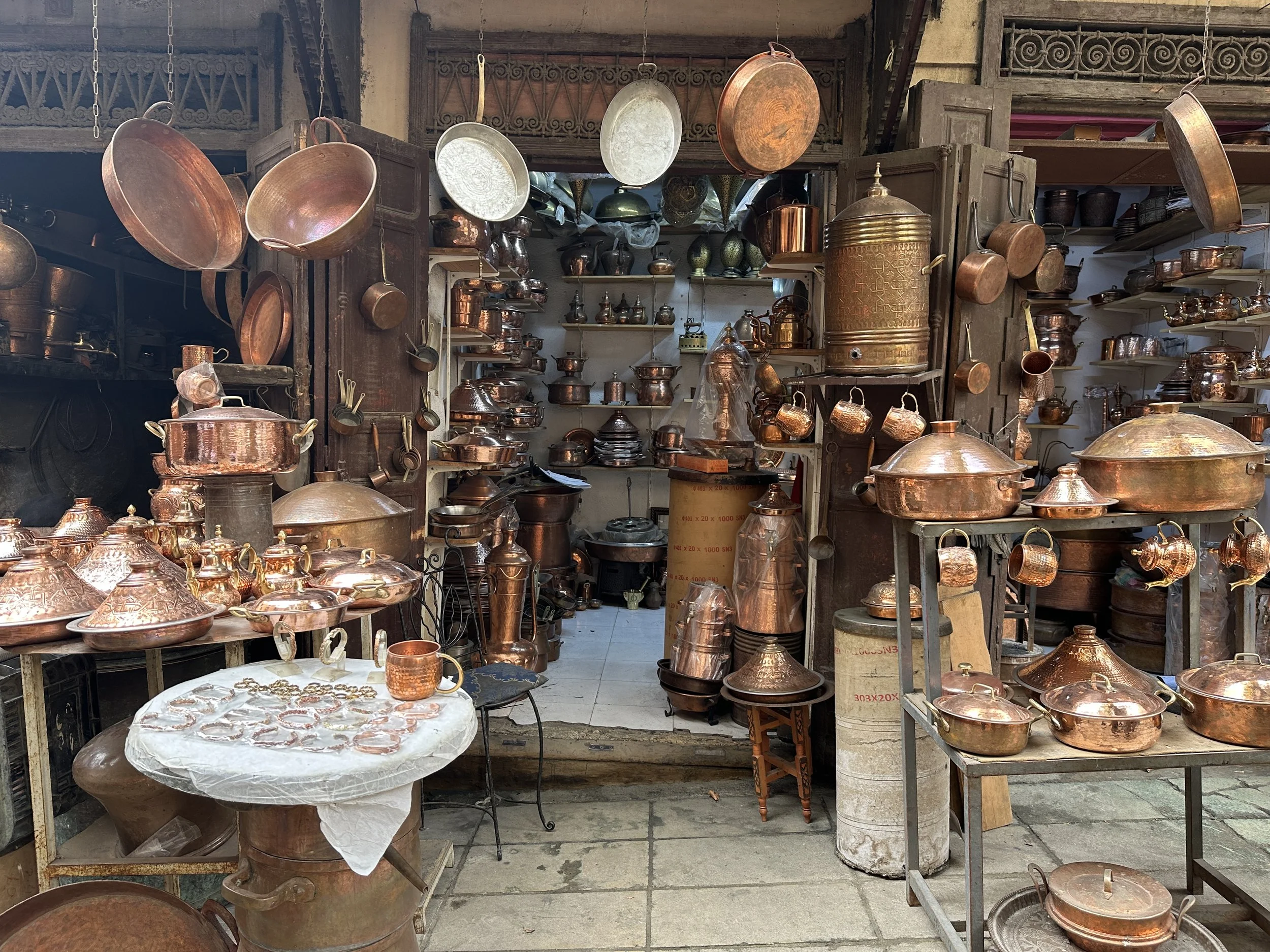
Further along, we entered a small square alive with the clanging rhythm of blacksmiths forging trays, lamps, and ornaments. Nearby, dyers stirred steaming pots, coaxing wool into jewel-toned threads. You could stand there for hours and still notice something new with every step, a living crafts scene at its most authentic.
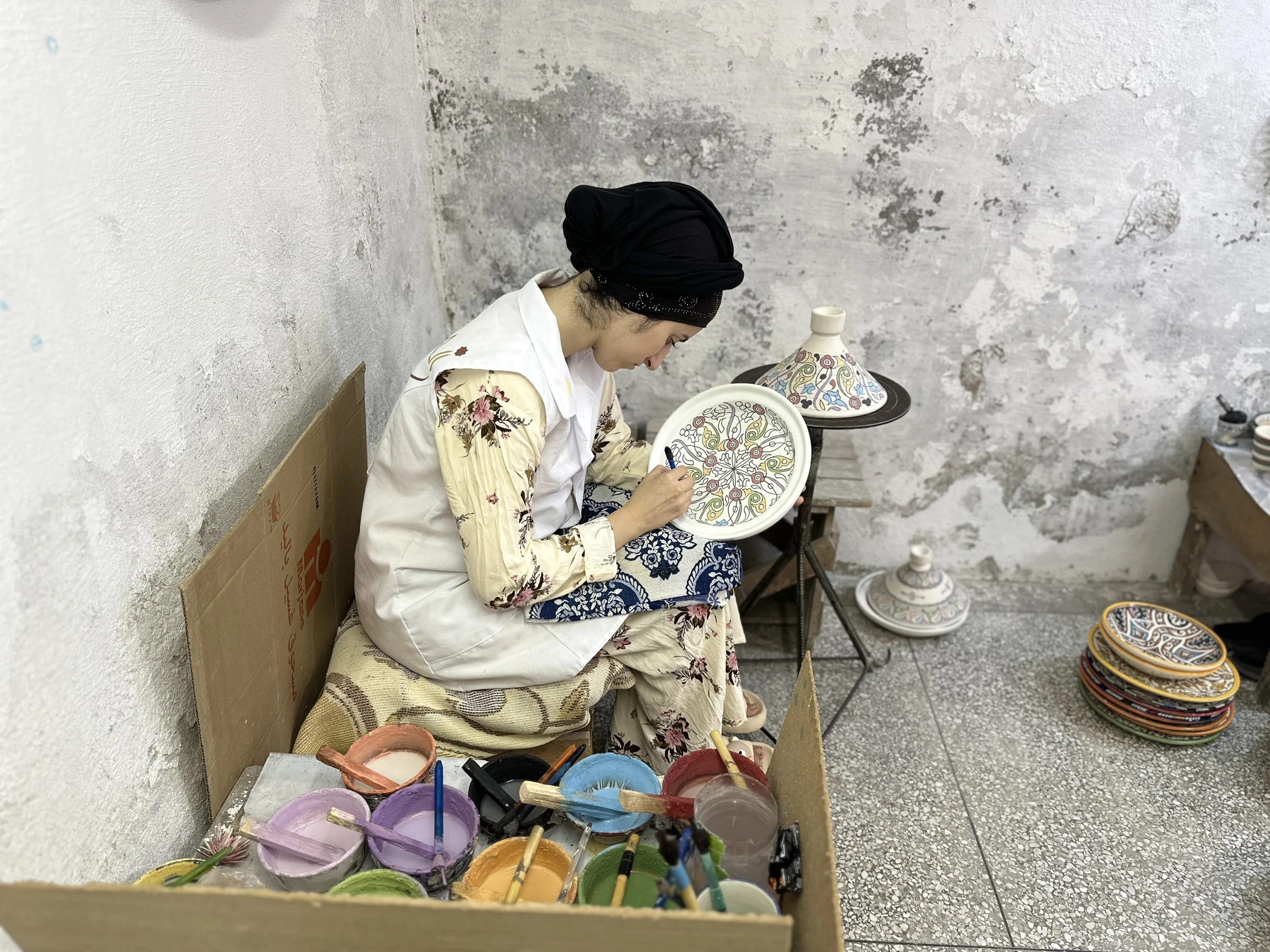
Our final stop was Art Naji, a family-run workshop specialising in pottery and zellige mosaics. Artisans shaped clay into tagines and bowls while others pieced together tiles into intricate geometric patterns. It was a calmer space after the medina’s frenzy, a place to watch craftsmanship that still defines Fez’s soul.
By the time we returned to the hotel, the city had left its mark in the colours behind our eyelids, the scents clinging to our clothes, and the stories echoing in every alleyway. From the grandeur of the palace to the hypnotic chaos of the souks, the tanneries, blacksmiths, and artisans, Fez isn’t just seen. It is felt deeply, vividly, and all at once.
