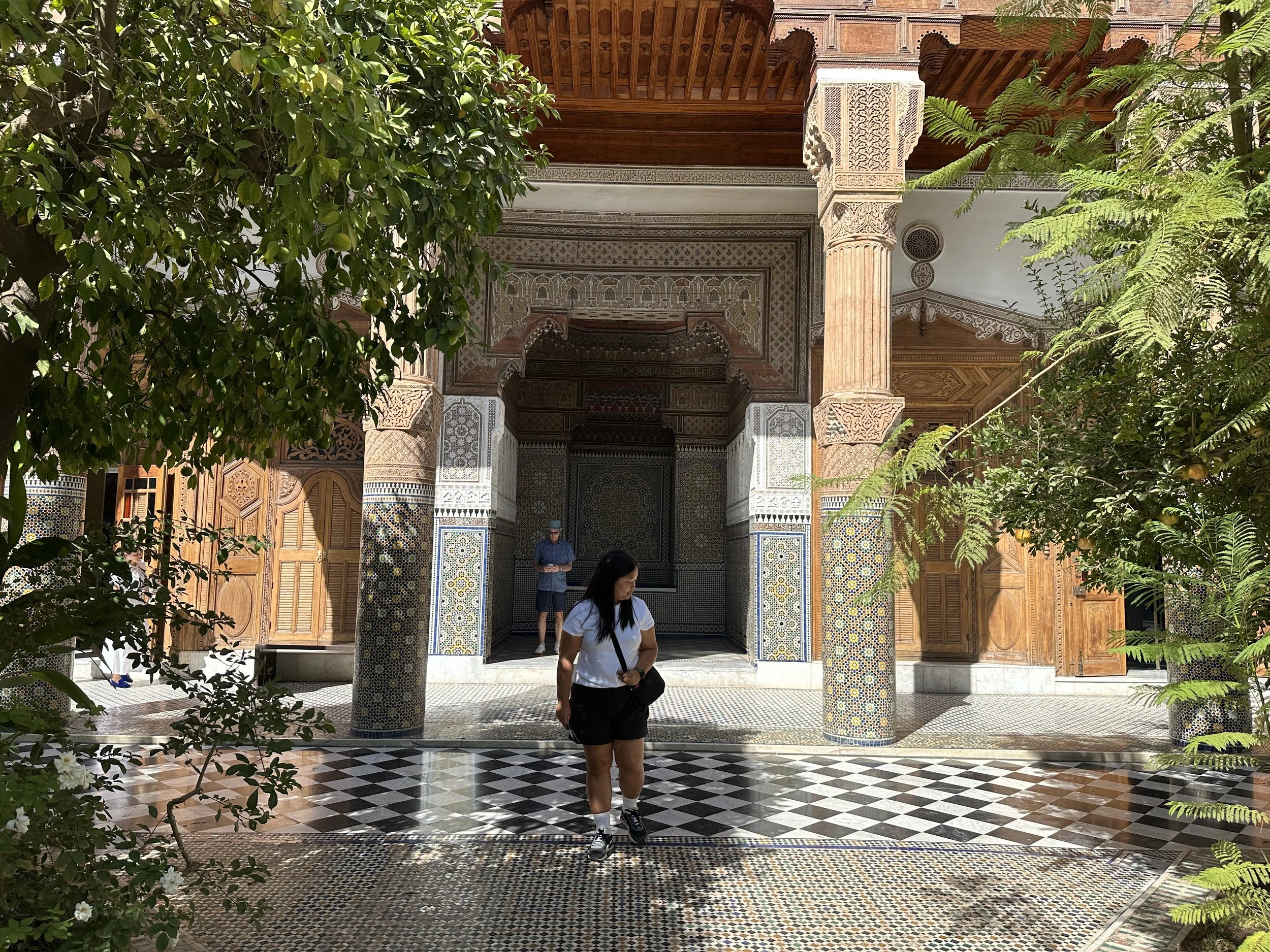
Dar El Bacha — Where the Story Circles Back
Dar El Bacha was built in 1910 for Thami El Glaoui, the Pasha of Marrakech, often called the Lord of the Atlas. The palace was designed to impress, with carved cedar ceilings, patterned zellij tiles, and courtyards where sunlight moves like water. Today it houses the Museum of Confluences and one of the most beautiful cafés in the world, Bacha Coffee.
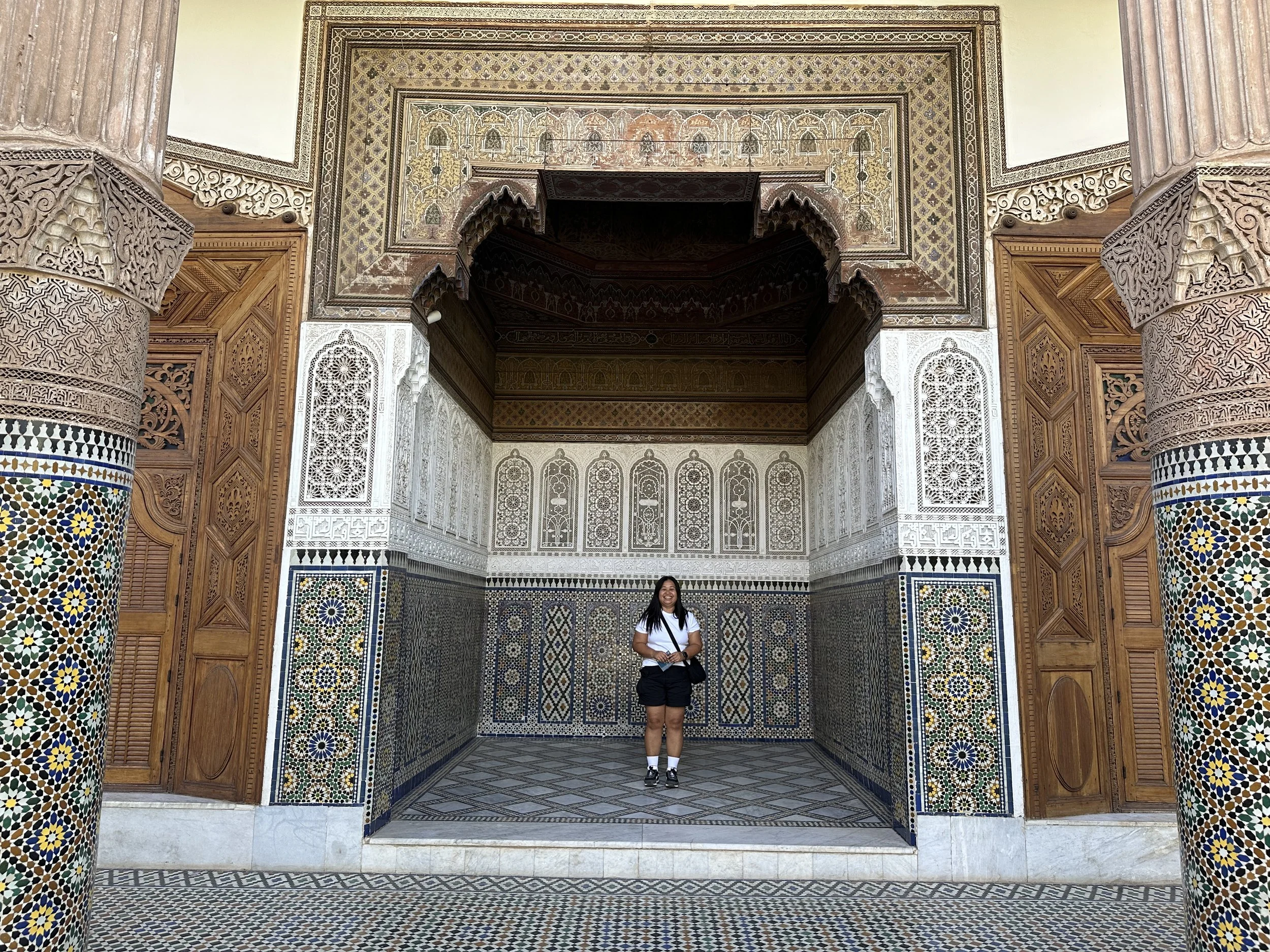
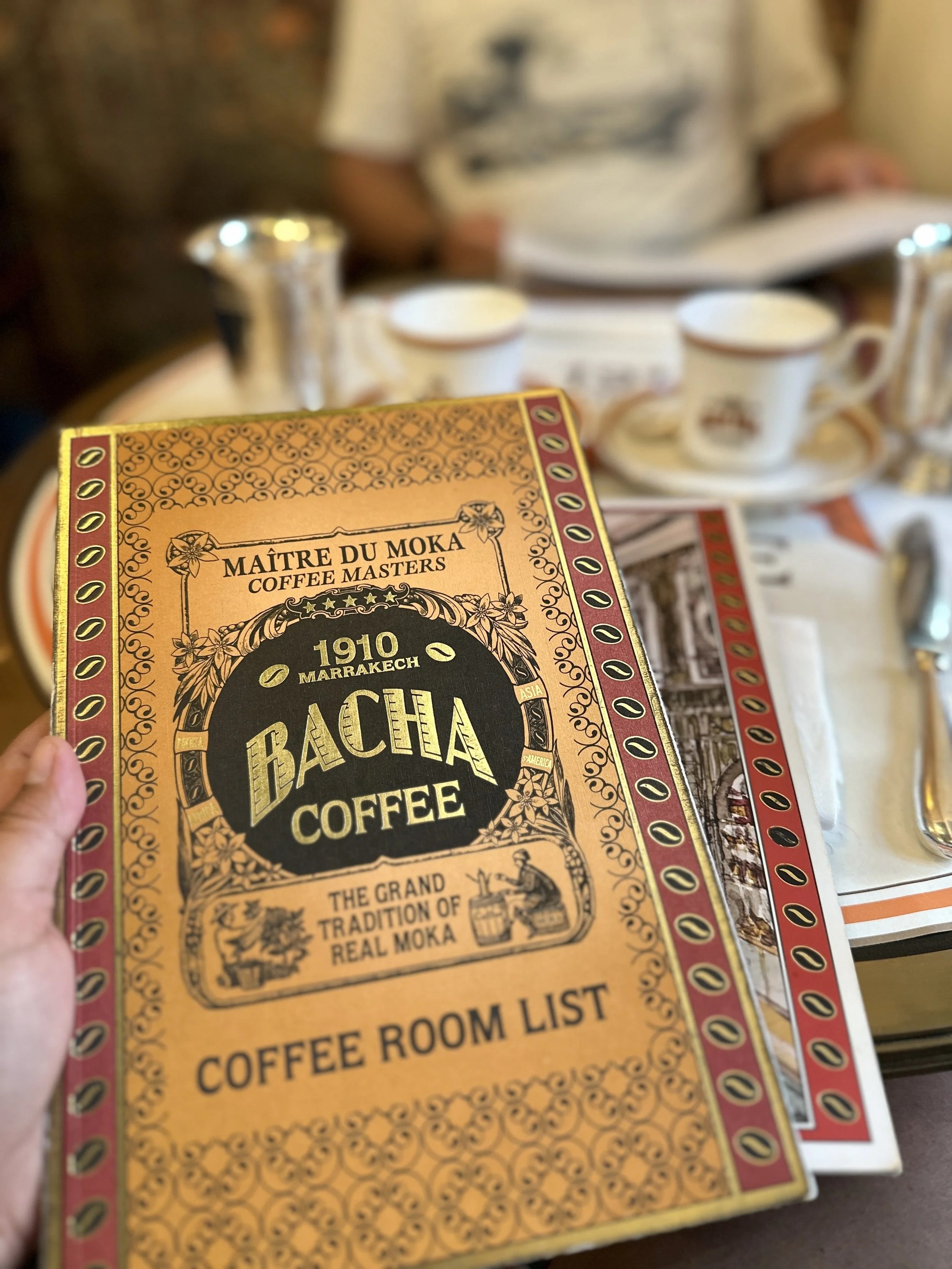
Bacha Coffee first opened here in 1910, serving fine Arabica blends to the Pasha’s guests, from diplomats and artists to royals and writers who passed through Marrakech during its cosmopolitan golden years. A century later, the brand was revived, spreading from this very palace to cafés across the world. Sitting here means sipping from the same story that began in these walls.
After a disappointing walking tour, stepping through the gates of Dar El Bacha felt like hitting reset. The noise and dust of the city dropped away, replaced by calm and cool shade. Our entry ticket gave access to both the museum and the café, a perfect chance to see a traditional Moroccan dar without the crowds of Bahia.
At the café door, every table was taken. The staff handed us a buzzer and asked us to wait, which turned out to be a gift. We wandered through the palace instead, past fountains, carved doors, and mosaics glowing under the afternoon light. By the time the buzzer finally hummed, we were already enchanted.
They led us to a table in a side salon off the main courtyard. The room was calm and elegant, more like a private drawing room than a café. Patterned walls, old portraits, and soft yellow lamps gave it a quiet warmth. The tables were a little too close for comfort, one polite lean and we would have been part of our neighbour’s conversation. I felt slightly underdressed in my shorts and tee while everyone else looked ready for a photoshoot, but the coffee made up for it.
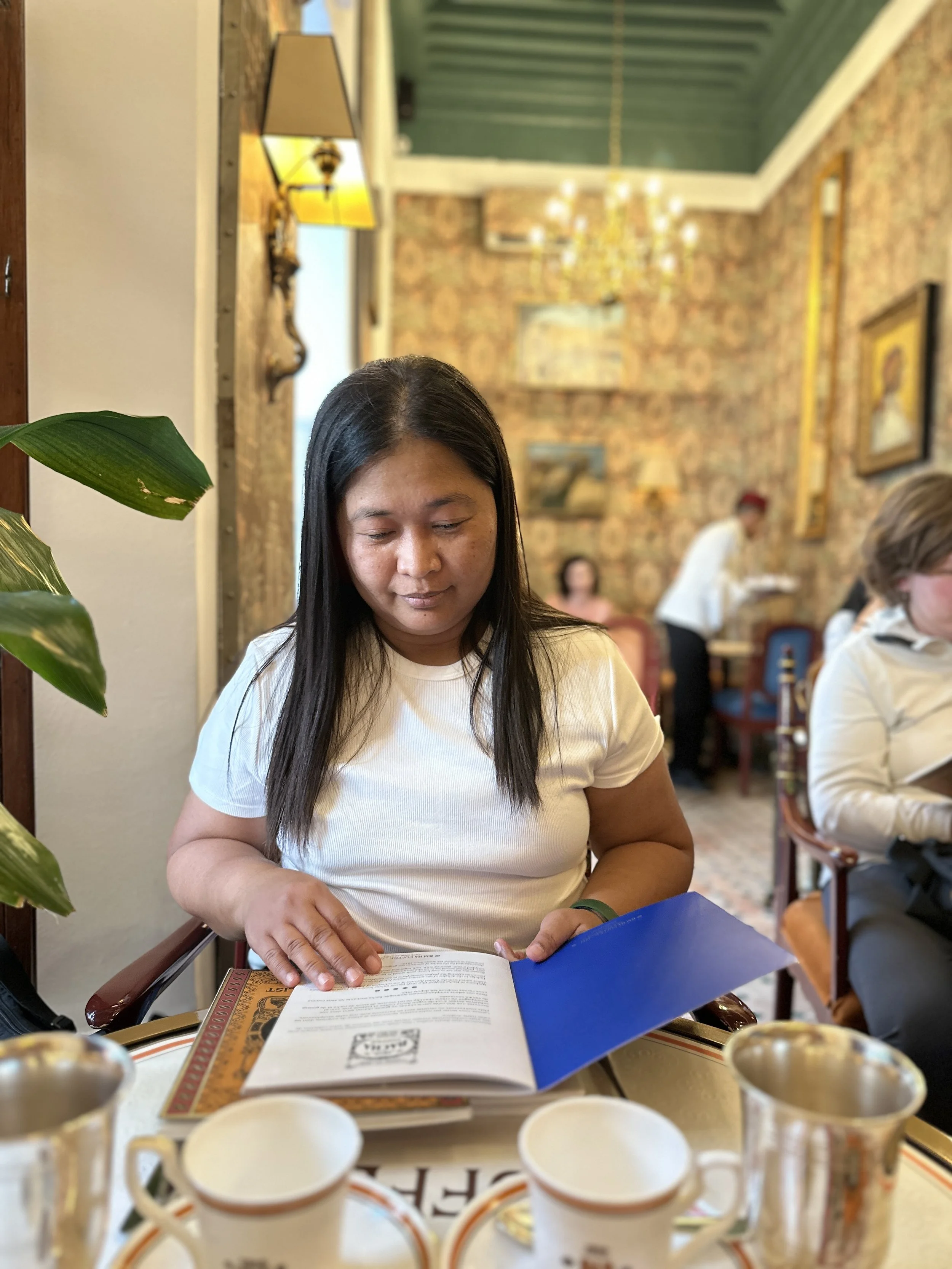
The menu arrived like a book, thick pages, gold lettering, and what felt like hundreds of coffee choices from around the world. Our server, dressed in white with a red fez, was gracious and assured. He nodded at our order and said with a smile that it was best served cold.
The coffee came with ceremony: silver pots, fine china, and the scent of roasted beans and caramel. The Café Carmelo Morning Glacé was smooth and cool, the tartelette au citron bright, the Café Chocolate Hill rich enough to silence conversation. Everything was deliberate, elegant, almost theatrical.
In person, it was even more beautiful than any photo. Light shifting across tiles, the quiet hum of voices, the scent of coffee drifting through the courtyard. Sitting there, cup in hand, I felt that familiar rush of gratitude, the privilege of being able to travel, to see and touch history, to sit where stories once happened.
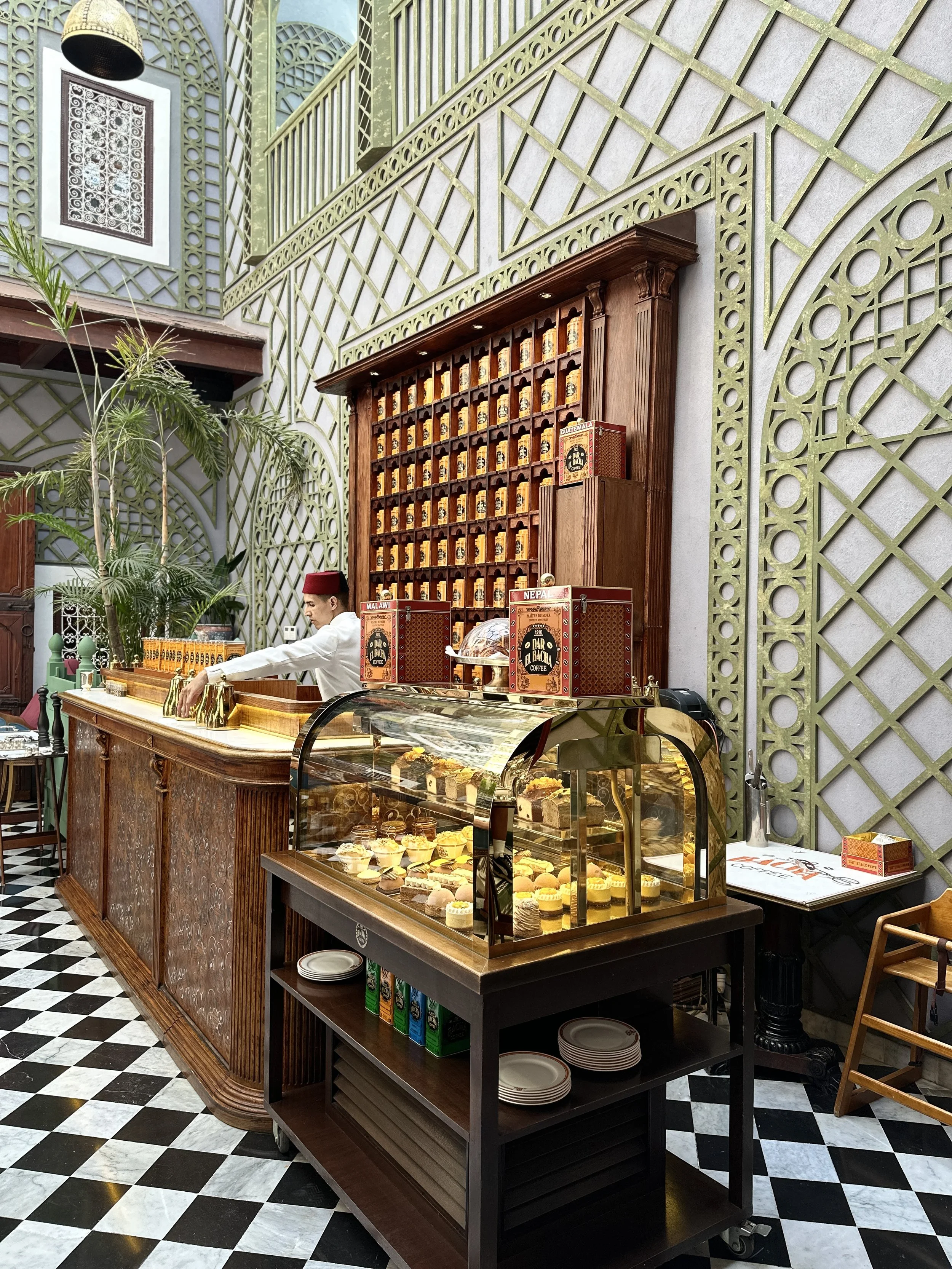
I had been to the Bacha Coffee branches in Singapore and Changi long before this. They looked the part, Moroccan tiles, brass pots, the same golden glow, but this was the heart of it. The original. The one that carried a century of stories in its walls. Being here made those other visits feel like preludes to this moment, as if the journey had quietly led me back to where it all began.
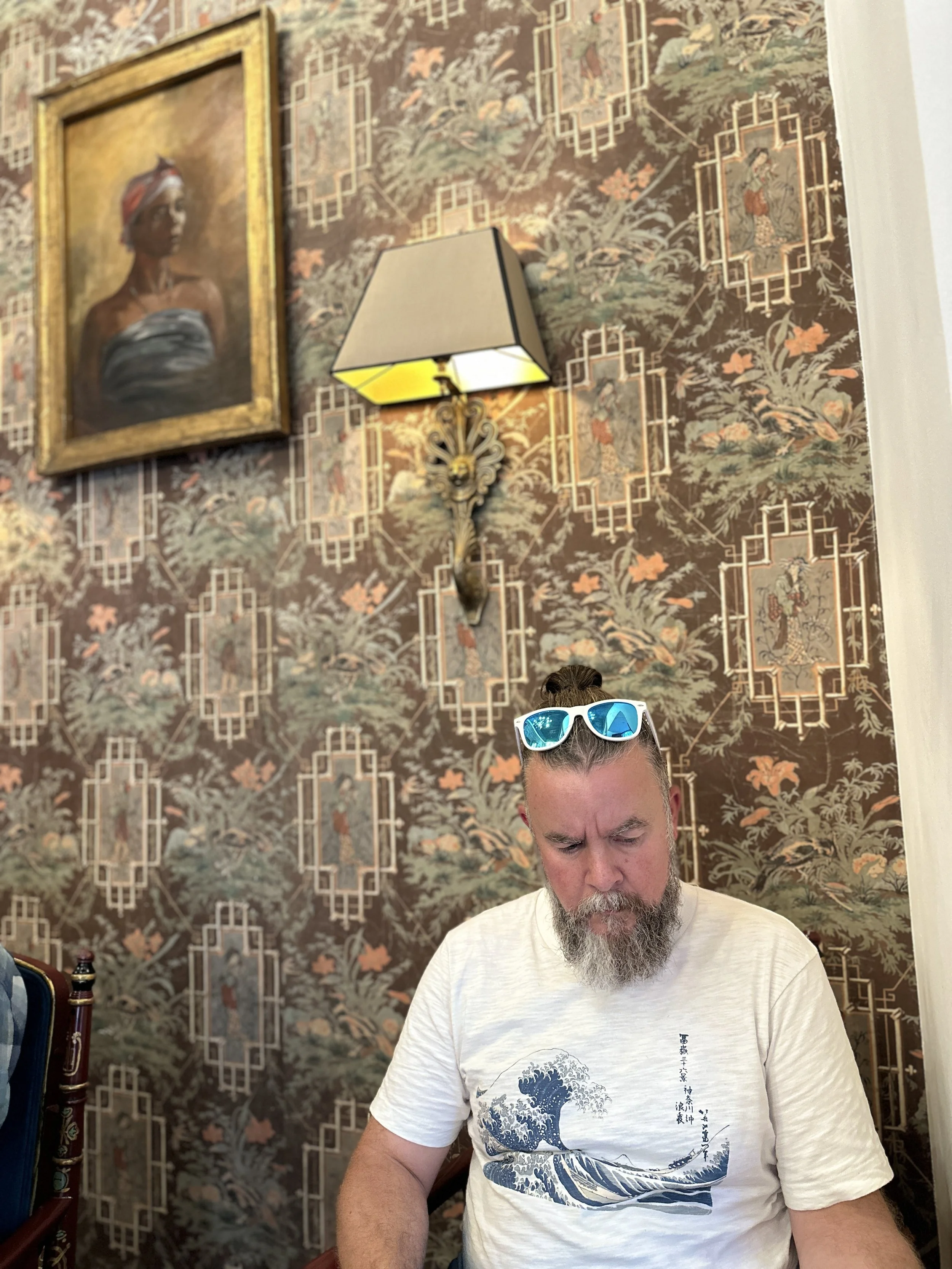
That coffee was our last taste of Morocco. After days of spice, dust, and colour, Dar El Bacha felt like the country’s calm heartbeat. It was the right ending, quiet and rich, a moment to breathe before we left the maze behind.
From Lisbon’s tiled alleys to Marrakech’s shaded courtyards, this journey had been a map of old worlds meeting new. Standing in Dar El Bacha, coffee in hand, it felt complete. The stories, the architecture, the echoes of Al-Andalus — all of it converged here, quiet and golden. Travel doesn’t always end where it begins, but sometimes it circles back in spirit. This one did.