
The Painted Mosque of Tetovo
We left Skopje early, the city pulling away behind us as the foothills tightened around the road. Tetovo arrived fast. The Painted Mosque, Xhamia e Pashës, sat close to the main street, bright even under soft morning light. It was our first stop, a quick break before pushing deeper toward the mountains.
The courtyard felt like a pocket of still air. Trees. A fountain for ablutions. The kind of calm you only get when a place has been tended for centuries. The mosque was first built in 1438. Two sisters from Tetovo funded it, which was unusual for the fifteenth century. Time was not gentle. The structure was heavily damaged across the years and then rebuilt in 1833 by Abdurrahman Pasha and his family. That nineteenth century rebuild shaped the look you see today, complete with Baroque influenced details and the now famous painted walls.
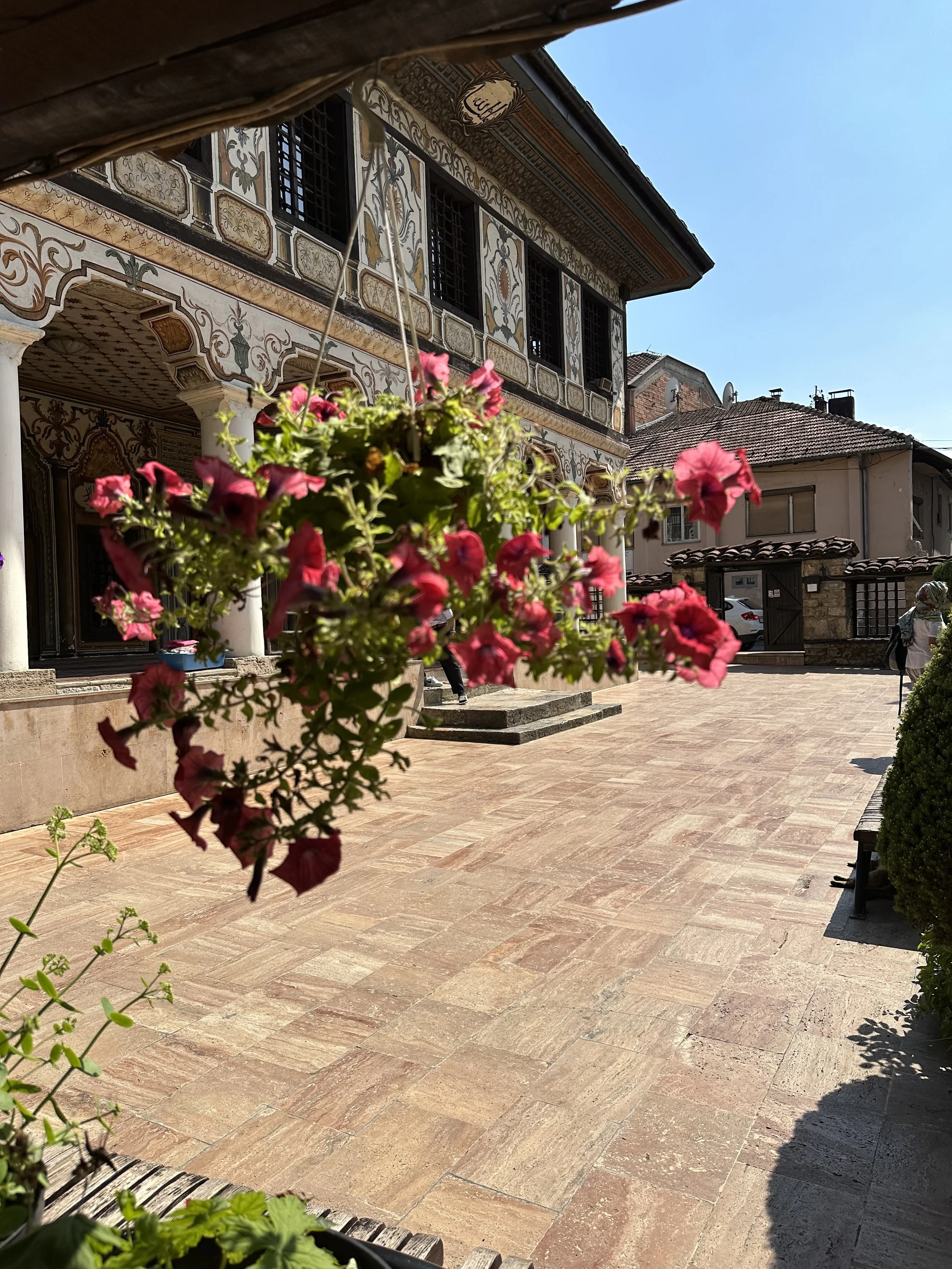
We had just over an hour to explore. Enough time to wander the courtyard and step inside the prayer hall between the scheduled prayers. I was grateful, as always, that the mosque keeps spare hijabs for visitors. It makes it easier to enter respectfully without fuss.
Inside, the decoration covered almost everything. Ottoman motifs. Balkan folk patterns. European Baroque curves. The blend is rare in this region. You see landscapes, stylised flowers, geometric work, and scenes that feel lifted from imagination. A wooden balcony called a mahfil hangs over the prayer hall. The windows are large for a fifteenth century layout, most likely a result of the nineteenth century rebuild. The minaret is slim and tall, a familiar shape in this part of the Balkans.
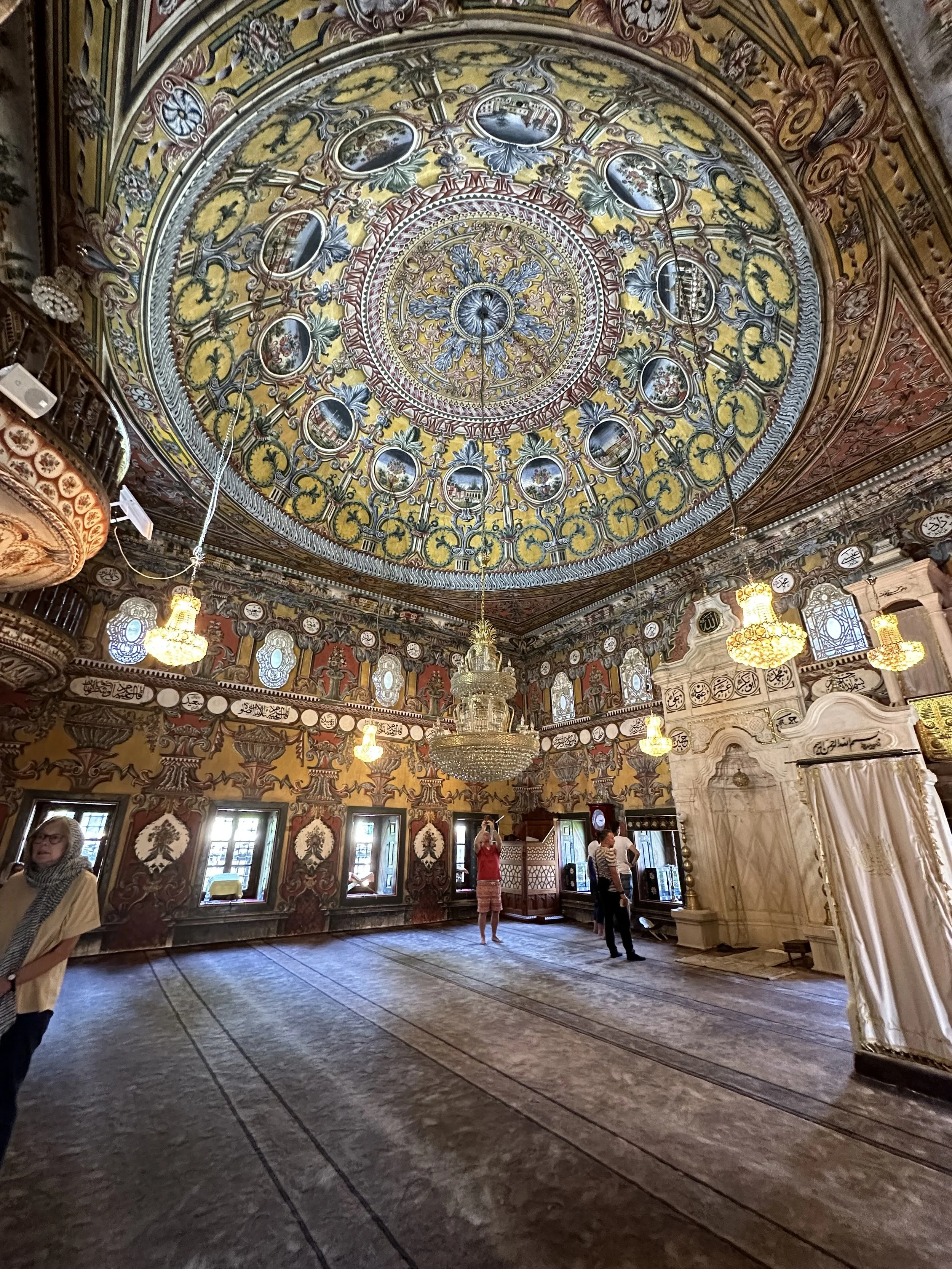
As we moved through the interior, something shifted. This was the most beautiful mosque I have seen. The colours, the patterns, the quiet. I had to stop myself more than once from whispering it out loud. I kept catching the words on my tongue, saying how beautiful it is, again and again, like the space demanded a soft voice. It felt instinctive, almost automatic, the kind of reaction you only get when a place hits you deeper than expected.
The exterior uses tempera paint on plaster, which is unusual for Ottoman religious architecture. Most mosques rely on tiles or carving. Here, colour becomes the entire identity. There is a mural of Mecca painted as a landscape with trees and sky. That is not standard religious art.
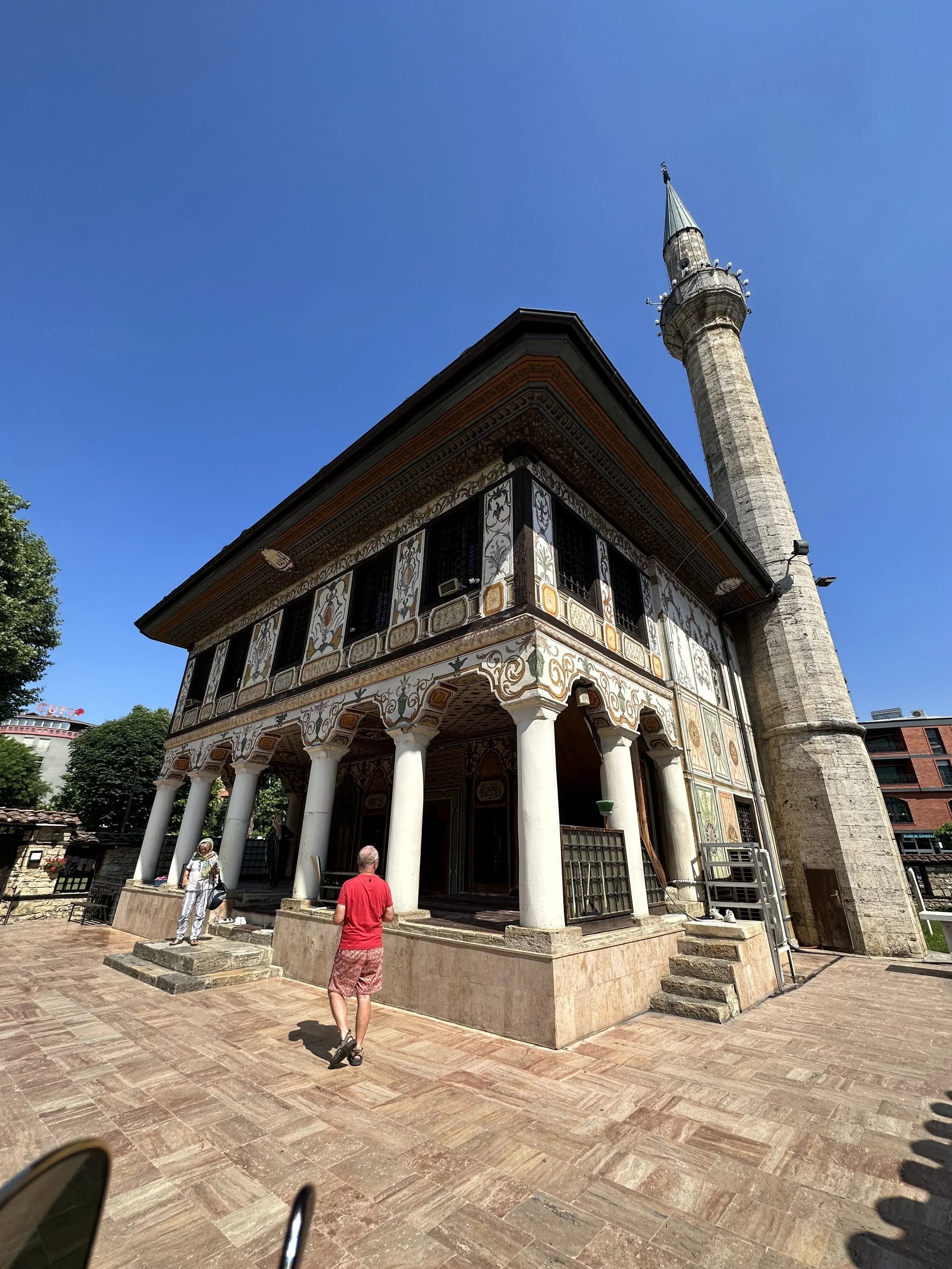
Local stories say the painters used natural dyes from Skopje markets. I cannot confirm this. Another story claims the original patron sisters wanted the mosque to feel like a garden. I cannot confirm that either. What you can confirm is the impact. The whole place looks like someone handed an Ottoman architect a full paintbox and gave them total creative autonomy.
After an hour the mountains called again. We stepped back onto the road, colours still clinging to us, and carried on toward the next valley. The stop was short, but the mosque did exactly what the best places do. It surprised us, shifted our mood, and set the tone for the journey ahead.
We rolled out of Tetovo with the colours still fresh in our minds. The road bent toward the highlands, the air cooling as the peaks rose around us. The mosque stayed with me, bright behind the eyelids long after we left the valley. Then the hills opened, the landscape shifted, and the blue of Lake Ohrid began to pull us forward. The next chapter waited by the water.
