
Skopje, A Walk Through Old Stone and New Stories
Skopje arrived at the end of a long travel day. Prizren in the morning. Big Pine Trail. Matka Canyon. A slow bus into a city shaped by Ottoman quarters, earthquakes, and sharp new monuments. Our hotel, Hotel De Koka, sat in the Old Bazaar. The building felt like a page from the communist era, all straight lines and worn carpets. We dropped our bags and explored the bazaar on foot. Busy lanes. Lamps. Metalwork. Shops that felt almost like souks. We had dinner at one of the liveliest restaurants in the bazaar and laughed when we realised half of our tour group had picked the same place. Different tables. Same idea. Later we found a quiet bar beside the hotel and ended the night with a slow drink.
The next morning our local guide met us in Sheshi Skënderbeu. The loop began here. A walk through Ottoman courtyards, fortress walls, earthquake scars, and modern statues that crowd the riverfront. Skopje reveals itself in layers. The walk folds them together.
⏱️ Skopje Walking Route
Route: Sheshi Skënderbeu > Kapan Han > Old Bazaar > Bakery stop > Čifte Hammam > Murat Pasha Mosque > Mustafa Pasha Mosque > Skopje Fortress Kale > views of the City Stadium and the Millennium Cross > Church of Saint Dimitrija > Daut Pasha Hammam > Philip II Square > Stone Bridge > Macedonia Square > Mother Teresa birthplace marker > Porta Macedonia > Mother Teresa Memorial House > back to the square
Style: Loop, steady uphill to the fortress, simple descent
Good for: First time visitors, history lovers, culture and architecture, half day walks
🏛️ Sheshi Skënderbeu, 00:00–00:10
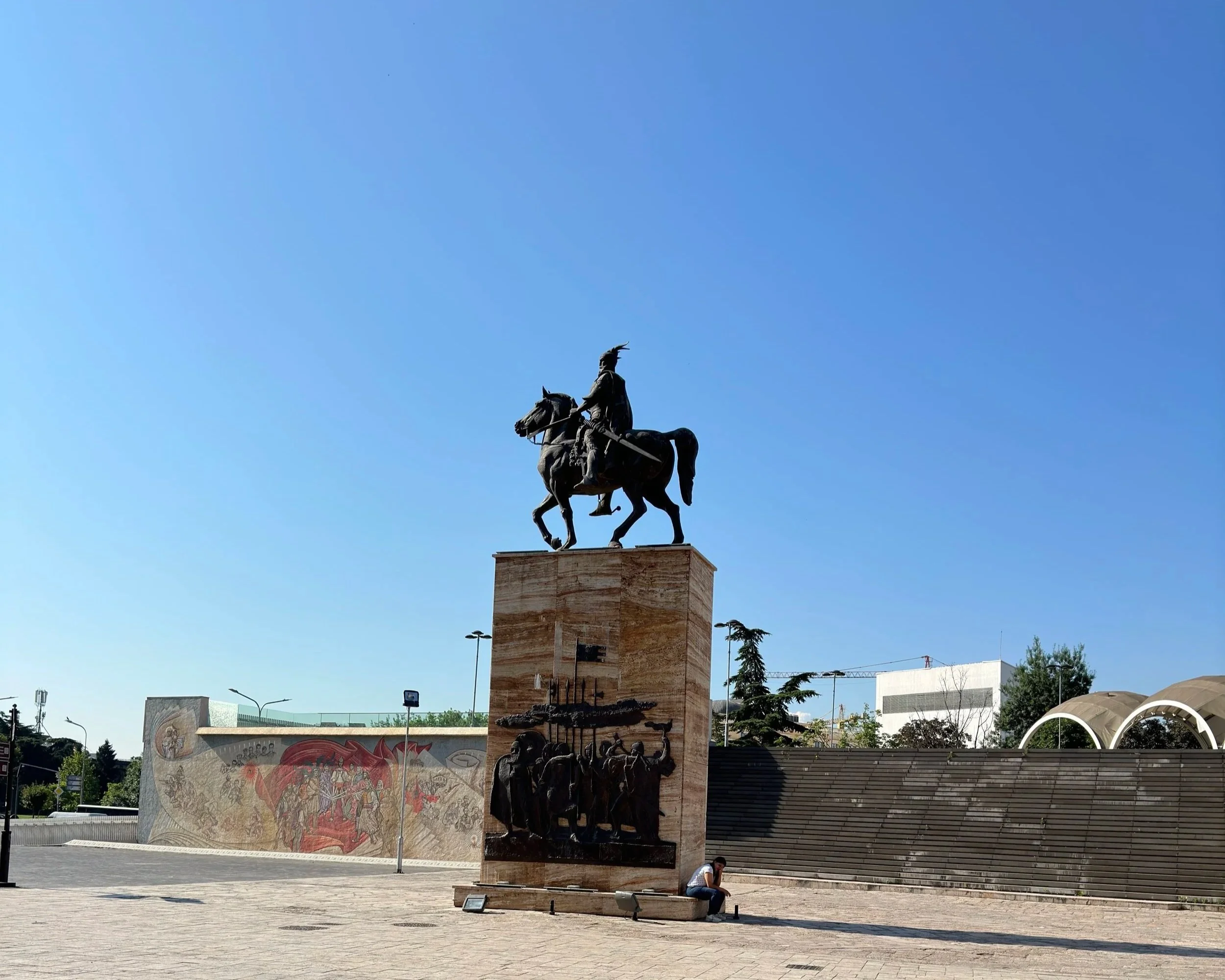
The loop began in Sheshi Skënderbeu, the plaza named after Albania’s national hero. The square links the Old Bazaar to the modern quarters. Ottoman roofs on one side. Socialist buildings on the other. It sets the tone for Skopje, a city that never sits in one era for long. It was a practical meeting point. No crowd. No rush. The guide gave us a short run through of Skopje’s history. Roman roots. Centuries of Ottoman rule. The 1963 earthquake that flattened most of the city. A rebuild shaped by Yugoslav architects. Then the 2014 project that filled the riverfront with new statues. You feel the shifts as he speaks.
🚶 Walk to Kapan Han: 2 minutes
🏨 Kapan Han, 00:12–00:20
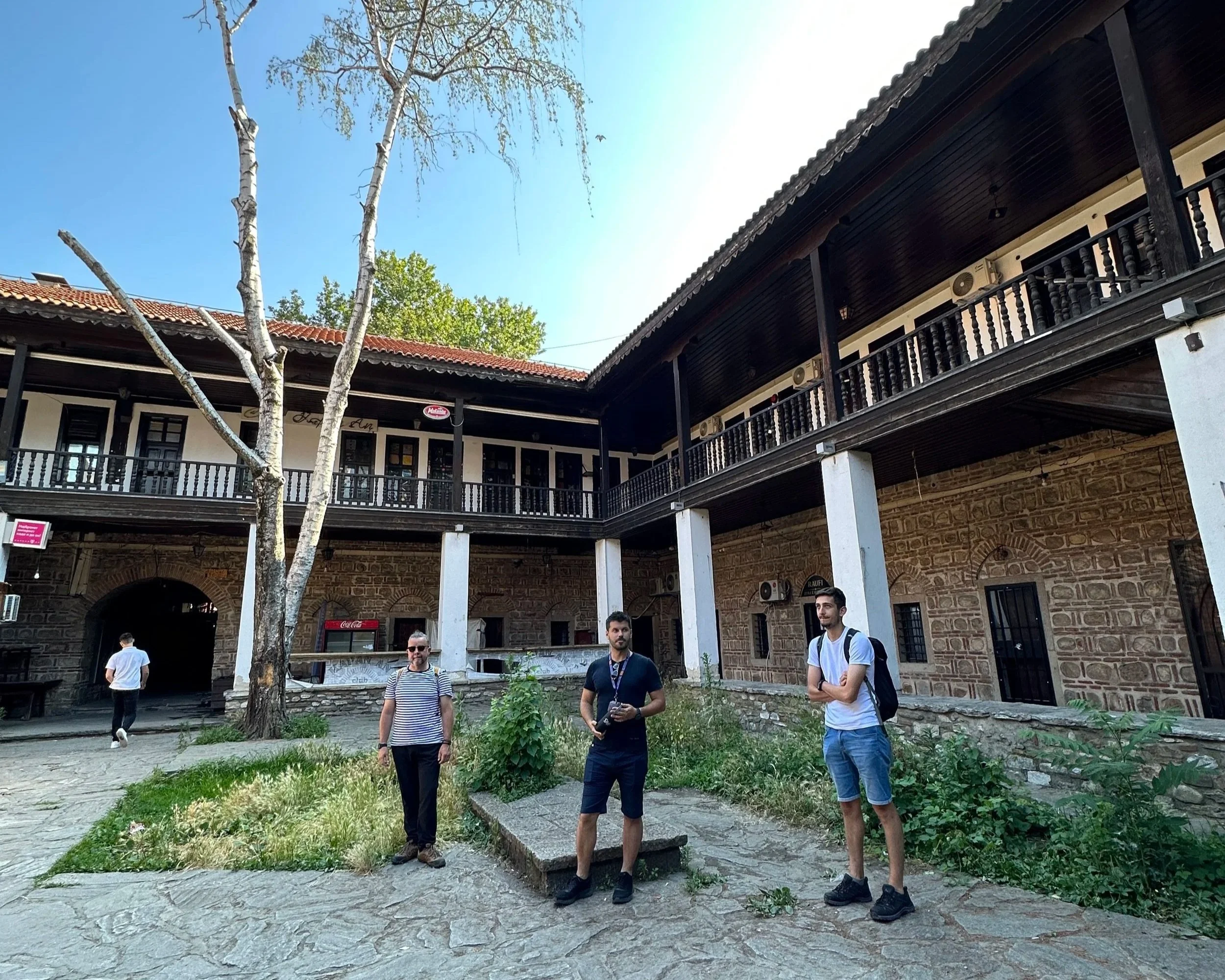
Kapan Han sits inside the Old Bazaar, a fifteenth century Ottoman caravanserai. Traders once slept in the upper rooms while goods stayed below. Stone walls. Arched gates. A small courtyard that now holds cafés and restaurants. The guide explained that hans once anchored trade routes across the Balkans. This one survives as a quiet pocket in the busiest part of the bazaar. It still feels like a stopover, even now.
🚶 Walk to the Bakery: 2 minutes
🥖 Old Bazaar Bakery Stop, 00:22–00:27
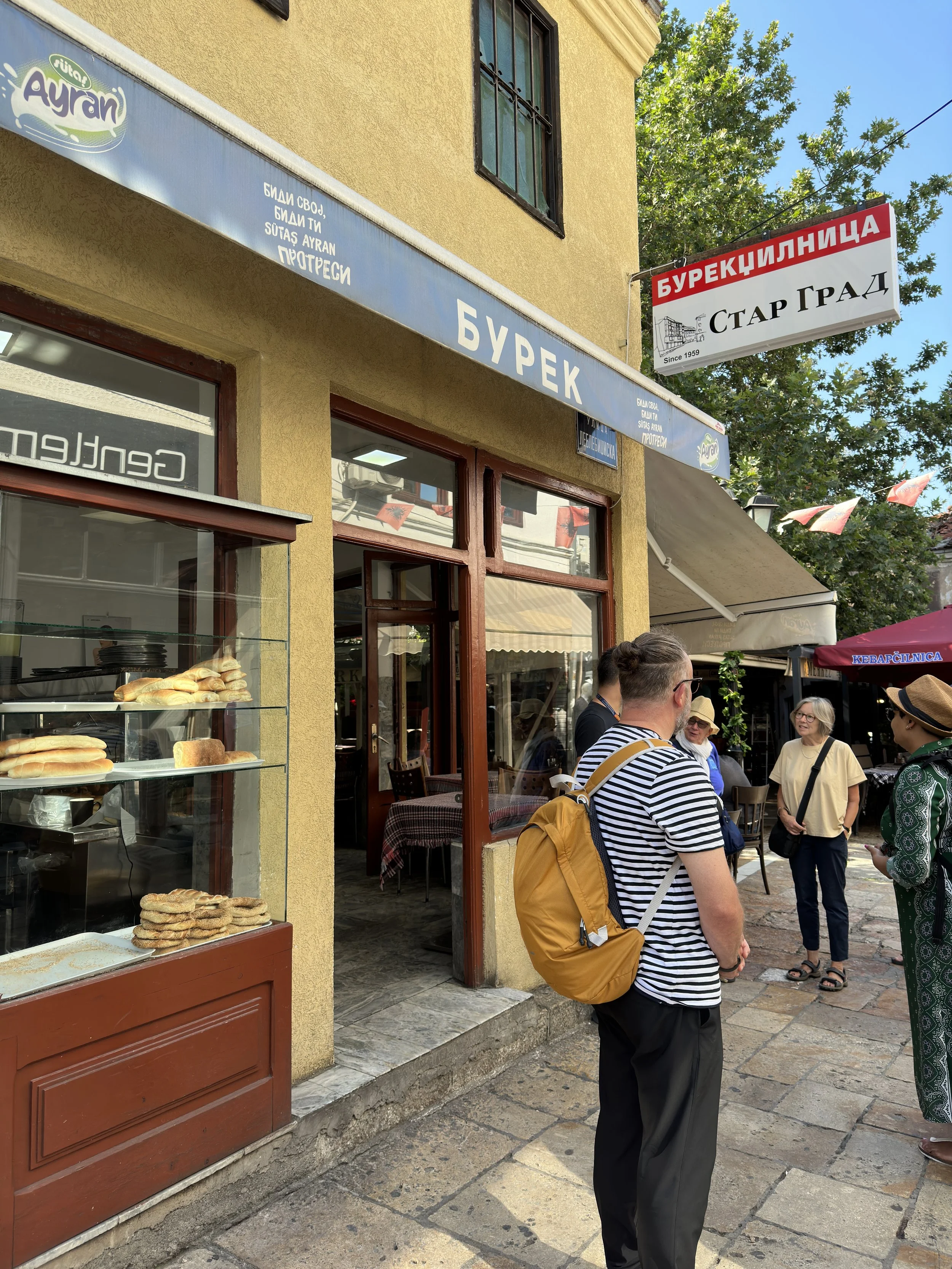
We paused outside a bakery. The guide used it to explain daily breads. Round loaves. Flat baked crusts. Soft white rolls eaten with cheese or meat. He spoke about how Ottoman influences shaped food in Skopje. Bread is at the centre of that story. We did not go inside. The smell carried the point well enough.
🚶 Walk to Čifte Hammam: 2 minutes
🛁 Čifte Hammam, Чифте Амам, 00:29–00:39
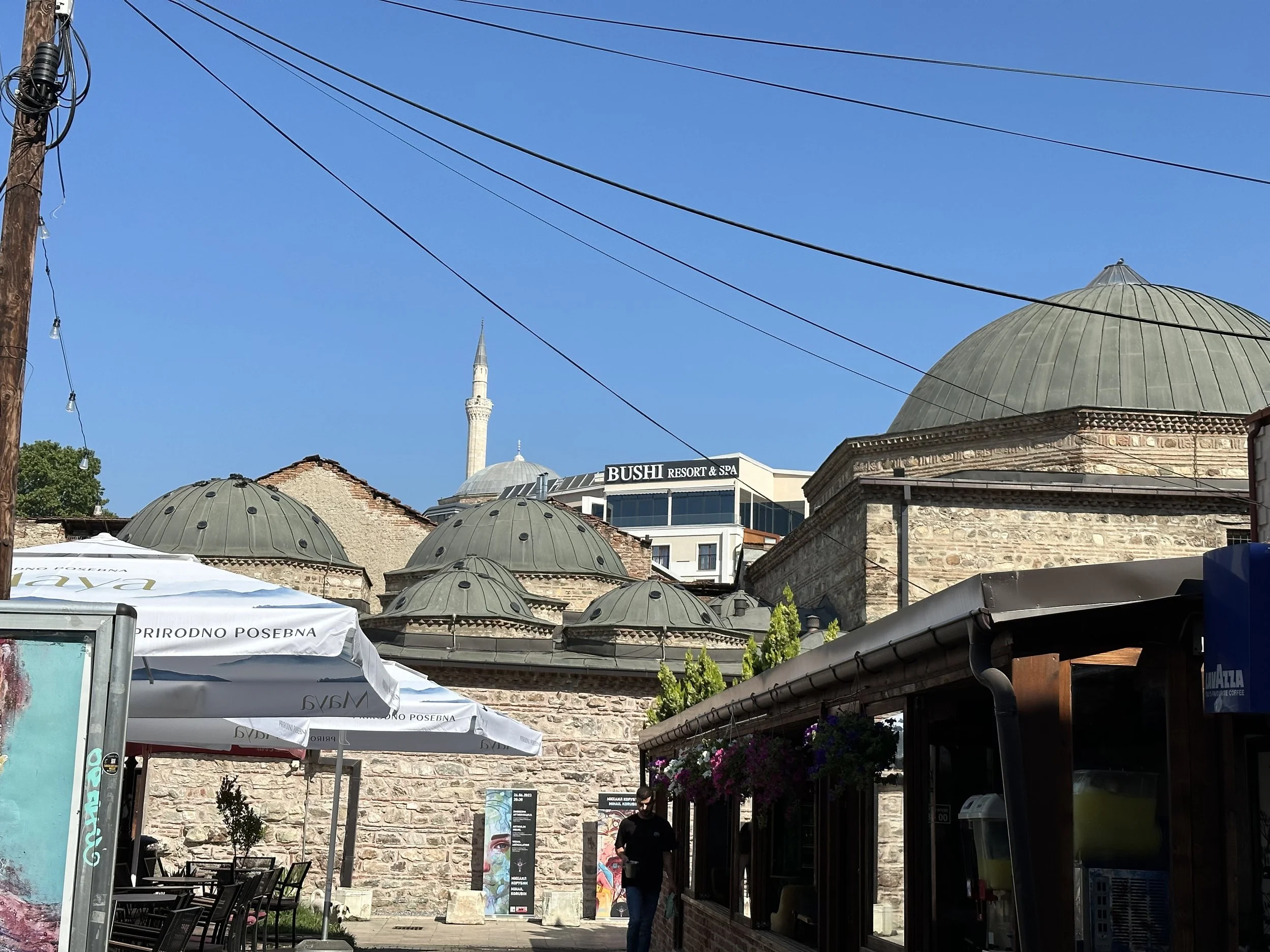
Čifte Hammam dates to the fifteenth century. Two separate bathing halls once served men and women, linked by a central space. You recognise it by the domes with small glass skylights. Ottoman baths were more than bathing houses. They were social spaces. Places for rest, gossip, and ritual. The guide told us how Skopje’s hammams once shaped daily life. Many closed in the modern era. This one survives as an art gallery. Even from the outside you feel the weight of the stone and its long memory.
🚶 Walk to Murat Pasha Mosque: 2 minutes
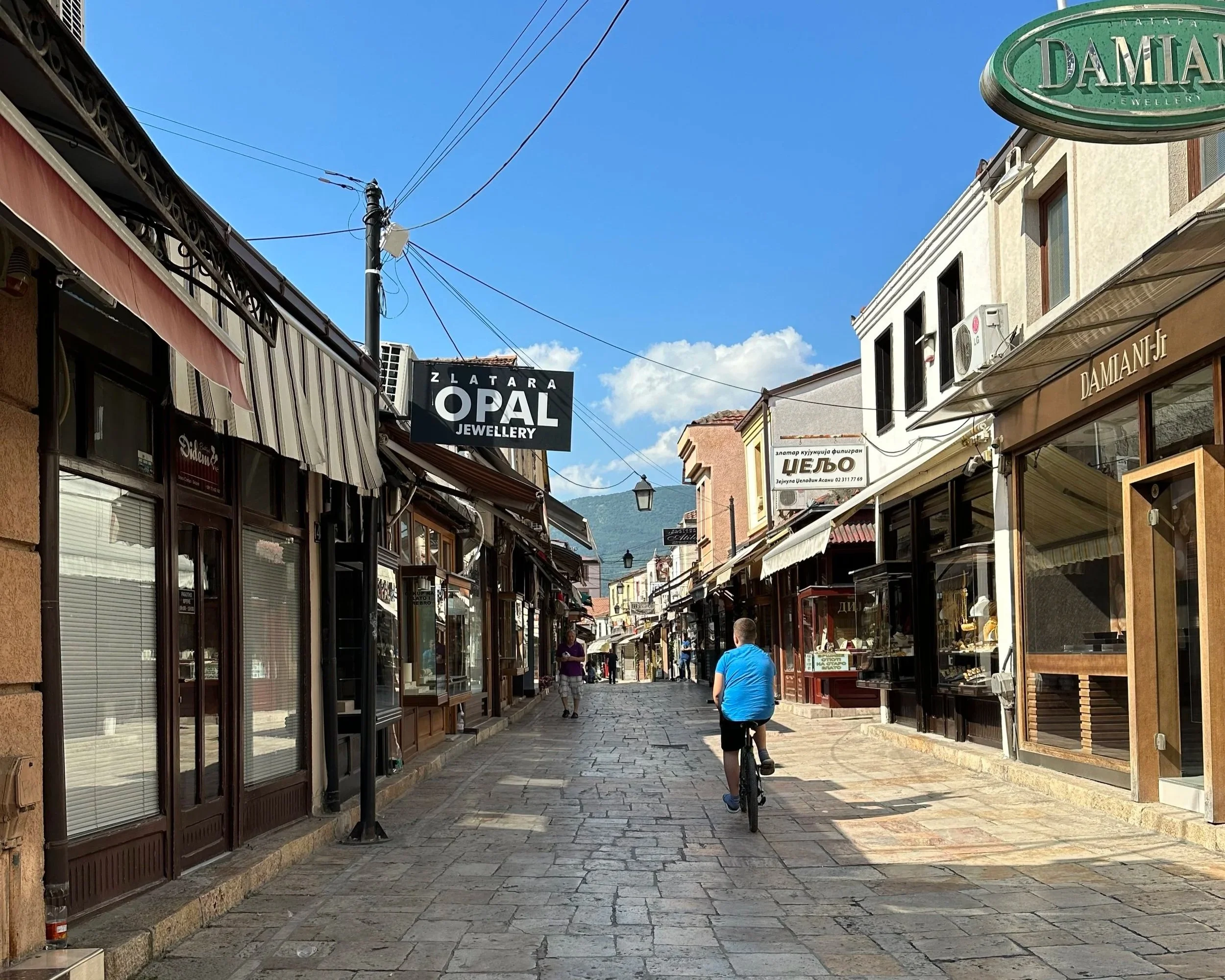
Gold and Silver Alley, 00:41–00:46
The bazaar narrows into alleys lined with gold, silver, and filigree workshops. Filigree is the fine silver wirework that Skopje is known for. The shops glitter in the light. We walked past Murat Pasha Mosque, a seventeenth century mosque rebuilt after fires. It sits quietly in the bazaar. Locals step in and out. Its presence is calm and steady. It marks the middle of the old quarter.
🚶 Walk uphill to Mustafa Pasha Mosque: 7 minutes, gentle climb
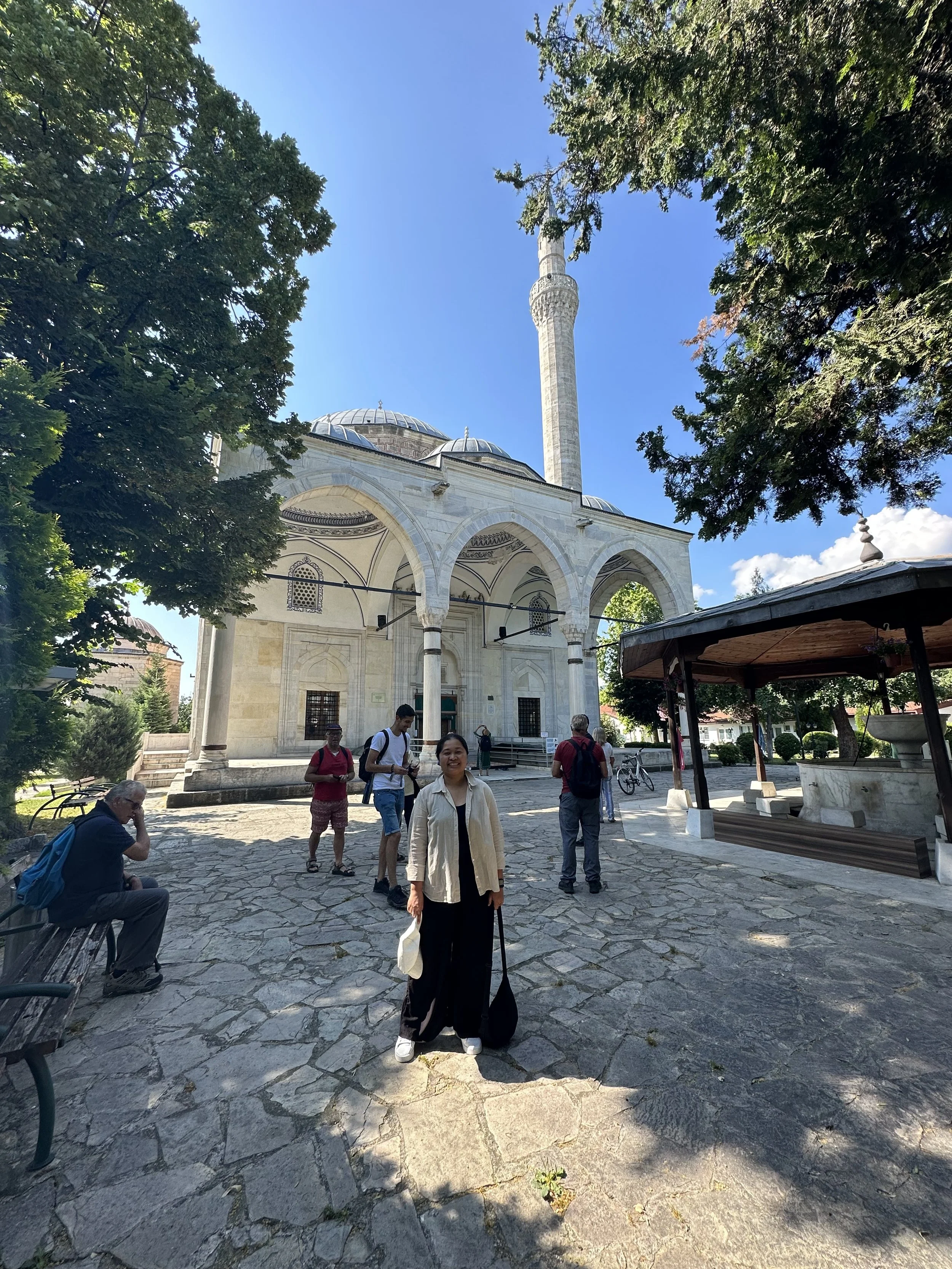
🕌 Mustafa Pasha Mosque, Мустафа Пашина Џамија, 00:53–01:03
The climb leads out of the busiest alleys and up towards the ridge above the bazaar. Mustafa Pasha Mosque stands tall here, built in 1492. The date is confirmed. Its courtyard is one of the most peaceful corners in Skopje. Stone. Trees. A calm terrace above the city. The guide explained how its founder, Mustafa Pasha, served under Bayezid II in the Ottoman court. The mosque stands untouched by later rebuilding. Earthquakes damaged much of Skopje, but this mosque remained stable. The view from the gate shows the bazaar roofs spreading below.
🚶 Walk to Skopje Fortress: 6 minutes uphill
🏰 Skopje Fortress Kale, 01:09–01:29
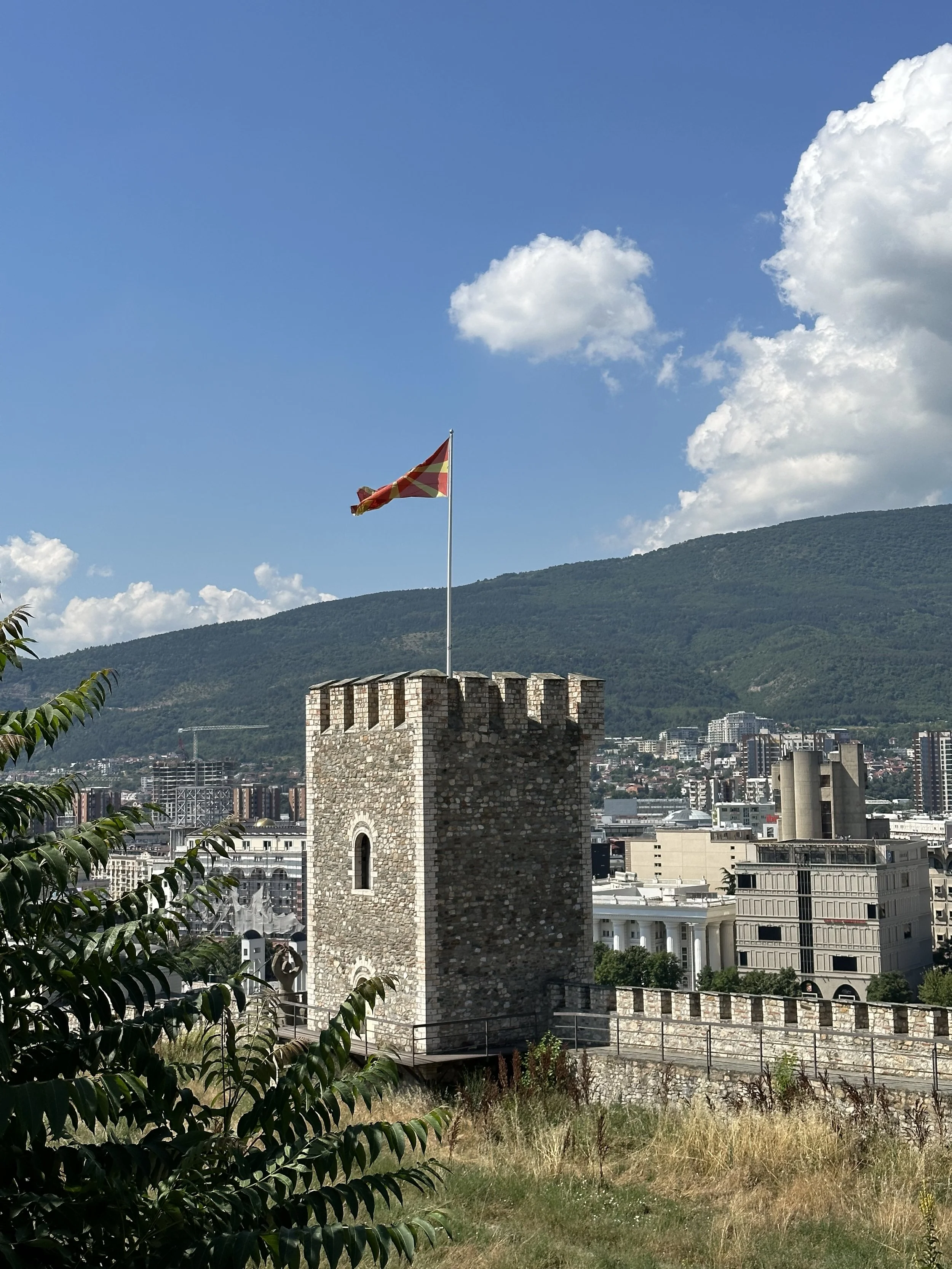
The fortress rises above the Vardar valley. Archaeology confirms layers from late antiquity through the Byzantine era and the Ottomans. The 1963 earthquake damaged part of the walls, and later reconstruction continues in steps. The guide pointed to the City Stadium in the distance and to the far mountain ridge where the Millennium Cross stands. The cross rises 66 metres and was built in 2002. Beside it stands a tall telecommunications tower, the main TV tower for the city. Both visible from the fortress walls. The view spreads across Skopje, split between old stone and new concrete.
🚶 Walk downhill to Church of Saint Dimitrija: 10 minutes
⛪ Church of Saint Dimitrija, Црква Свети Димитрија, 01:39–01:52
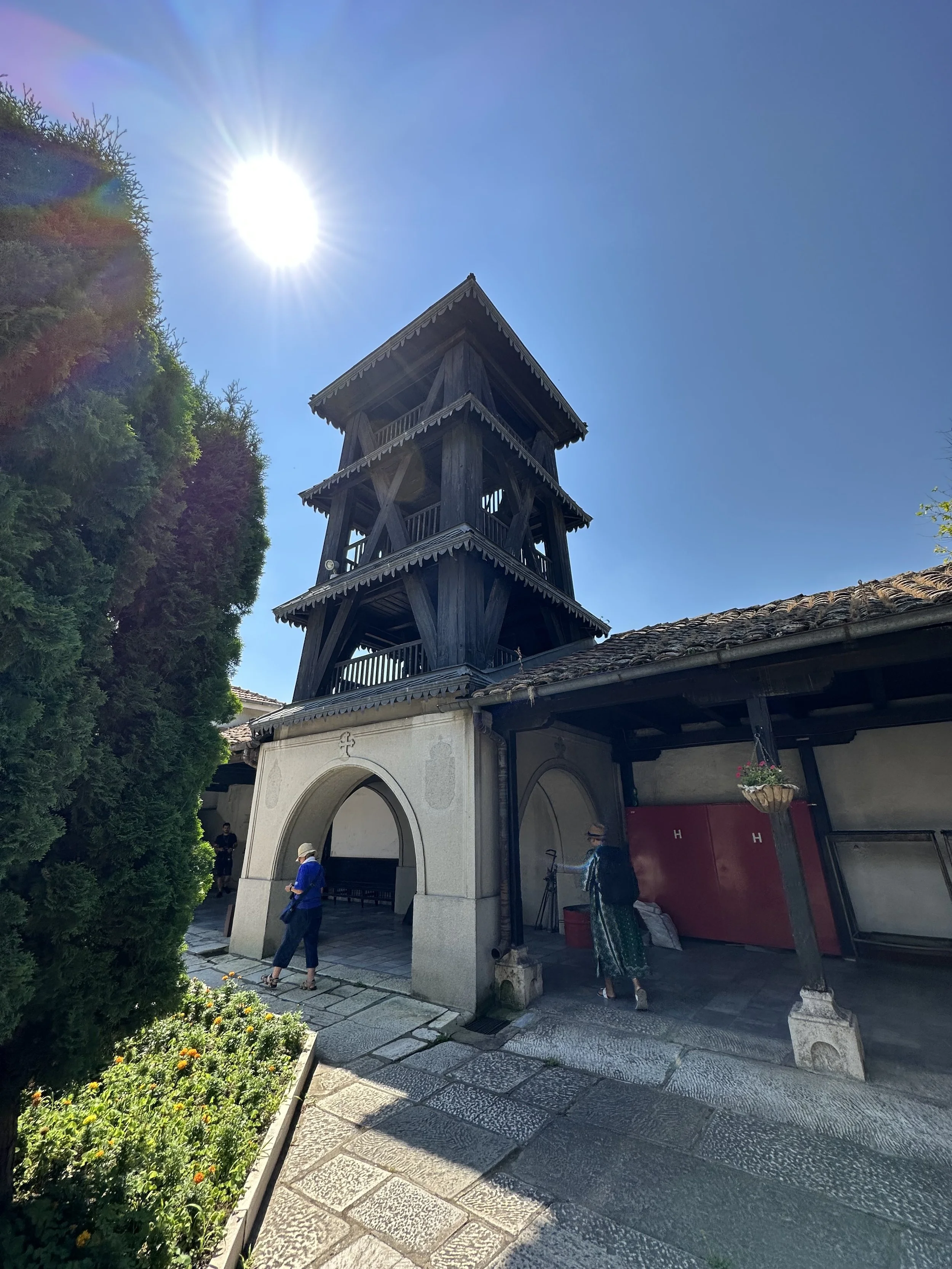
The path drops back into the city. We reached the Church of Saint Dimitrija. The entrance sits a level below the street. You walk down steps into a dim interior that feels hidden under the pavement. The church is known for its wood-carved iconostasis, though we did not explore inside. The layout alone feels unusual. The guide noted that Orthodox churches in the region often sit on older foundations. I cannot confirm if that is the case here, but the layout gives a sense of deep time. We were not allowed to take photos inside
🚶 Walk to Daut Pasha Hammam: 3 minutes
🛁 Daut Pasha Hammam, Даут Пашин Амам, 01:55–02:05
This hammam sits close to the river. Built in the late fifteenth century by Daut Pasha, the Ottoman vizier. Another pair of domes. More skylights. More reminders of how important these spaces once were. It now houses part of the National Gallery. The exterior alone tells enough. Stone that survived fires, floods, and quakes.
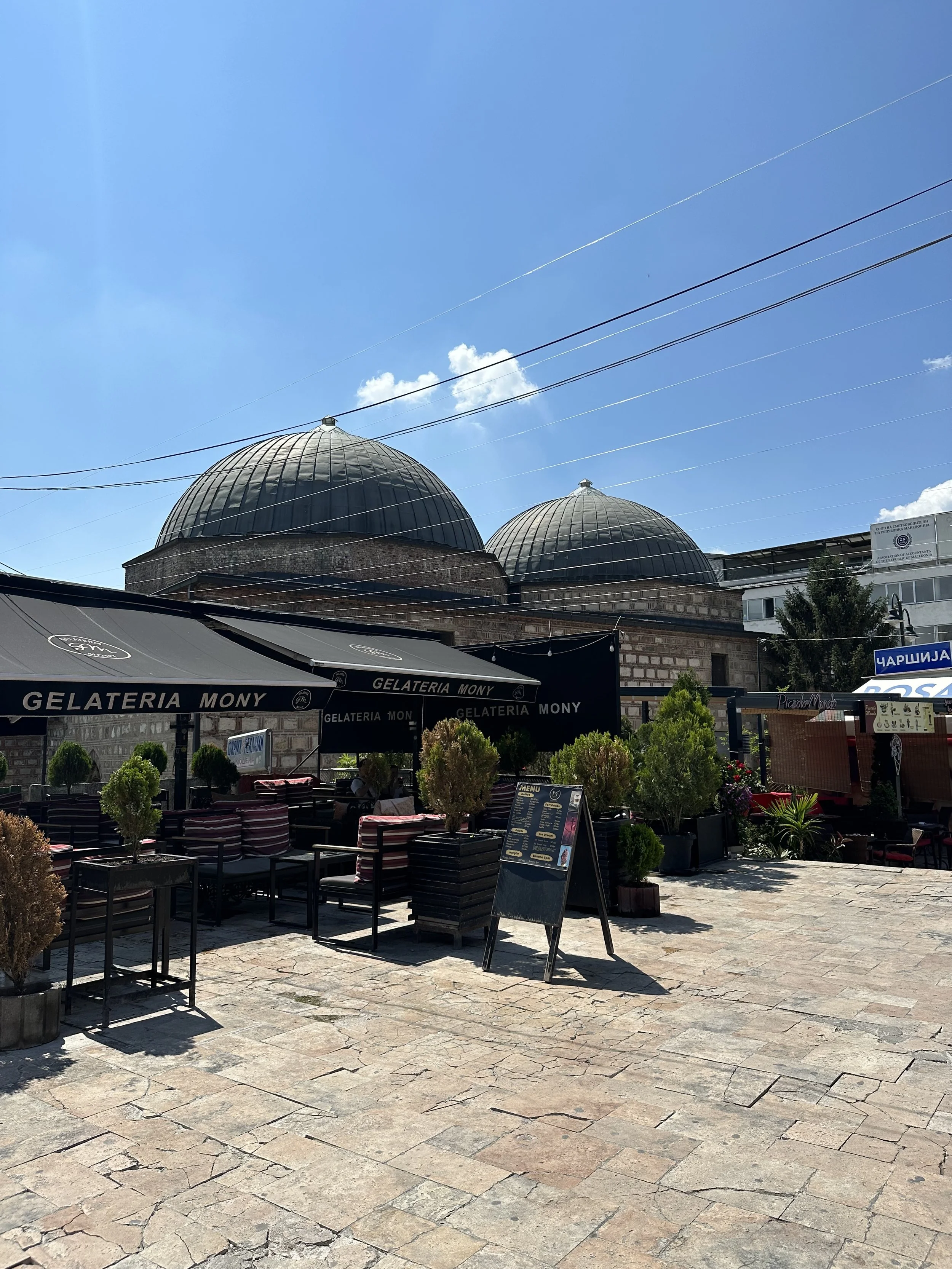
🚶 Walk to Philip II Square: 3 minutes
🗿 Philip II Square, 02:08–02:15
Philip II Square stands at the edge of the river. The statue of Philip of Macedon rises from a wide fountain. It is part of the modern monuments built in the last decade. Bold. Large. Designed to reshape Skopje’s image. The scale surprised us. The guide explained the political story behind the statues. Identity projects. Tourism goals. Public debate. Skopje wears its arguments in bronze.
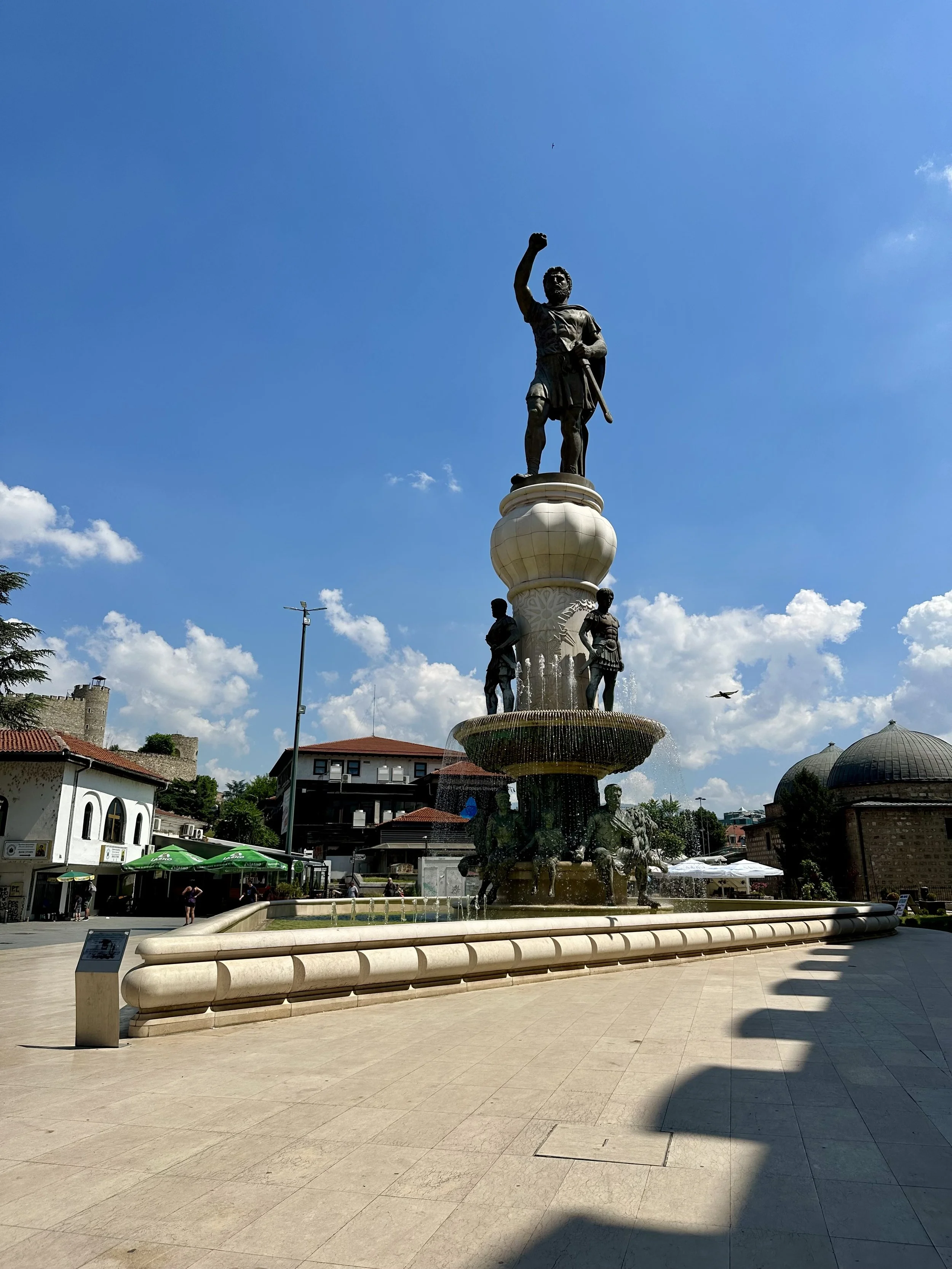
🚶 Walk across the Stone Bridge: 2 minutes
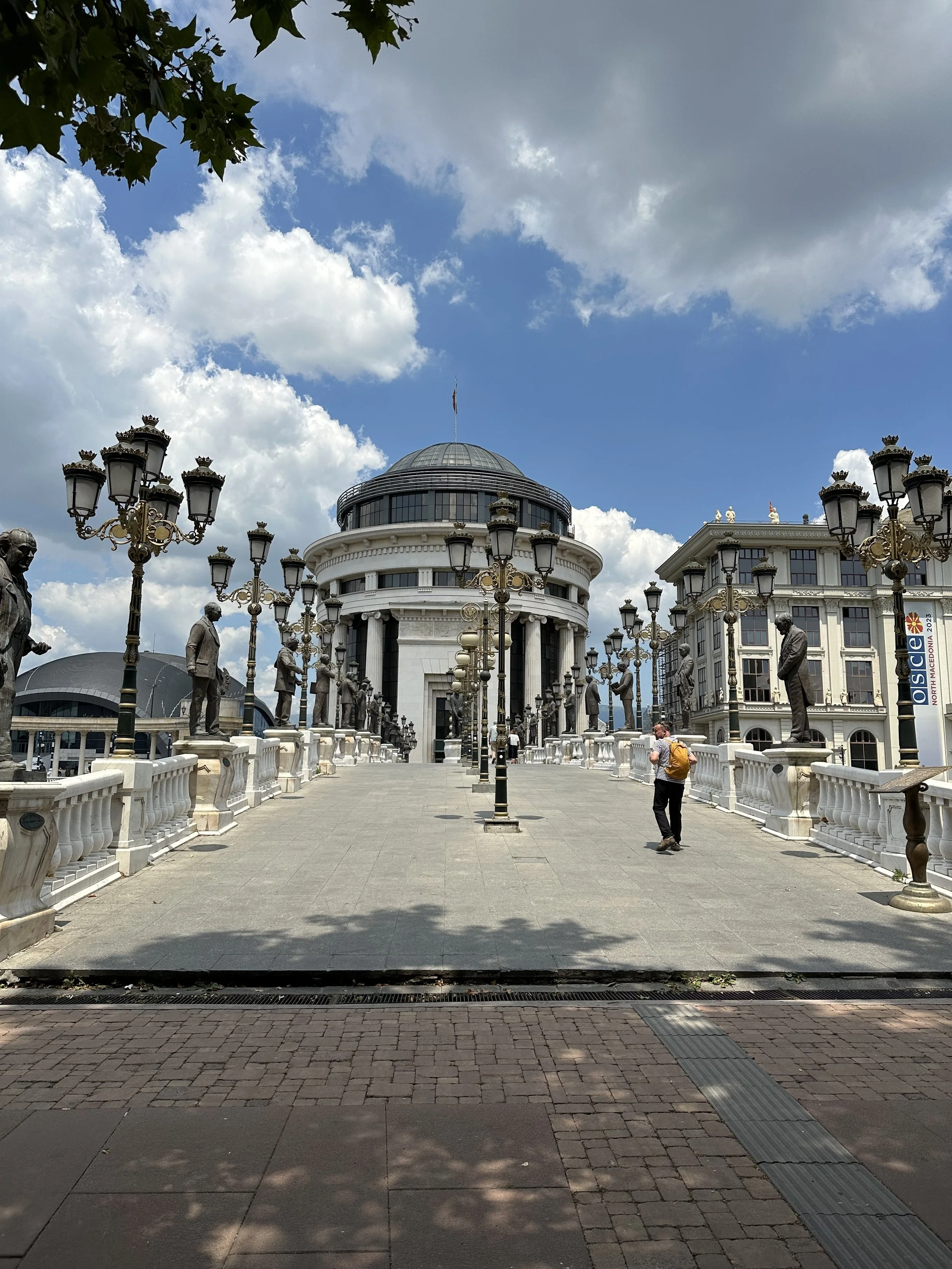
🌉 Stone Bridge, Камен Мост, 02:17–02:22
Cross the Stone Bridge. The current structure dates mainly to the fifteenth century with later repairs. It links the Ottoman bazaar to Macedonia Square. Statues line the riverside. The Vardar flows wide and slow. Standing in the middle shows the split between old and new Skopje. It is the city’s central axis.
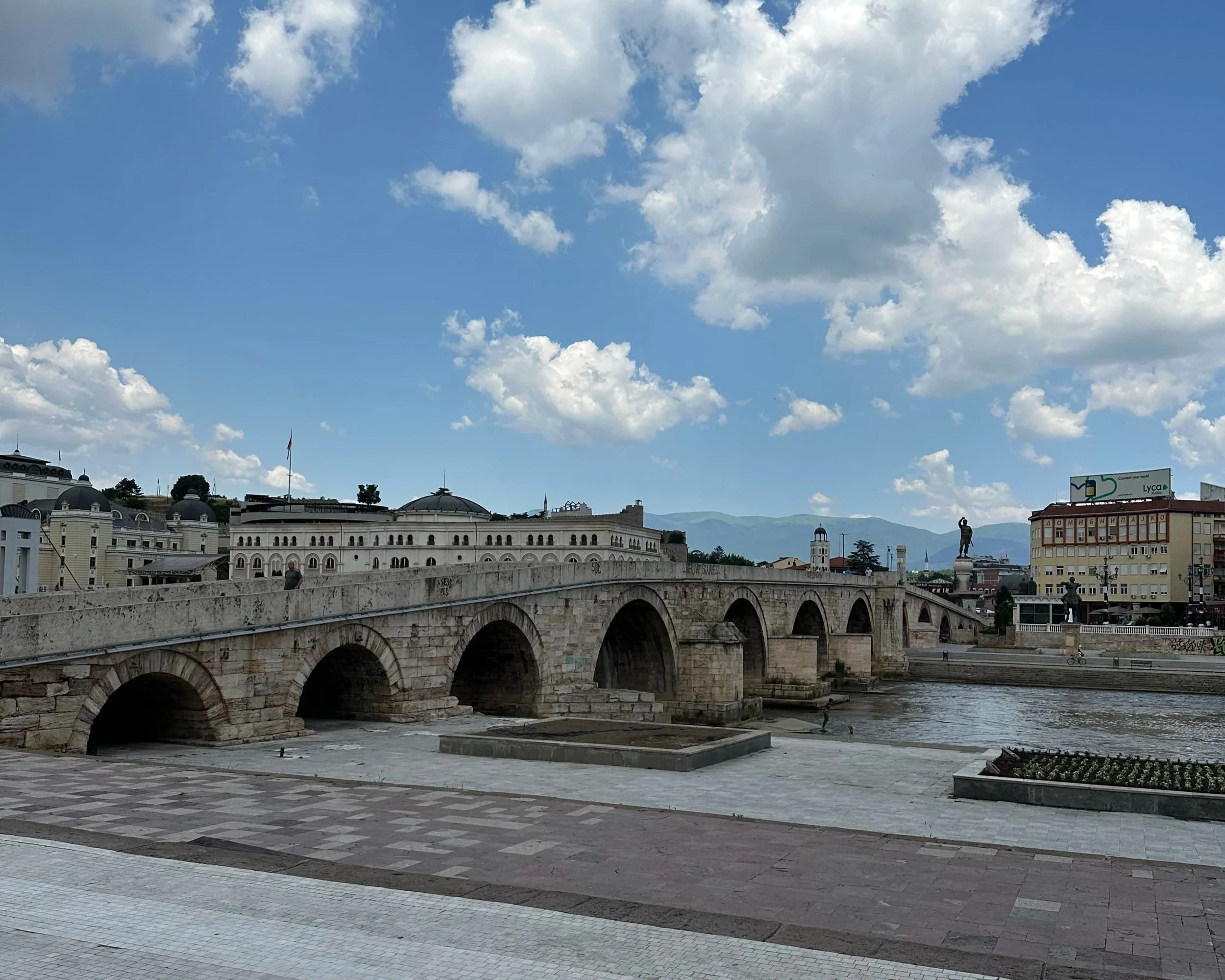
🚶 Walk to Macedonia Square: 2 minutes
🗽 Macedonia Square and Warrior on a Horse, 02:24–02:34
The main square is dominated by the statue commonly recognised as Alexander the Great, although officially called Warrior on a Horse. The fountain storms with water and lights in the evening. The guide spoke about how controversial the monument was when built. Greece objected. North Macedonia defended it. Today it stands as one of the city’s most photographed sights. Around the square sit new façades, rebuilt after 2014 to give the city a classical look. Columns. Stone cladding. The effect is striking and unusual.
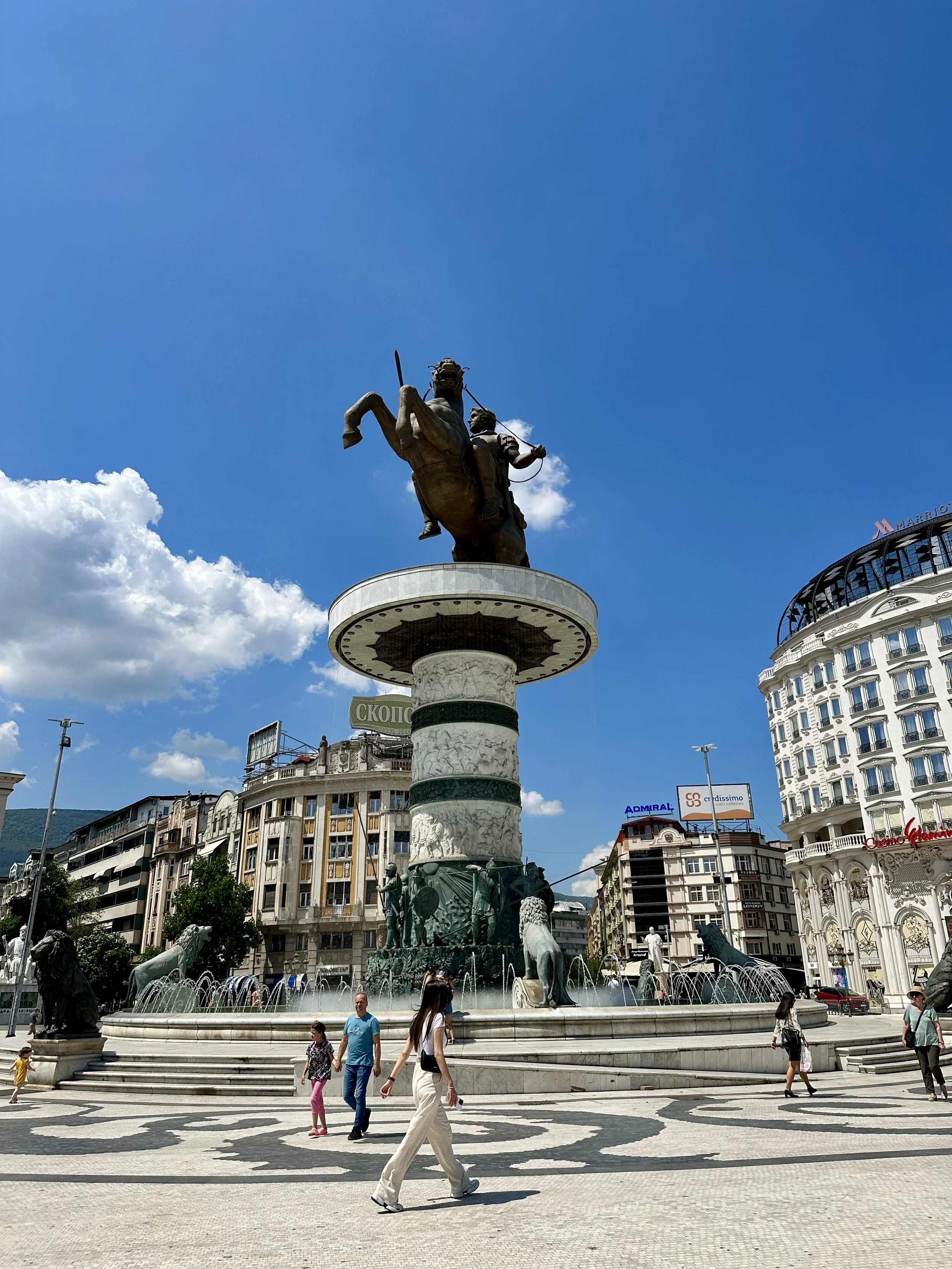
🚶 Walk to Mother Teresa birthplace marker: 3 minutes
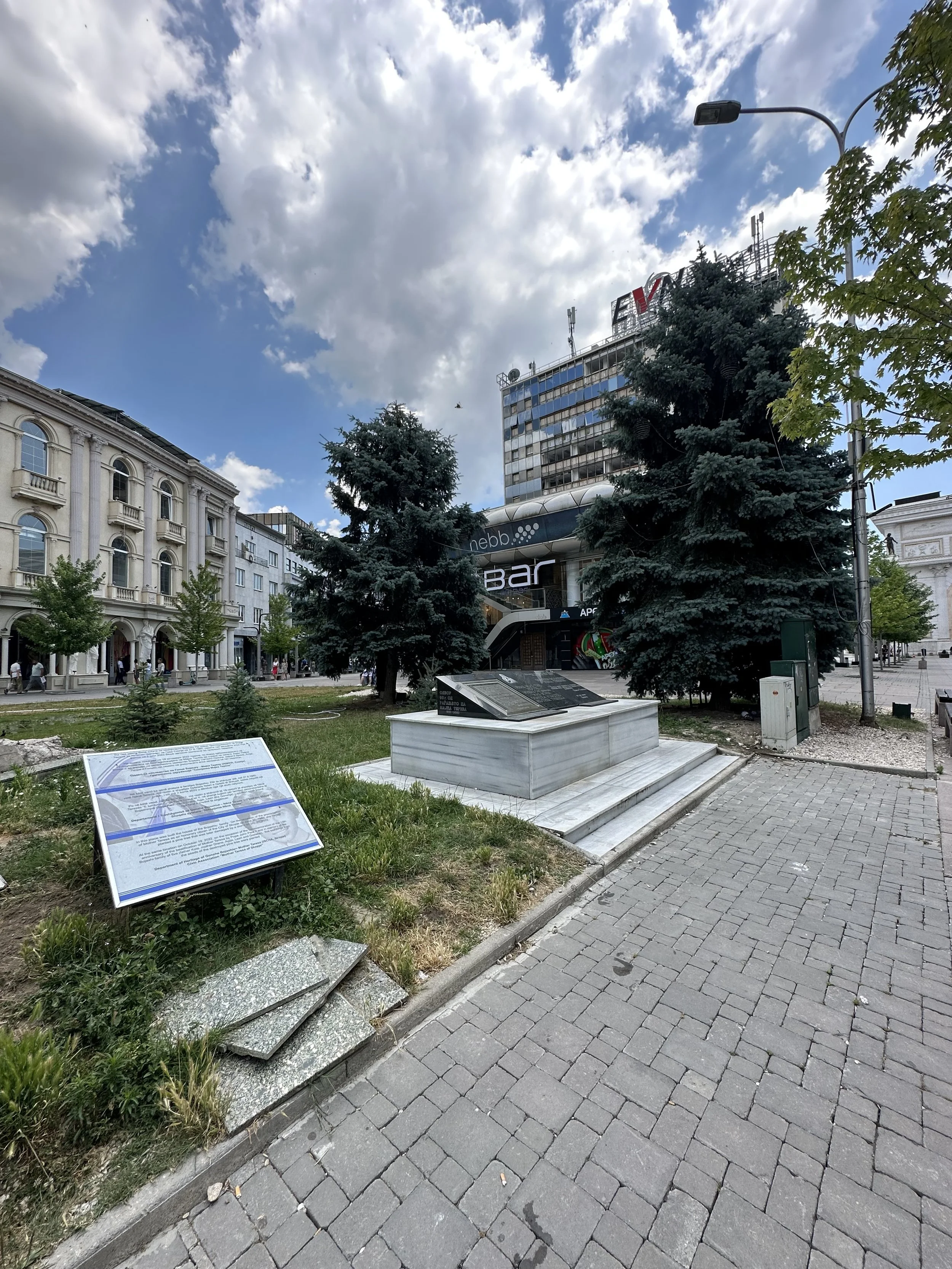
📍 Mother Teresa Birthplace Marker, 02:37–02:41
A small plaque marks the spot where Mother Teresa was born. The original house is gone. The site sits among modern blocks. The guide gave a short biography. Born here in 1910. Albanian heritage. Joined a religious order in Ireland. Mission work in India. Nobel Peace Prize. Skopje claims her as one of its most important figures.
🚶 Walk to Porta Macedonia: 2 minutes
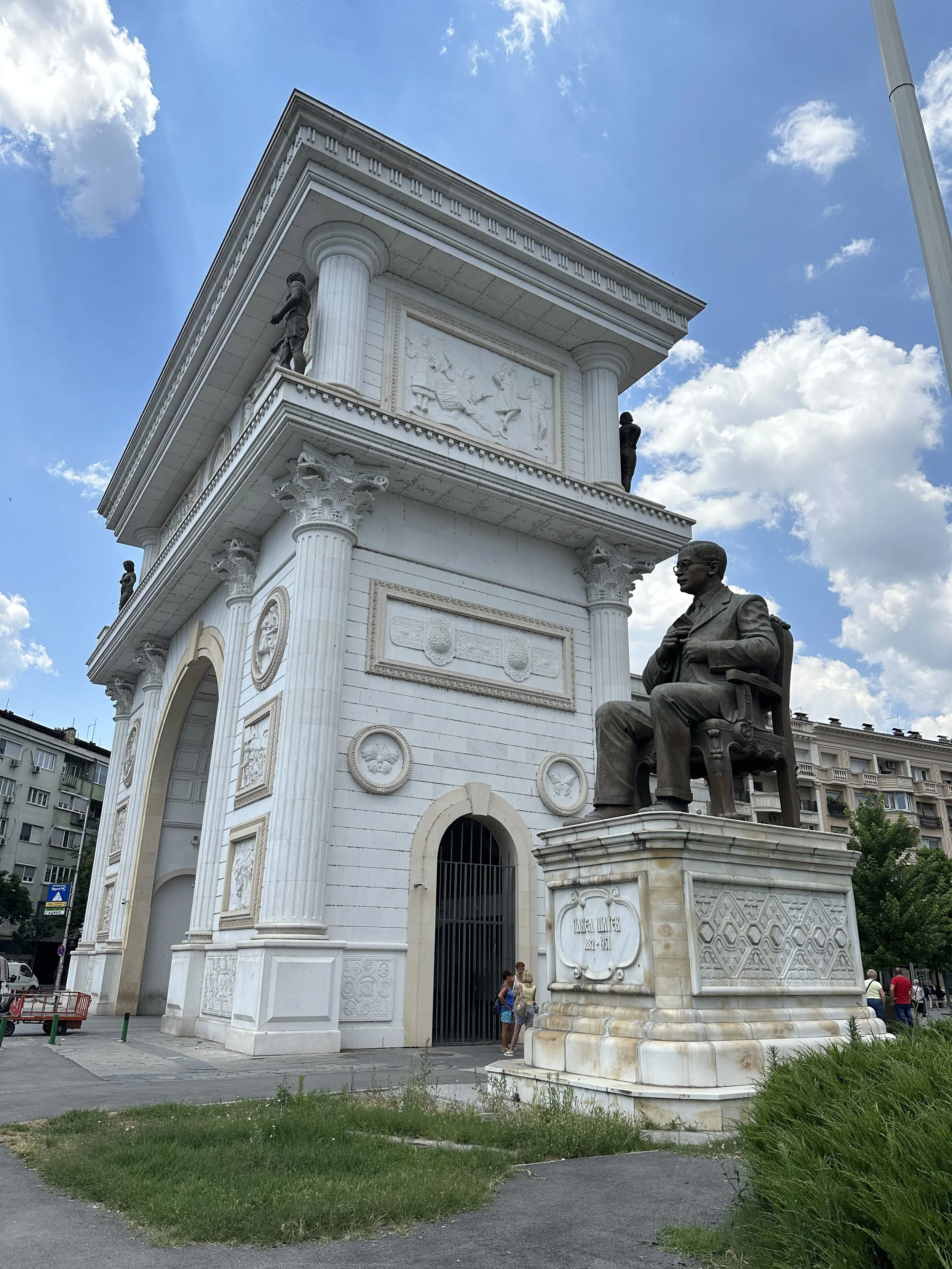
🇲🇰 Porta Macedonia, 02:43–02:48
Porta Macedonia is a triumphal arch built in 2011. White stone. Reliefs showing historic scenes. It frames the street like a ceremonial gate. Like many structures from this period, it was part of the identity project. You read it as both monument and message.
🚶 Walk to Mother Teresa Memorial House: 3 minutes
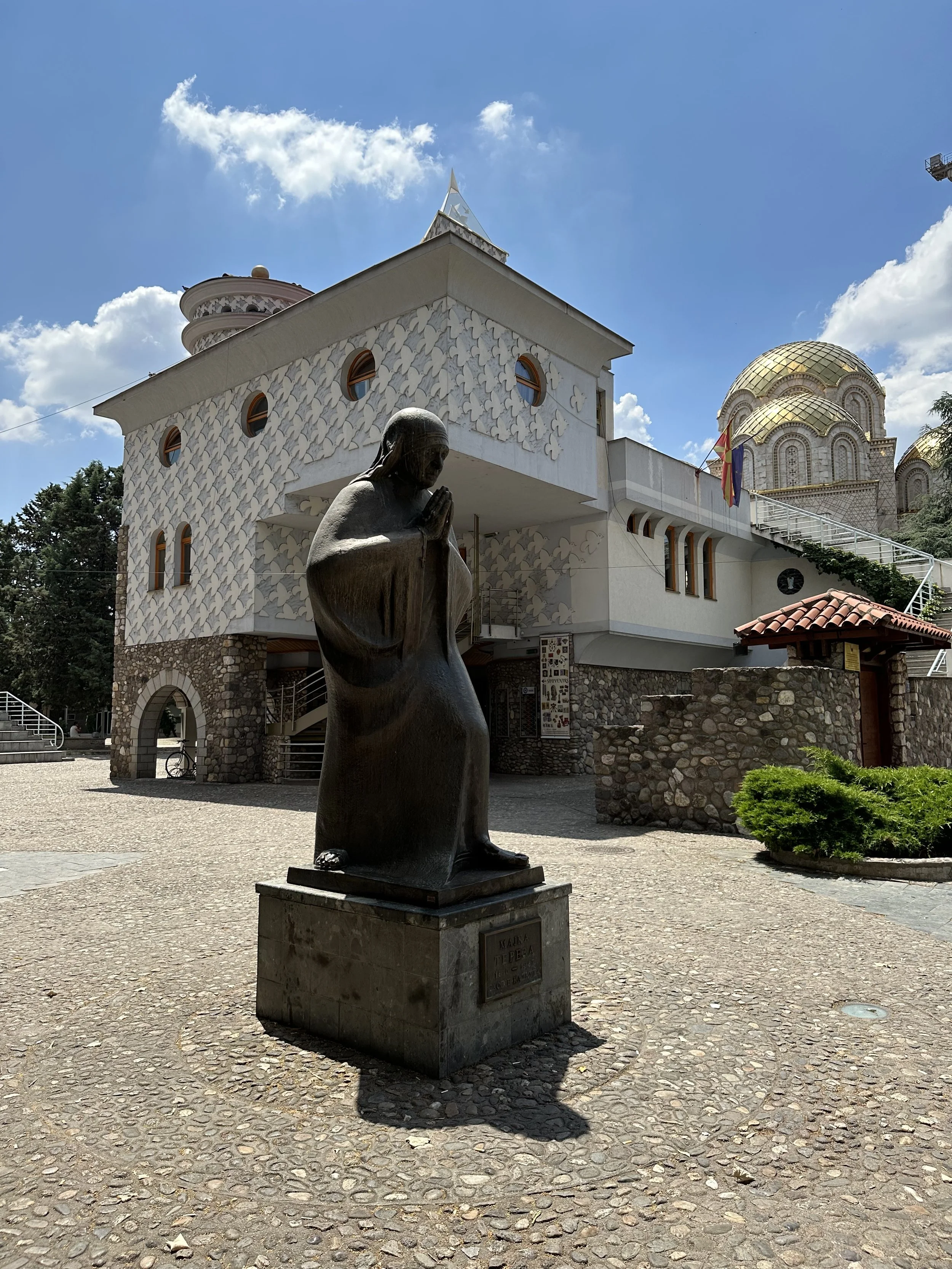
⛪ Mother Teresa Memorial House, 02:51–03:01
The walk ends at the Mother Teresa Memorial House. A modern building on the street where she grew up. White walls. Glass. Small museum displays. It replaces what the earthquake destroyed. By this point our local guide had left us and our tour leader took over. He spoke about Skopje today and mentioned his uncle, Nexhat Agolli, whose statue stands in the city. His story was tied to the politics of Yugoslavia’s break up. Troubled. Complex. A reminder that every monument has more than one version of the truth.
⬅️ Back to the Square
We had time for lunch and space to reflect on the walk. We realised that if we had pushed ourselves the night before, we could have seen the new town lit up. Another time, perhaps. Skopje is the kind of place that can take another visit.
📸 Best Selfie Spots
• The Old Bazaar. The doorway of Kurshumli Han frames your shot with stone arches and soft shade.
• Skopsko Kale. The walls give strong lines and the Vardar fills the background.
• The Millennium Cross, Милениумски Крст. Pair it with the Telekom tower for a sharp twin silhouette.
• Alexander’s statue in Ploshtad Makedonija. Shoot low, keep the fountain in frame, let the horse rise behind you.
💡 Pro Tips
• Carry small cash in the Old Bazaar. Many stalls still prefer it.
• Bring water. The climb to Skopsko Kale is steeper than it looks.
• Avoid midday sun on the square. Early or late light gives cleaner photos and calmer views.
• Stand by the Stone Bridge for the best sightline to the Millennium Cross on Vodno.
⏱️ More To See If You Have Time
• Museum of the Macedonian Struggle. Clear look at the twentieth century story.
• Holocaust Memorial Centre. Strong and careful storytelling near the Old Bazaar.
• Archaeological Museum. Good if you want context for the layers under Skopje.
• Cable car up Mount Vodno. Wide views and a close look at the Millennium Cross.
Final Thoughts
Skopje surprised us. The history sits in layers, earthquake scars beside Ottoman stone, modern statues beside old craft streets. Our guide poured stories into the walk, dates and myths and small details you only get from someone who grew up here. By the time we reached the square again, it felt like the city had unfolded itself for us.
When our guide left us, the pace softened. We found lunch, watched the square in its midday lull, and talked about how the New Town would have looked lit up at night. We decided we would save that for next time. Cities like this do not give everything in one go.
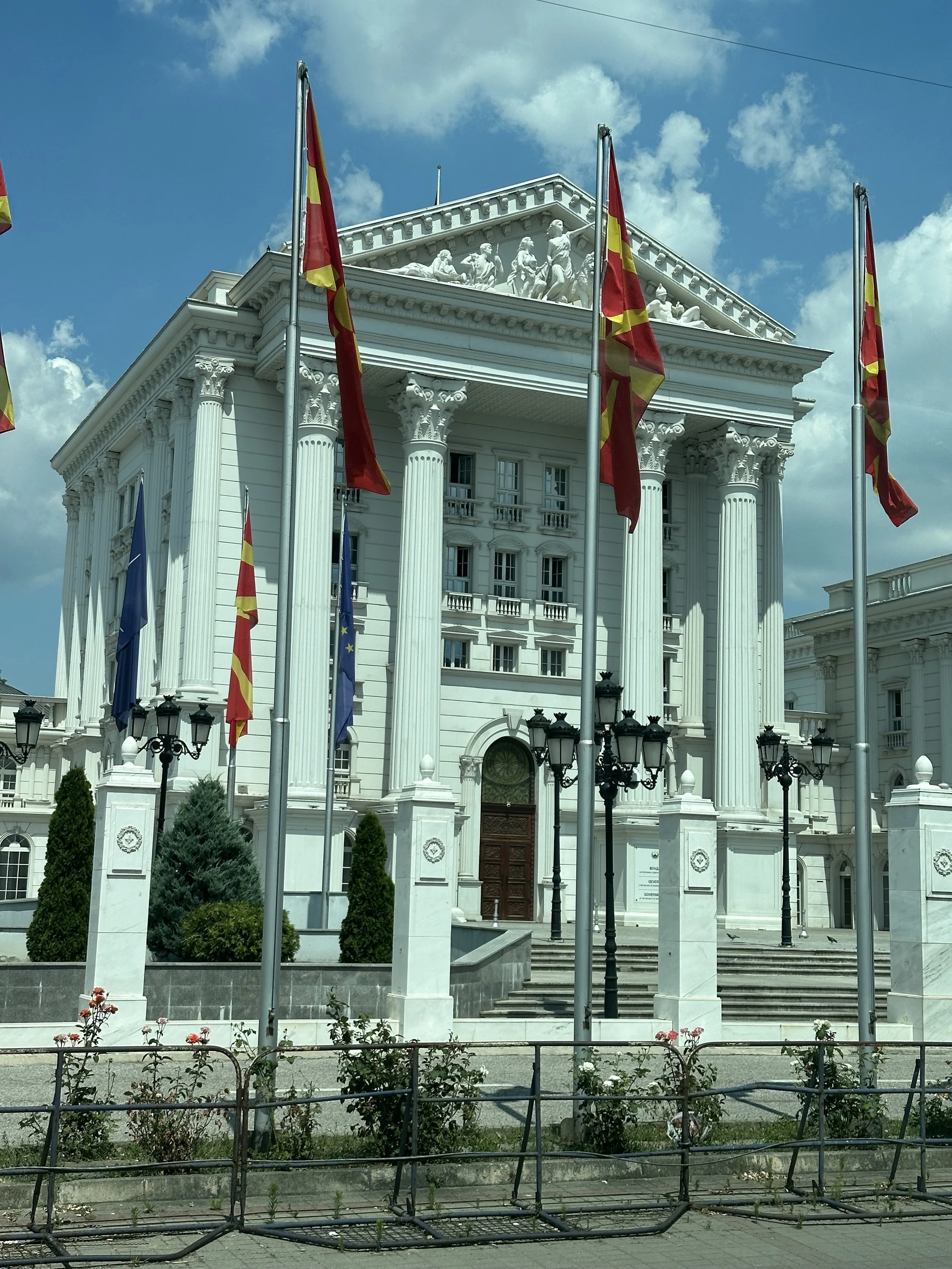
As the bus pulled away, we passed the Villa Vodno, the residence of the President. Clean lines, white walls, quiet behind trees. A final reminder that Skopje keeps shifting between old and new without apology.
Leaving Skopje felt easy after a full morning on our feet. The bus rolled out of the centre and the statues and river slipped away behind us. The road curved towards the Šar Mountains. The landscape opened. Villages, orchards, wide fields. It felt lighter after the weight of the capital.
Our next stop was something completely different. No crowds. No grand squares. No giant monuments. Just one of the most beautiful mosques in the Balkans, painted in colours that look unreal until you stand in front of them. The Painted Mosque in Tetovo waited for us at the edge of the valley, quiet and bright, ready to show a softer, older side of North Macedonia.
