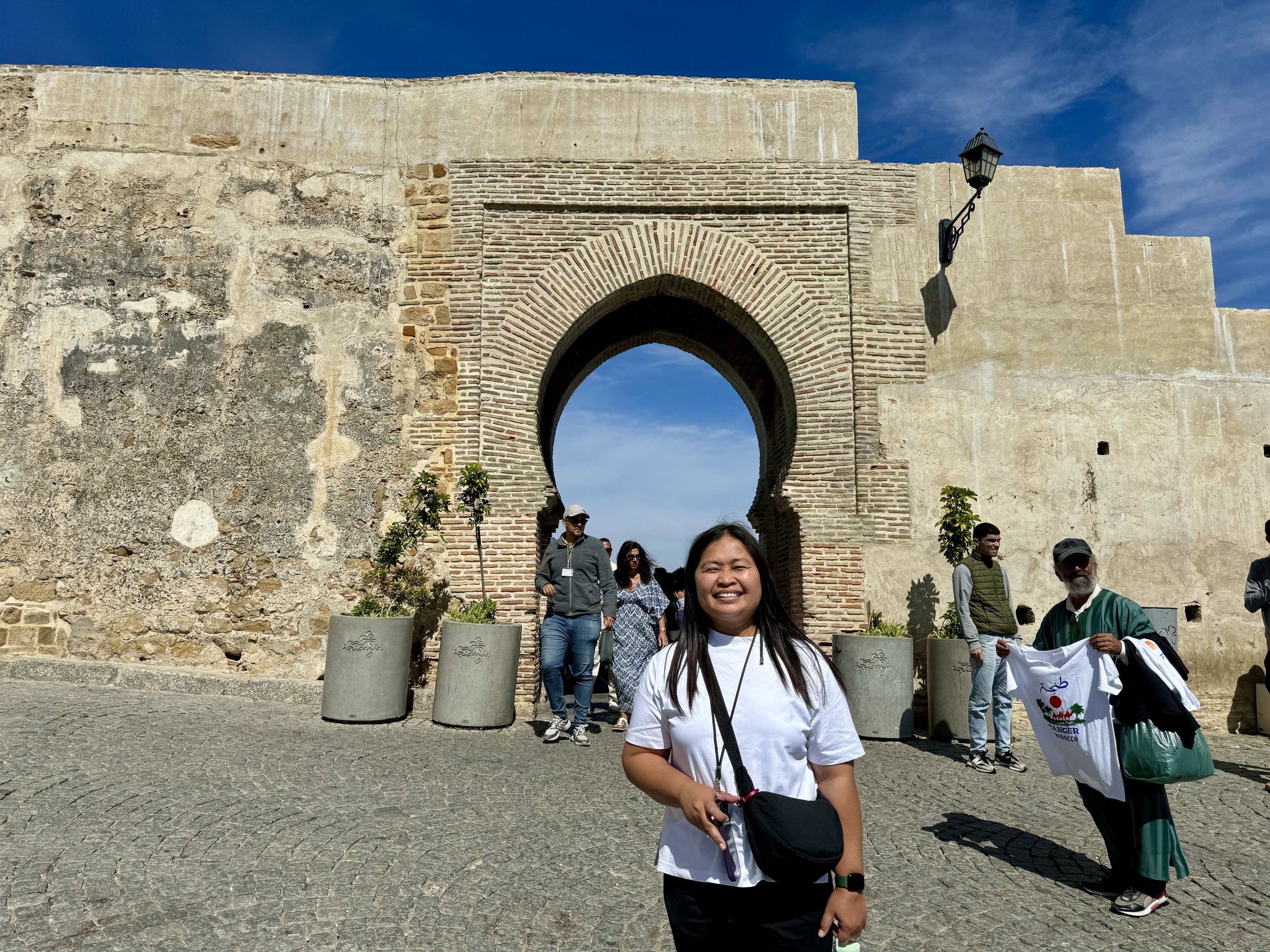
Tangier: Across the Strait
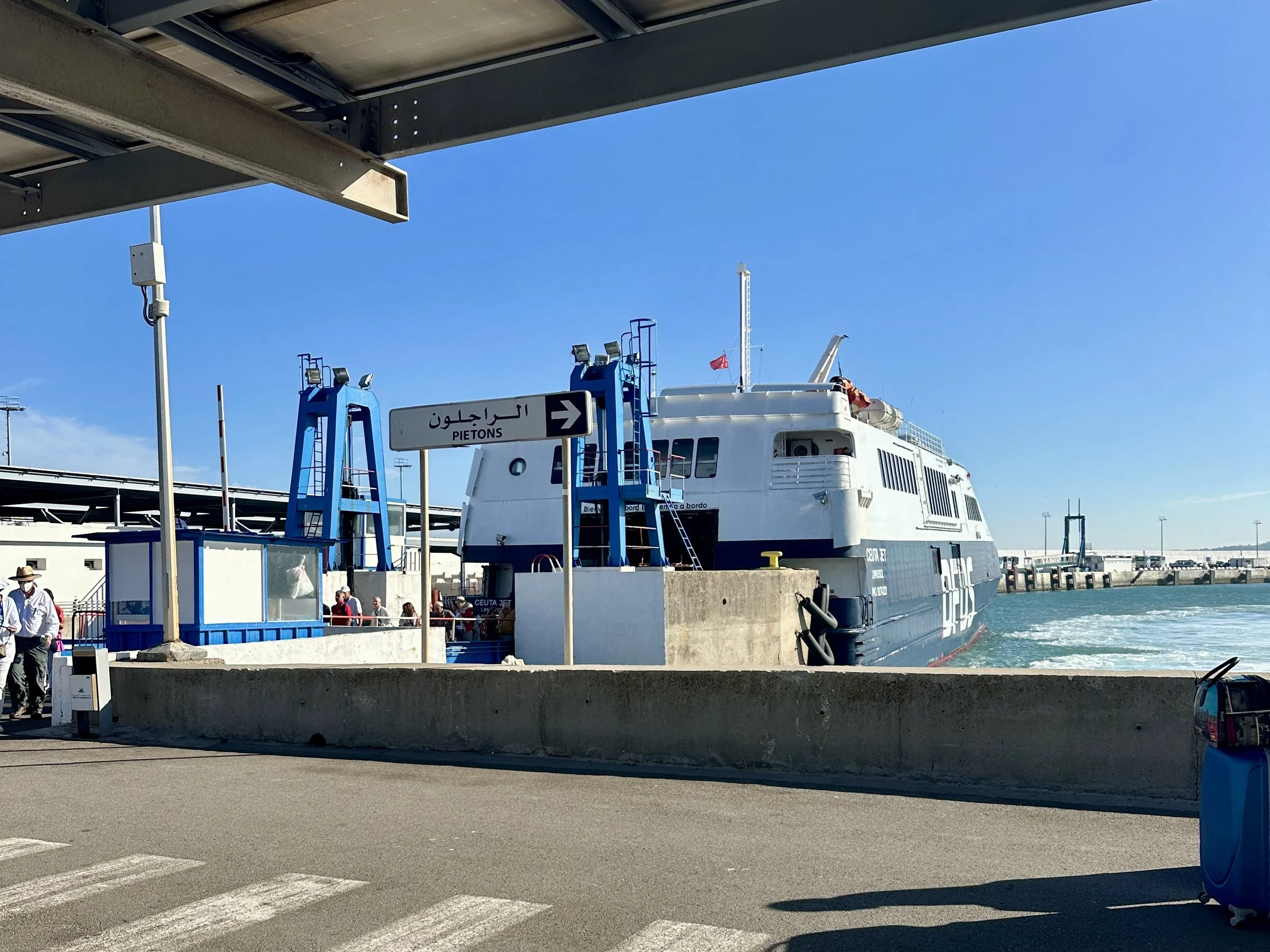
The ferry from Tarifa took about an hour and a half, but it felt like crossing into another world. The sea shimmered between continents, and when we stepped off in Tangier, everything felt different. The air was warmer, the light softer, the voices around us unfamiliar. Our local guide was waiting at the terminal, ready to take us through the city before we had time to take it all in.
We drove up to Rmilat Park, winding past royal residences and quiet hillsides. At the top, we stopped to look over the Perdicaris Villa. Our guide told the story of the 1904 kidnapping, when a wealthy American was taken from the house and gunboats were sent to rescue him. It was hard to imagine all that in such a peaceful place, with sunlight falling through the trees and the sea sparkling below.
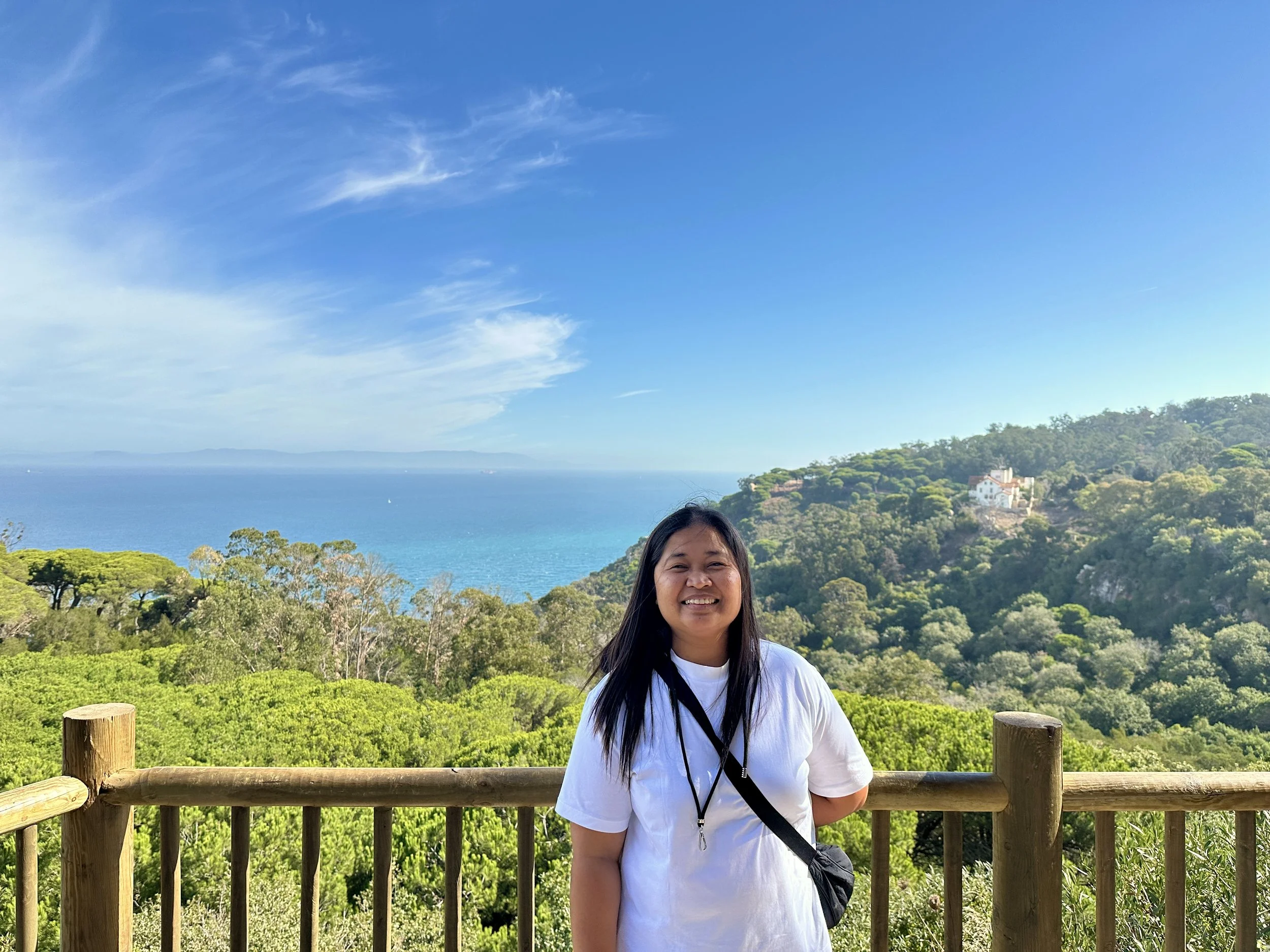
Perdicaris Villa, Rmilat Park, Tangier
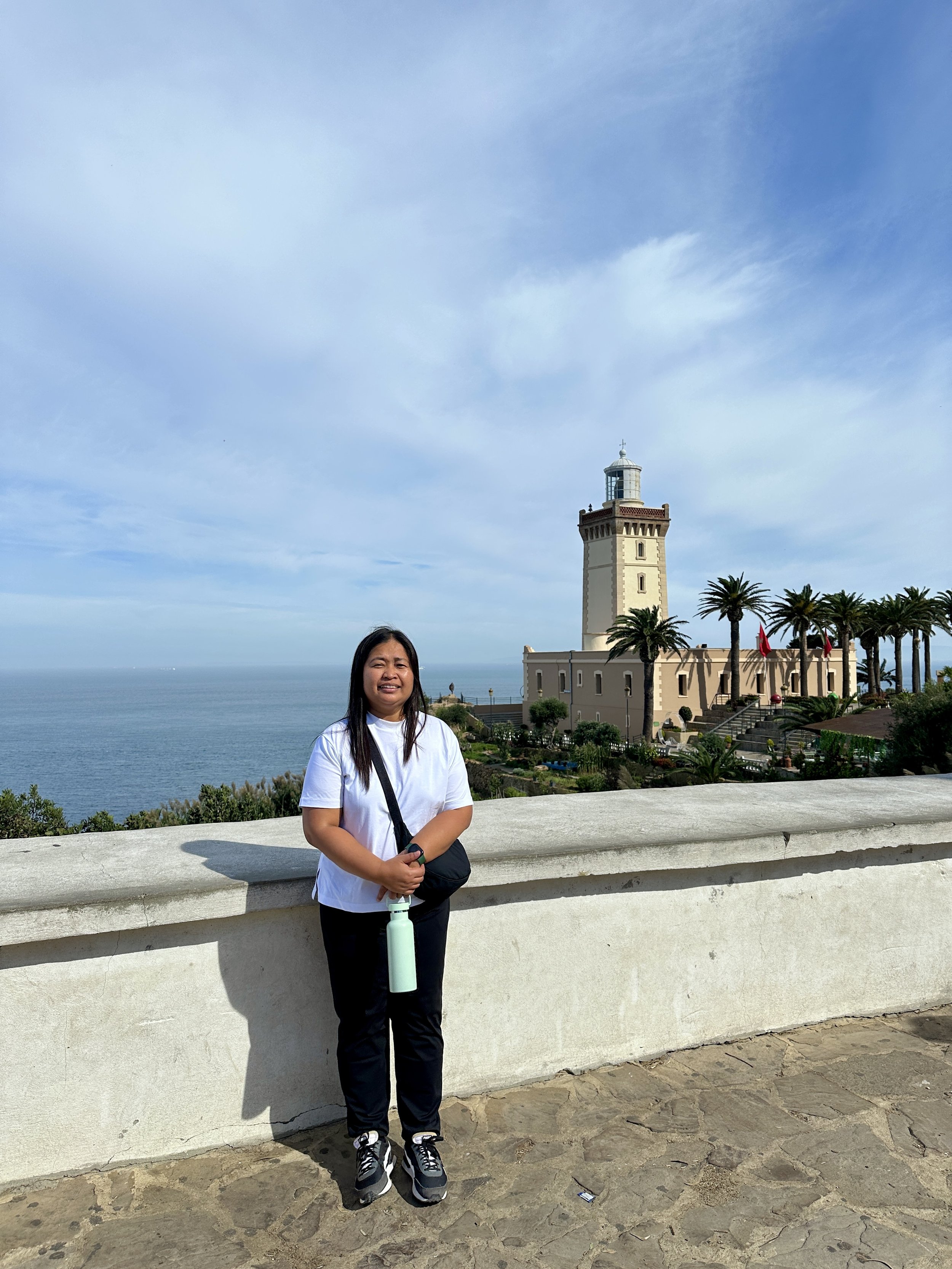
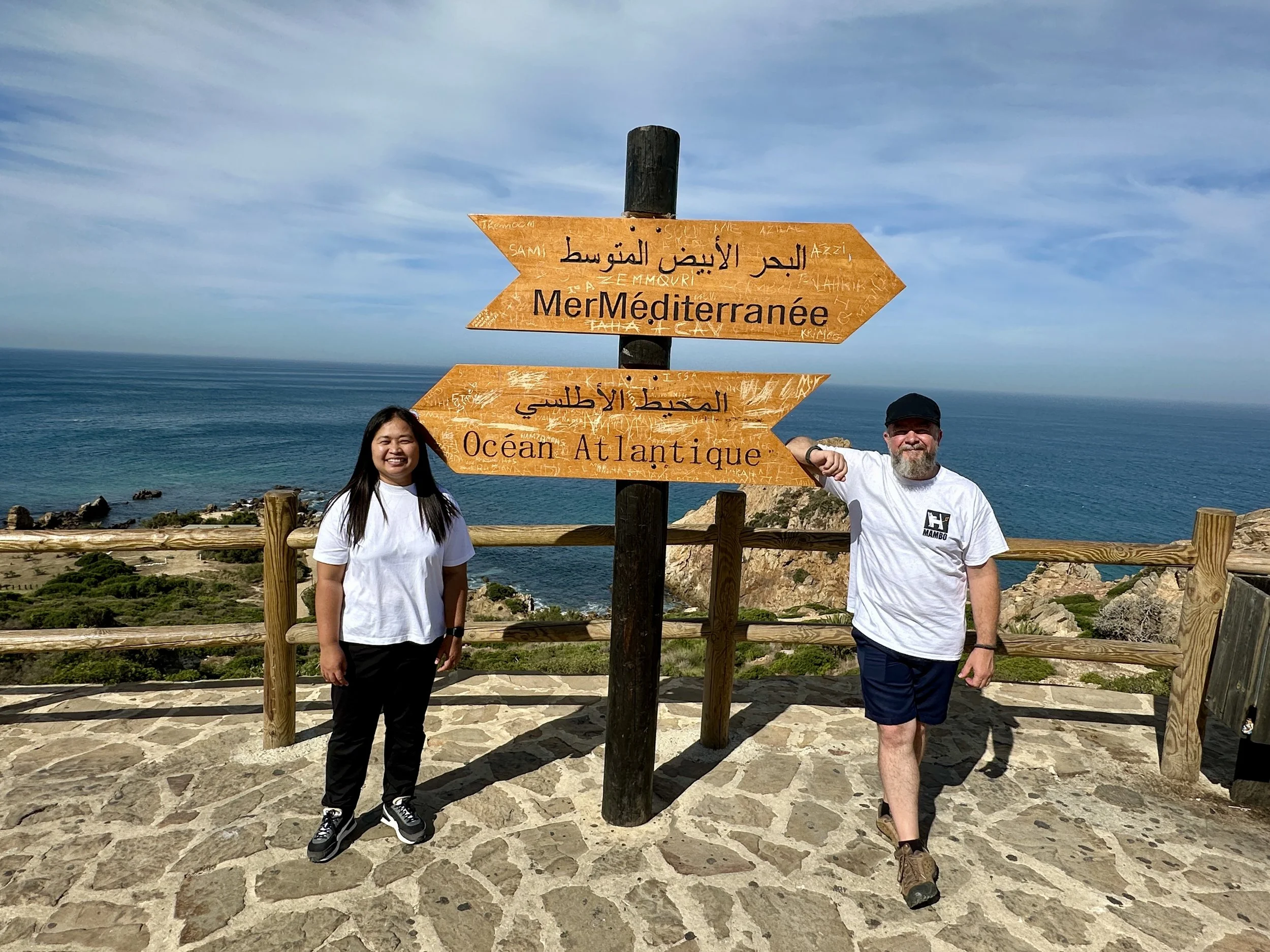
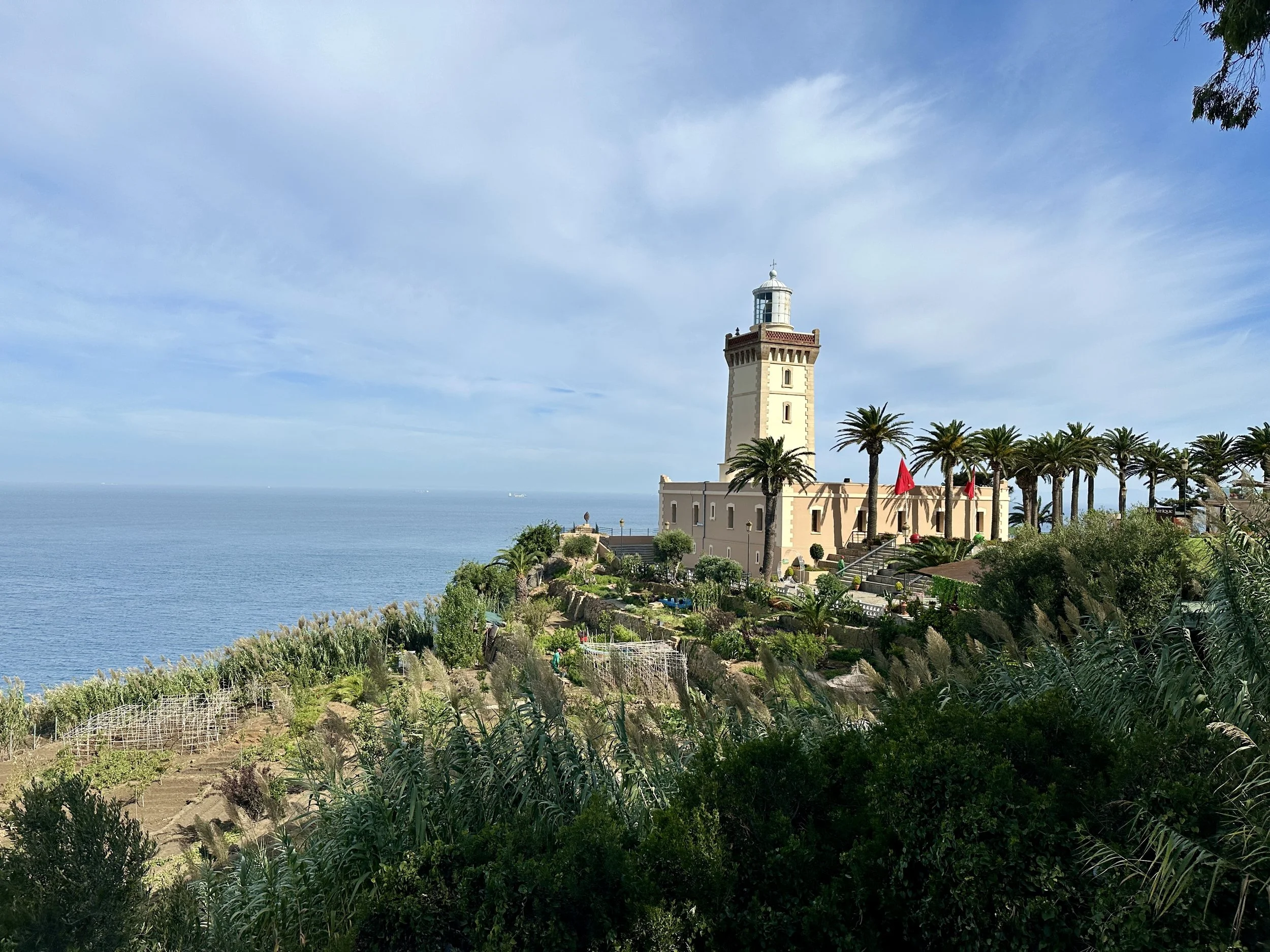
Next was Cap Spartel Lighthouse, standing tall on the cliffs where the Atlantic sweeps in. The wind was strong, and the view stretched forever. Not far away, we stopped where the Atlantic and the Mediterranean meet. There was a small sign marking the spot, and we stood for a while watching the two seas shimmer side by side.
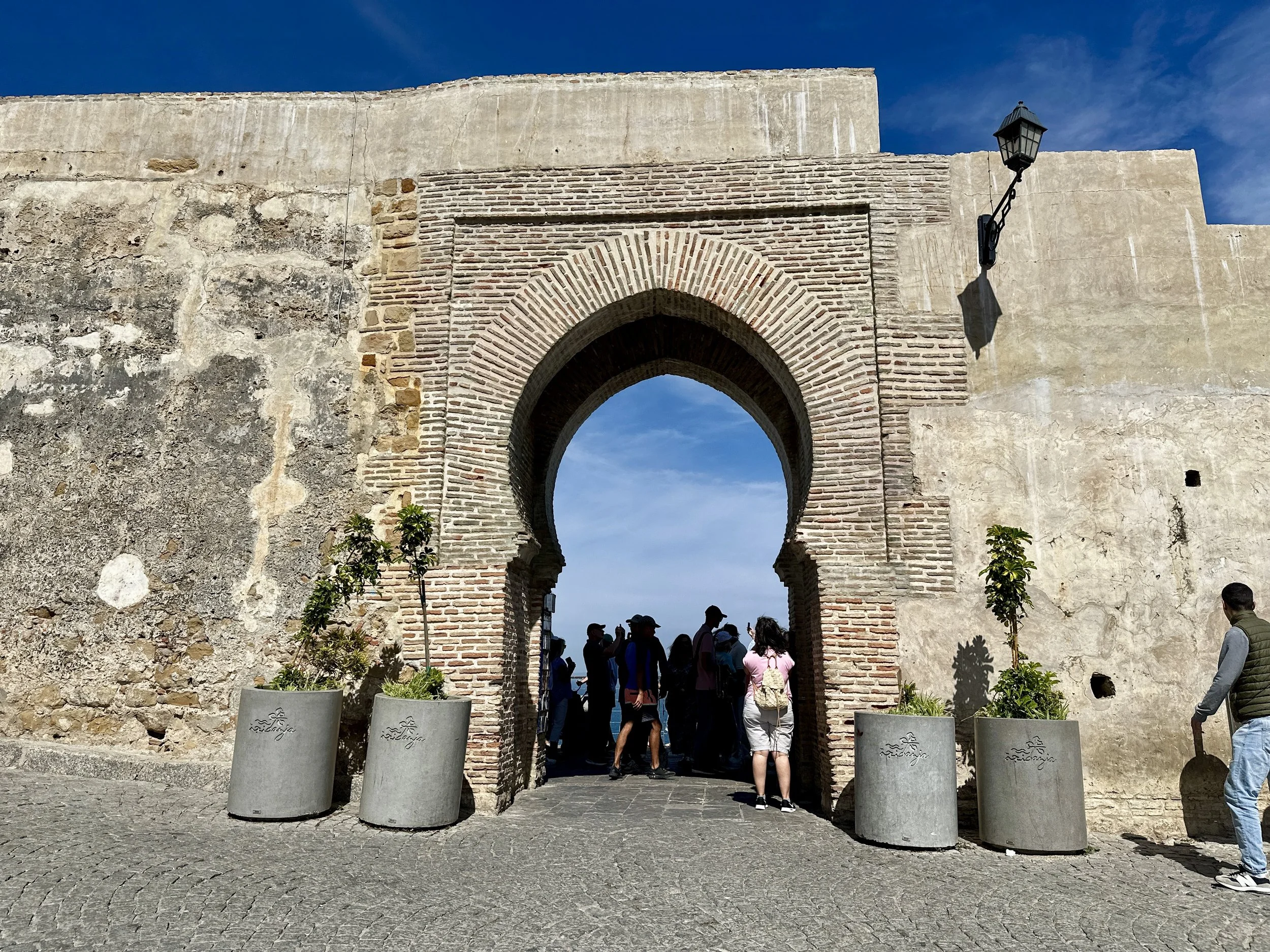
From the coast, we drove back toward the old city. We entered the medina through Bab Kasbah and stopped at a small café for mint tea and a quick break. The tea was hot and sweet, the glasses beading with steam, and from our tables, we could see the beautiful whitewashed houses and small alleyways.
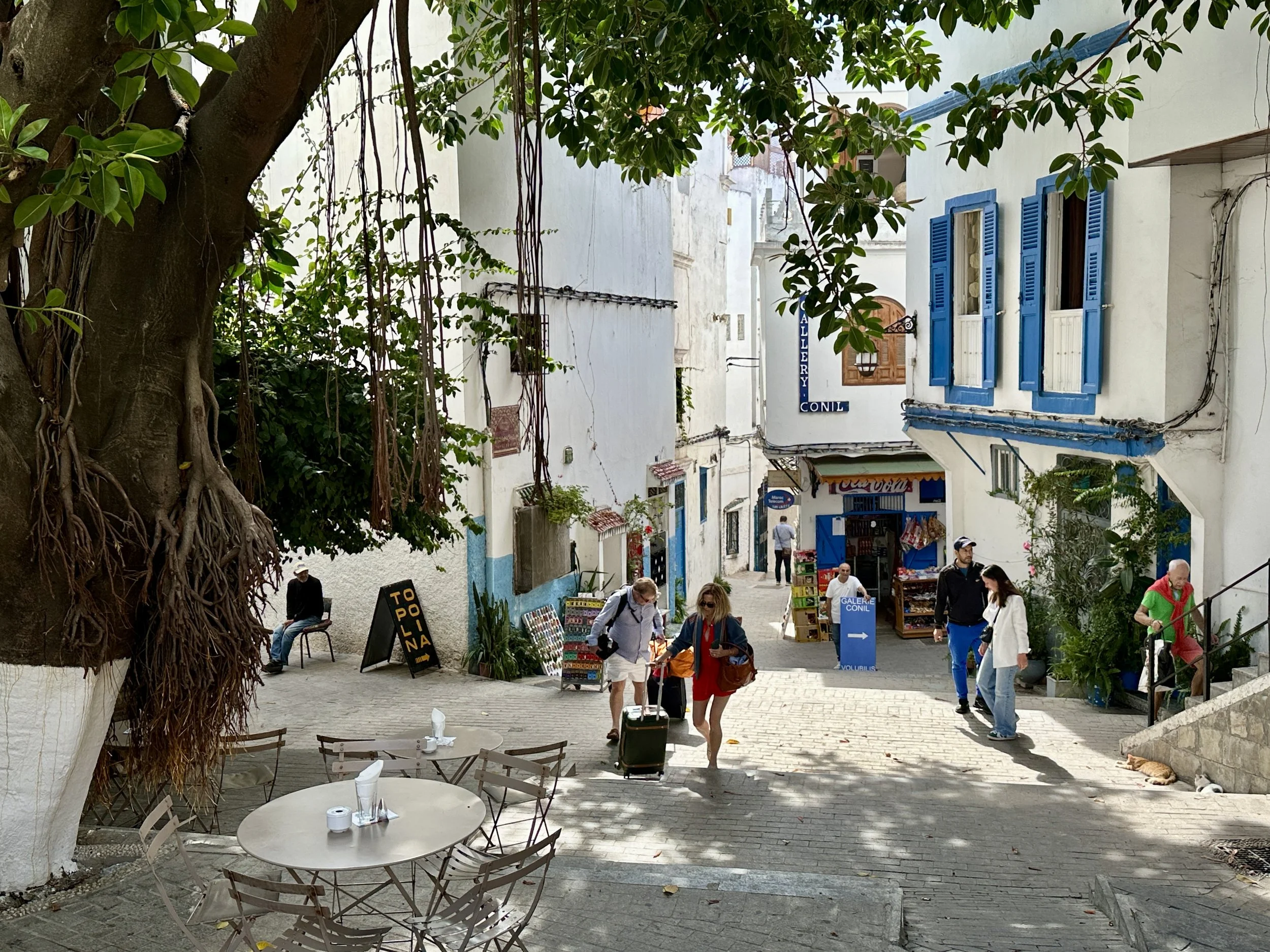
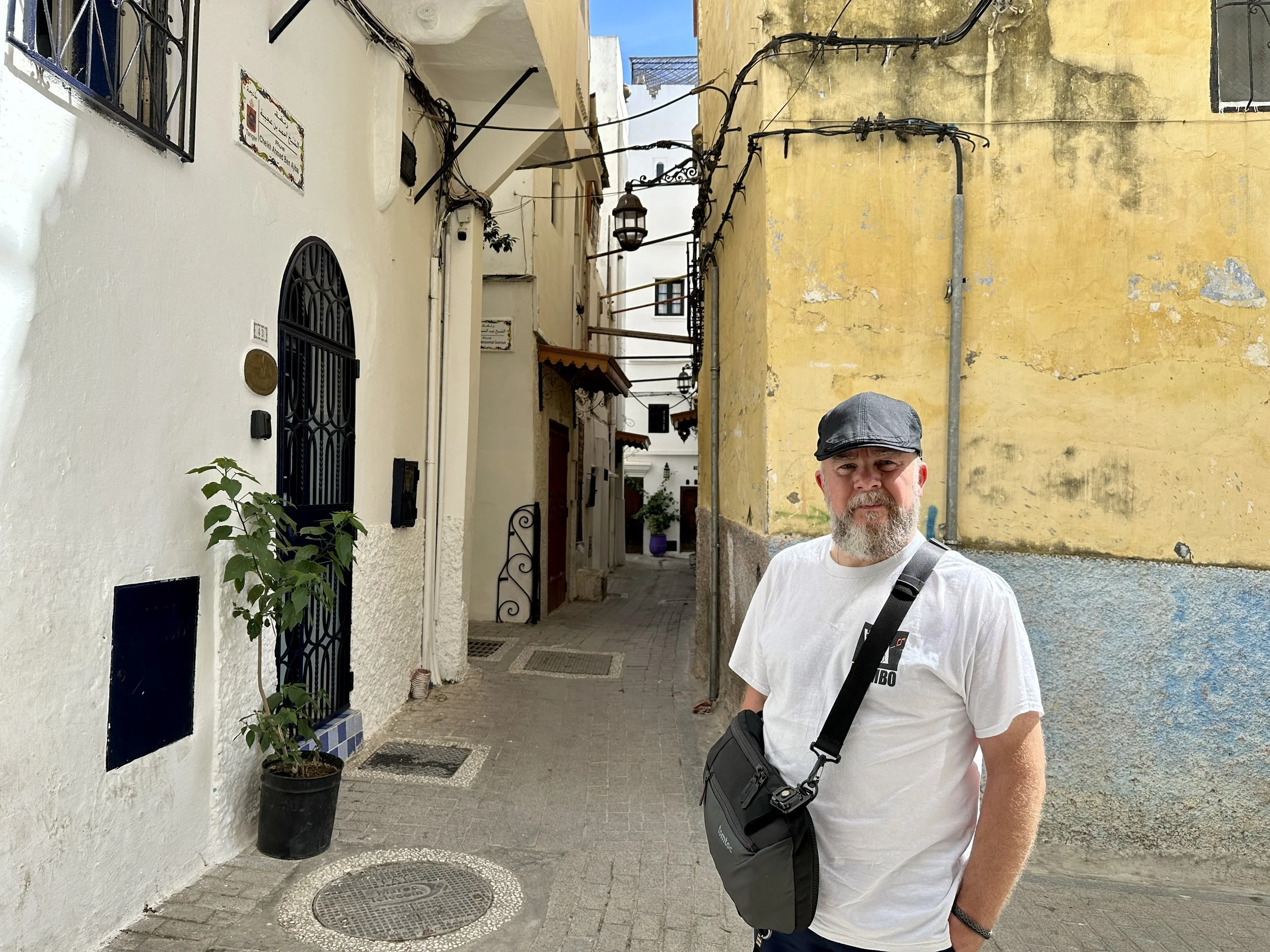
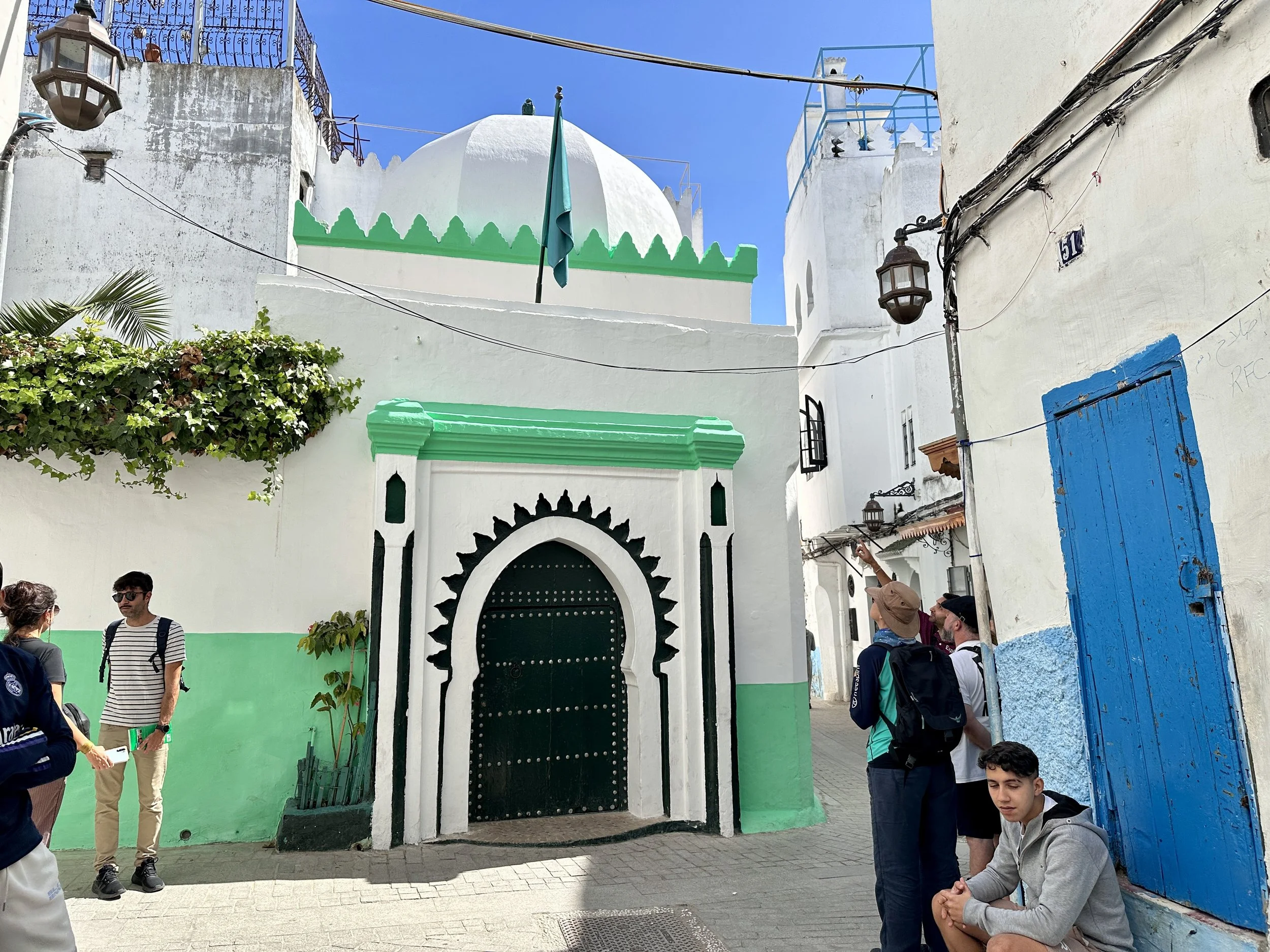
Then we followed our guide into the narrow lanes. The streets wound tight and close, whitewashed walls catching the light. We walked past small mosques and green doors that stood out against the plaster. I didn’t know what the colour meant, but it seemed to belong to the place.
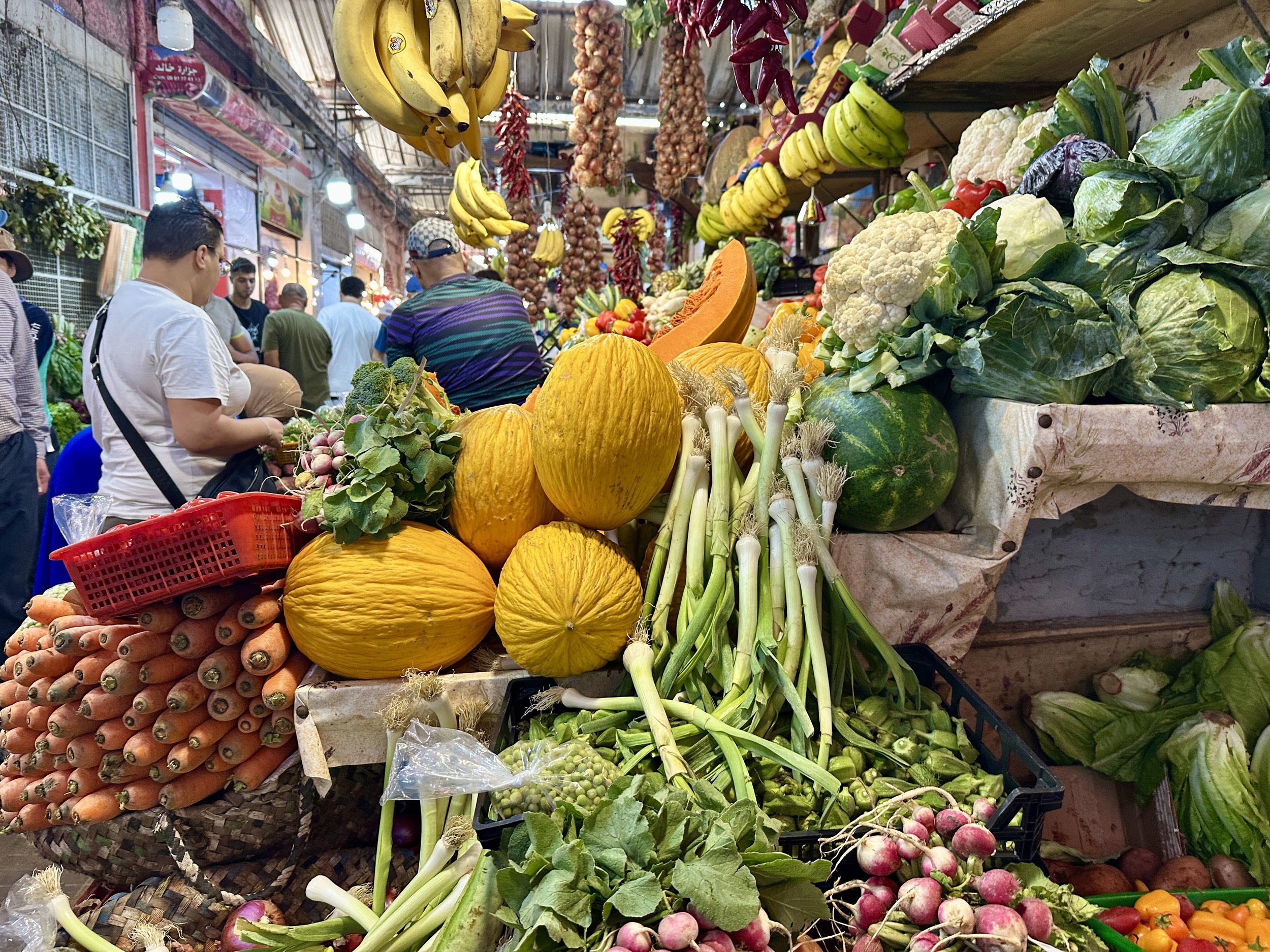
The path opened into the markets, alive with colour and noise. Stalls spilled onto the streets, stacked with bright fruit, hanging clothes, and trays of spices. The air was thick with the smell of mint and bread.
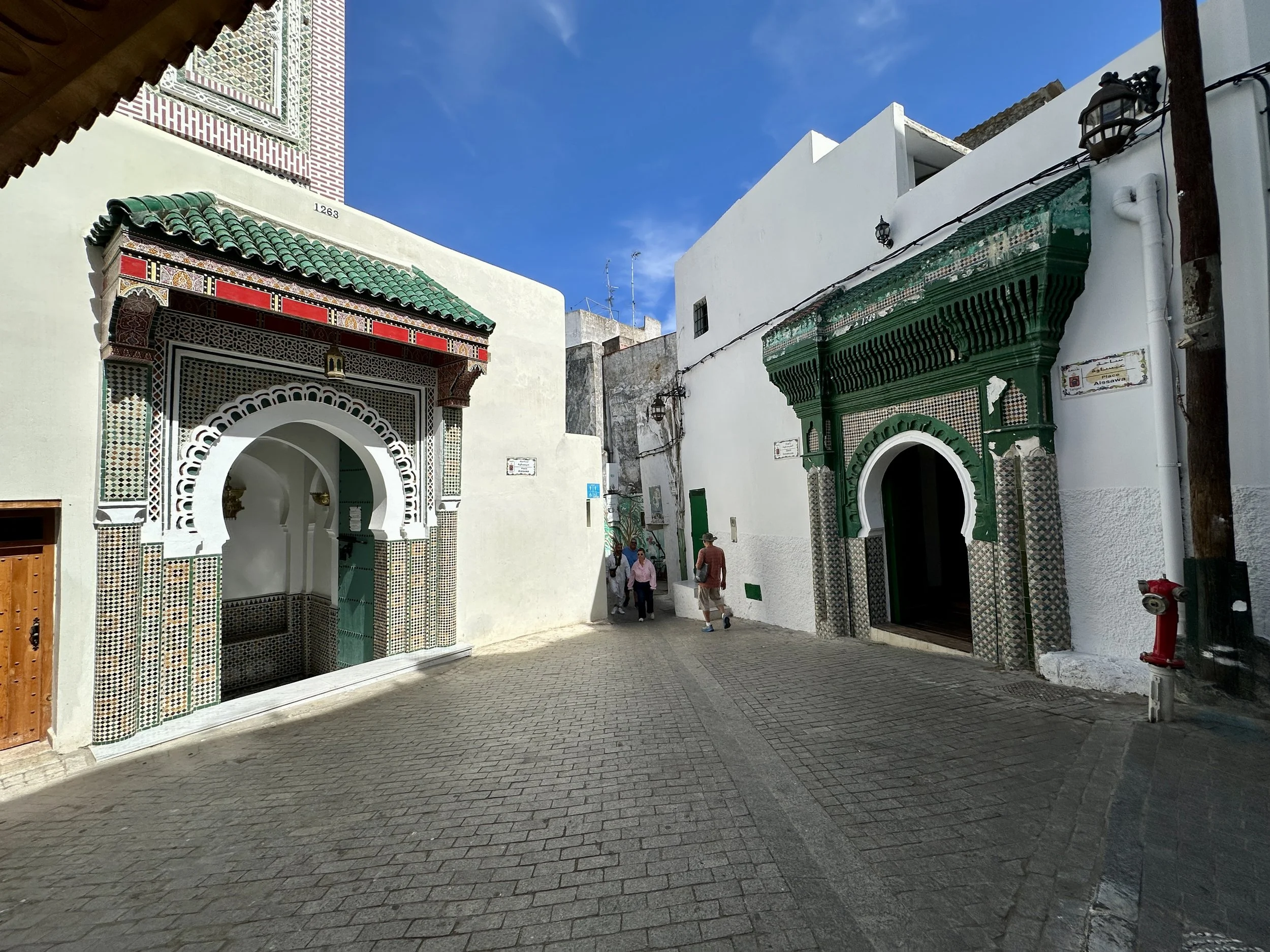
We walked past the Grand Mosque and paused just long enough to take a quick photo from the street. We did not step inside, we only watched the light catch the stone arches and the steady stream of people moving through the courtyard. It was a short stop, but it showed us how much the building shapes the flow of the neighbourhood.
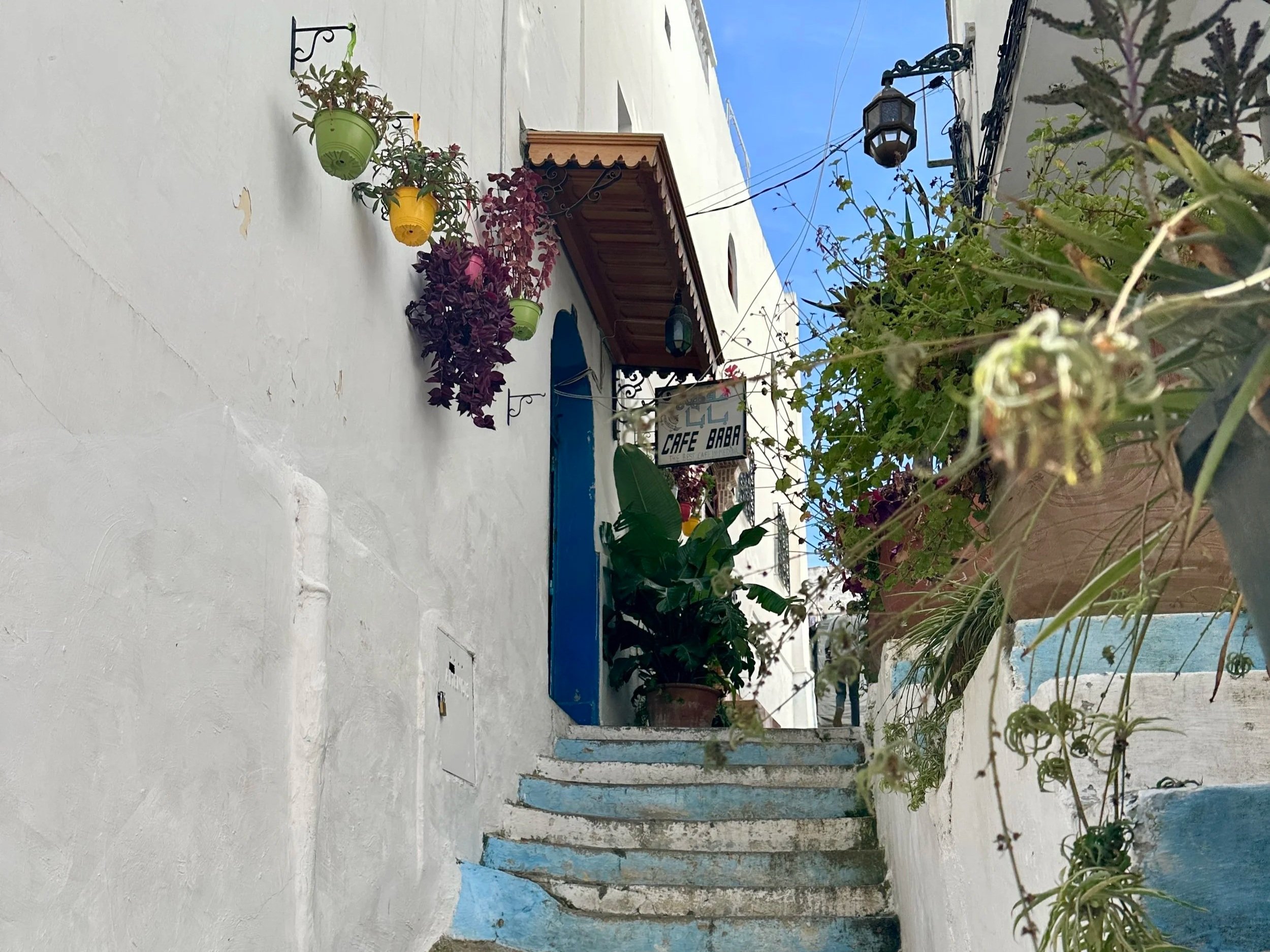
We paused outside Café Baba, taking a photo of its famous façade. The Rolling Stones once drank tea here, our guide said with a grin. We didn’t go in, but it felt like one of those spots that carries a bit of legend in the air.
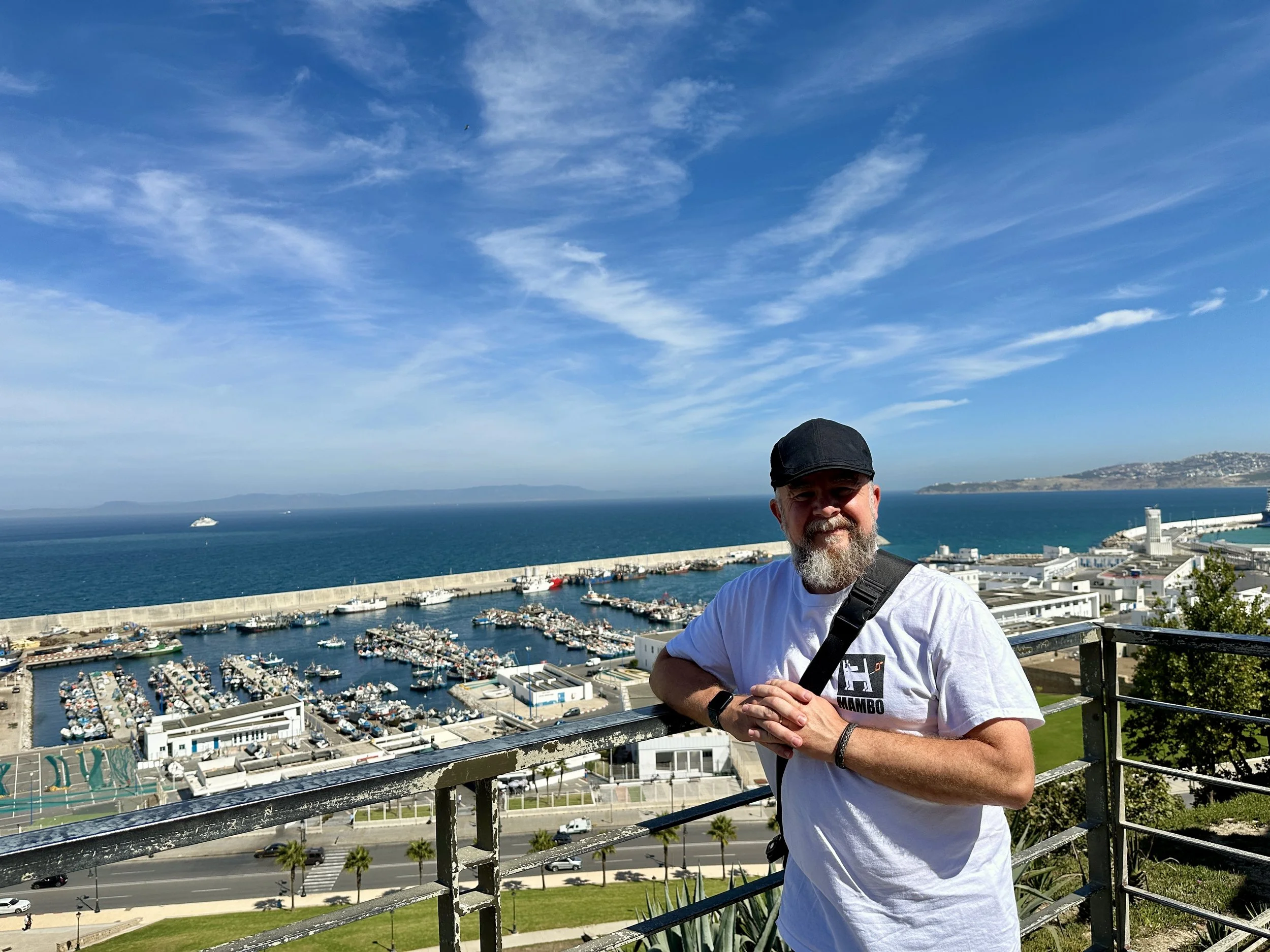
At the top of the Kasbah, the city opened up again. From the lookout, Tangier spread below in white and blue, the port glinting in the light. We followed the winding streets down until we reached Place du 9 Avril, busy with traffic and chatter. The sound of the city rose around us — horns, footsteps, voices in many tongues. Tangier felt alive, layered, and full of stories. It was both an ending and a beginning, the point where Europe slipped away and Morocco began.
By half past eleven, we were back on the minibus, leaving Tangier behind. The road wound through the Rif Mountains, climbing past olive groves and small villages. The sea faded from view, replaced by blue hills and quiet valleys. The drive took us inland toward Chefchaouen, where the noise of the coast gave way to silence and shade. The blue city waited ahead.