
Chefchaouen — The Blue Quiet
The drive from Tangier to Chefchaouen cut through shifting landscapes. The green hills softened, the air thinned, and the road began to twist through mountain folds. We arrived around four in the afternoon and walked through one of the old gates to our hotel, the Parador.
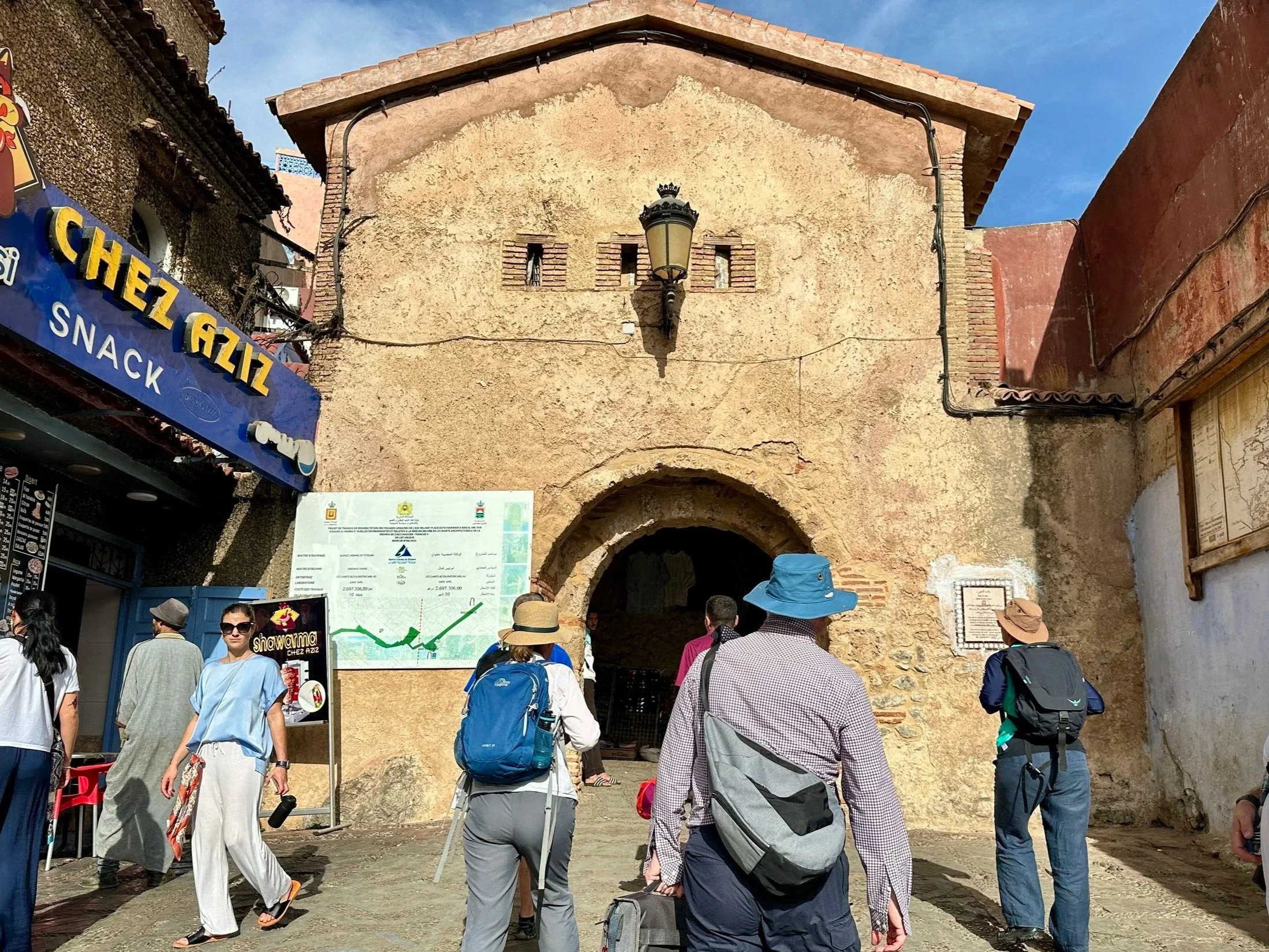
Chefchaouen had been on my bucket list for years. That first wander through the blue lanes felt surreal. The shops were closing, the town settling into evening. I was already in love with it, the calm, the colour, the way sound softened against the painted walls.
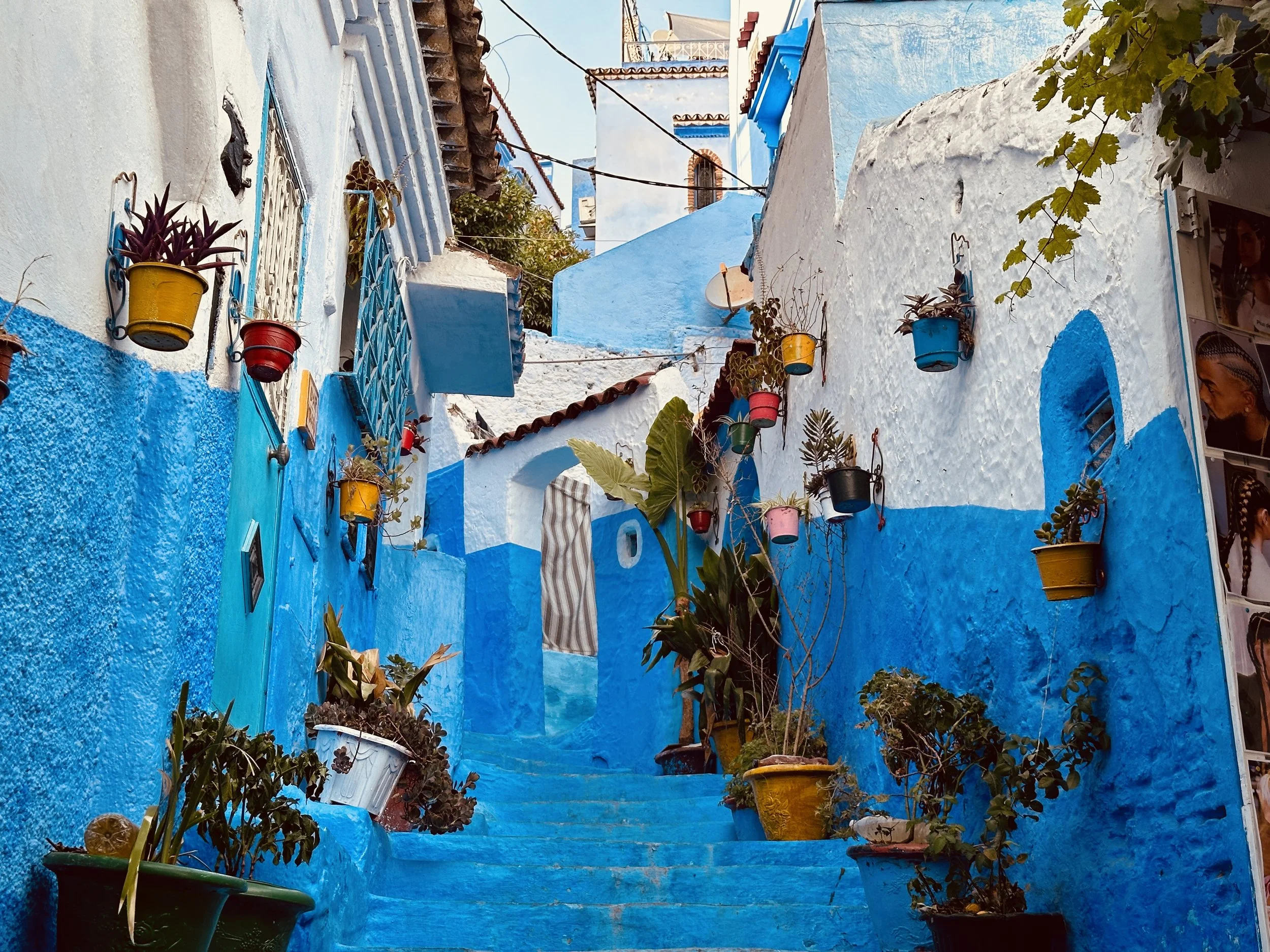
Chefchaouen was founded in 1471 as a small fortress built to defend against the Portuguese along the coast. After the fall of Granada, Muslims and Jews from Al-Andalus began settling here, bringing their traditions, architecture, and quiet grace. You can still feel that influence in the city’s arches and courtyards, and in the way its streets twist like old memories. For centuries, Chefchaouen stayed hidden in the Rif Mountains, untouched and self-contained, which may be why it feels almost timeless today.
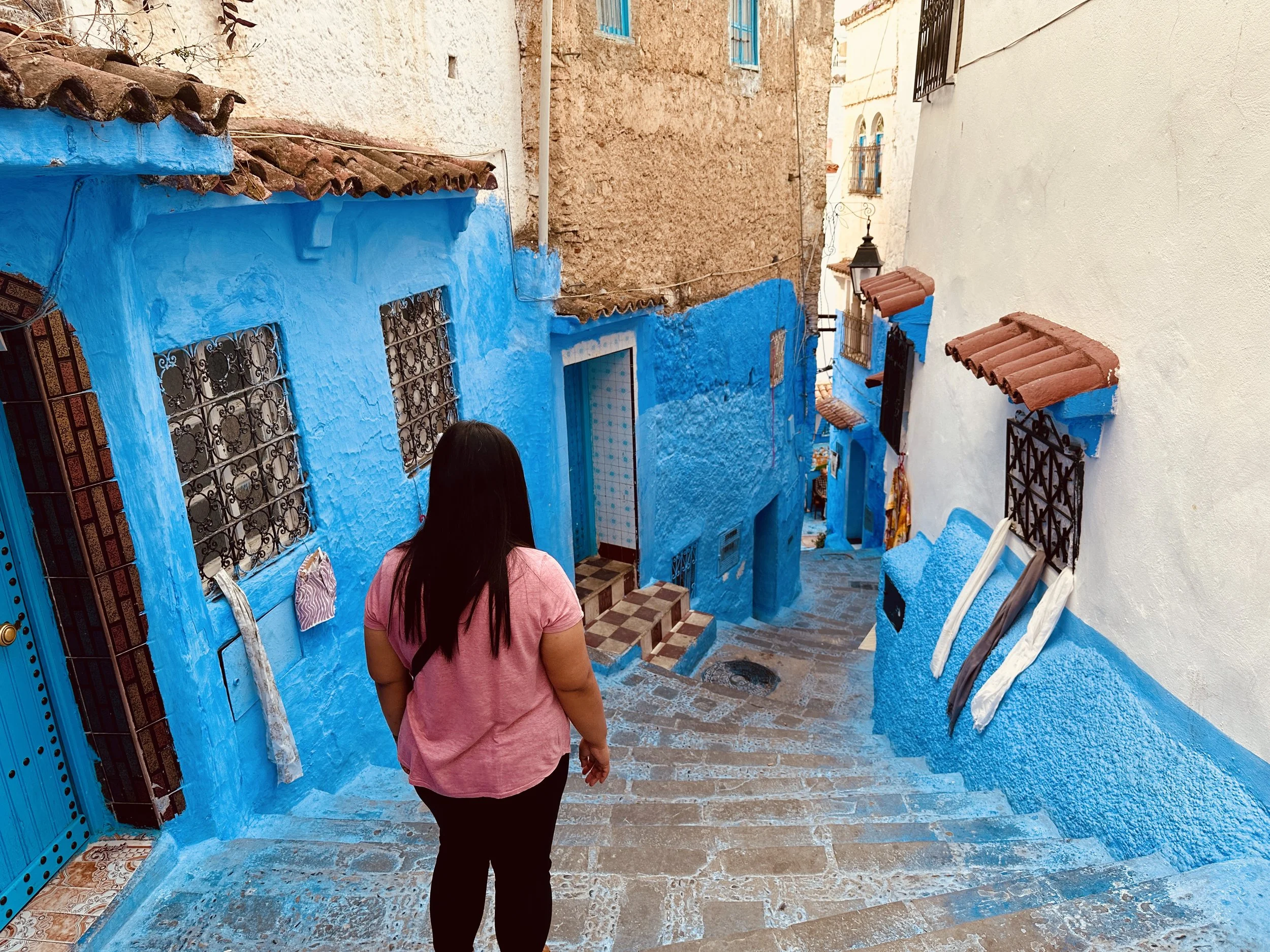
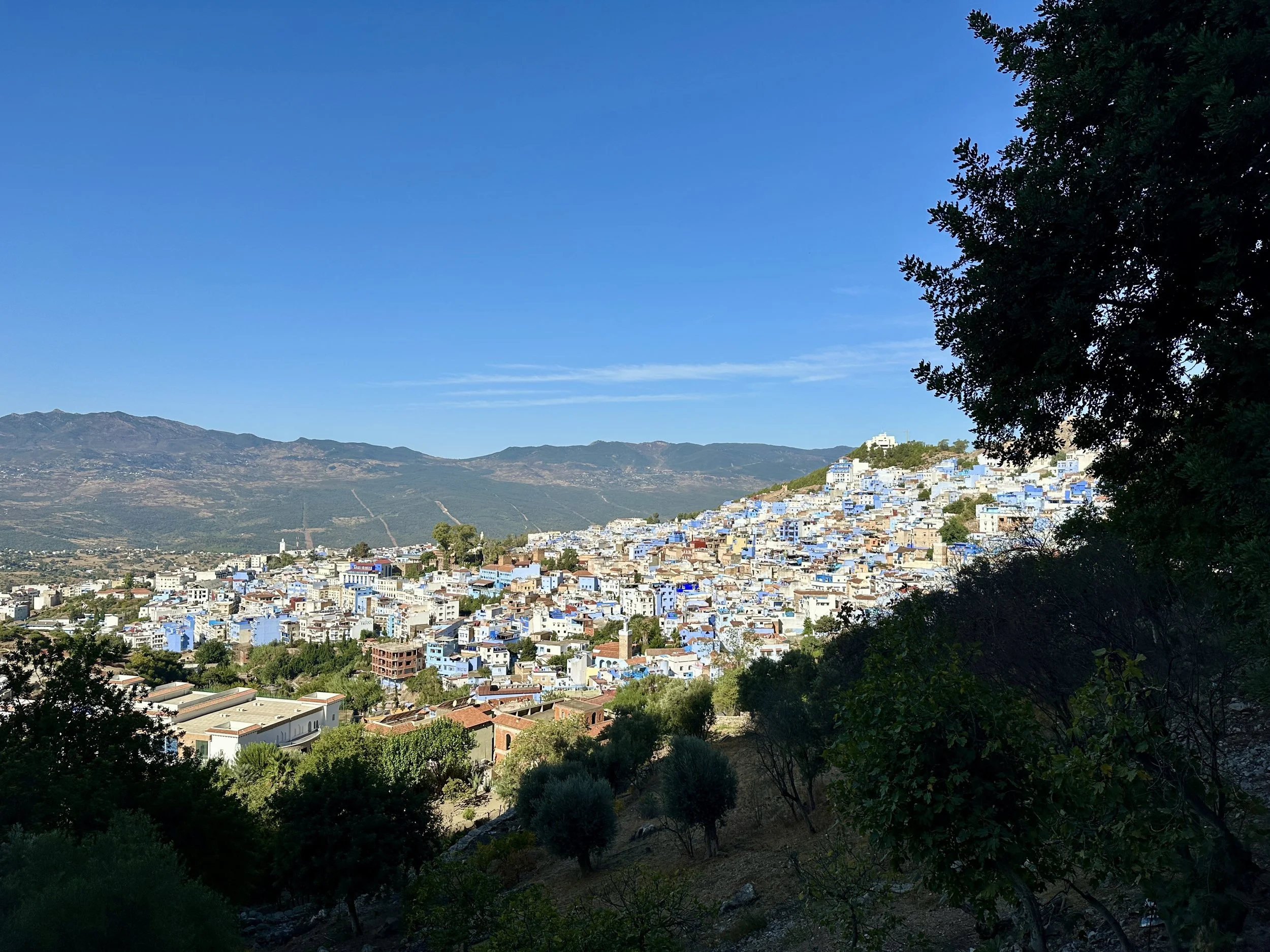
The next morning, we met our guide, a young man who grew up in the city. He took us through the famous blue streets before the shops opened, when the light was soft and the alleys were quiet. He explained that the blue symbolises peace and heaven, a tradition believed to have been introduced by Jewish refugees in the 1930s. They brought with them the custom of painting walls blue to remind people of the sky and the divine, and over time, the whole town followed. It’s strange to think that without its blue, Chefchaouen would look like any other white hill town along the Mediterranean, beautiful, but not this dreamlike.
We walked past a small waterfall and the old communal laundry area where locals once washed their clothes. Then up a path that opened to a hilltop view of the whole town, a sea of blue framed by the Rif Mountains.
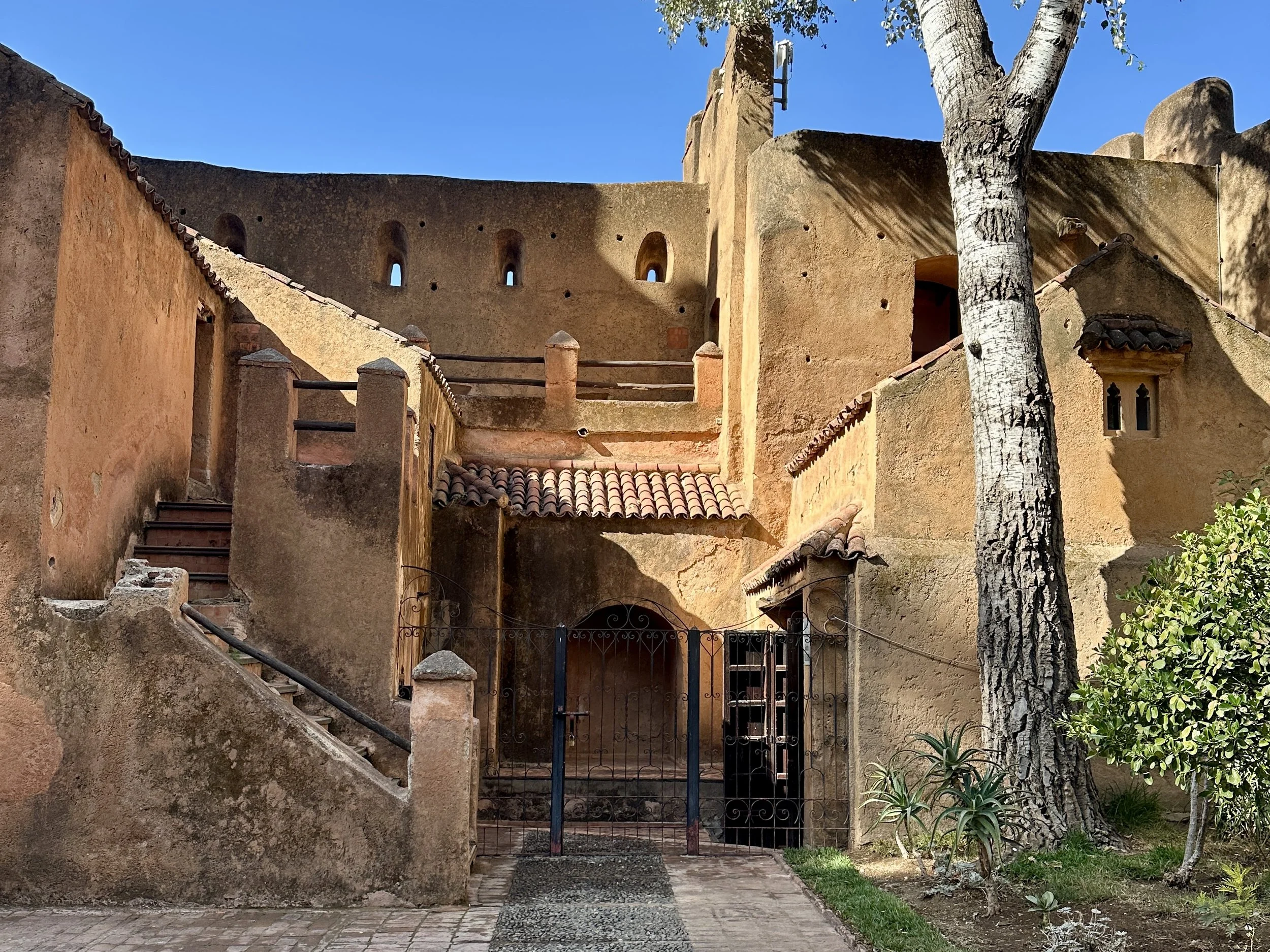
We made our way back into the old medina to see the Kasbah, its red walls standing in quiet contrast to the blue around it. Built in the 15th century by the city’s founder, it once guarded this mountain town from foreign attacks.
Places to See in the Blue City
If you have a day or two in Chefchaouen, wander slowly. The best sights reveal themselves between turns.
The Kasbah: A quiet red fortress in the main square.
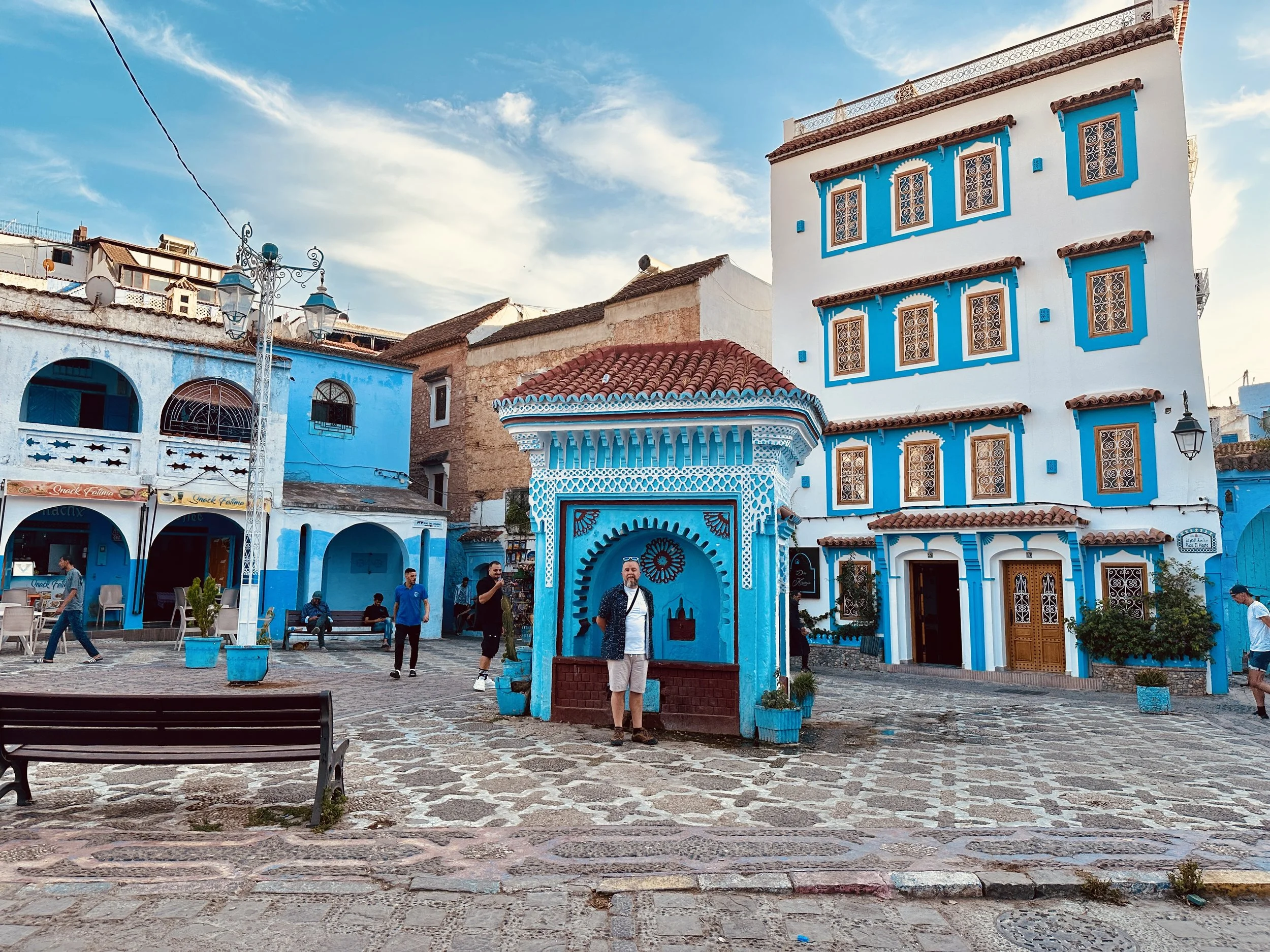
Plaza Uta el-Hammam: The heart of the medina, perfect for people-watching over mint tea.
Ras El Maa Waterfall: A small cascade at the edge of town, where locals once washed clothes.
The Spanish Mosque: A short uphill walk for a full view of the blue city against the Rif Mountains.
The Blue Streets: Best seen early morning before the shops open, when the town is still half asleep.
Leaving Chefchaouen felt like waking from a soft dream. The next stop was Fes, a long bus ride ahead through the folds of the Rif.
