
Prizren, The Old Town Loop, A Half Day Walk Through Kosovo’s Historic City
Prizren was the name that kept surfacing whenever we planned Kosovo. After two nights here, the old town proved even better in person. Cobbles by the river. Stone bridges. Rooftops climbing towards a fortress. We arrived the day before from Peja after visiting the White Drin waterfalls and Pristina. This morning was for the town itself. Because this was part of the Undiscovered Balkans trip, our Explore tour leader took us on a walking tour. A slow loop through history, food scents, river views, and a steady climb to the fortress that looks over everything.
⏱️ Prizren Walking Route
Route: Shatërvan > Stone Bridge > Teqja e Saraçhanës & Saraçve Mosque > Xhamia e Emin Pashës > Gazi Mehmed Pasha Hammam > Lidhja Shqiptare e Prizrenit > Door 52 > Kisha Ortodokse “Sveti Spas” > Kalaja e Prizrenit > Xhamia e Sinan Pashës > back to Shatërvan
Style: Loop, uphill section to the fortress, easy descent
Good for: First time visitors, culture lovers, photography, relaxed half day walks
🕌 Shatërvan Square, 00:00–00:10
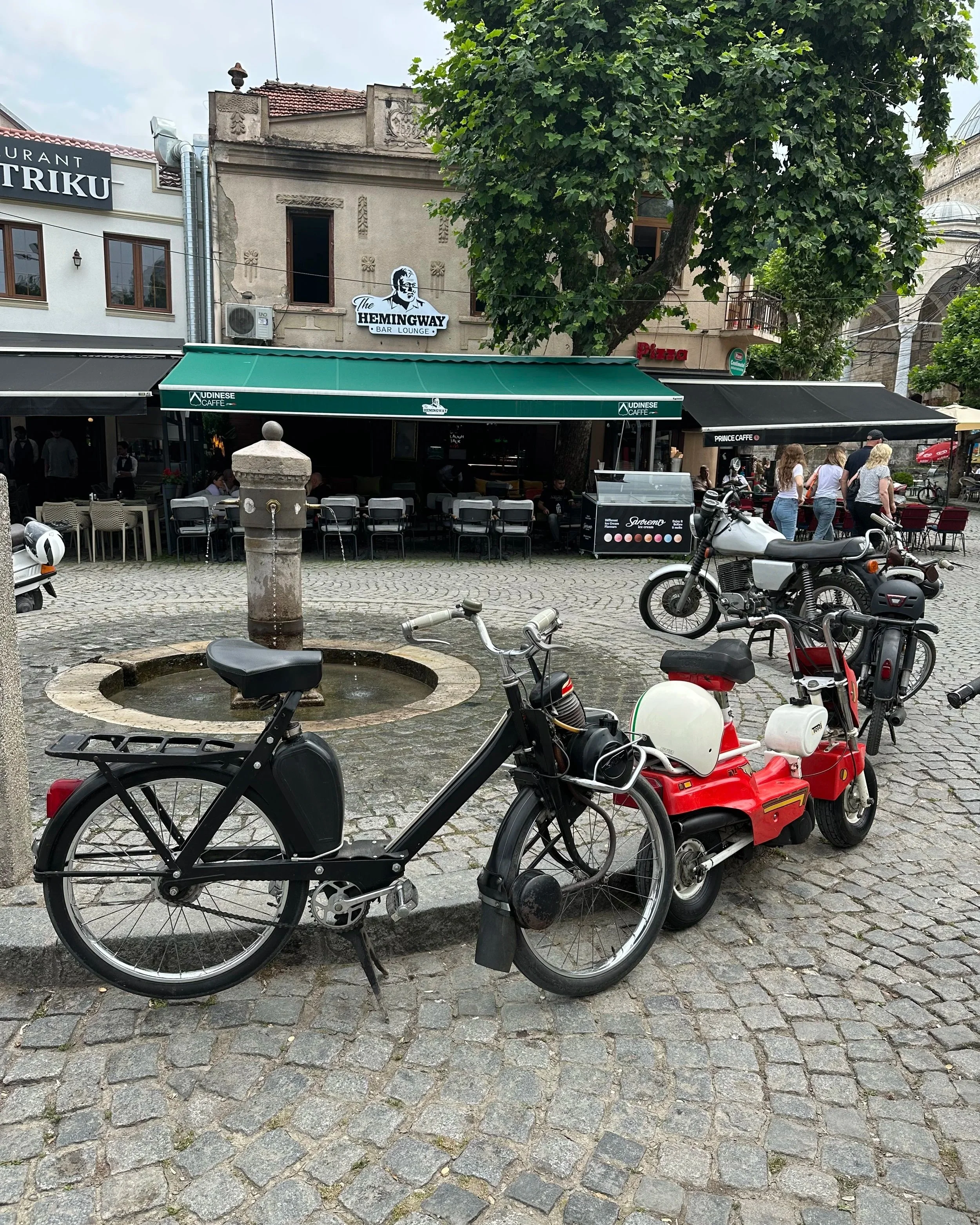
Start at Shatërvan, the small square that feels like Prizren’s living room. A stone fountain sits in the centre fed by cold water from the Ottoman period. This fountain has been part of daily life here for centuries, a place where travellers once paused to refresh before entering the bazaar quarter. Locals stop to drink or splash their hands. Cafés line the edges with the smell of coffee and grilled meat. The minaret of Xhamia e Sinan Pashës rises over the roofs and the river hums nearby. It sets a soft pace for the walk ahead.
🚶 Walk to Stone Bridge: 2 minutes
🌉 Stone Bridge, Ura e Gurit, 00:12–00:17
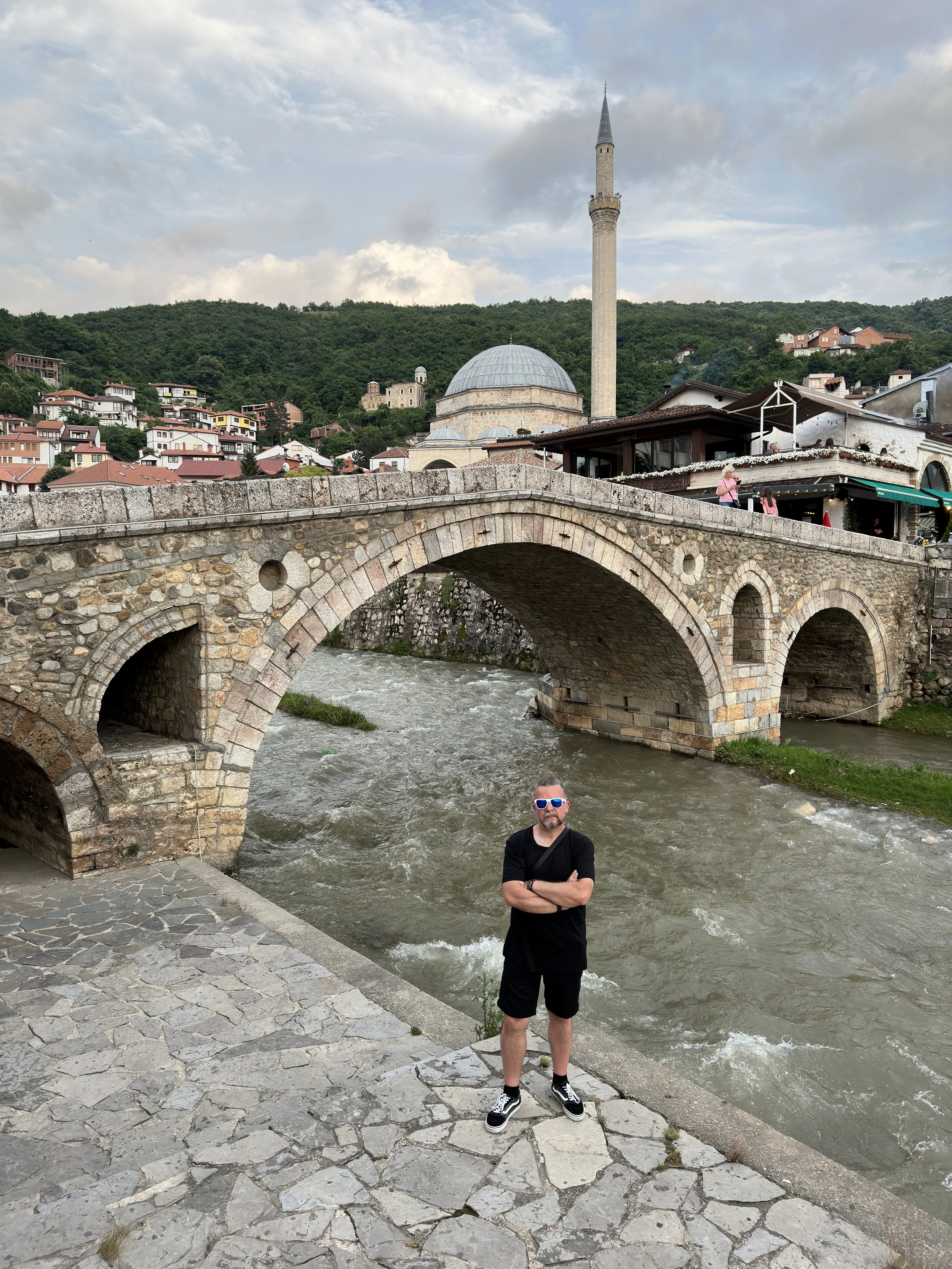
Take a few steps and reach the Stone Bridge, Prizren’s postcard view. Its roots go back to the fifteenth century, part of the original Ottoman crossing that linked the bazaar to the residential quarter. It crosses the Bistrica with one clean arch, rebuilt after the 1979 flood. Standing here, you see how the town grew around this single point, a crossing used by traders, soldiers, and caravans. Stand in the middle for the classic scene, mosque on one side, fortress on the hill, cafés along the riverbanks. This is the moment that shows why travellers fall for the city.
🚶 Walk to Teqja e Saraçhanës and Saraçve Mosque: 3 minutes
🕌 Teqja e Saraçhanës and Saraçve Mosque, 00:20–00:30
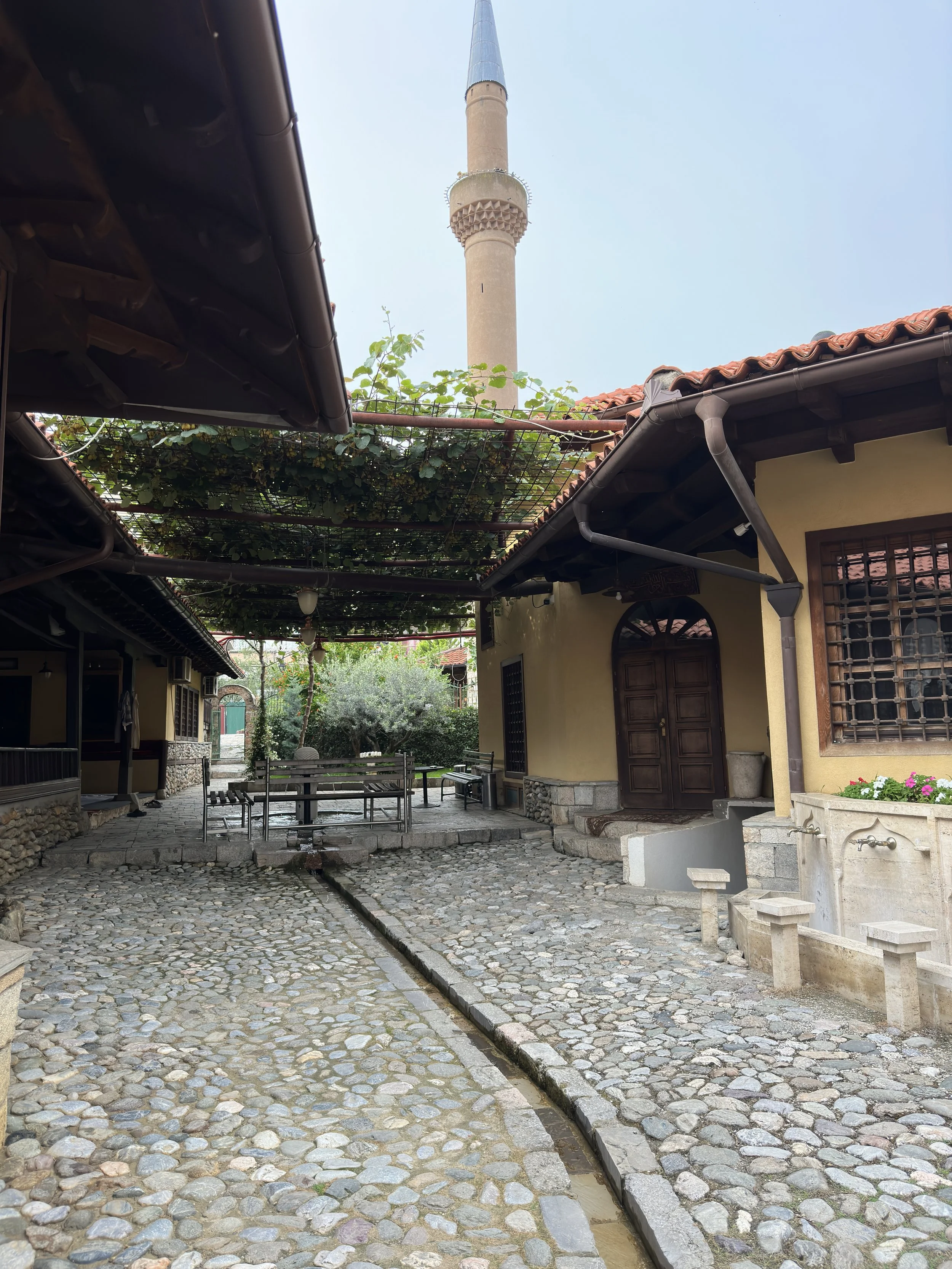
Follow the street lined with grills and cafés until you reach the courtyard of Teqja e Saraçhanës. The noise drops as soon as you step in. It feels cool and shaded. This teqe belonged to the Halveti Sufi order, a brotherhood that shaped spiritual life here from the seventeenth century onwards. The Saraçve Mosque sits beside it with simple walls and a quiet presence. Together they form a small religious pocket that survived fires, conflict, and rebuilding. It is the kind of oasis that resets your pace.
🚶 Walk to Xhamia e Emin Pashës: 4 minutes (gentle uphill)
🕌 Xhamia e Emin Pashës, 00:34–00:39
Continue uphill to Xhamia e Emin Pashës. Built in the late Ottoman period by one of Prizren’s wealthiest benefactors, it marked the expansion of the city beyond the riverfront. Its minaret lifts above the roofs. We did not go inside. It works as a small waypoint, a gentle marker that you are leaving the busiest streets behind.
🚶 Walk to Gazi Mehmed Pasha Hammam: 3 minutes
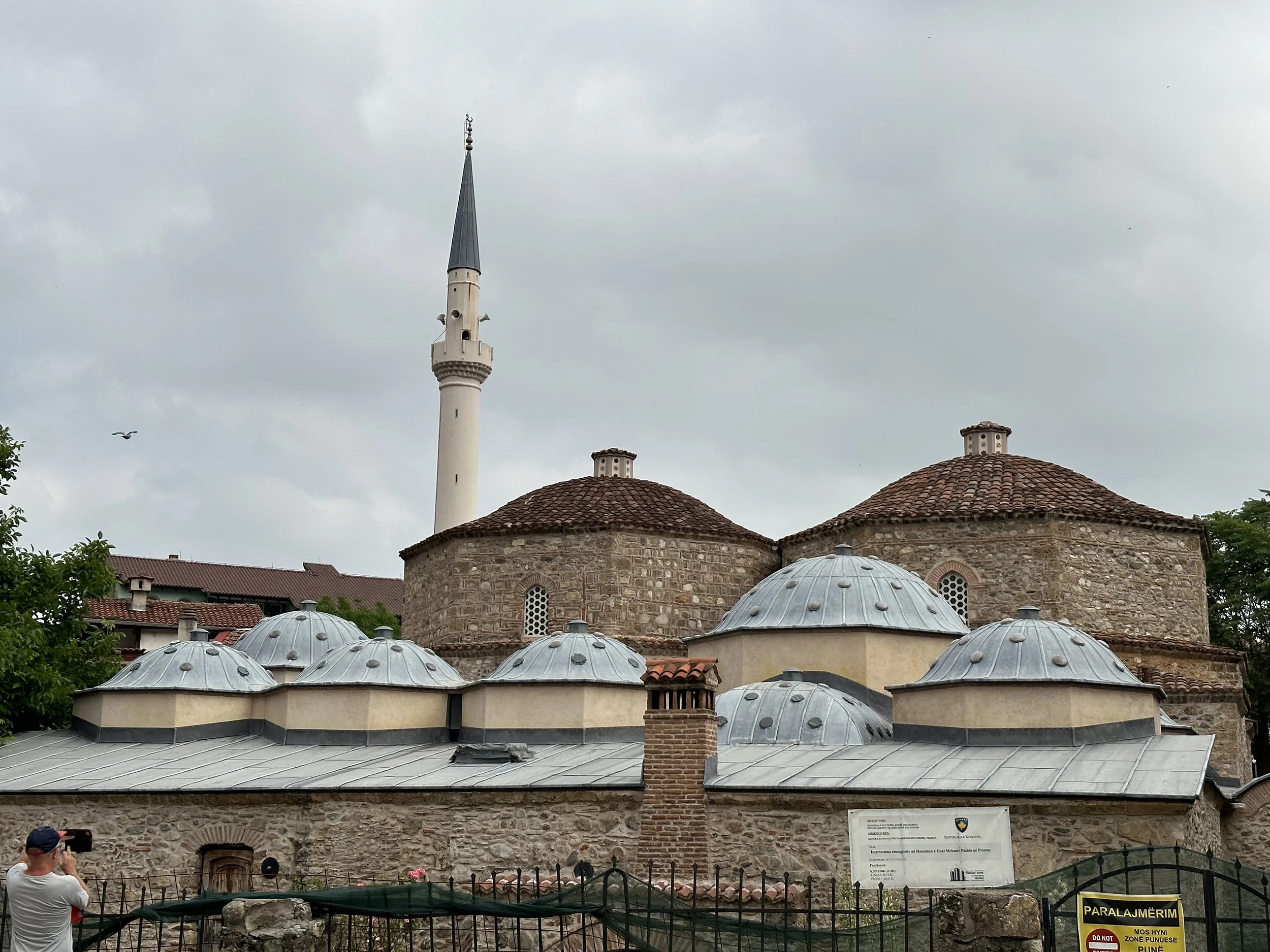
🛁 Gazi Mehmed Pasha Hammam, 00:42–00:52
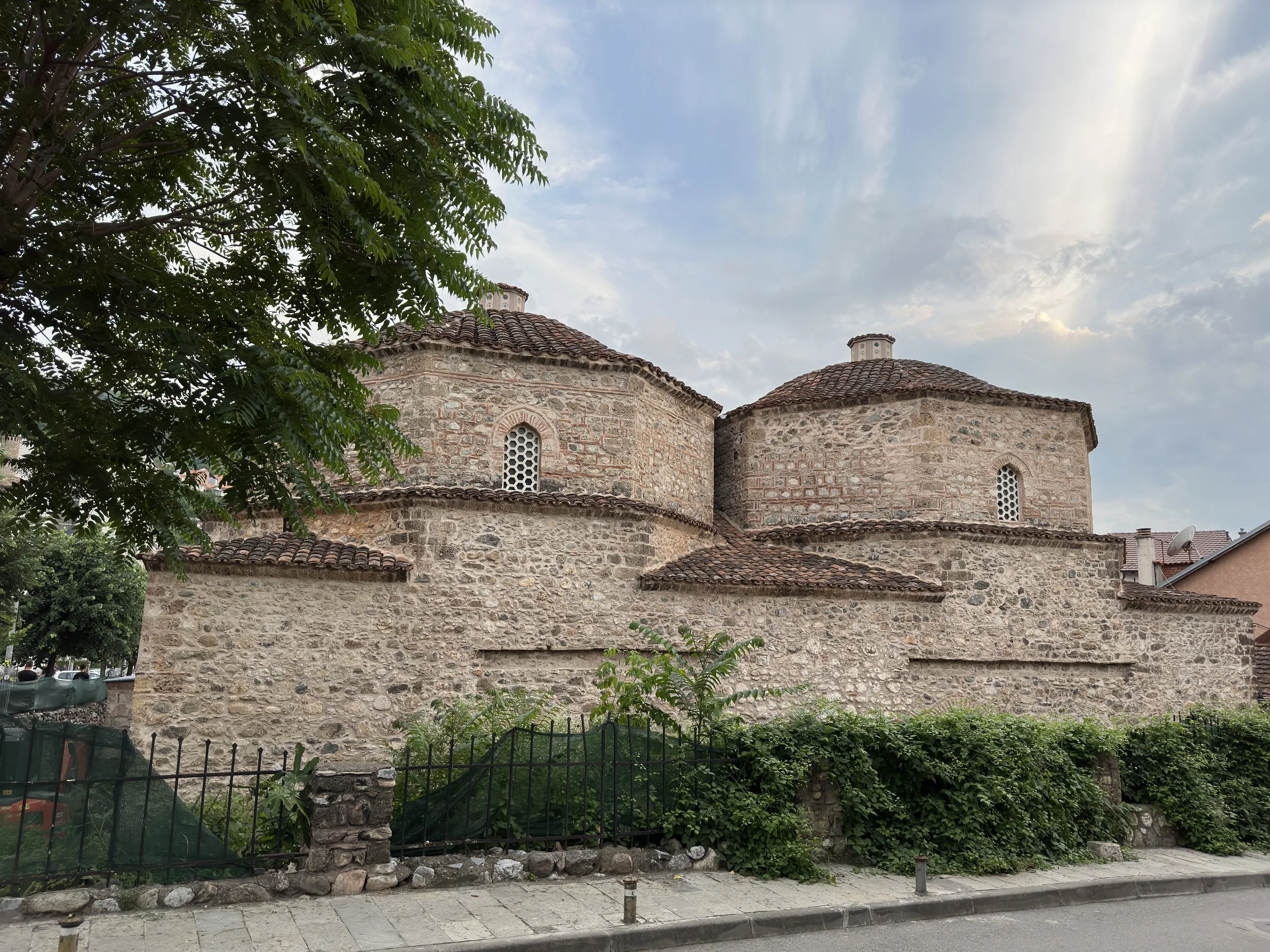
Walk further and reach the sixteenth century hammam, confirmed as one of the most important Ottoman buildings in Prizren. It was built by Gazi Mehmed Pasha, the same governor who founded the nearby mosque and medrese, creating a full civic complex. You recognise it by the domes with round skylights. The hammam once served as a public bathhouse, a vital social space for the community. The stone walls still hold the feeling of a space made for warmth and rest. Even unused, it shows how long the town has shaped and reshaped its routines.
🚶 Walk to Lidhja Shqiptare e Prizrenit: 4 minutes
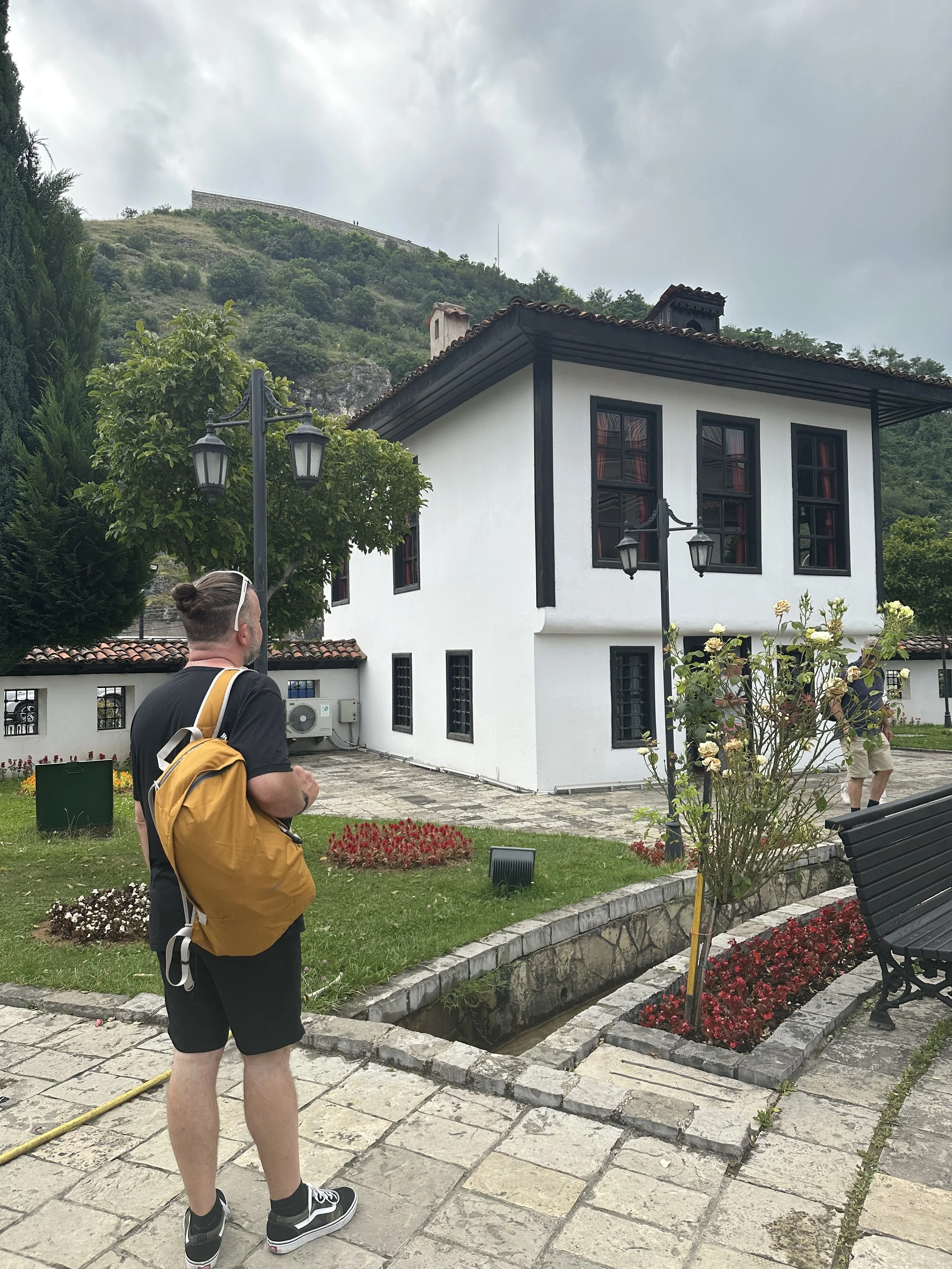
🏛️ Lidhja Shqiptare e Prizrenit, 00:56–01:11
Continue to the Albanian League of Prizren, founded in 1878. That year is confirmed. The complex sits beside the river with restored wooden balconies. This is the house where Albanian leaders gathered to resist partition and to define cultural and political identity under the late Ottoman Empire. Standing here, you understand why this building is treated almost like a shrine. Even a short stop shows the weight of the place. Mountains behind. River ahead. A site that mattered then and still matters now.
🚶 Walk to Door 52: 5 minutes (cross the small bridge)
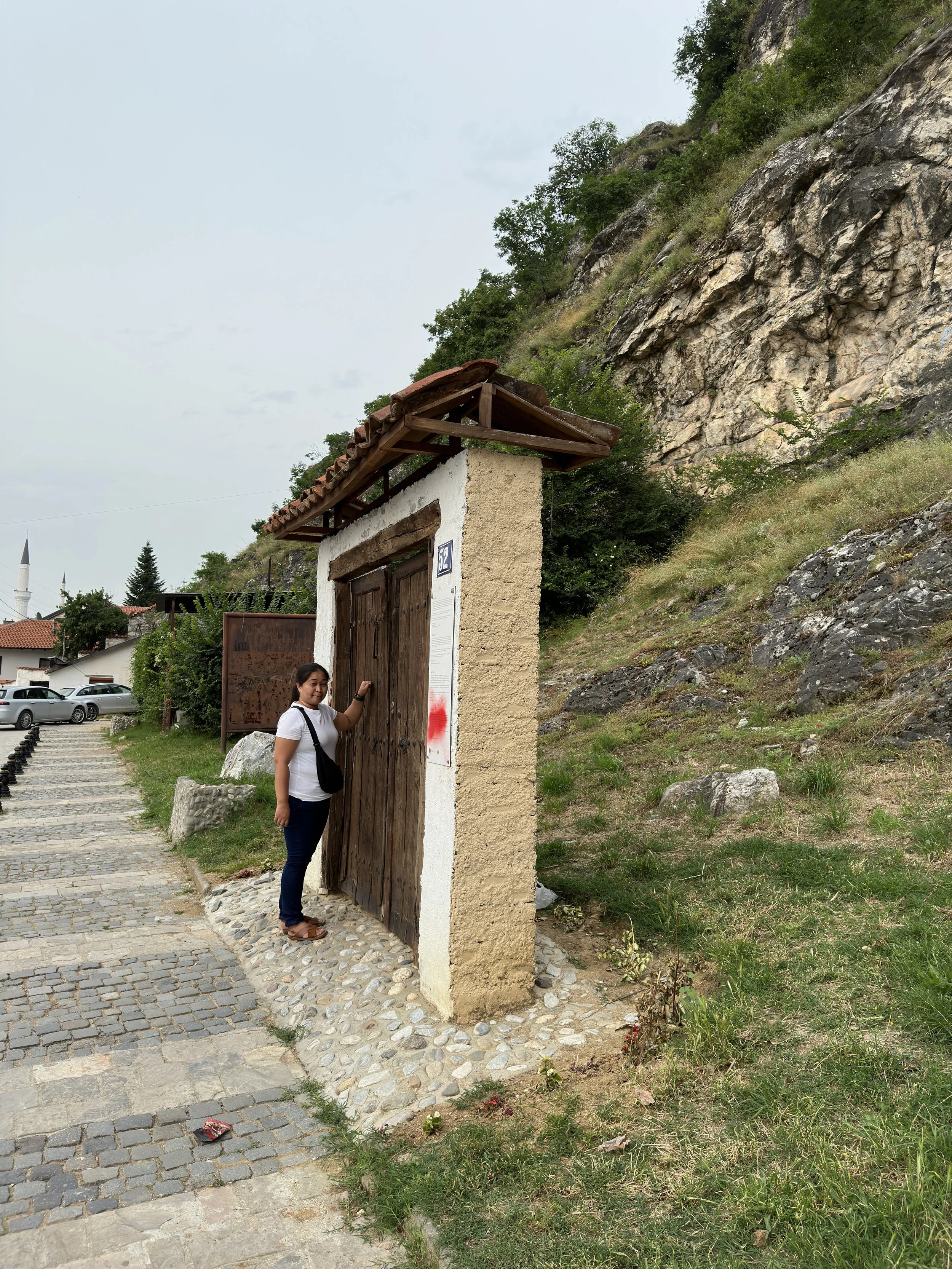
🚪 Door 52, 01:16–01:26
Cross the bridge beside the League and follow the quiet lane. Door 52 stands here, a traditional pinewood Prizren door held together with iron hinges forged by local blacksmiths. Doors like this were once a sign of craftsmanship and family status across the old neighbourhoods. It has a hammer that once served as a bell, handles to open and close, a snake shaped latch at the back that symbolises protection, and the Star of David carved into the wood, a reminder of Prizren’s once diverse religious communities. The door has served families for more than two hundred years. It was nearly demolished in May 2020 but survived and is now restored as a public monument. A small detail that carries big stories.
🚶 Walk to Kisha Ortodokse “Sveti Spas”: 6 minutes uphill
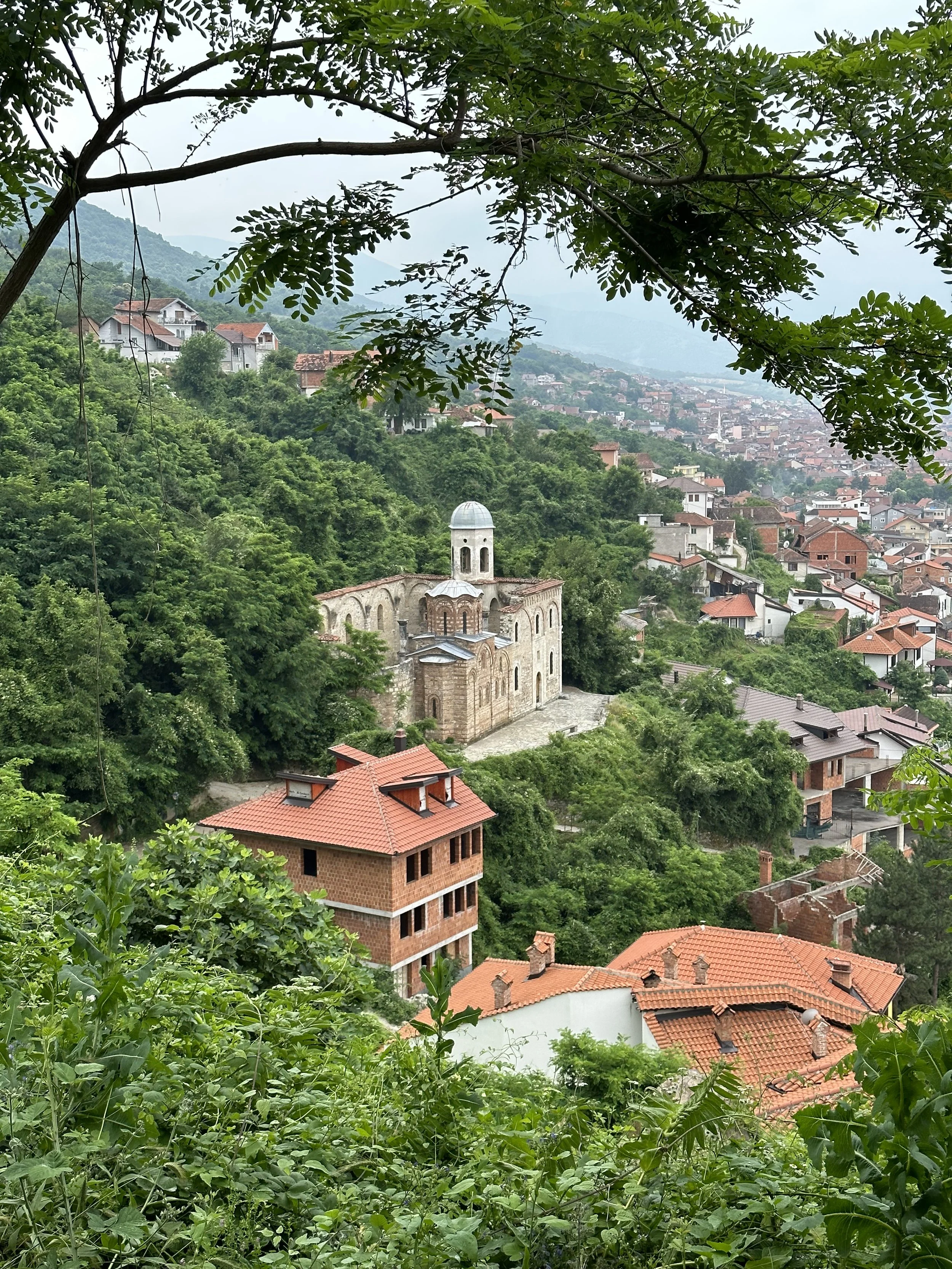
⛪ Kisha Ortodokse “Sveti Spas”, 01:32–01:47
The lane rises towards the Church of the Holy Saviour, built in the fourteenth century. That date is confirmed. It was once part of a larger Serbian monastic complex built under the Nemanjić dynasty, a period when Prizren served as a royal and ecclesiastical hub. When we passed, the gate was closed. The church has faced damage and periods of restoration. The exterior still shows its medieval walls and faint fresco traces. It sits on a quiet terrace overlooking the old town. A still point before the climb.
🚶 Walk to Kalaja e Prizrenit, Prizren Fortress: 10 minutes, steep climb
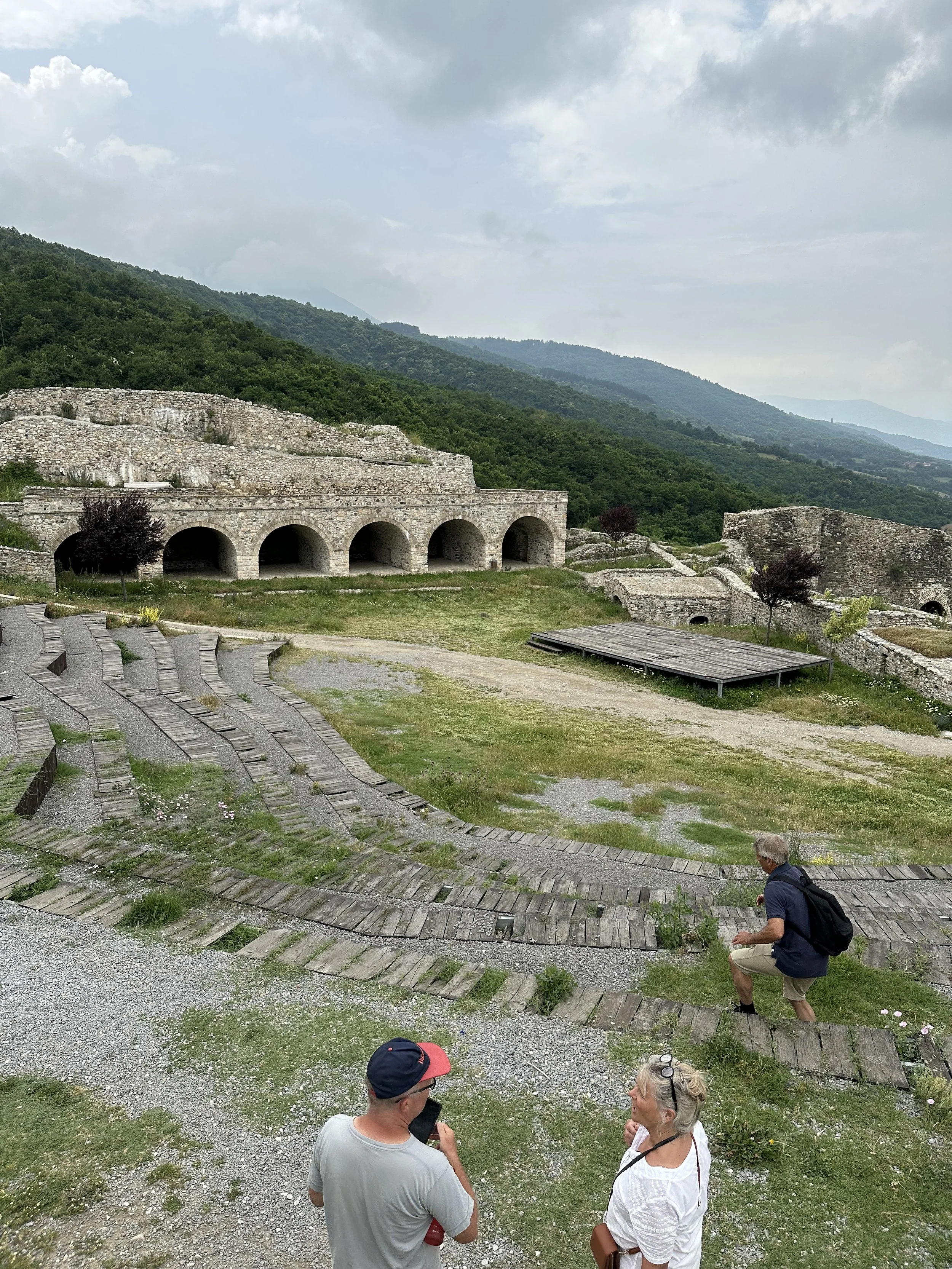
🏰 Kalaja e Prizrenit, Prizren Fortress, 01:57–02:27
Keep climbing and reach the fortress. Its origins go back to late antiquity, confirmed by studies, with major Ottoman expansions later. You feel the shift in era as the stones change size and shape under your feet. The fortress has watched over Illyrian settlements, Byzantine marches, Serbian rule, and Ottoman armies. You walk through broken gates into open courtyards with wide views over the valley. The river, the mosques, the roofs, the mountains, all gathered in one sweep. It is the best viewpoint in the city. No argument needed.
🚶 Walk down to Xhamia e Sinan Pashës: 12 minutes downhill
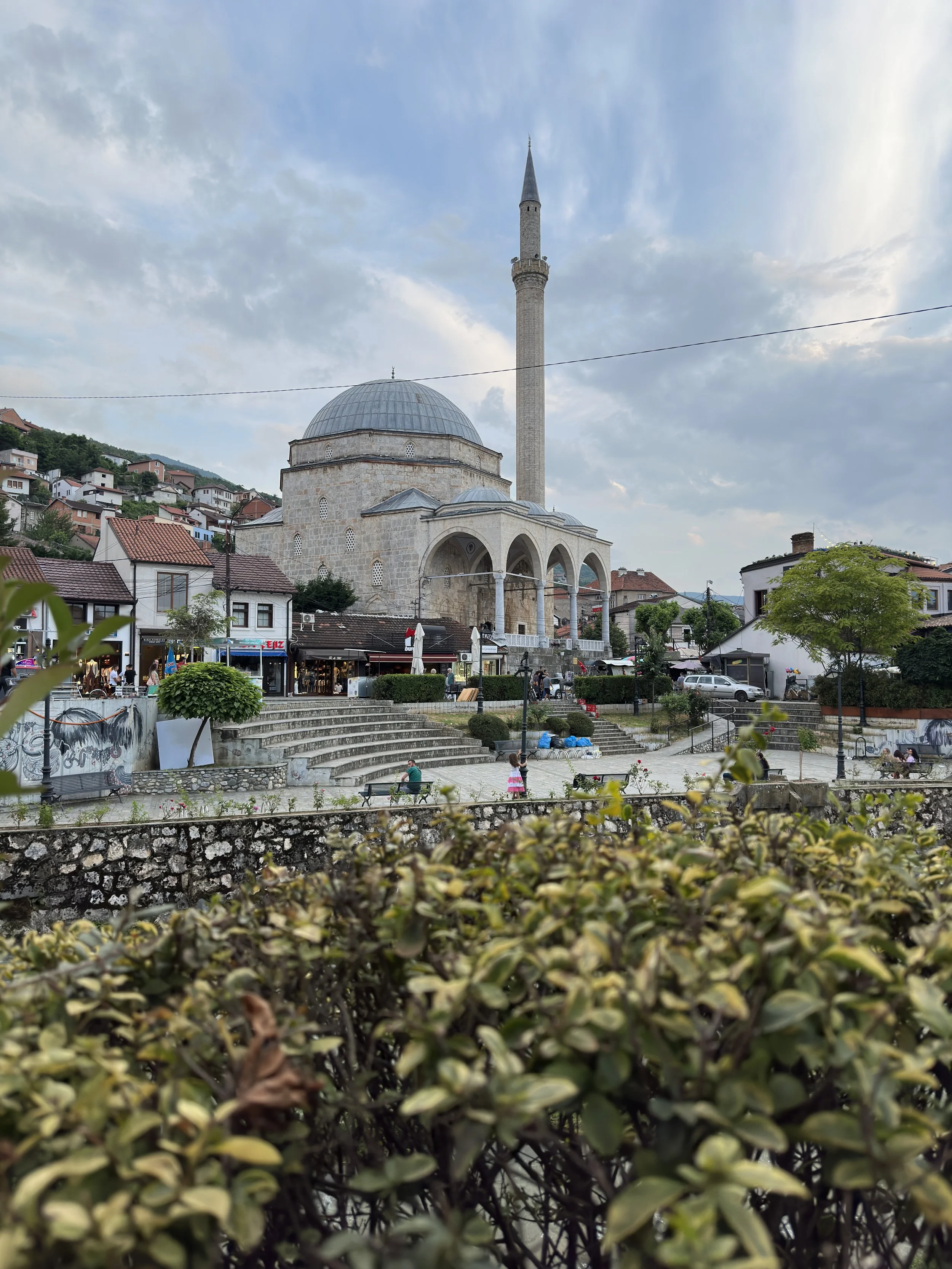
🕌 Xhamia e Sinan Pashës, 02:39–02:49
Walk back down into the old town and arrive at Xhamia e Sinan Pashës, built in 1615. A confirmed date. It was commissioned by Sofi Sinan Pasha, an Ottoman official who used stones taken from the former Saint Archangels Monastery, a fact that still sparks debate today. The large stone walls and tall minaret mark the heart of Prizren. We did not go inside on this loop, but the mosque anchors the riverfront and guides you back towards Shatërvan.
🚶 Walk to Shatërvan: 3 minutes
⬅️ Back to Shatërvan, 02:52–end
A short stroll returns you to the fountain where the walk began. The loop closes softly, the sounds of the old town settling around you.
Best Selfie Spots
• Middle of the Stone Bridge, your backdrop is the river and fortress
• Shatërvan fountain, early light hits the water just right
• The terrace below Sveti Spas, soft views over tiled roofs
• The fortress walls, widest panorama in Prizren
• Riverfront by Sinan Pasha Mosque, classic postcard angle
Pro Tips
• Wear supportive shoes, the climb to the fortress is steady and uneven
• Bring water, especially in summer, the uphill heat builds quickly
• Start early to avoid crowds on the bridge and at the fortress
• If you struggle with steep paths, take slow steps, the stones get slippery after rain
• The route is safe and straightforward, but some parts are exposed to sun
If You Have More Time
• Visit Marash Park beside the river, a small green break
• Explore the Catholic Cathedral of Our Lady of Perpetual Succour, a calm interior
• Walk the riverside path all the way to the old stone mill
• Cross to the newer part of town for cafés and sweet shops
• Visit the Archaeological Museum inside the fortress if open, timings vary, I cannot confirm current schedules
Final Thoughts
This loop covers the heart of Prizren. The main sights are here. The mosques. The hammam. The League. The fortress. The small details like Door 52. It gives you a strong sense of the old town in one sweep. You leave knowing the shape of the place, the way it rises and folds around the river.
From here our day did not end. We left Prizren’s riverbanks and made our way into the vineyards of nearby Rahovec and Veliko Hoča, a Serbian enclave wrapped in rolling hills. It was time for wine tasting, village lanes, and another chapter of Kosovo’s complicated map.
