
Pristina: A Quick Look At Kosovo’s Capital
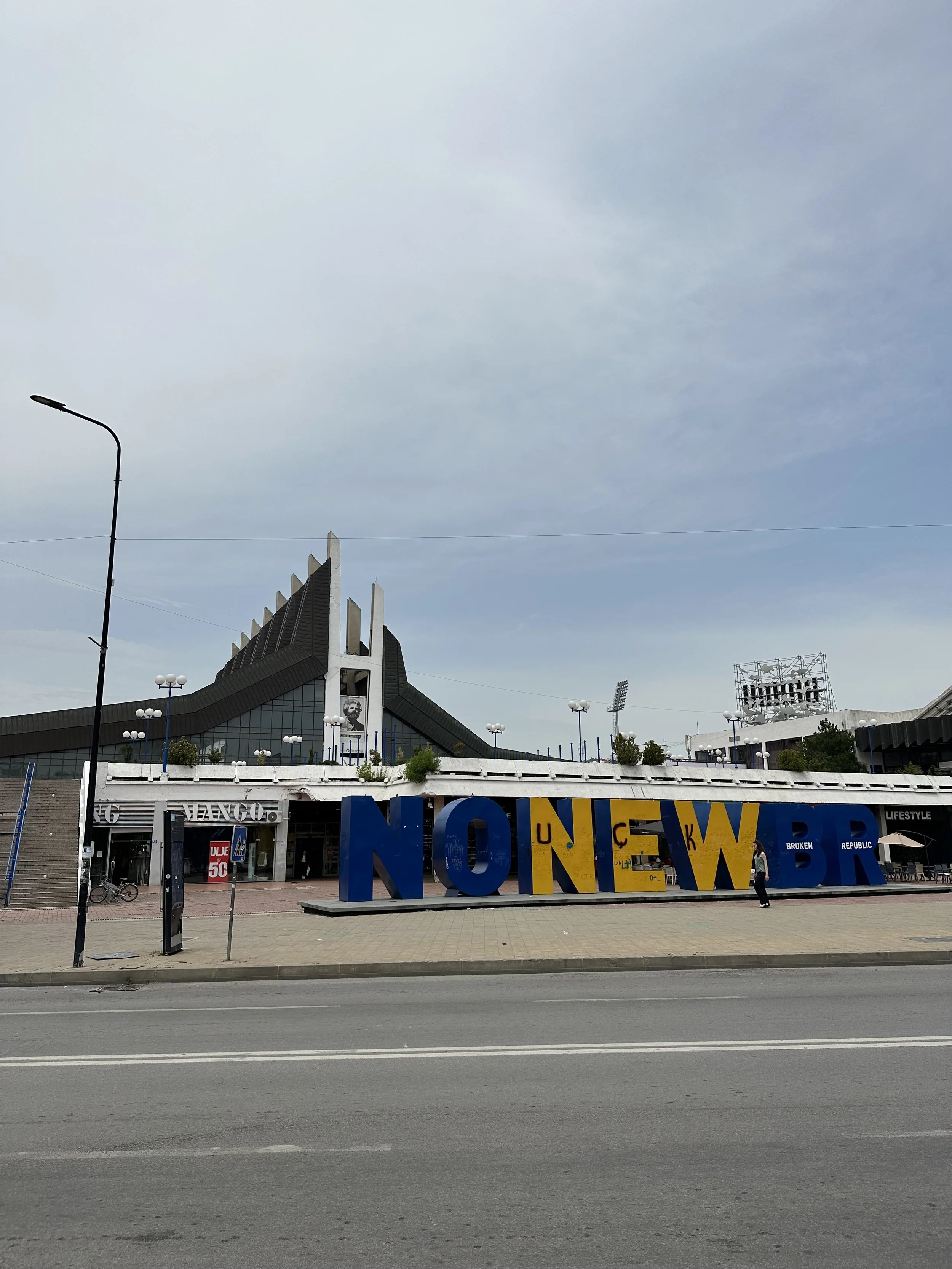
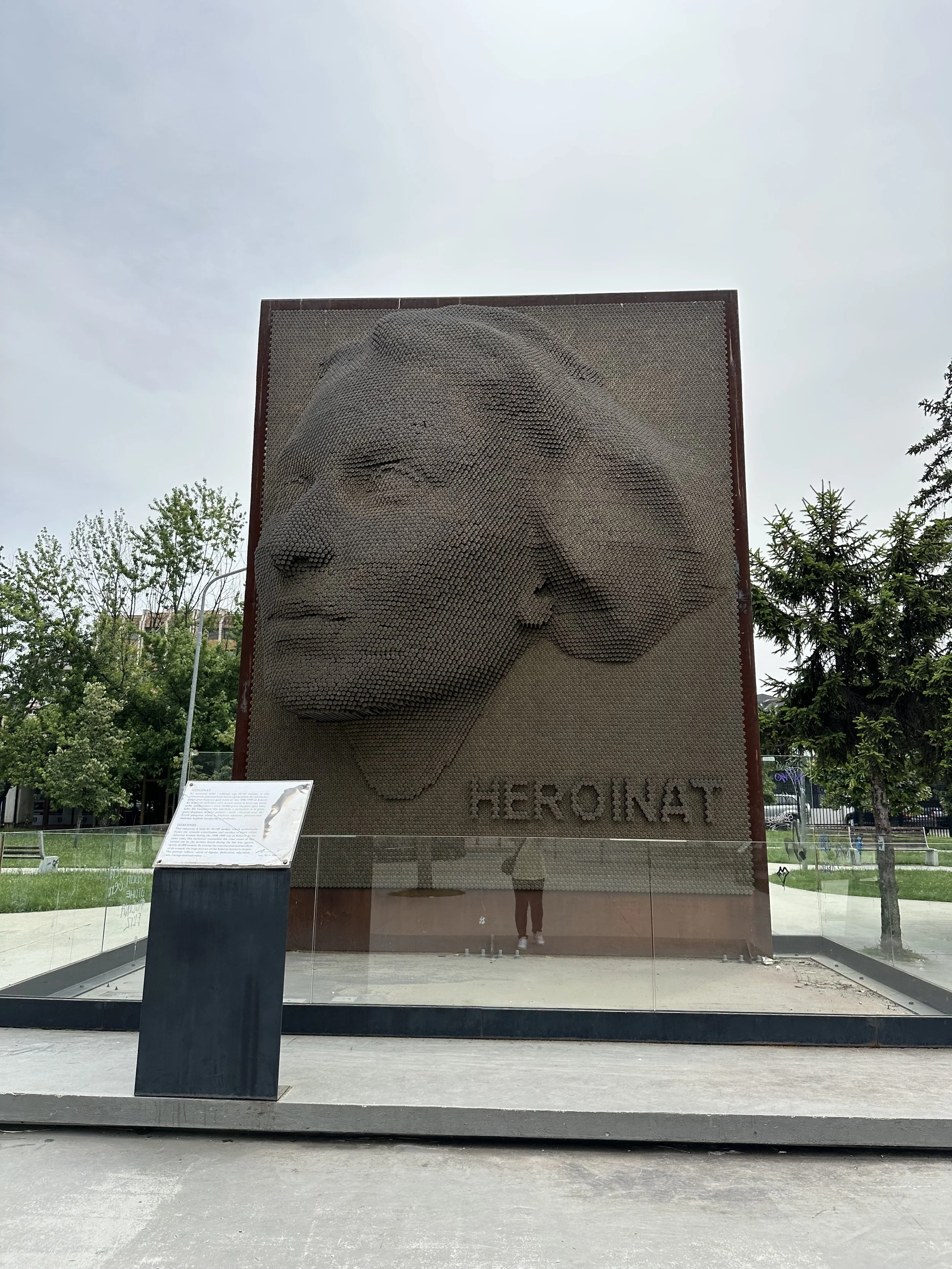
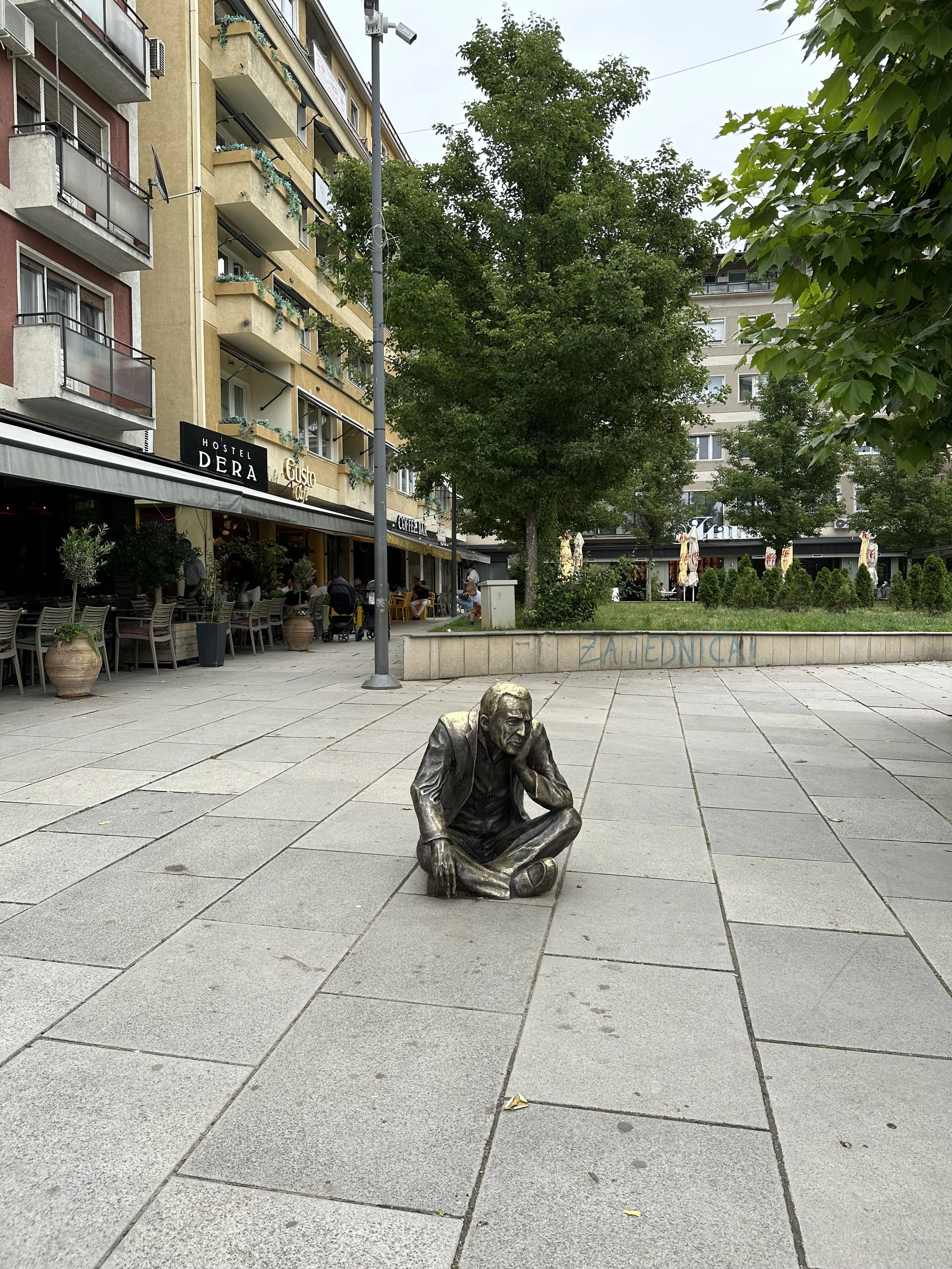
We started at the Newborn Monument, bright and loud at the edge of the centre. Then we walked to the Heroinat, its thousands of metal faces catching the light. The pedestrian street carried us forward, concrete blocks on both sides, their walls splashed with murals and graffiti. In the middle of all that colour we found the bronze figure of Faik Rexhepi, seated in quiet defiance, a sculpture born from a 1990 protest photo. It felt like a pause in the noise. A little further on we saw Skanderbeg again, raised high in the square, the familiar silhouette seen across so much of the Balkans. We passed the National Theatre next, its worn facade and steady crowds giving the street a bit of old city rhythm.
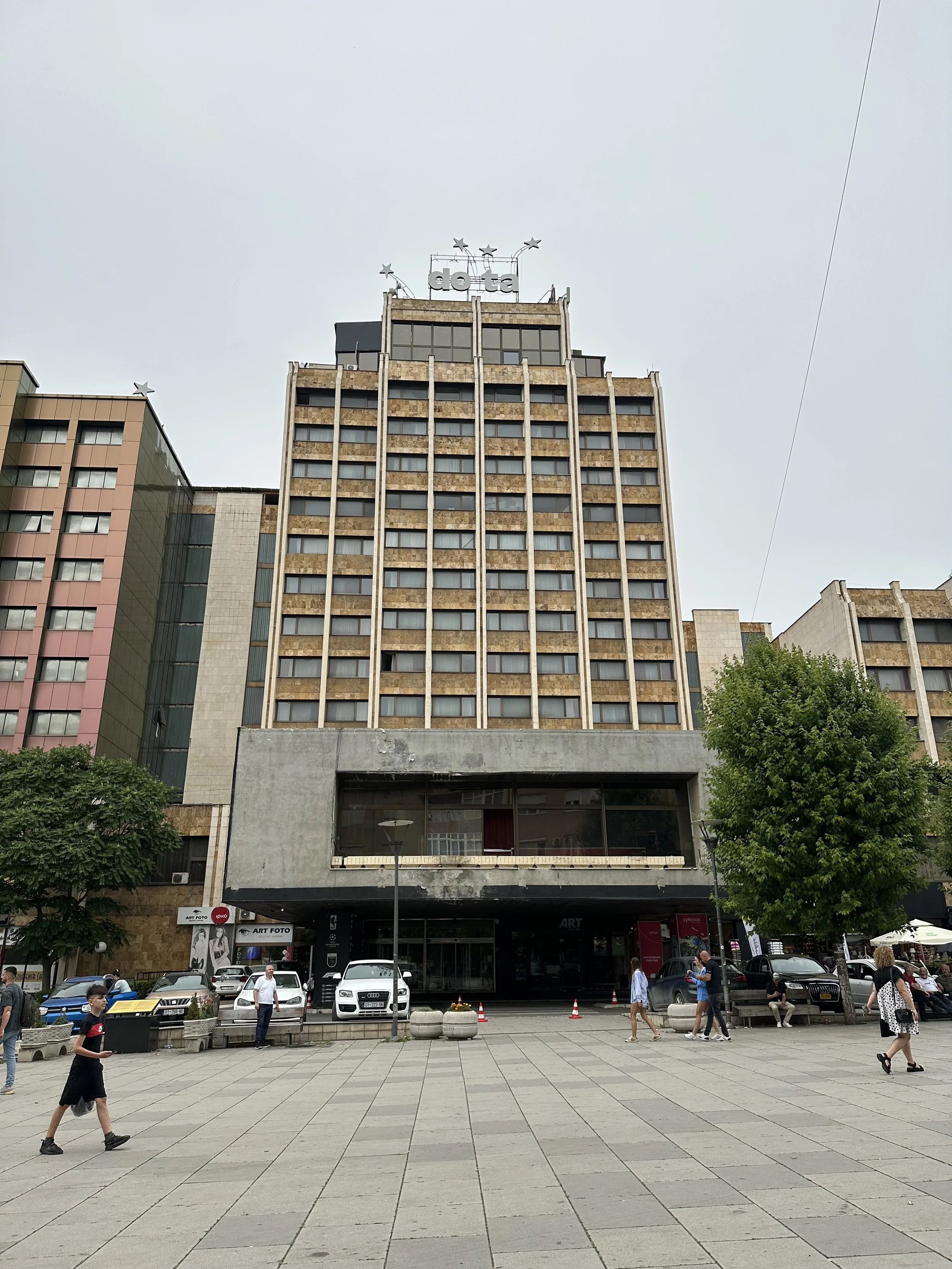
Then the Grand Hotel rose ahead of us, tall and tired, a slab of pure modernist ambition. It opened in the late nineteen seventies under Yugoslav rule. Local stories say Tito pushed for it and stayed here in nineteen seventy nine. Straight lines. Simple geometry. Concrete wrapped round rows of windows. Once the pride of the city. A symbol of progress. Now faded yet still full of presence, a reminder of the era when modernism tried to pull Pristina into the future.
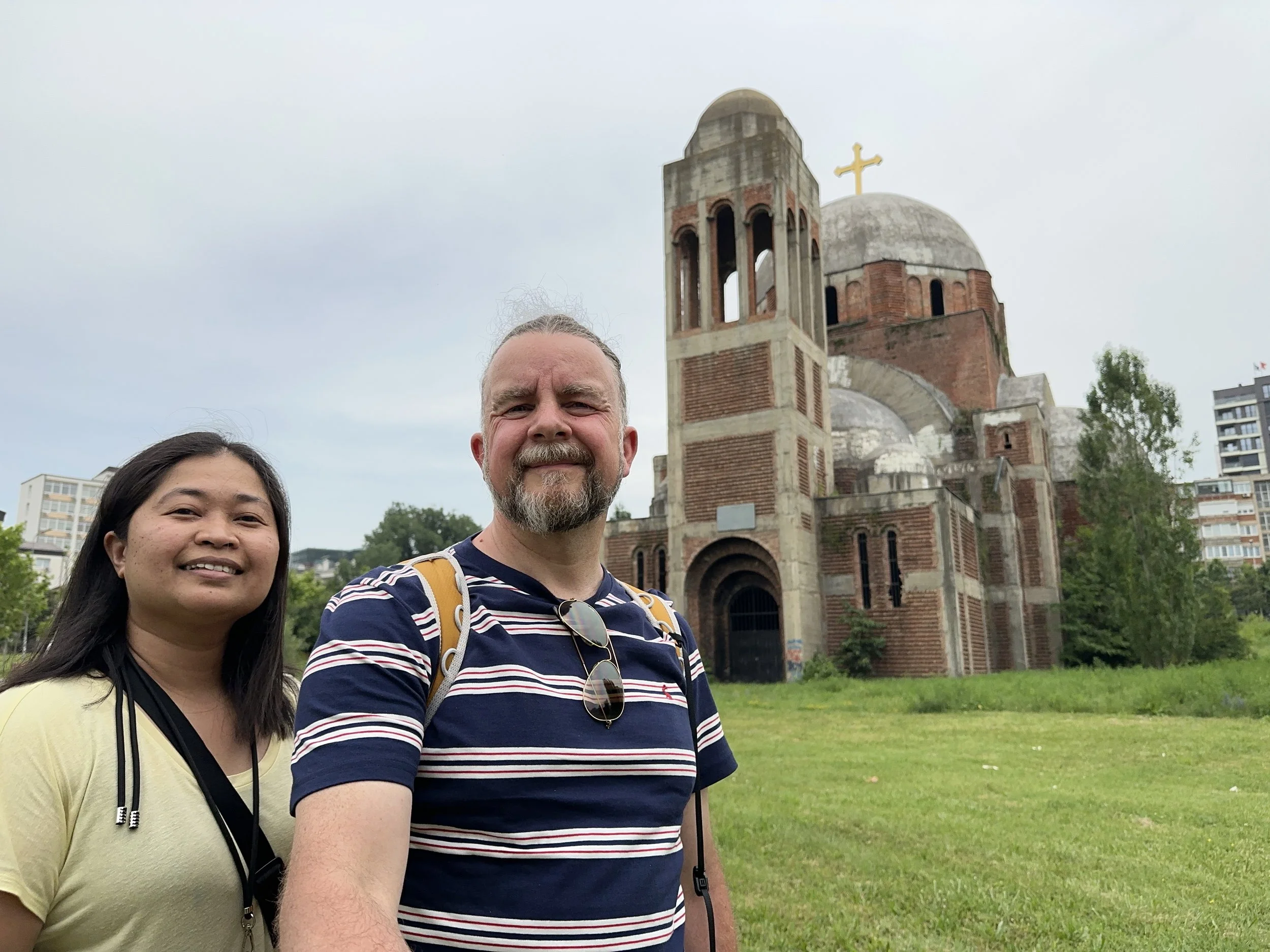
We continued to the unfinished Church of Christ the Saviour, its brick shell rising from the grass near the university. Construction began in the early nineties, then stopped when the war began. It has stayed frozen ever since. No doors. No finished interior. Just raw walls, a half built dome, and silence. The place feels suspended in time, carrying all the politics and conflict that stalled it.
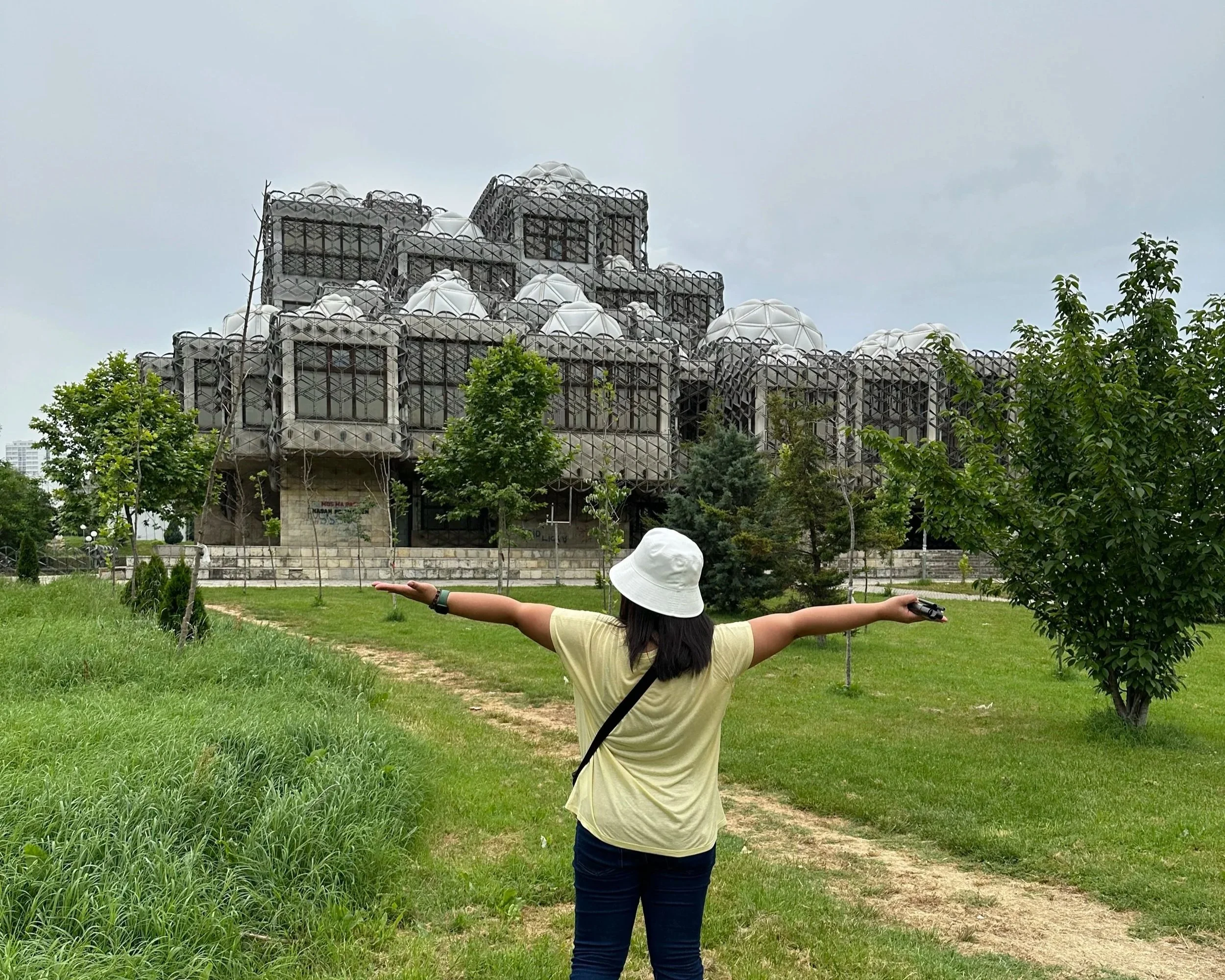
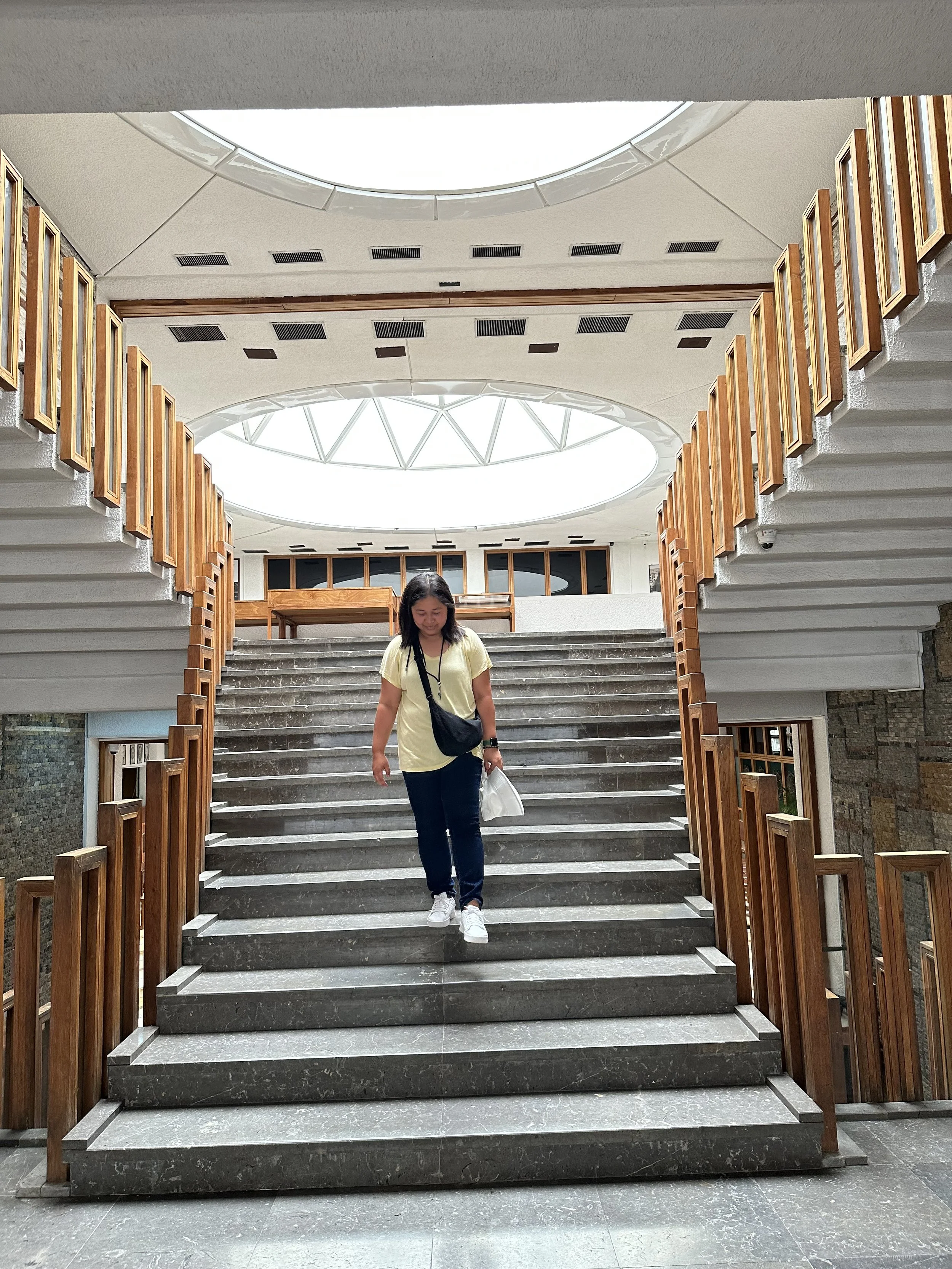
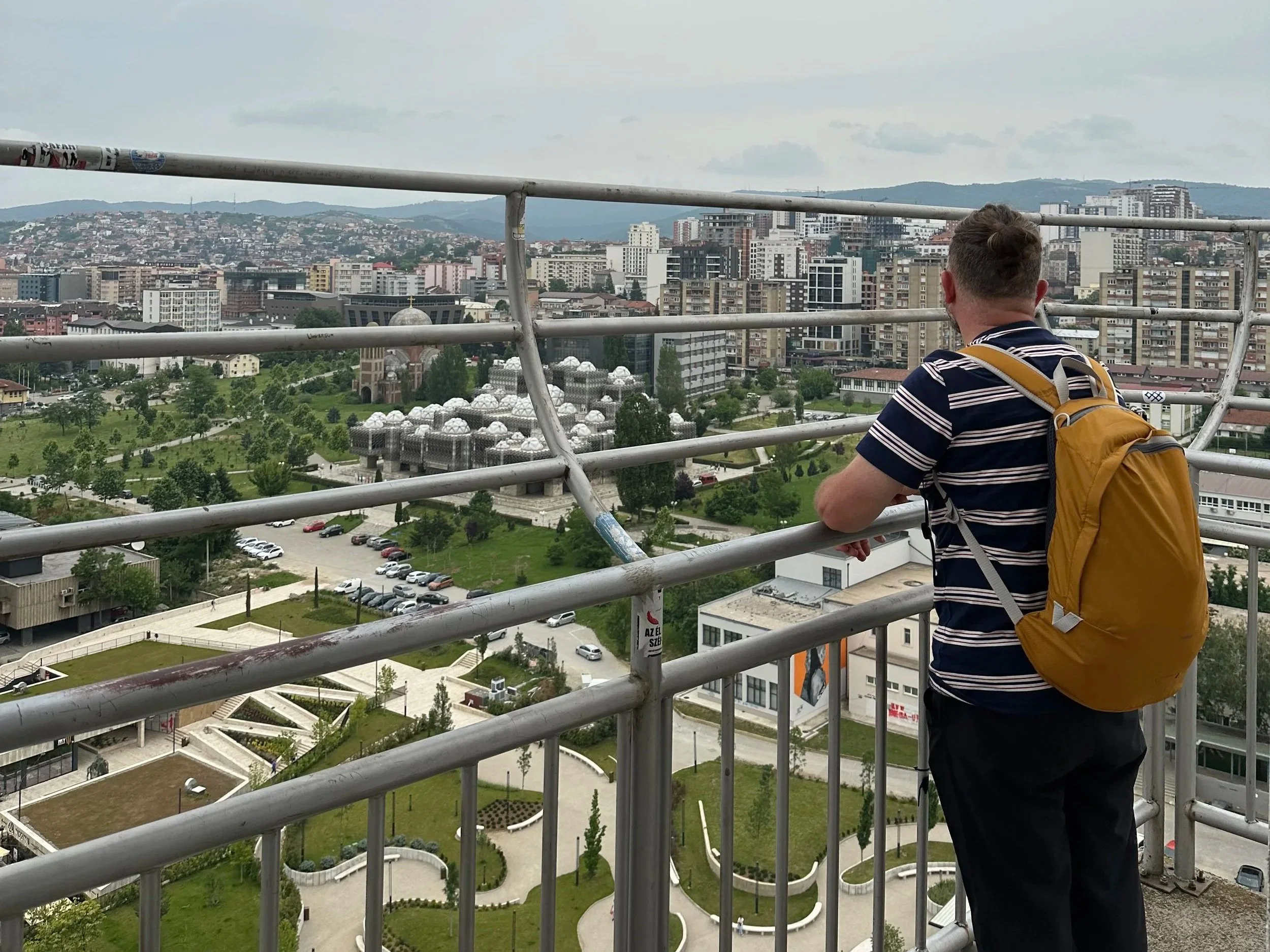
Then came the place I had been waiting for, the National Library. My soft spot for brutalist architecture runs deep and this was the one I wanted to see. The building looked strange and brilliant, a heavy mass wrapped in its metal grid with domes scattered across the roof. Bold. Unusual. A little surreal. Standing in front of it, I understood why photos never quite catch its presence.
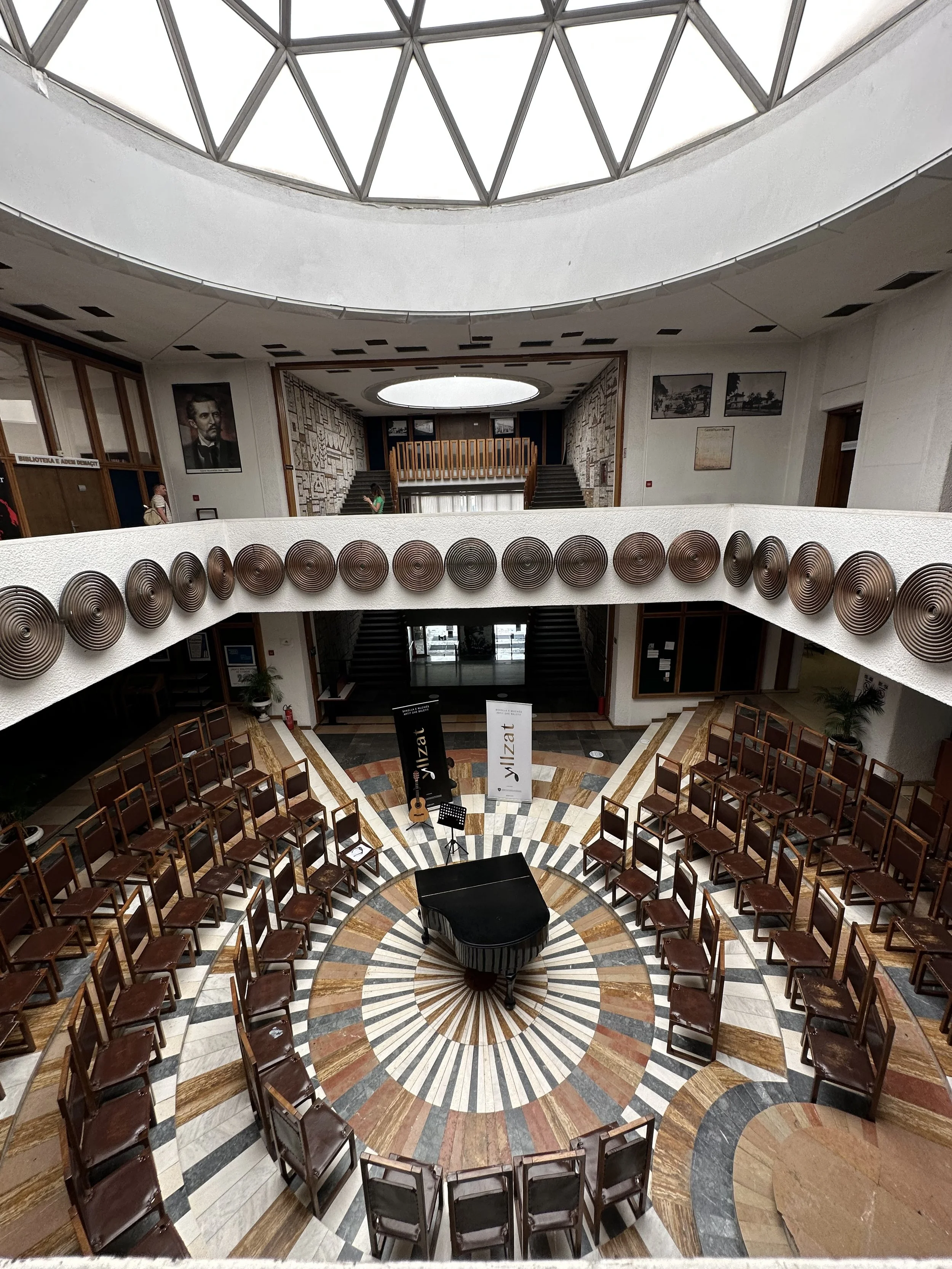
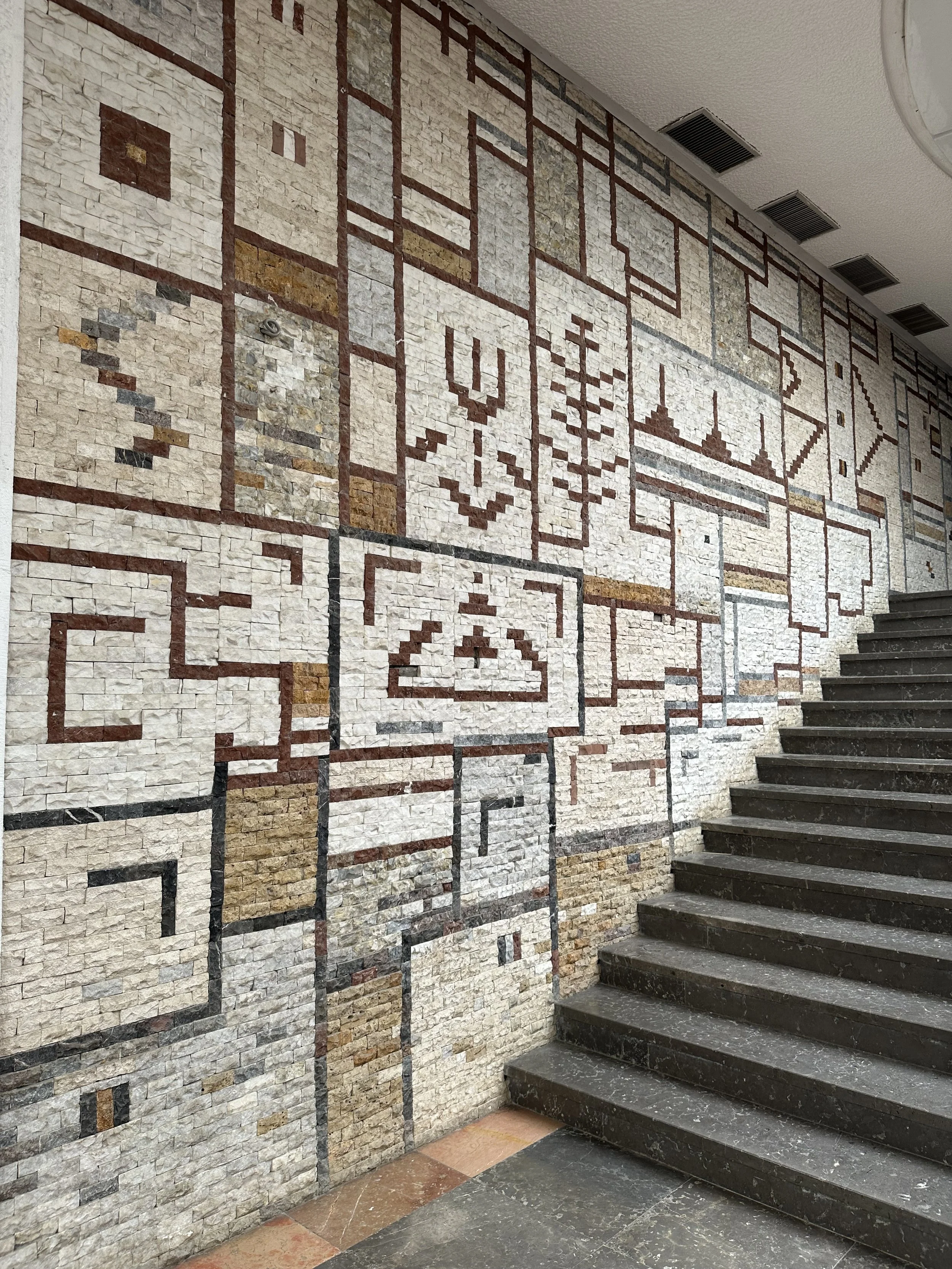
It was free to enter so we wandered in. Light filtered through patterned windows, soft and hazy. Long corridors. Quiet reading rooms. Concrete everywhere. A maze built for thought. Students moved through it with the relaxed ease of people who know its odd shape by heart. We explored slowly, taking in the shadows and the strange beauty of a building that never apologises for itself.
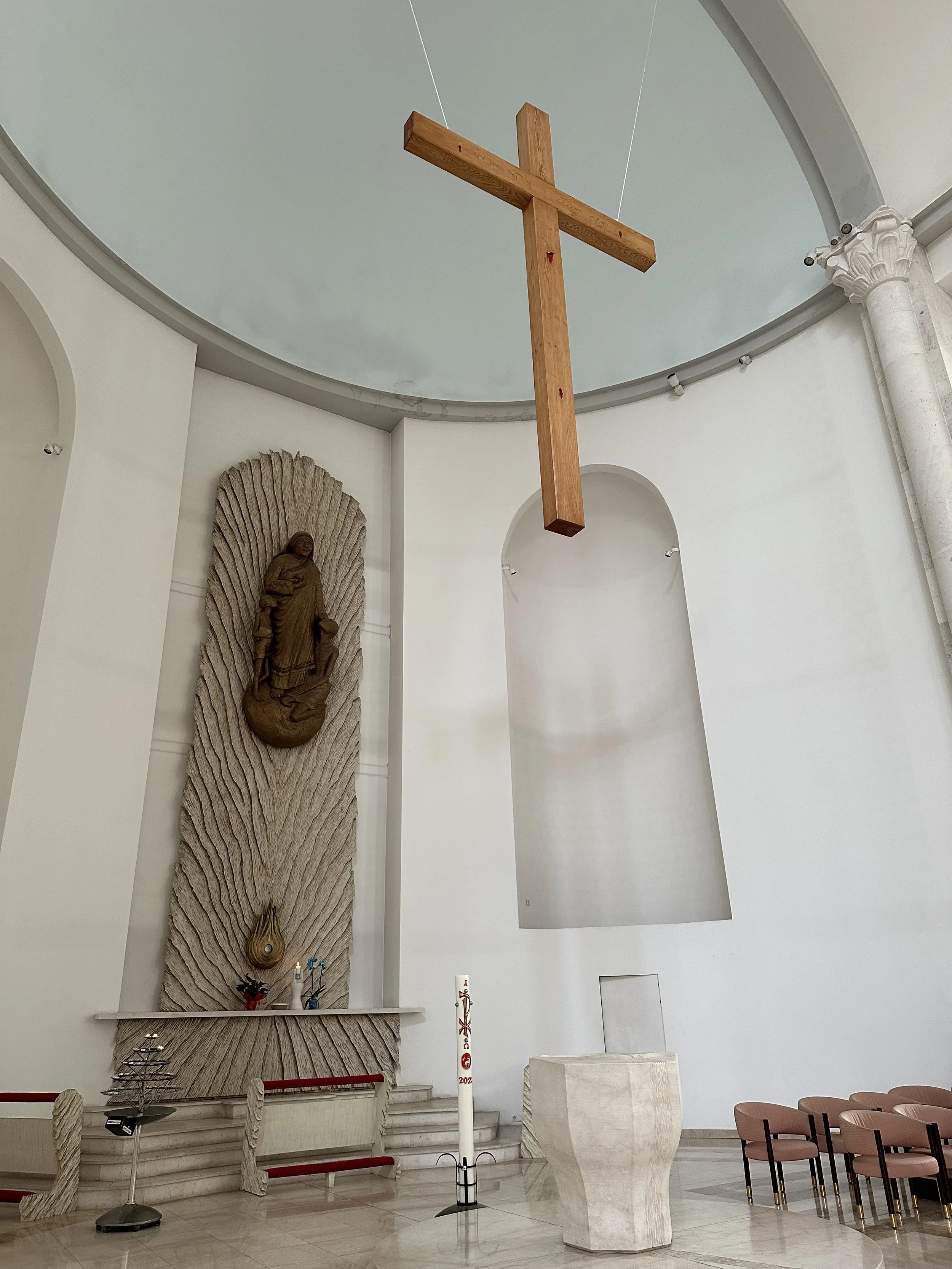
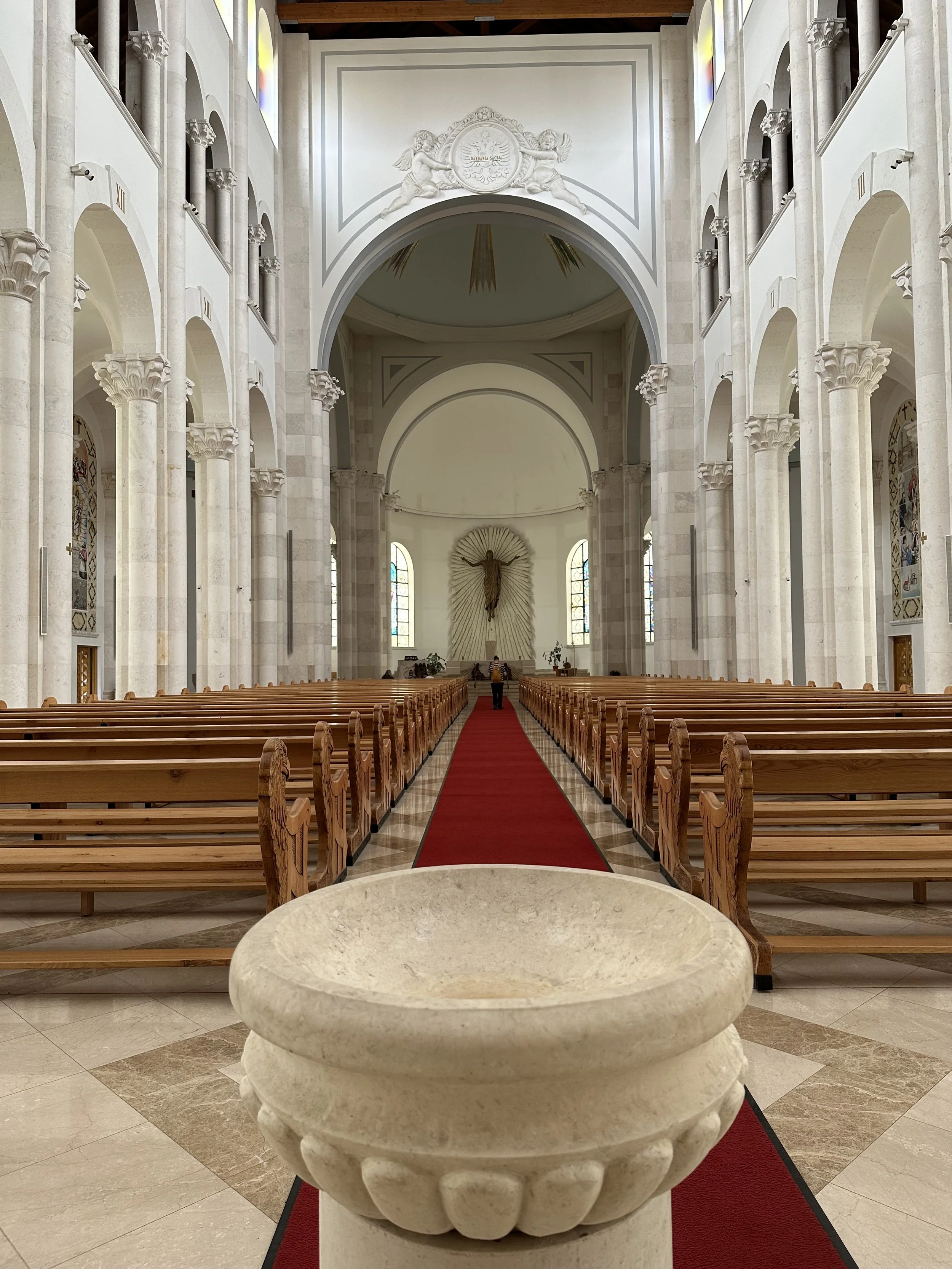
After leaving the library we walked to the Cathedral of Saint Mother Teresa, its tall white tower rising above the streets. The church felt bright and open, a sharp contrast to the heavy concrete we had just explored. Light poured through the windows. The interior felt simple and calm. It was one of those places where the city noise drops away the moment you step inside.
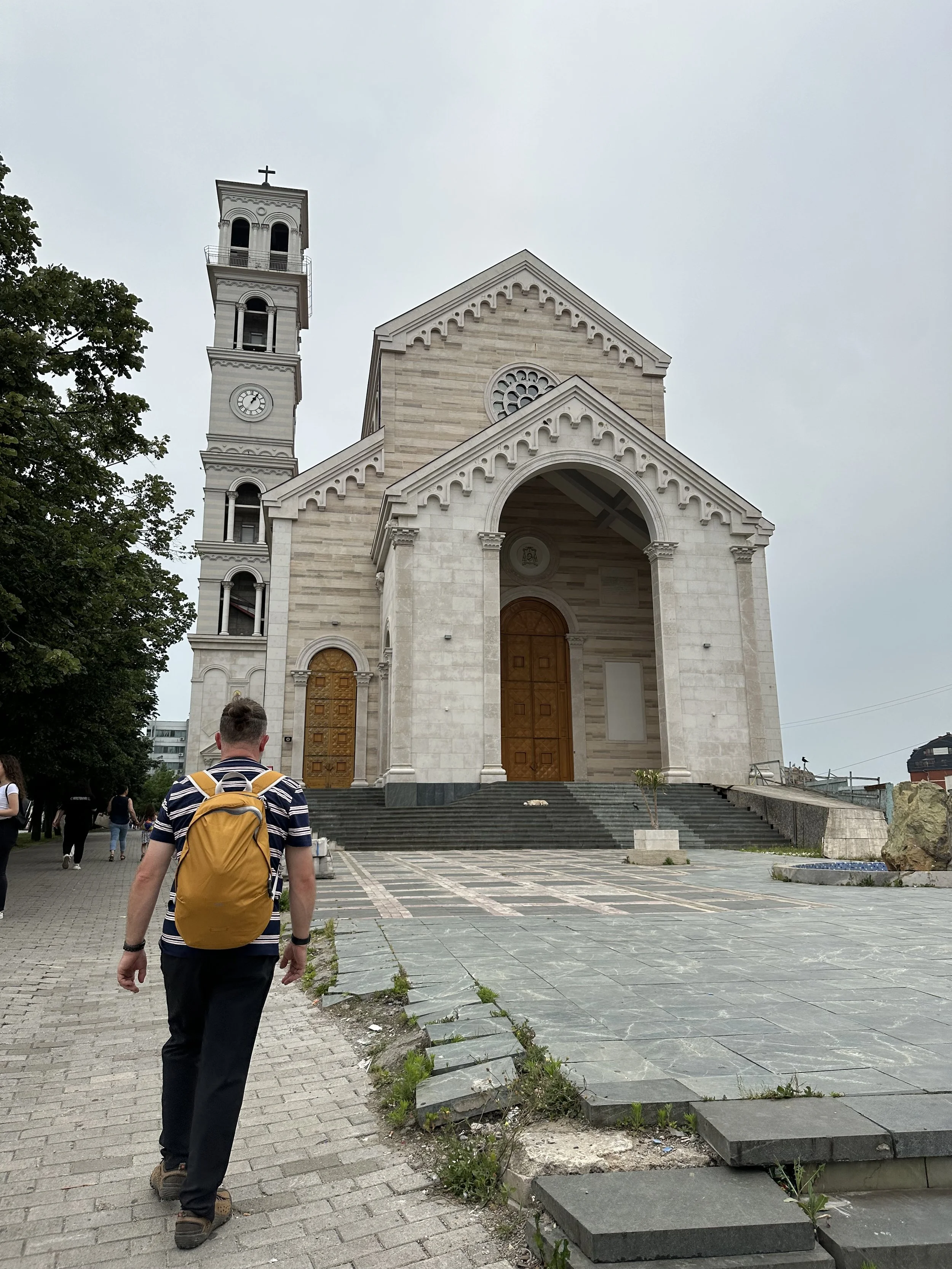
Near the exit we noticed a small sign for the tower. They told us we could take the lift to the top for a dollar. We went for it. The lift climbed slowly, quiet and steady. At the top the view was wide and bright, although the platform felt a bit unsafe, low railings and a sharp wind pushing at us. Even so, the whole city spread beneath us. Flat roofs. Long roads. Concrete blocks fading into the hills. We did not stay long, but it was the best dollar of the day. We took a final look, then rode the lift back to the street.
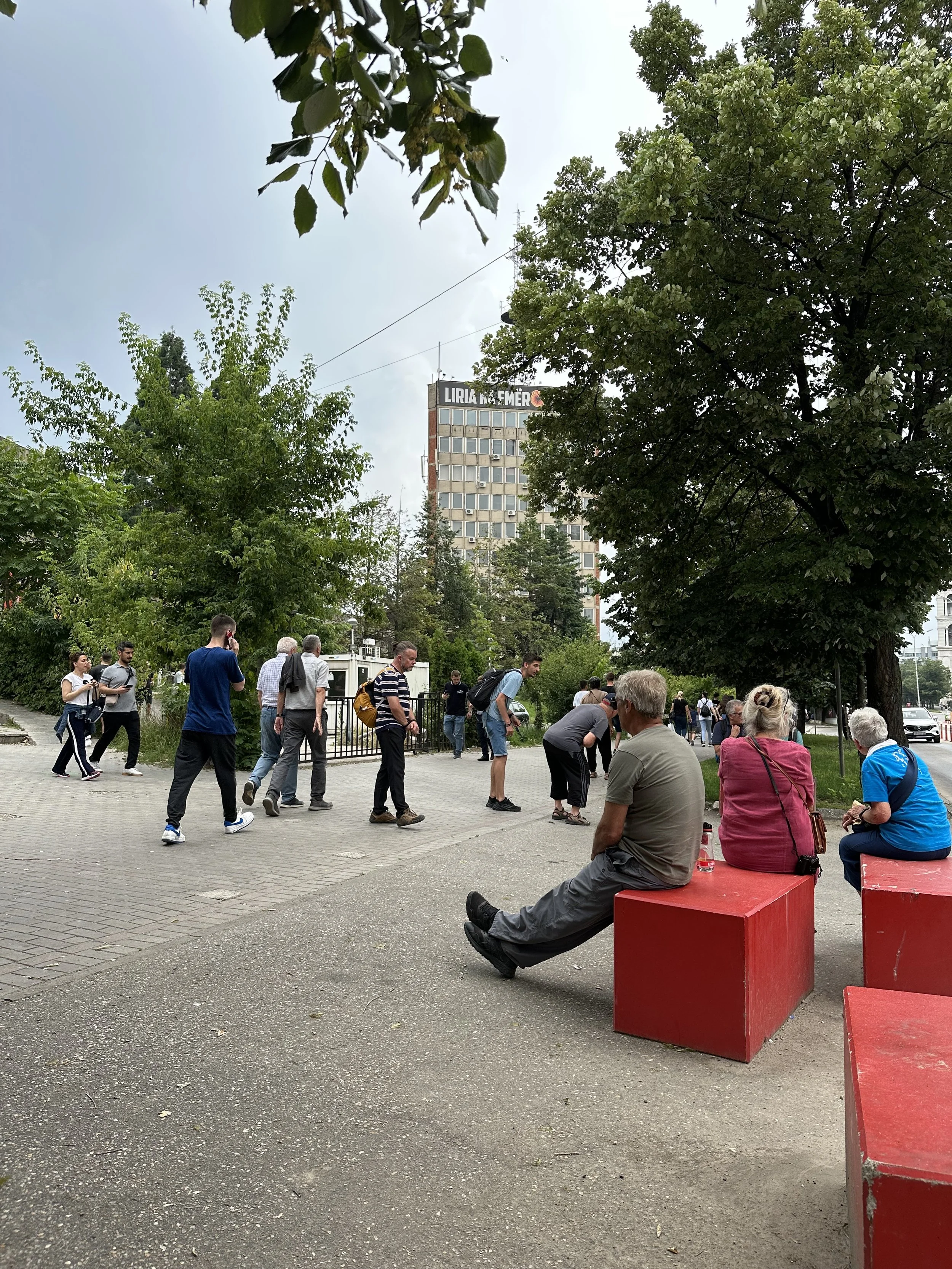
Heat pressed down hard so we stopped at a small cafe to cool off. Cold drinks reset our energy. After a short break we walked back to the meeting point for the bus. When everyone gathered, we learned the rest of the group had not made it inside the cathedral or the library. No tower view. No brutalist wander. It felt strange, knowing we had stepped into the two places that define the city while they missed both. A quiet win at the end of a hot afternoon.
Then we moved on to Prizren. The road wound south as the light fell behind the hills. The city appeared slowly, minarets and rooftops tucked along the river. The whole pace shifted, softer after the concrete and heat of Pristina. By the time we crossed into the centre the sky had turned blue grey, the kind that hints at a good evening ahead. Another place. Another rhythm. The journey kept stretching forward.
