Memory Lane: Belgrade (Beograd), Serbia
Some cities feel like they're designed to impress you in the first five minutes. Belgrade is not one of them.
In 2017, Belgrade (Beograd) was our stop after Sarajevo and before heading into Hungary, and we arrived in the afternoon with that familiar coach-tour problem: you finally reach a place you've been curious about, but you've got just enough time to check in, freshen up, and immediately head back out again.
That evening, we joined a walking tour with a local guide, and she was brilliant. You could tell she genuinely loved her city. She spoke with the kind of passion you only get from someone who has lived through Belgrade's layers, contradictions and resilience. The only issue was timing.
Belgrade in fading light is not the easiest city to "read", especially if you are seeing it for the first time.
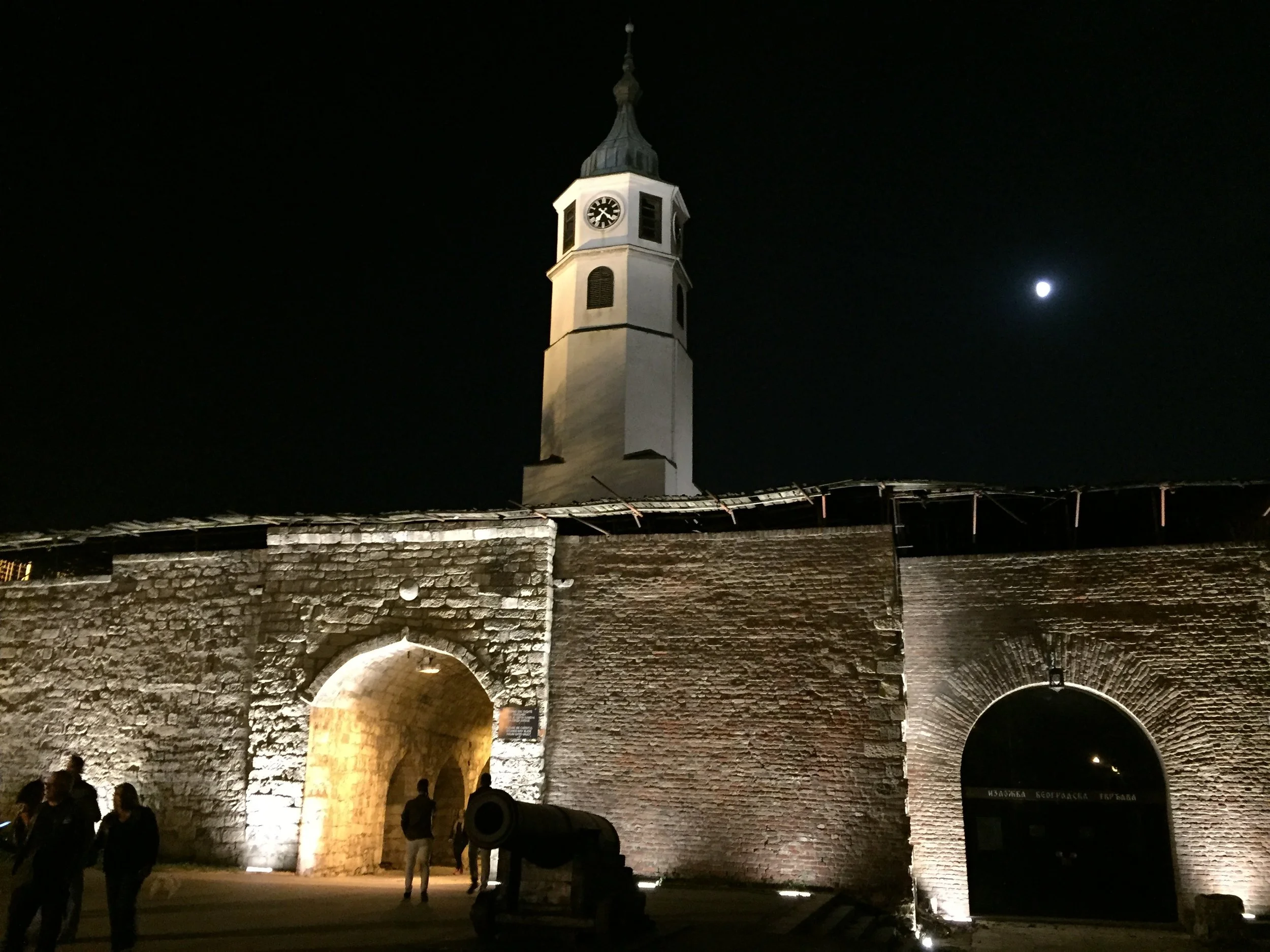
We made our way towards Kalemegdan Fortress, which sits high above the point where the Danube and the Sava meet. Even in the fading light, it was easy to understand why this location has been so important throughout history. This wasn't just a scenic viewpoint. It was a strategic one.
Unfortunately, the daylight disappeared faster than I would have liked.
Somewhere between the rushing schedule and the setting sun, we ended up seeing the Victor Monument in near-darkness. The statue is one of Belgrade's most recognisable symbols, but I'll be honest: seeing it in the dark felt a little like watching the final scene of a film without knowing the plot.
There was something slightly frustrating about it because the city deserved better conditions, and so did our guide. Her enthusiasm never faded, but the atmosphere had shifted into that familiar feeling of trying to absorb a place while keeping up with the group and racing against the clock.
But once we made our way back towards the city centre, Belgrade finally started to click.
Knez Mihailova Street was a standout. The city's main pedestrian thoroughfare was lively and elegant, lined with shops, cafés and people enjoying the evening. Under the streetlights, it felt warm and welcoming. It was the kind of place where you could easily imagine spending hours wandering without a plan.
We also passed the National Theatre, which looked particularly impressive illuminated against the night sky. This was where the darkness actually worked in Belgrade's favour. The city centre felt vibrant, polished and full of life.
One of my favourite details from the walk was seeing Hotel Moskva. Even from the outside, it has the sort of grand presence that makes you stop and look twice. Opened in 1908, the hotel has become one of Belgrade's most recognisable landmarks and has witnessed more than a century of the city's history. Standing there beneath the lights, it felt like a reminder that Belgrade has many stories to tell if you're willing to spend the time listening.
Later, we ended the evening in a cobblestoned area filled with restaurants and buzzing with both locals and visitors. I can't remember exactly what I ate, but I remember the atmosphere. Warm lights spilled out onto the street, conversations filled the air and every table seemed occupied. Looking back at my photographs, I'm fairly sure this was Skadarlija, Belgrade's famous bohemian quarter.
And in a final, very Serbian touch, our guide ended the tour with a small shot of rakija.
If you've never tried it, rakija is a traditional fruit brandy found throughout Serbia and the wider Balkans. It felt less like having a drink and more like being welcomed into the culture. It was a simple gesture, but it's one of the things I remember most clearly from the evening.
We didn't make it to the Temple of Saint Sava, one of Belgrade's most famous landmarks, and that's probably what sums up this visit best. This wasn't really a visit at all. It was a glimpse.
Even so, Belgrade left an impression.
Not because it was instantly beautiful or easy to understand, but because it felt real. This is a city built at the crossroads of empires, shaped by its position between rivers and influenced by centuries of conflict, trade and cultural exchange.
If anything, this brief stop made me want a second chance.
Not a rushed afternoon. Not a twilight walking tour. A proper Belgrade day.
One where I could see Kalemegdan in daylight, visit Saint Sava, linger over coffee, and discover more of the city at my own pace.
By the end of the evening, we actually vowed we'd come back and explore it properly.
And Belgrade feels like exactly the kind of city that rewards you when you do.
Because Belgrade is clearly not a city that reveals itself in a hurry.