
Marrakech — Walking Through the Medina
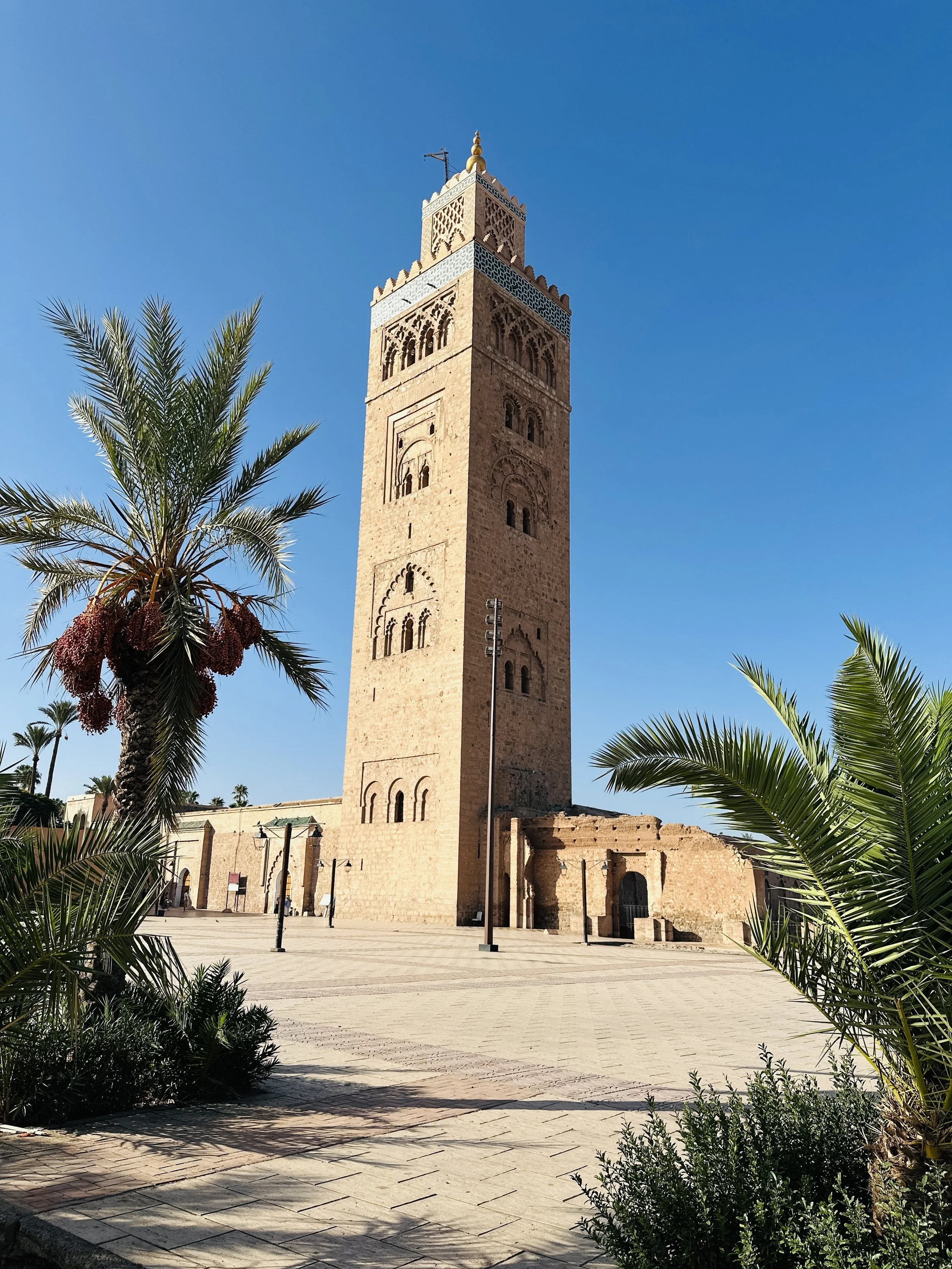
We took a taxi to start by the park beside Koutoubia Mosque, where the ruins of an older mosque still sit quietly in the dust. It was meant to be the beginning of the highlight of Morocco. Our local guide met us there and led us toward Jemaa el-Fnaa — that famous square everyone talks about. By day, it was just a square. Busy, yes, but flat in the harsh light. The kind of place that feels like it’s waiting for its own story to start.
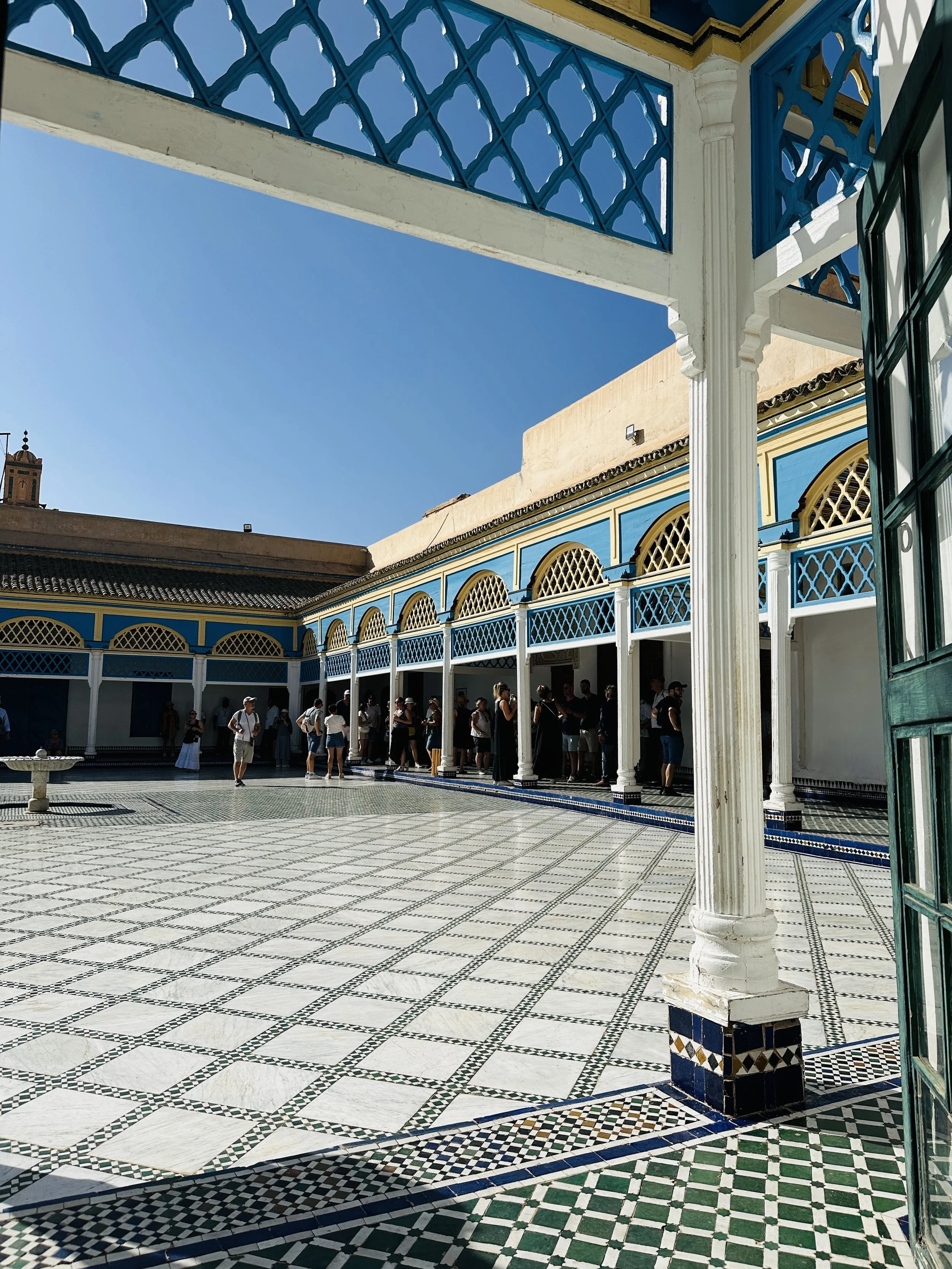
We walked through a gate into a long street packed with fruit, spices, and everything in between. The smell of cumin and oranges clung to the air. Then another gate, another turn, and we were at Bahia Palace. The tickets were already bought, so we followed the crowd inside. It was beautiful, but too full to breathe. Whatever the guide said was lost in the echo of tour groups. I saw the palace, but I didn’t really see it. After a while, I gave up and sat outside in the sun.
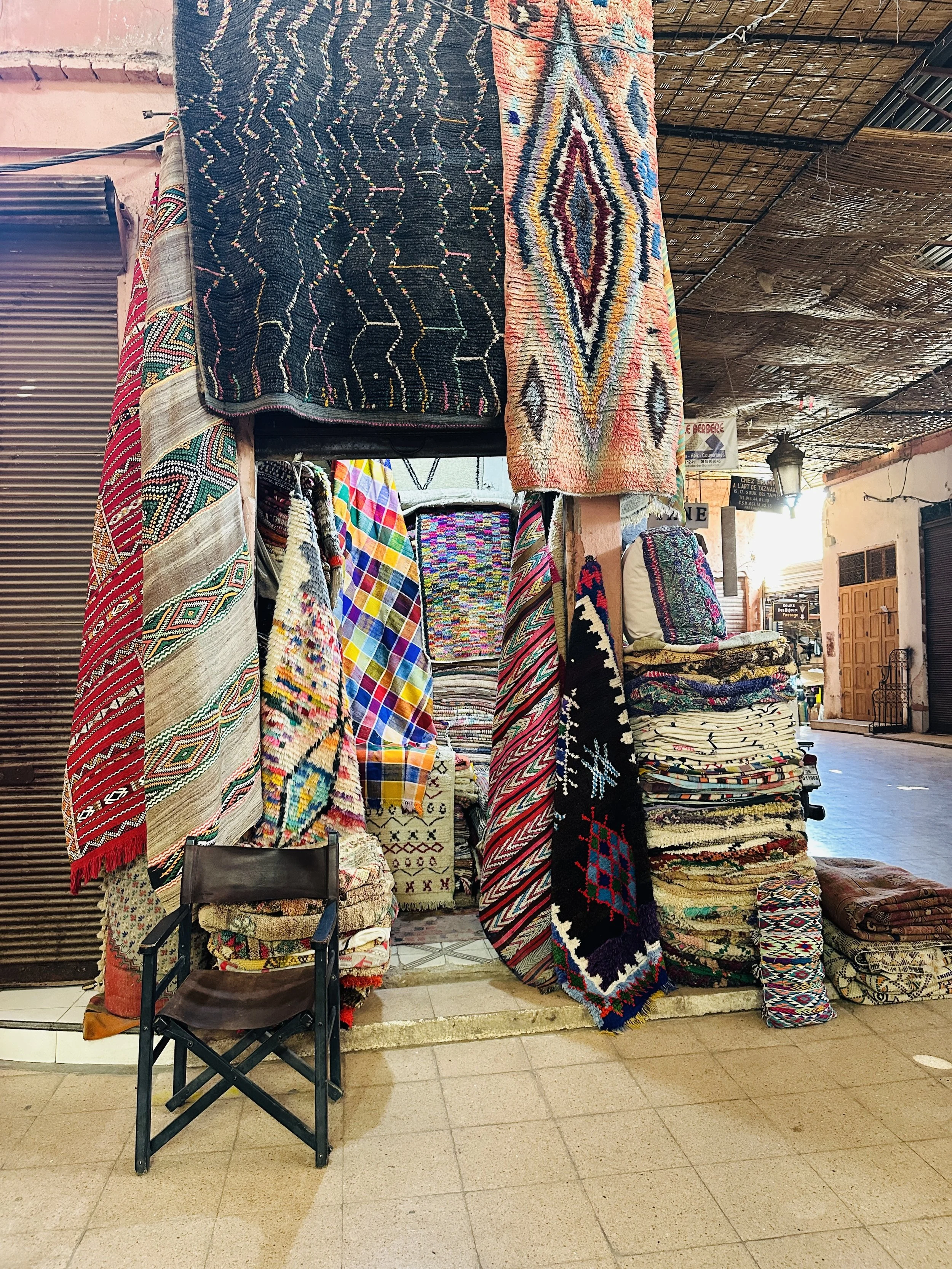
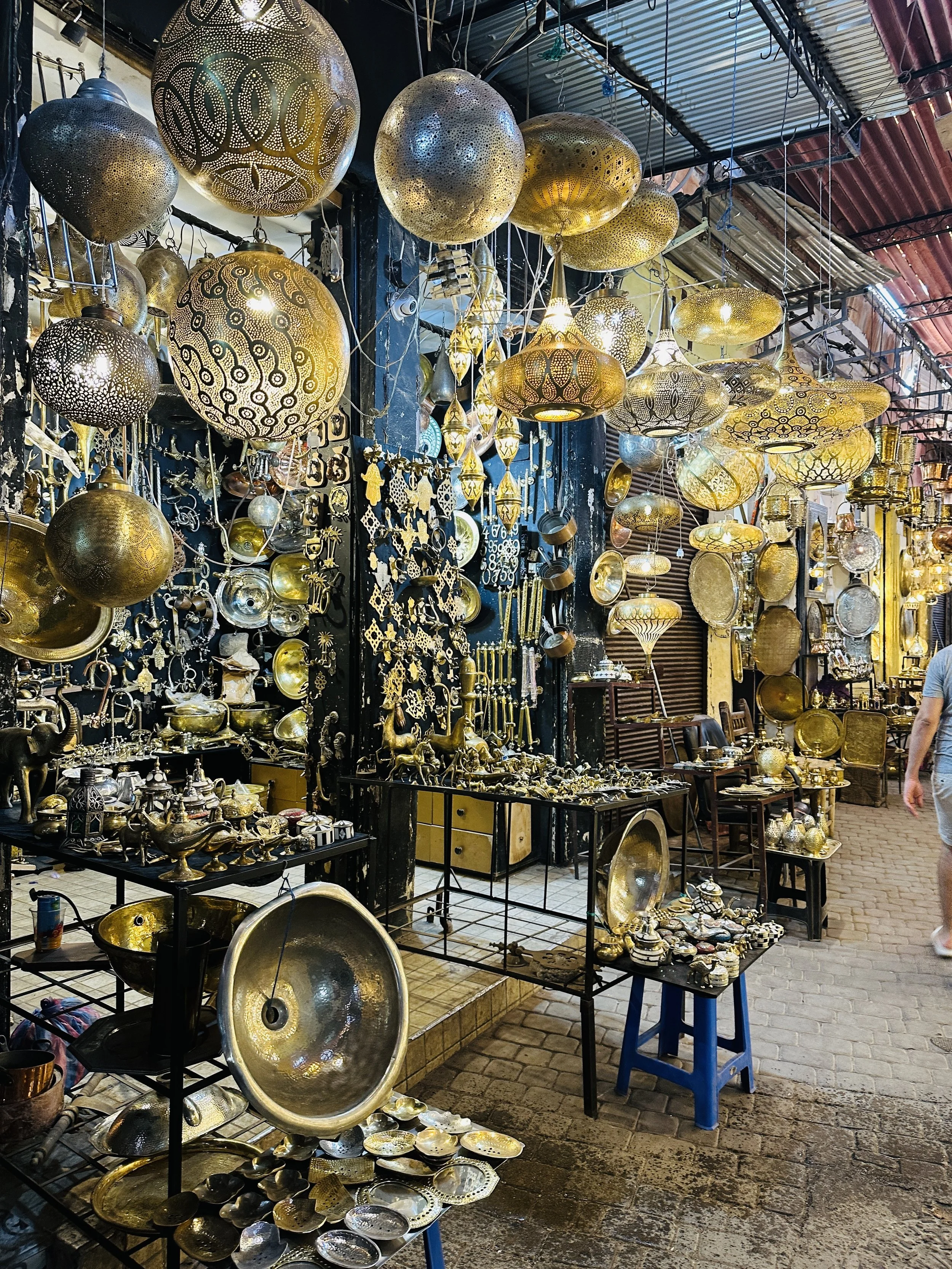
The tour went on — into the souks where the city folds in on itself. Carpets stacked high, rectangles on the floor to mark their size. Lamps glowing gold in the dim light. Wool hanging over alleys, dripping colour from the dyers’ stalls. Mats and baskets. Shelves of olives and jars of pickled things. Somewhere, a hammer struck metal, over and over. We stopped at an argan oil shop, the usual sales pitch.
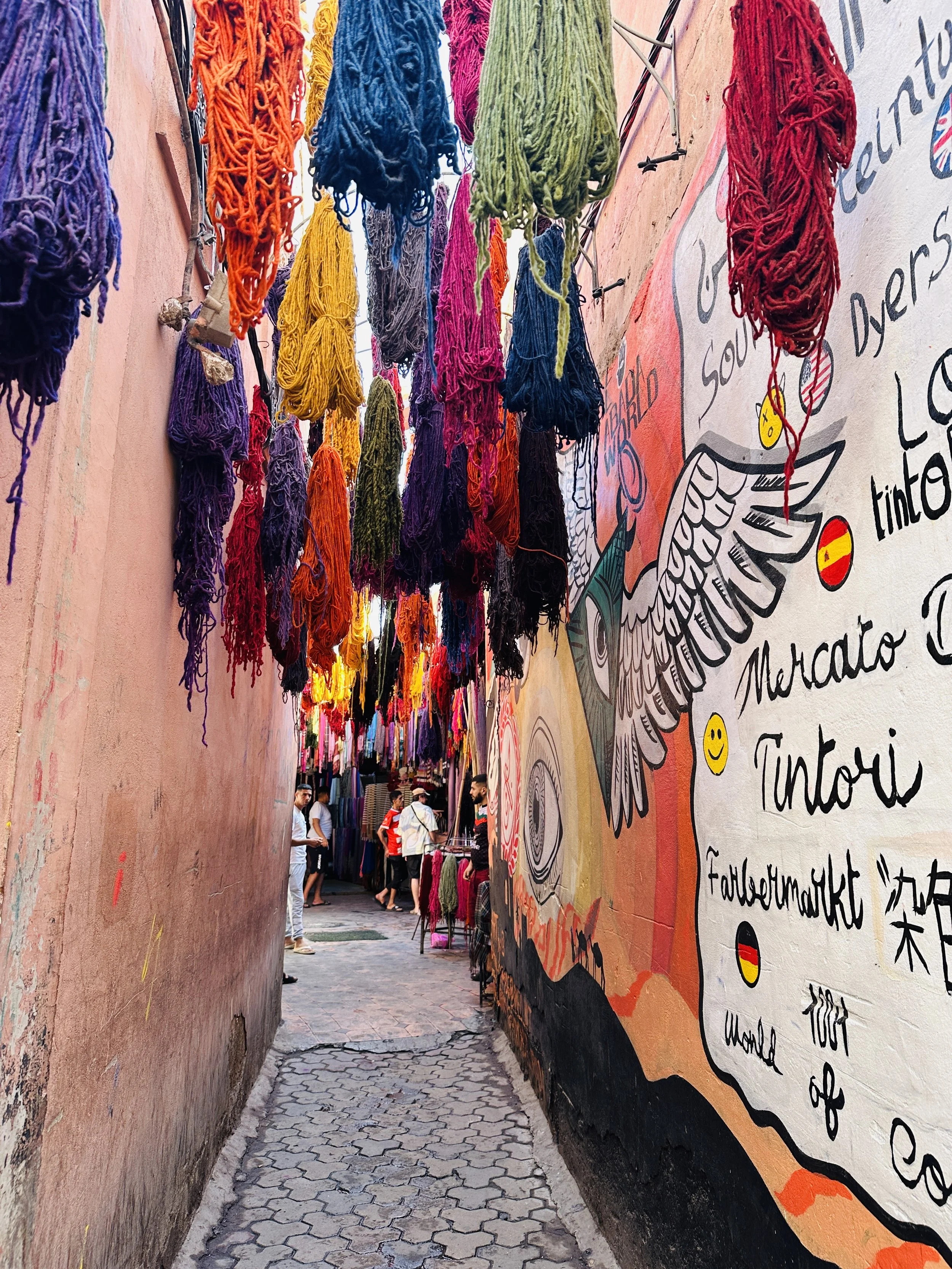
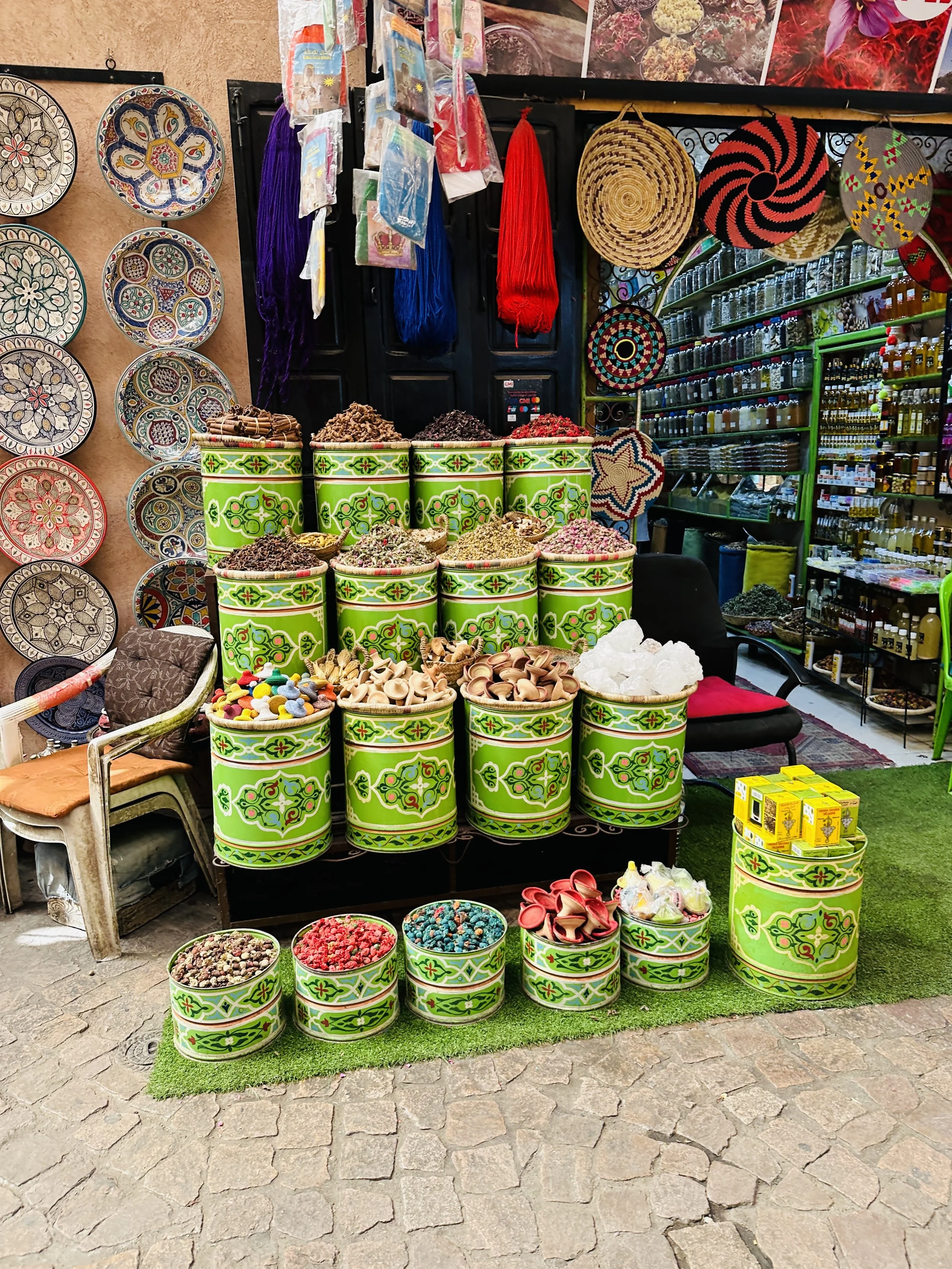
When the tour ended, I couldn’t help comparing our guide to the ones we had in Tangier, Chefchaouen, and Fez. In those cities, we learned something. Here, we just walked. His answers were short, his explanations almost none. Marrakech was meant to be a highlight, a city of history and art. But that morning, I left the tour feeling as if the stories had stayed behind closed doors.
So we decided to walk again, this time on our own. There was one place I’d been waiting to see — Dar El Bacha. Maybe, I thought, I’d finally find a quieter side of the city there.
