
Into the Quiet at Dečani Monastery
We left Junik in the late morning. Light stretched over the valley. The road softened. Houses thinned. Fields widened. The land slowed its breathing after the long ride from Valbonë. Colours muted. Sky pale. The kind of drive that tricks you into thinking you have not travelled far. The road curved along the hills. Small farms sat behind low stone walls. A few shops appeared, then slipped away. The landscape did not perform. It simply let us pass. The air warmed. The valley eased into a steady rhythm.
As we approached Dečani, the first KFOR post appeared. A few vehicles. A few buildings. Nothing dramatic. We slowed, but no one stopped us. Its presence alone did the talking, a reminder that this peaceful valley carries older tensions beneath its calm surface. Our bus pulled over near the tree line. The monastery waited beyond it. We got off and walked the short path to the entrance. The quiet shifted. Still soft, but sharper. The kind of silence that asks you to pay attention.
The main checkpoint stood at the gate. A booth. A barrier. A soldier stepped forward. Passports checked one by one. Names matched. No fuss. Smooth and matter of fact. We were told not to photograph the soldiers. A simple rule. Security is work, not theatre.The reason is real. The monastery has faced security incidents in the past. It is a Serbian Orthodox site in a region shaped by long standing tensions. KFOR protects it for that reason. I cannot confirm how long this arrangement will continue.
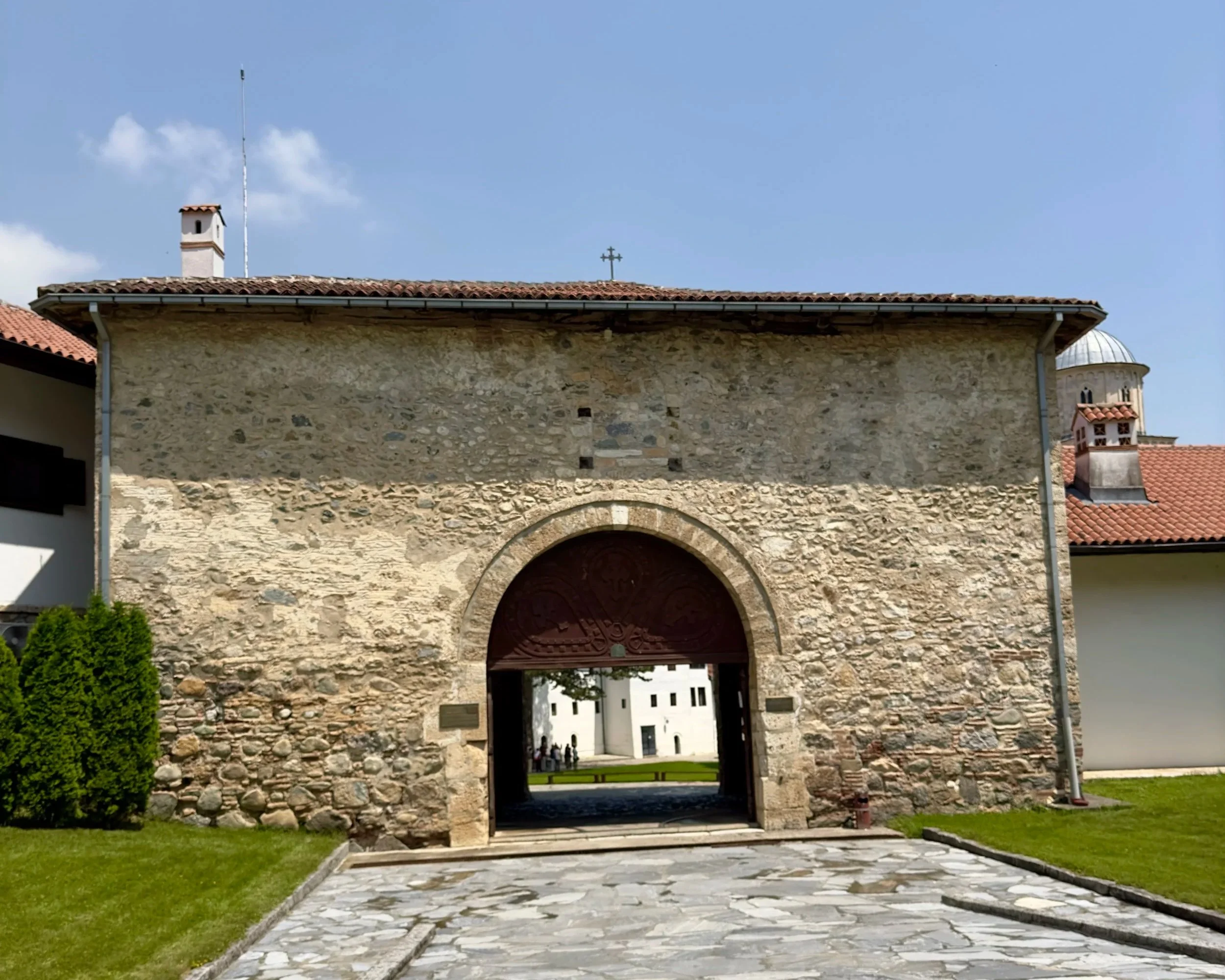
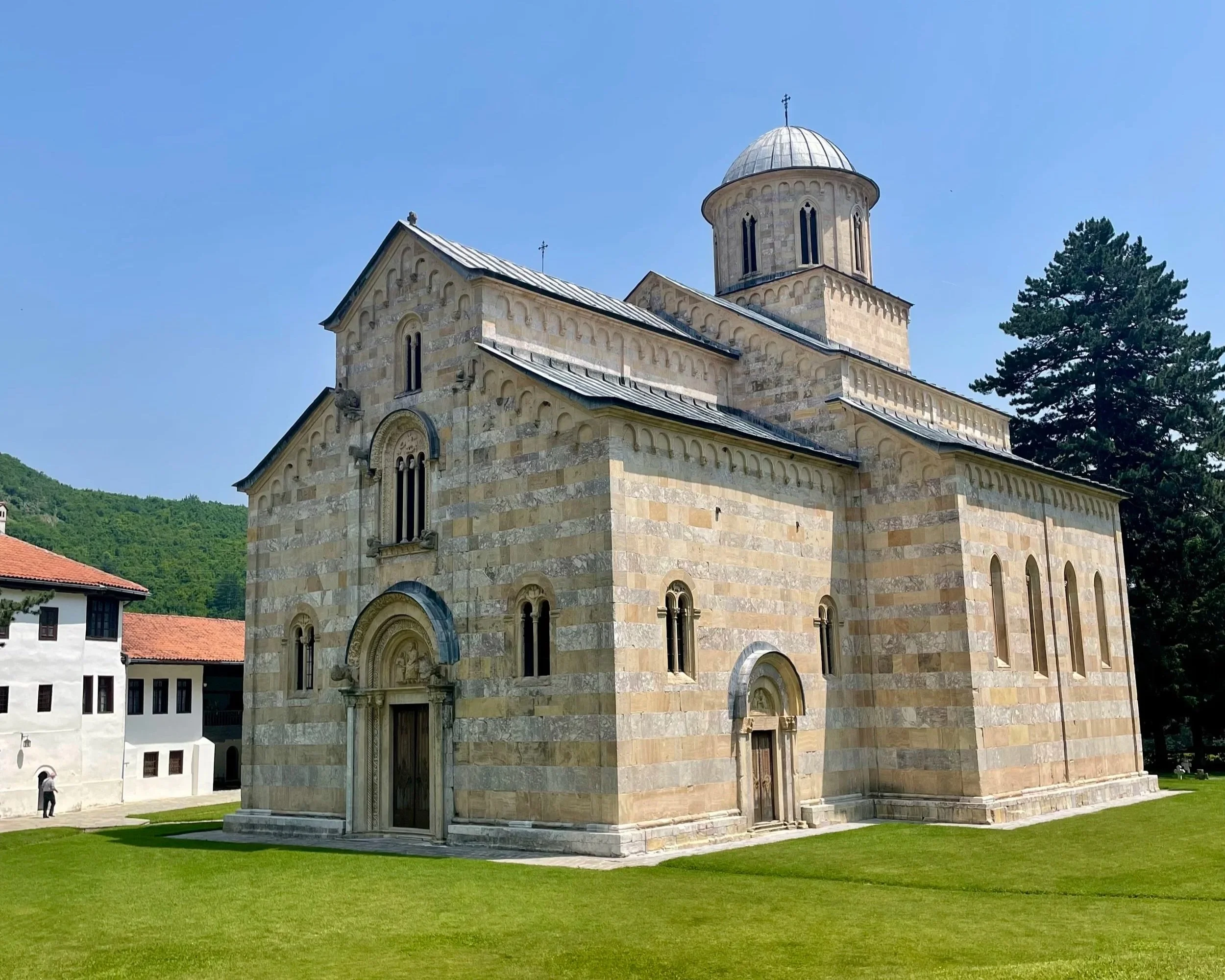
Inside the gate, the shift was instant. Cooler air. Trees closing overhead. Stone walls surfacing through the branches. The road noise dropped away as if someone had turned a dial. Time folded a little. The monastery waited at the end of the path. Pale stone. Fourteenth century. Steady. It felt self contained, a place with its own pace. Founded by King Stefan Dečanski, it stands as one of the best preserved medieval churches in the Balkans. UNESCO lists it for its architecture and frescoes. The stone can look like marble in the right light, soft and deliberate.
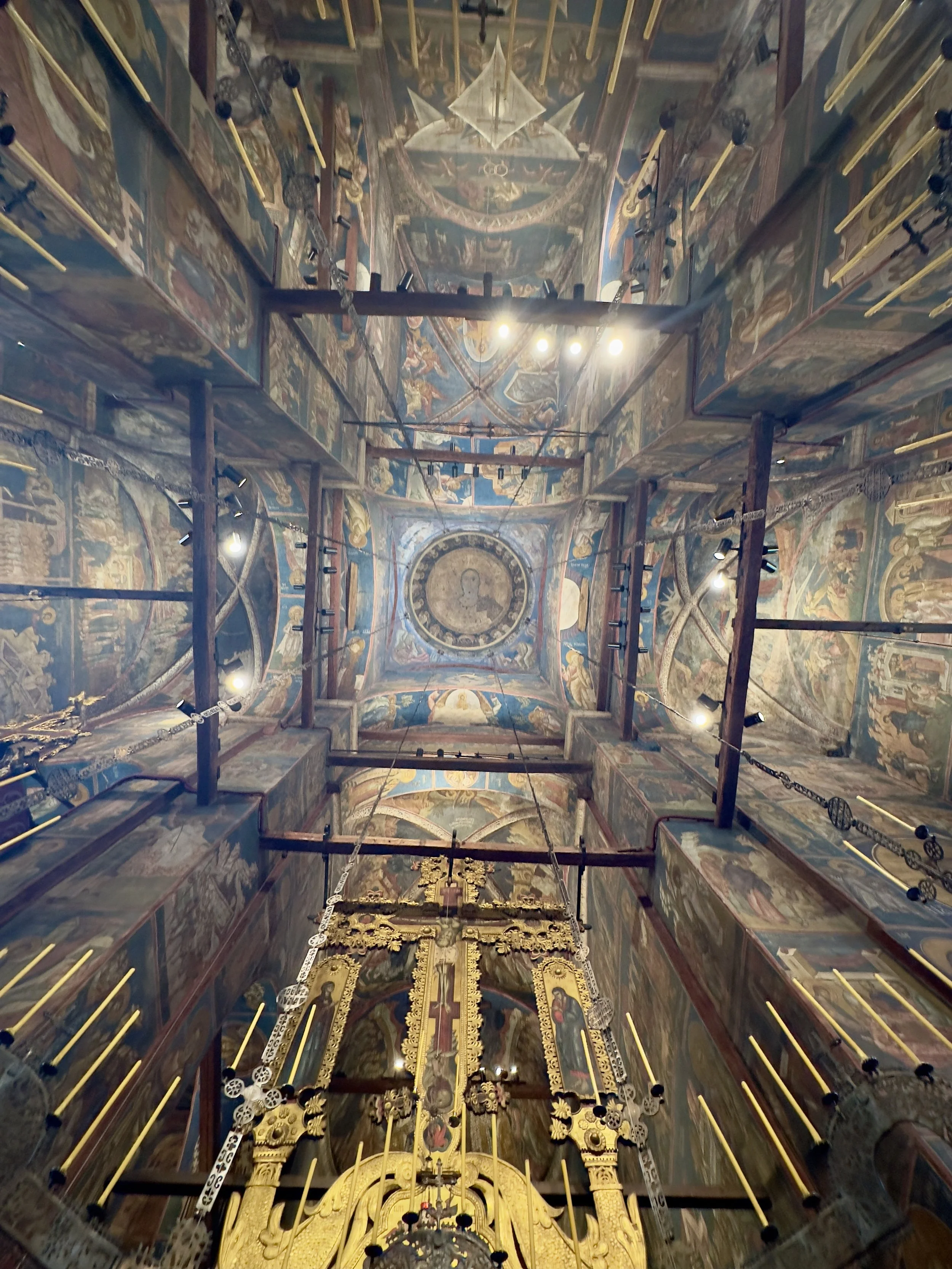
Inside, colour fills every surface. Walls. Arches. Columns. Over a thousand scenes. Saints. Stories. Small details that only appear when you stand still. People call it one of the richest fresco cycles in Europe. I cannot confirm rankings, but the scale is striking. This is not a museum. Monks live here. You see them tending gardens, moving from one building to another. They set the rhythm. They keep the place rooted in the present.
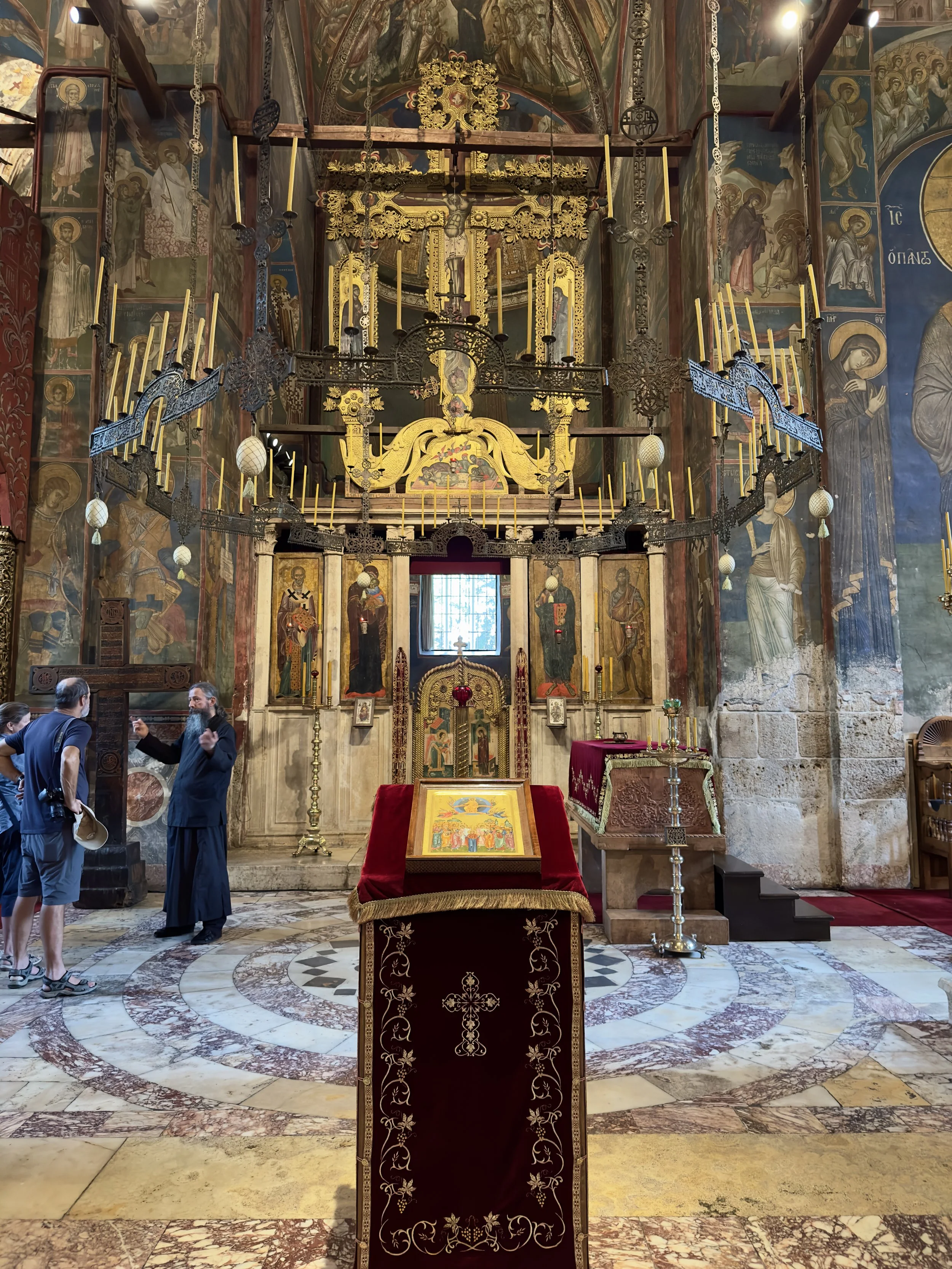
The church blends Romanesque shape with Byzantine style. Two architectural languages sharing one space, a reminder of the region’s pull between cultures in the 1300s. King Stefan Dečanski’s tomb rests inside. His relics are kept there. Pilgrims still come. The tomb is simple compared to the colour around it, but it holds the room. Under the dome, your voice folds back in a soft echo. Medieval acoustics doing quiet magic.
By the main doors, a tall monk crossed our path. Long beard. A gentle face that made us think of Rasputin in the friendliest way. He answered our questions with patience, turning the place from historic site into lived home.
Outside, ancient chestnut trees circle the courtyard. Some are protected as natural monuments. Stone and chestnut. Shade and history. The pairing gives the monastery its calm gravity. The visit felt peaceful. Uneventful in the best way. A slow breath between roads. We wandered through the compound, slipping between workshops and storage rooms. Quiet corners. No rush. We ended up in the small gift shop, stocked with honey, soaps, and icons. A soft landing after all that stone.
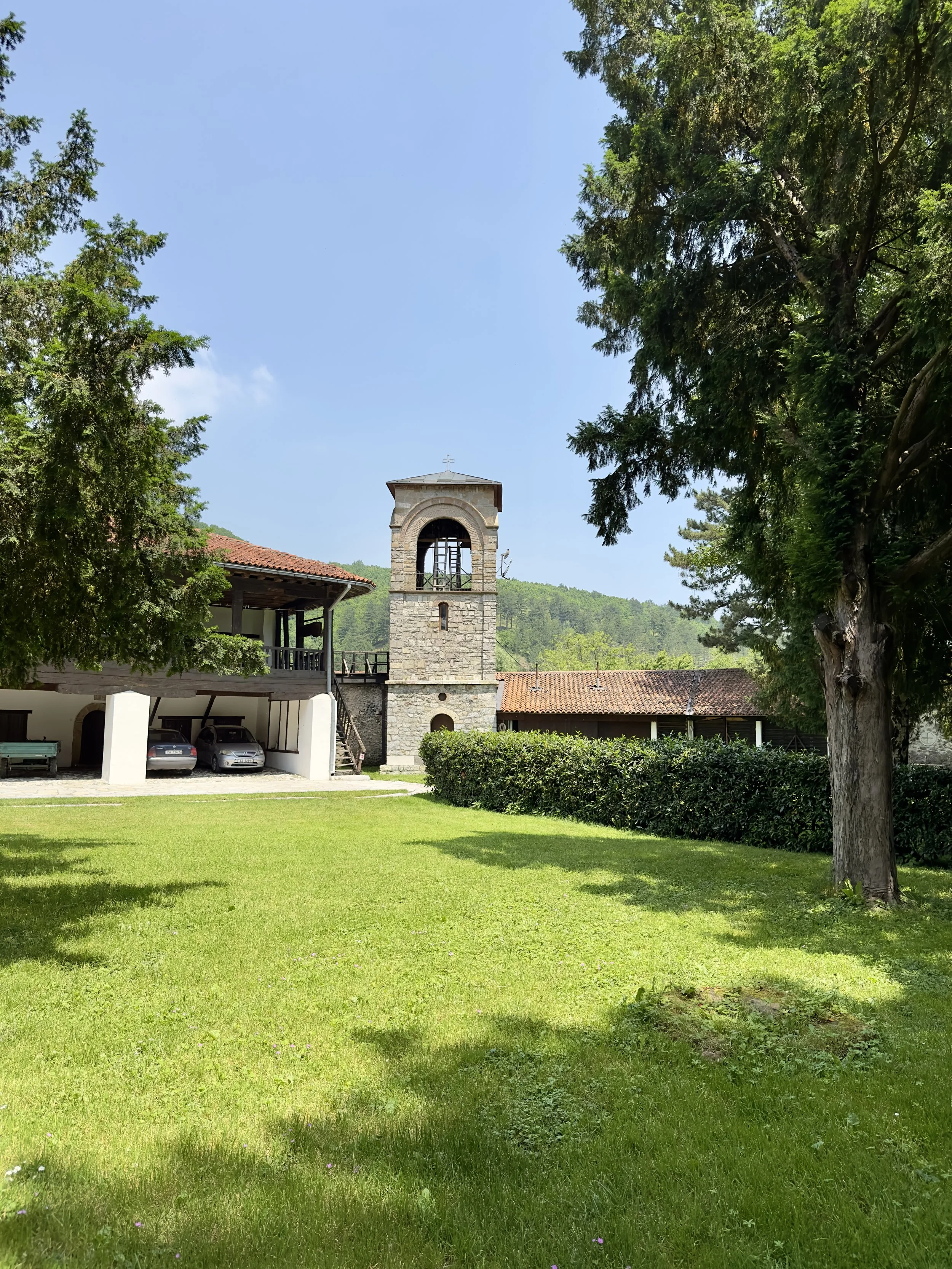
The monastery left me quiet, the kind of quiet that comes from beauty with no need for drama. It stayed with me as we stepped back through the checkpoint and onto the road again.
We continued toward Peja, the valley green and slow, the monastery settling in our minds like a soft echo that followed us down the road.
