
Valbonë to Junik: A Quiet Shift Into Kosovo
We left Valbonë early. The valley was still cold and blue, the mountains rising like sharp cutouts against the sky. The road followed the river. Clear water. Quick bends. A last sweep of the Accursed Mountains before we slipped out of Albania.
The drive to the Kosovo border felt steady. Forest. Small villages. The kind of landscape that keeps you quiet without asking for it. Our group dozed. The road curved. Then we reached the crossing. Passports out. A short wait. No fuss. Once we rolled through, the scenery widened at once. Bigger fields. Softer lines. More space around everything.
Our guide said we would stop in Junik before heading to Peja. He mentioned a tower. That was all.
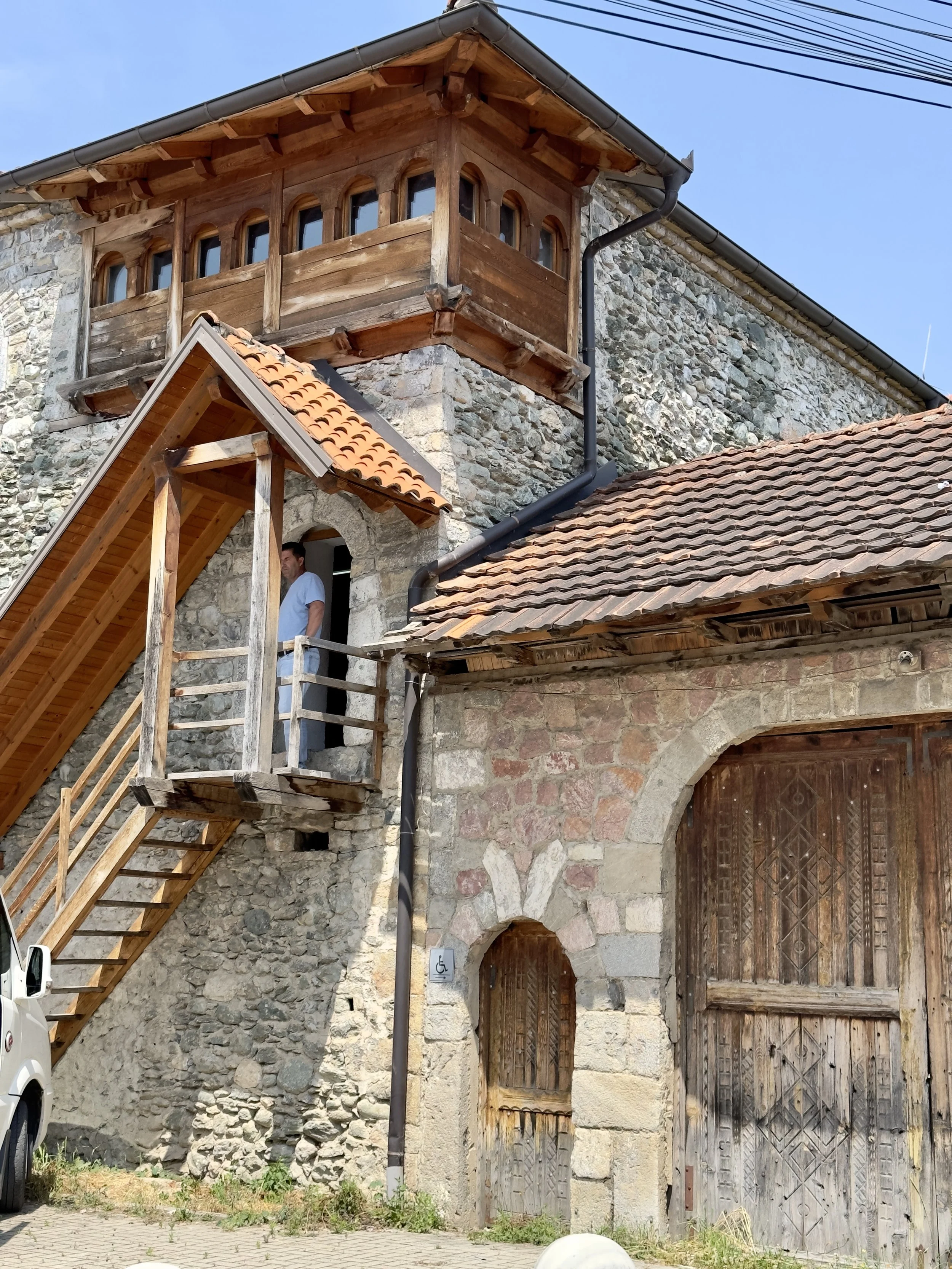
Hoxha’s Tower
Junik appeared slowly, with low houses and open fields on both sides of the road. Hoxha’s Tower stood near the edge of the village, a tall stone block with narrow windows. Sturdy. Unshowy. A building made for purpose, not style.
Inside, the rooms were cool and plain. Thick walls. Small spaces. Our guide explained that this is a kulla, a traditional tower house found in western Kosovo. Families once lived here. They protected themselves here. The top room, the oda, was where men gathered to talk through village matters. It felt easy to picture the place in use, even without knowing the exact stories that played out inside these walls.
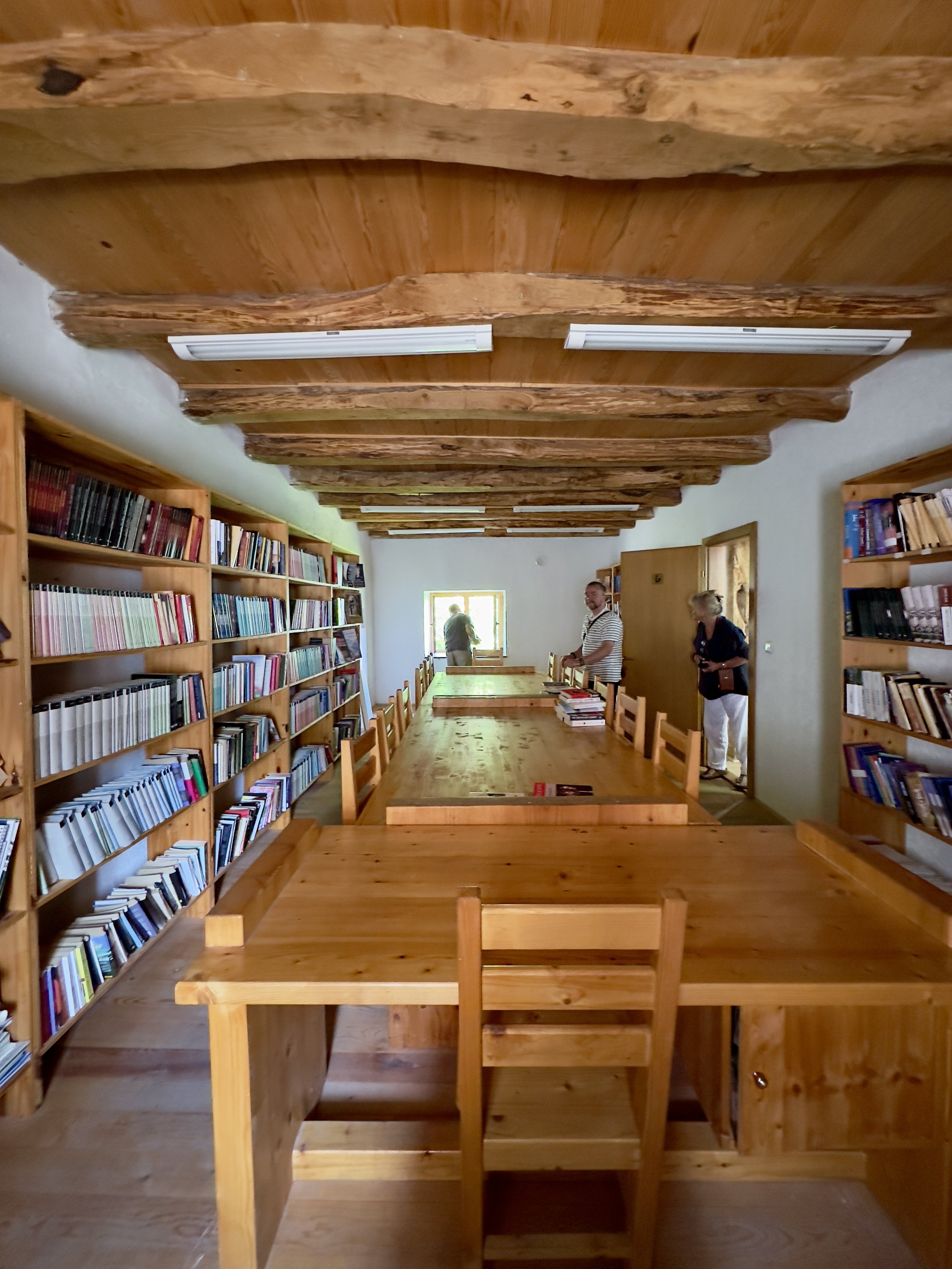
He also told us why this particular tower had been restored. Many kullas were damaged during the conflict in the late 1990s. This one was left fragile. The municipality and heritage groups flagged it as important for the community because it was one of the few surviving kullas in the area. It carried local identity. The European Union funded the conservation, and the International Organization for Migration completed the work in late 2011. The aim was simple. Save the structure. Preserve the heritage. Put the building back into daily life as a small public library. I cannot confirm any goals beyond these documented points.
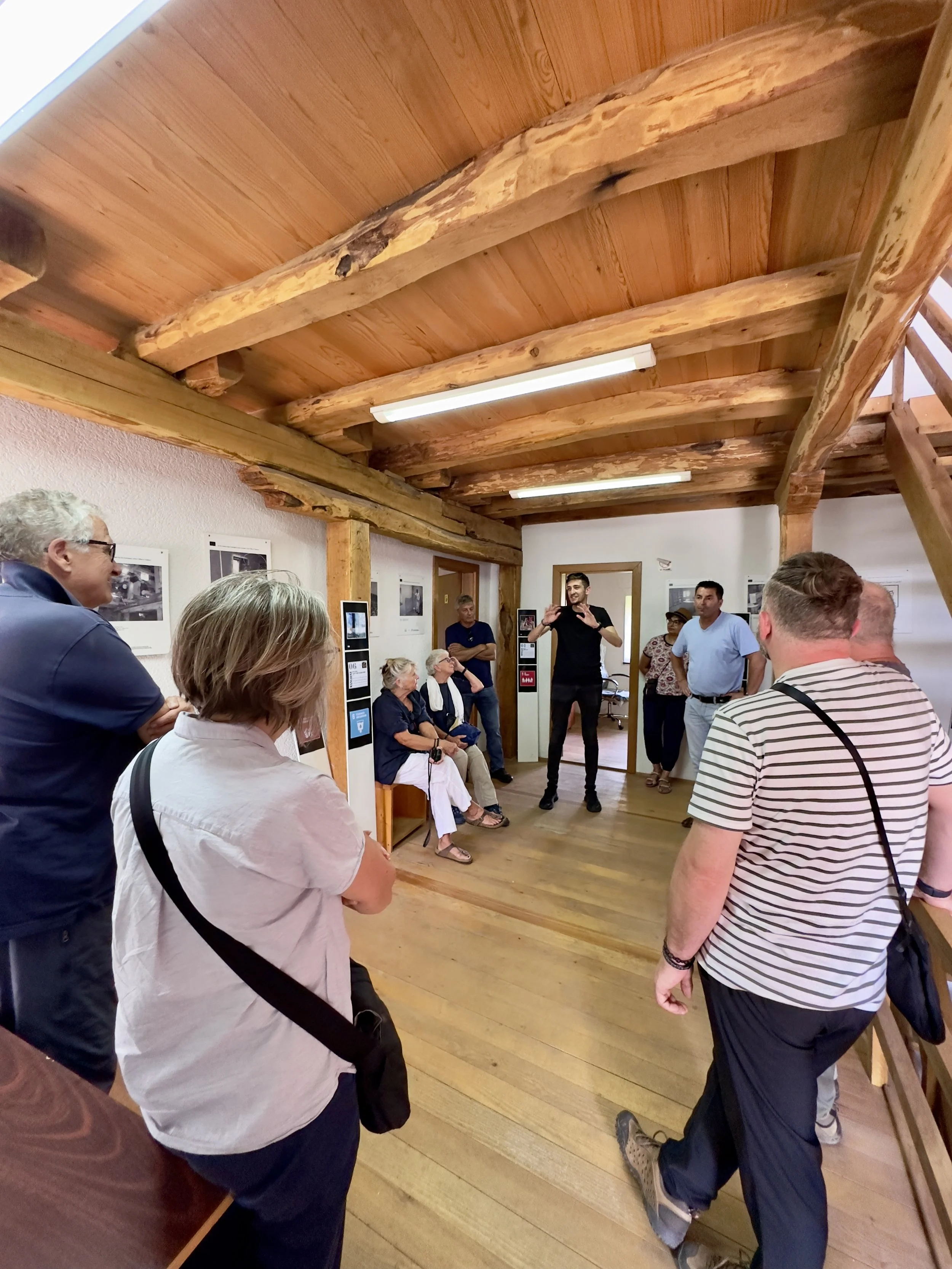
Walking through the rooms, the symbolism felt quiet, not forced. This was not a restoration for tourists. It was about keeping a piece of memory intact. A practical act of respect. A way for the village to hold on to something that still mattered.
It was a short stop, but it gave shape to the drive. A small slice of local life sitting between the border and the road ahead.
We left the kulla in Junik and carried on toward Deçan. The road stayed gentle, a straight pull through open fields and quiet houses. Nothing dramatic. Just easy travel through the valley.
The mountains drew closer as we drove. Deçan sat ahead like a small pause in the landscape, the kind of town you slip into without noticing. Our guide pointed to the far end of the valley. The monastery waited there, tucked beneath the slopes, steady and rooted. It felt like the right next step, a calm follow on from a morning of borders and old stone walls.
