
Hamburg: Canals, Churches & Winter Walks
We arrived in Hamburg in the middle of winter. The air was crisp enough to make our cheeks rosy and hands reach for gloves at every turn, but the city felt welcoming rather than harsh. Cobblestone streets, historic canals, red-brick warehouses, sleek modern buildings, and iconic landmarks made for a magical backdrop. Walking at our own pace, we soaked up the charm of the city, from quiet canals and quirky statues to bustling squares and postcard-perfect waterfronts, each corner whispering a little of its story. This loop really captures the Hamburg that first-time visitors tend to head for — the canals, historic Speicherstadt, the Elbphilharmonie, and Rathaus all in one compact area.
⏱️ Hamburg Walking Route
Route: Wasserschloss > Wandrahmsfleet > Speicherstadt > Magellan Terraces > Elbphilharmonie > St. Michael’s Church > Zitronenjette > St. Nikolai > Alster Arcade > Rathaus
Style: Loop, mostly flat with some cobbled streets
Good for: First-time visitors, history lovers, couples exploring together
🏛️ Wasserschloss (00:00–00:10)
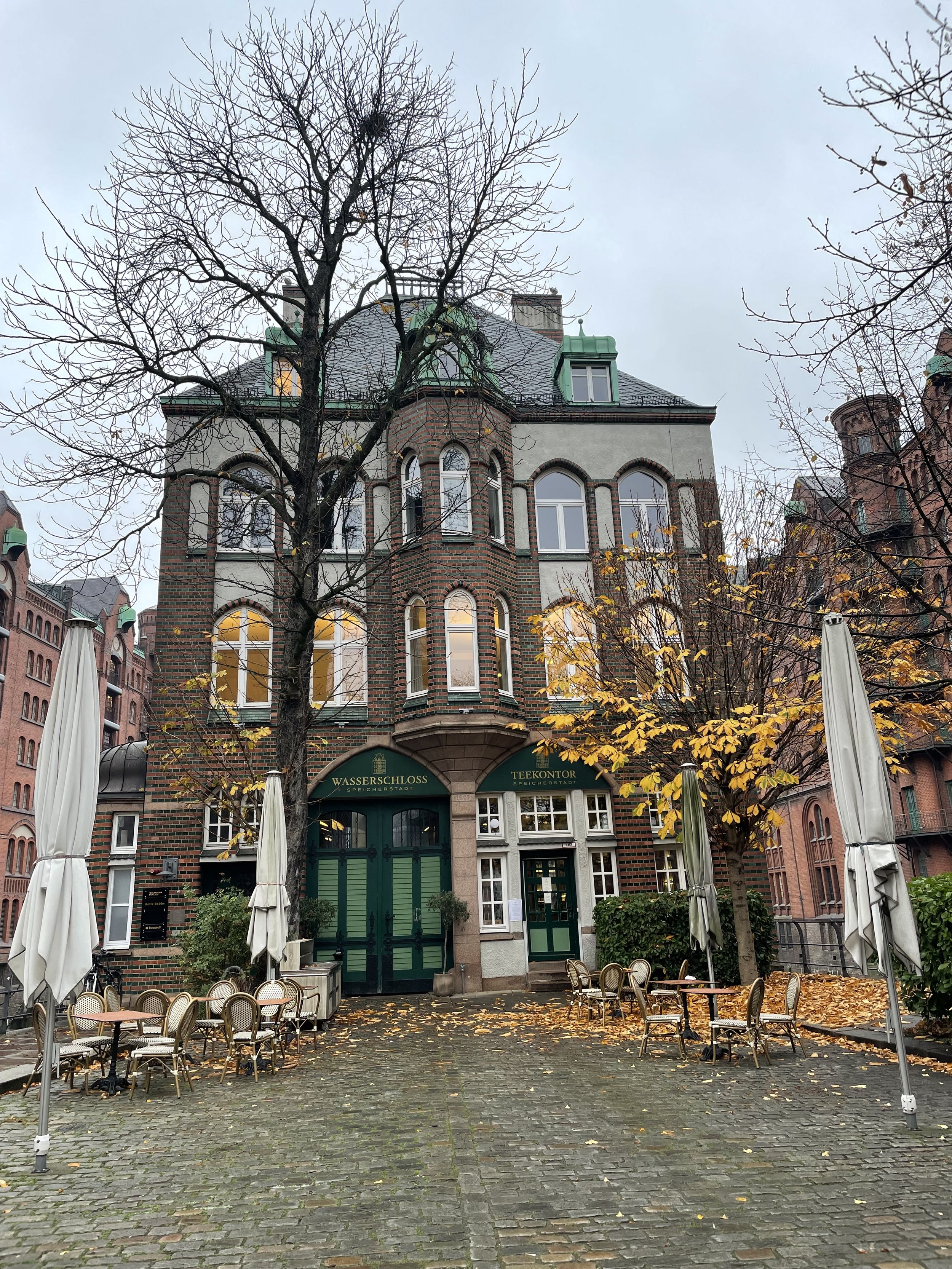
We started at Wasserschloss, a picturesque building perched at the edge of the canals in Speicherstadt. Built in the late 19th century during Hamburg’s rapid expansion as a trading port, its distinctive brick façade and small towers are a classic example of historic German warehouse architecture. The reflections in the canal made it feel almost like a painting, and it was a peaceful place to pause at the start of our walk.
🚶 Walk to Wandrahmsfleet: 5 minutes
🌊 Wandrahmsfleet (00:15–00:25)
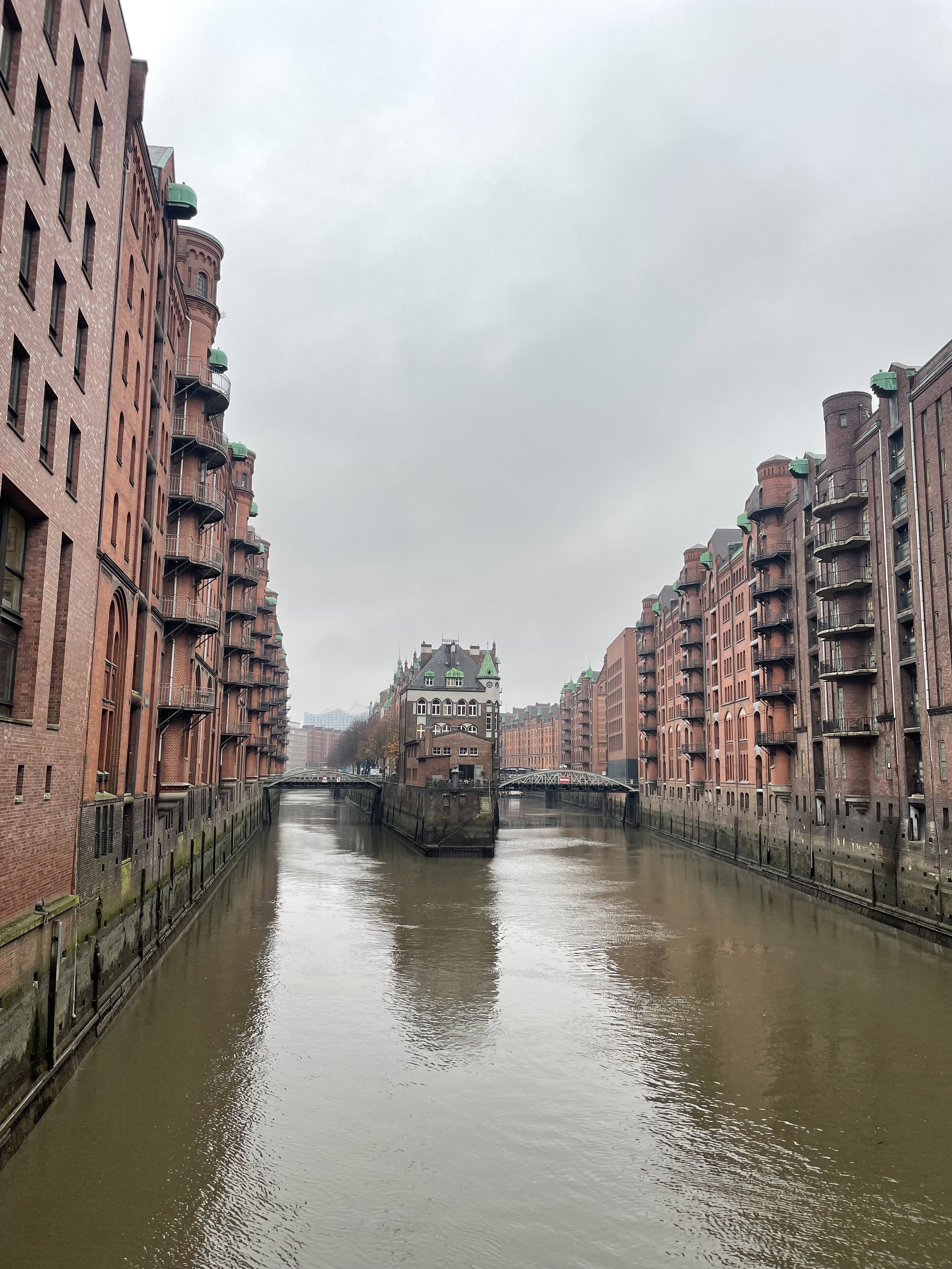
A short stroll brought us to Wandrahmsfleet, one of the charming canals threading through Speicherstadt. The narrow waterway, flanked by warehouses built on timber-pile foundations, reflects the city’s history as a shipping hub. Walking along the small footbridges, you can almost imagine goods being moved by hand across these waters a century ago — it’s surprisingly serene amid the city’s bustle.
🚶 Walk into Speicherstadt: 5 minutes
🏛️ Speicherstadt (00:30–00:50)
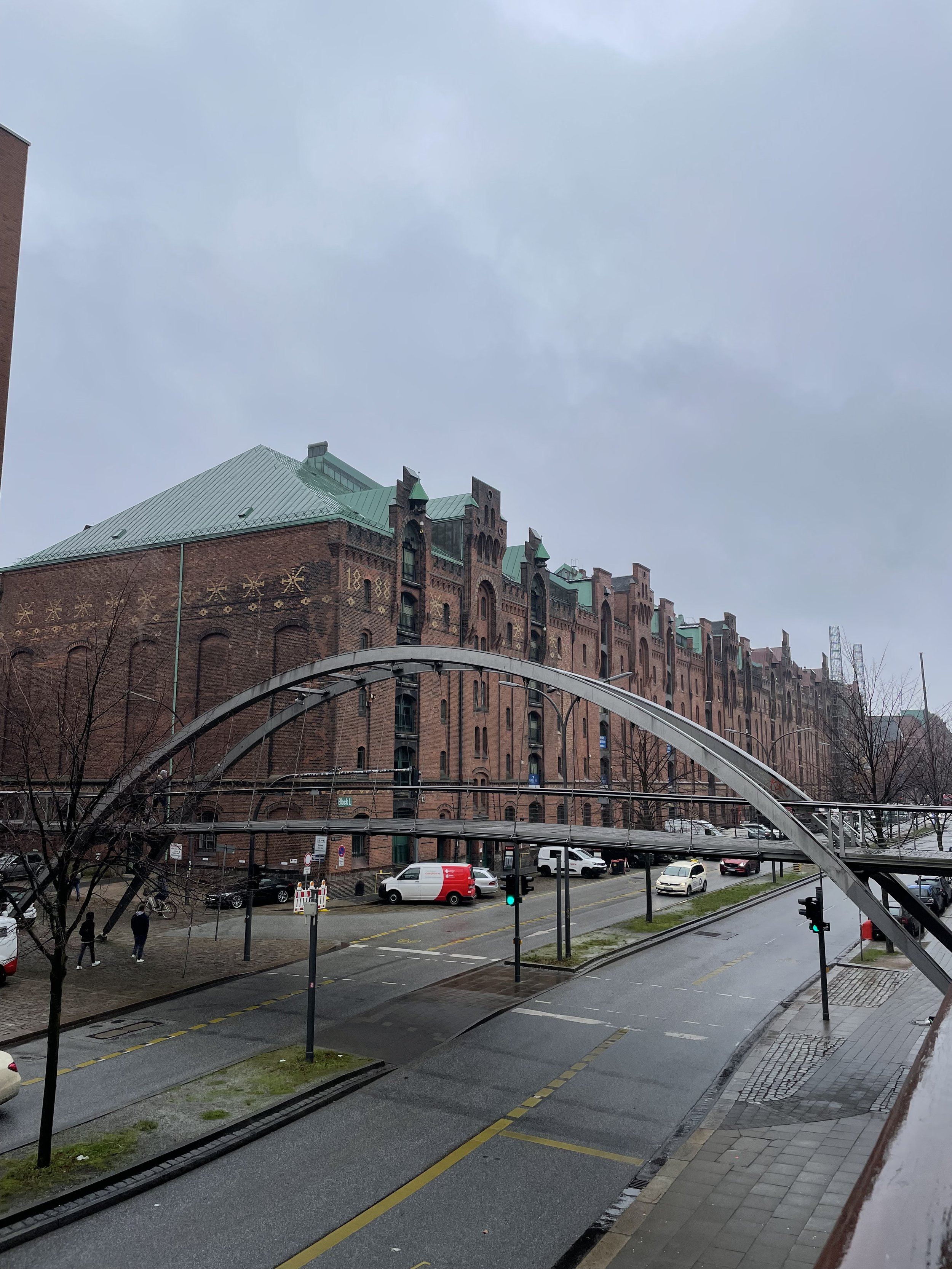
The Speicherstadt, literally “City of Warehouses,” is the largest warehouse district in the world built on timber piles, dating from the late 19th and early 20th centuries. Its neo-Gothic red-brick architecture and canals are stunning, especially in winter light. We wandered along the cobbled streets and over the canals, pausing to take photos of the warehouses and bridges that have become so iconic.
🚶 Walk to Magellan Terraces: 10 minutes
🏞️ Magellan Terraces (01:00–01:15)
Stepping into HafenCity, the city’s modern waterfront district, we strolled along the Magellan Terraces. Named after the famous explorer, this promenade offers views over the Elbe and the historic port area. The wide, open space with sculptures, fountains, and benches feels surprisingly peaceful, a nice contrast to the dense warehouses we’d just explored, and a perfect spot for photos.
🚶 Walk to Elbphilharmonie: 5 minutes
🎶 Elbphilharmonie (01:20–01:35)
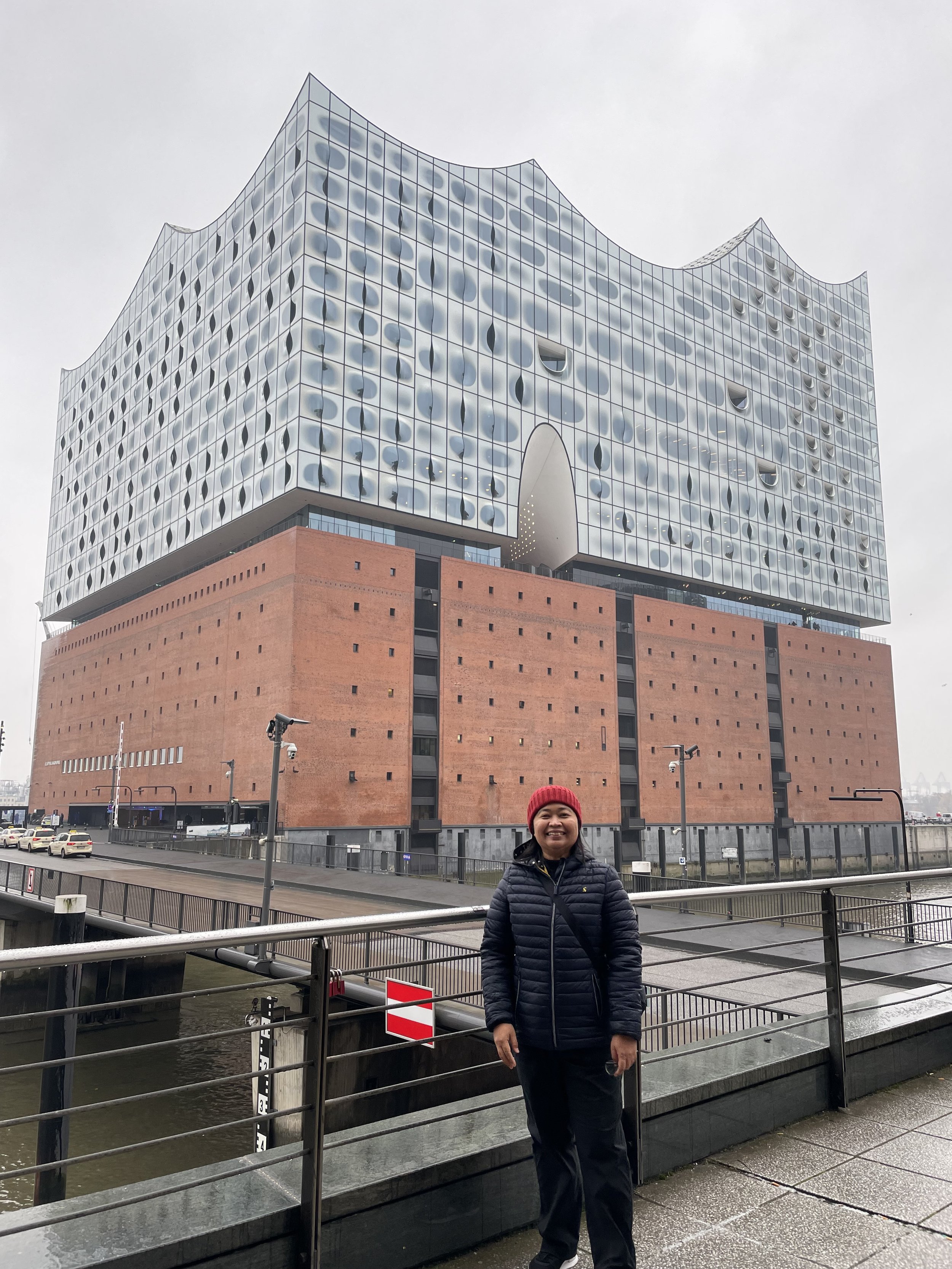
The Elbphilharmonie is one of Hamburg’s most iconic modern landmarks. Opened in 2017, it’s built atop an old warehouse and designed with a striking glass façade shaped like waves. Standing outside, we were struck by the contrast with Speicherstadt behind it — history meeting contemporary architecture. Even without going inside, it’s worth a pause just to take photos and admire the city’s waterfront evolution.
🚶 Walk to St. Michael’s Church: 10 minutes
⛪ St. Michael’s Church (01:45–02:05)
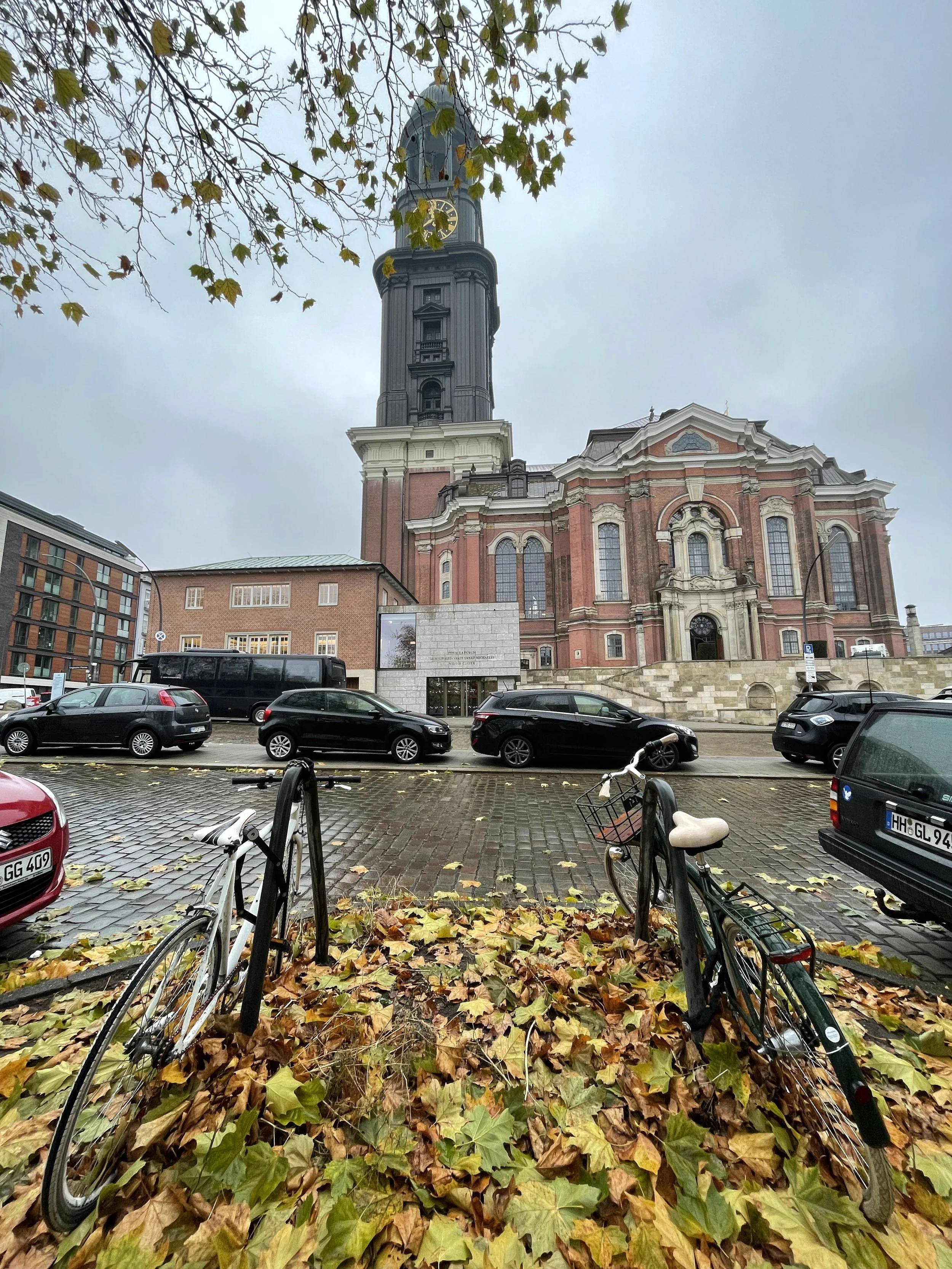
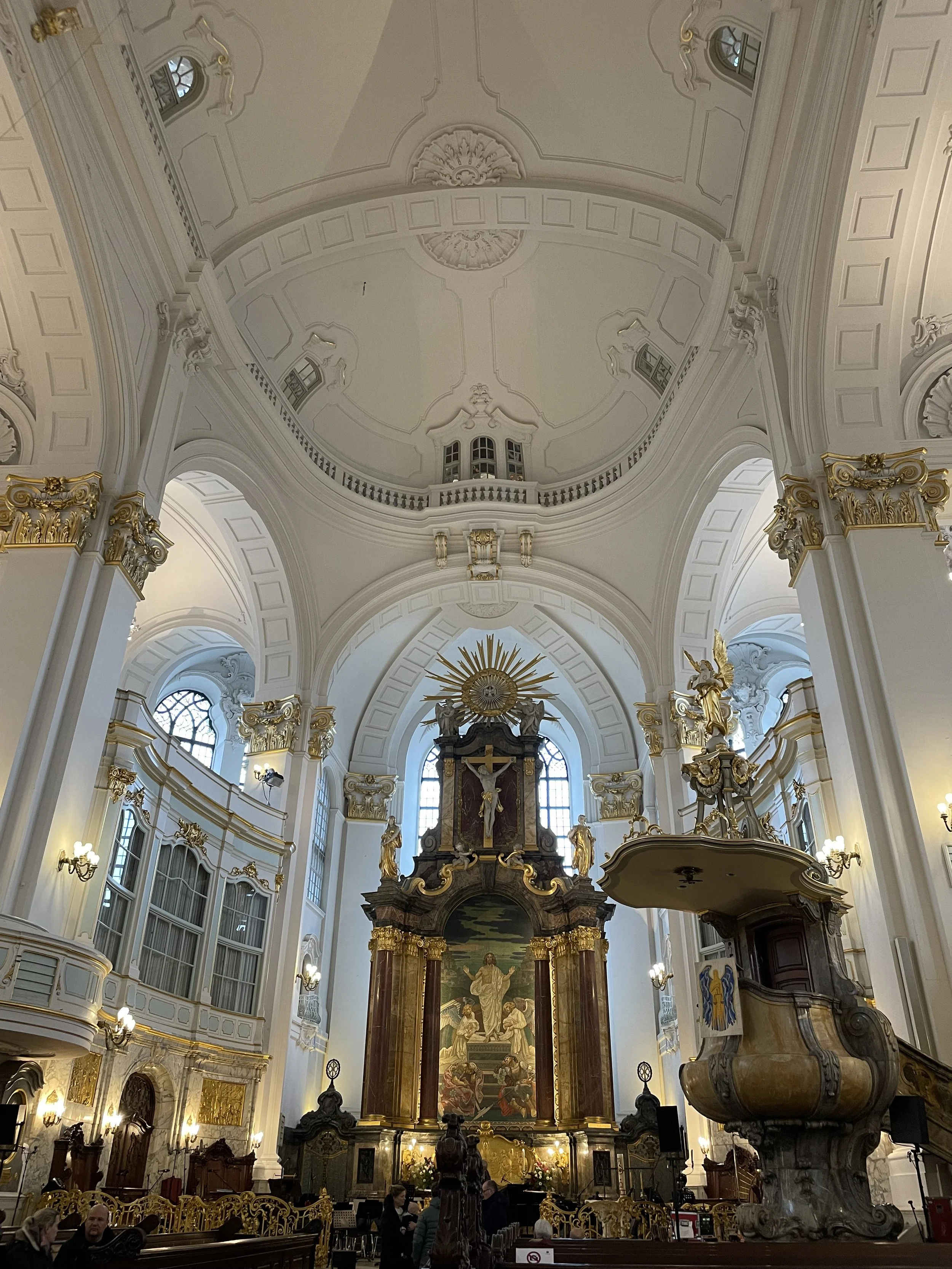
Known locally as the Michel, this baroque church dates back to the 17th century and is one of Hamburg’s most recognisable landmarks. Its copper spire towers over the skyline. We admired the exterior and climbed the tower for panoramic views of the Elbe and winter-dusted rooftops — a perfect cityscape. Its history as a major Lutheran site and its reconstruction after fires and wartime damage makes it feel like a symbol of Hamburg’s resilience.

🚶 Walk to Zitronenjette: 5 minutes
🍋 Zitronenjette (02:10–02:15)
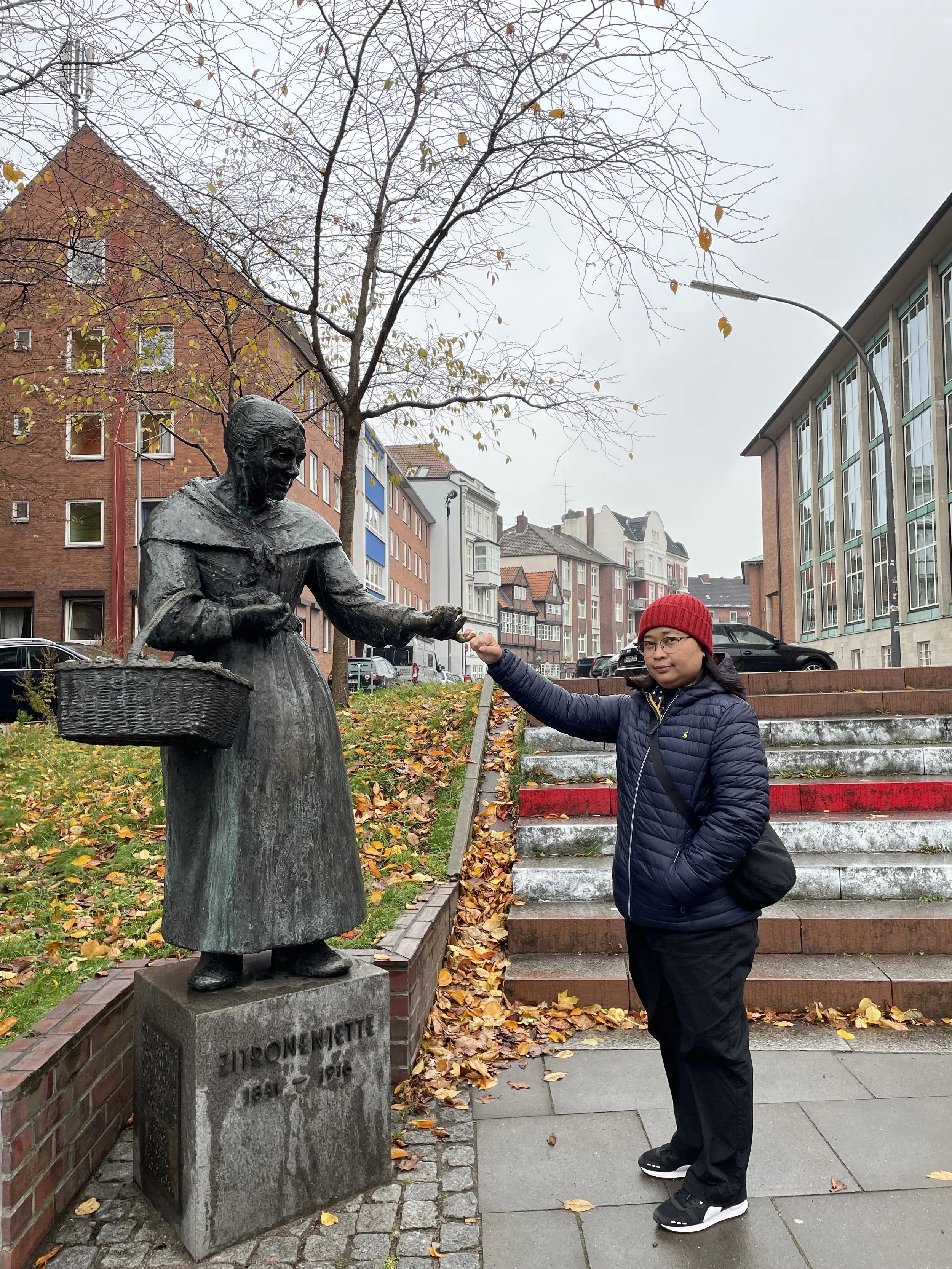
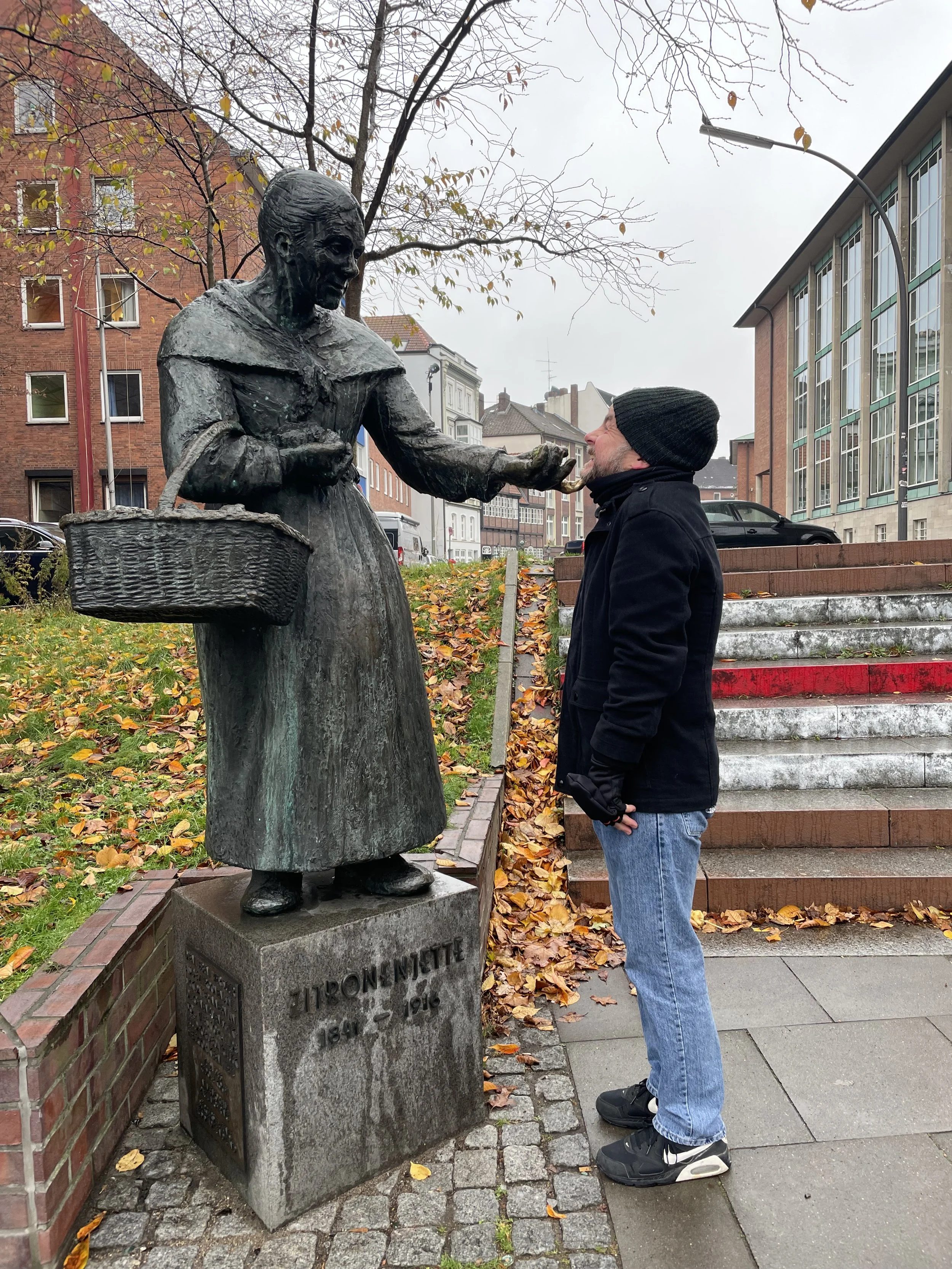
A short detour brought us to the statue of Zitronenjette, commemorating a spirited woman who sold lemons on Hamburg’s streets in the late 19th and early 20th centuries. Small and quirky, it’s a charming reminder of everyday life in historic Hamburg, and we paused for a quick photo.
🚶 Walk to St. Nikolai: 5 minutes
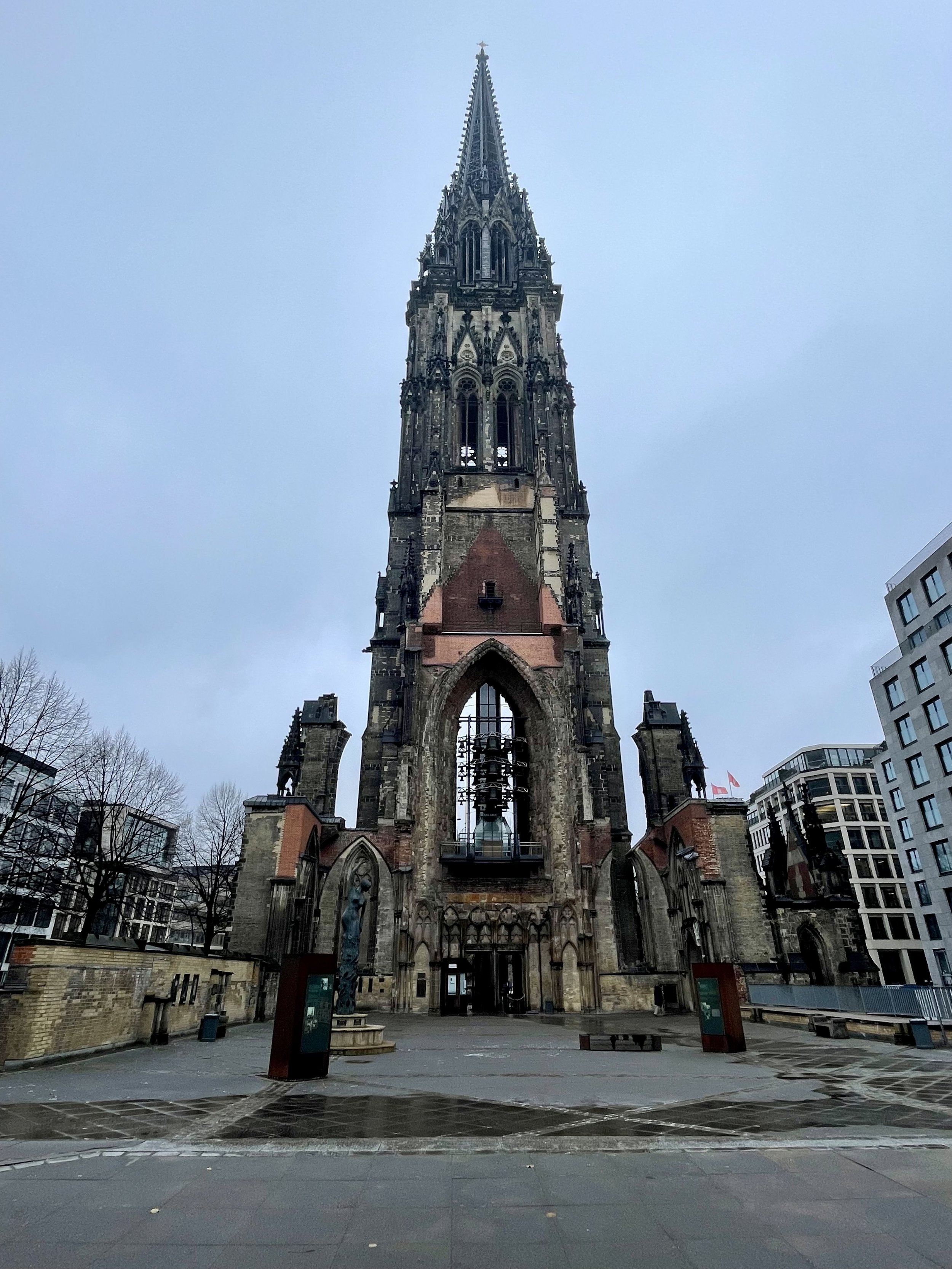
⛪ St. Nikolai (02:20–02:30)
The ruins of St. Nikolai Church, once the tallest building in the world in the 1870s, now serve as a memorial after being largely destroyed in World War II. Walking among the spire and skeletal arches, it’s a strikingly poignant reminder of the city’s past and resilience.

🚶 Walk to Alster Arcade: 10 minutes
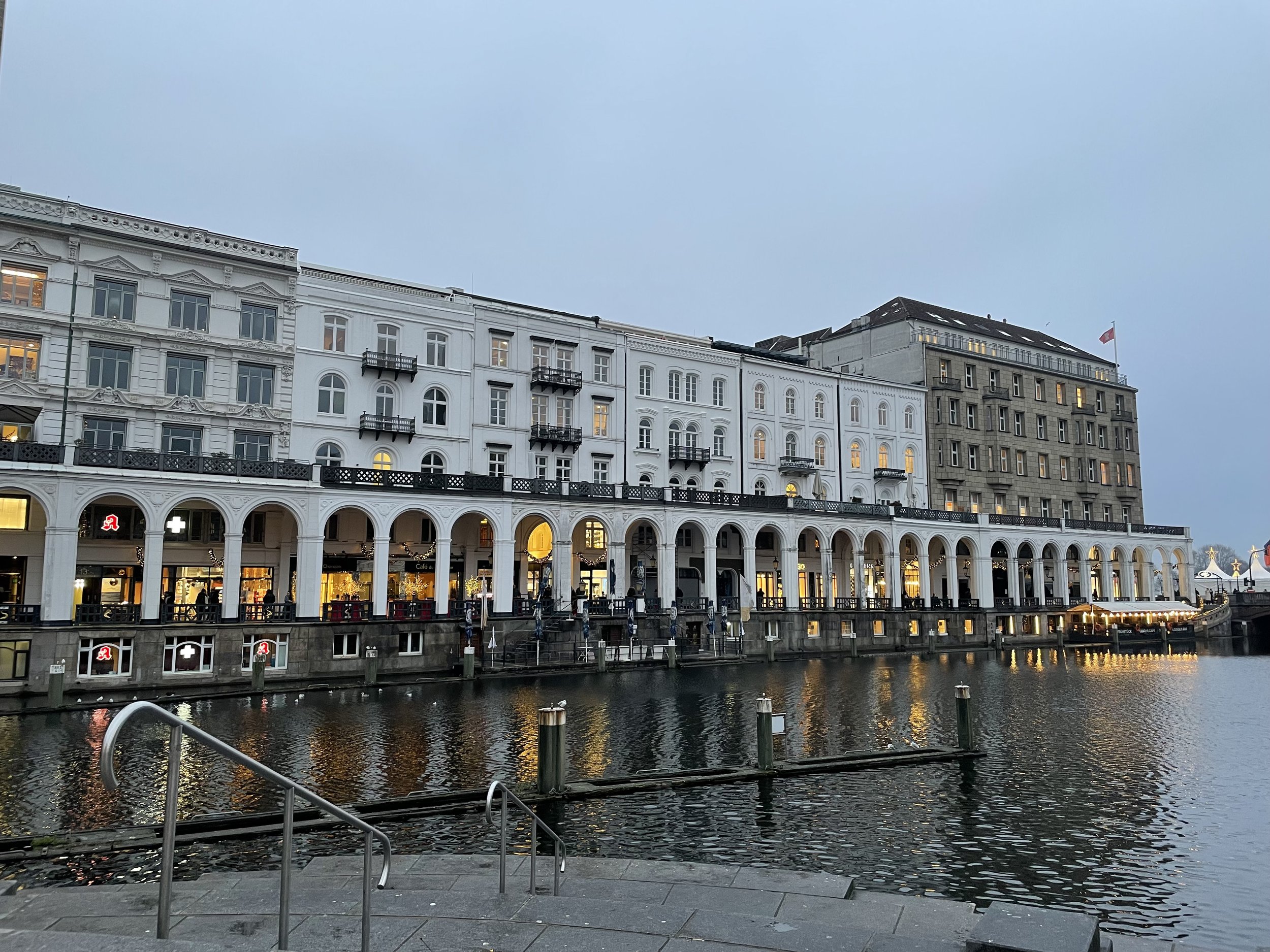
🏙️ Alster Arcade (02:40–02:50)
Along the Binnenalster, the Alster Arcade is an elegant shopping passageway dating from the late 19th century. Lined with boutique shops and cafés, it opens onto the lake with reflections of the surrounding architecture. It’s a short, stylish pause before heading to our final stop.
🚶 Walk to Rathaus: 5 minutes
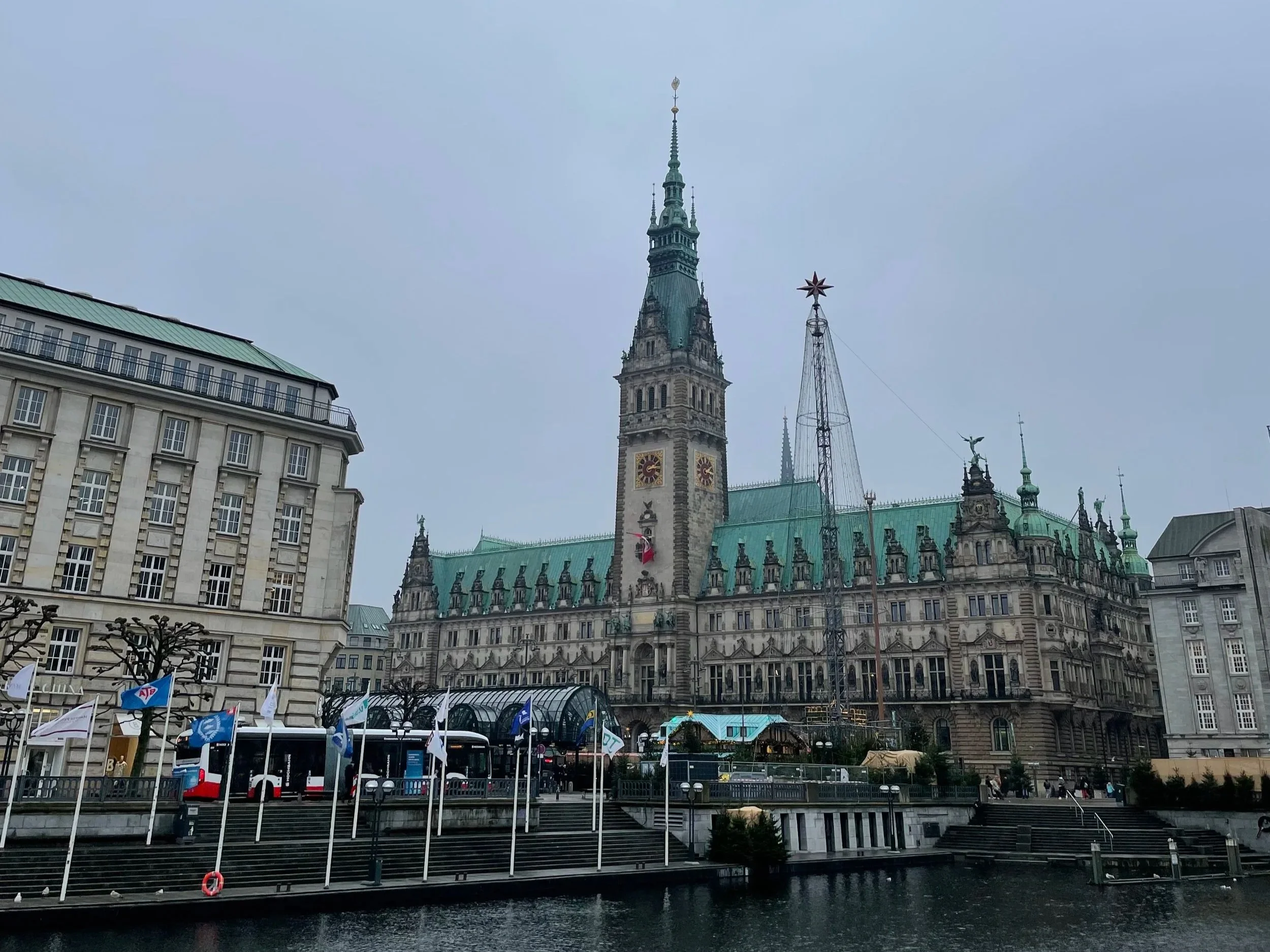
🏛️ Rathaus (02:55–03:10)
We finished at Rathaus, Hamburg’s neo-Renaissance city hall built in the late 19th century. The ornate façades and statues are remarkable, and standing in the square gives you a sense of the city’s civic pride. In winter, the square comes alive with festive energy, and it’s the perfect finale for the loop.
📸 Best Selfie Spots
Wasserschloss – reflections on the canals
Elbphilharmonie – modern landmark against historic warehouses
St. Michael’s Church tower – panoramic city views
St. Nikolai ruins – dramatic, historical backdrop
Rathaus – grand neo-Renaissance façade
💡 Pro Tips
Dress warmly — winter in Hamburg can be biting
Wear comfortable shoes for cobbled streets and canals
Pause along Speicherstadt and terraces for photos
Start early for quieter streets and softer light
🕰 More to See If You Have Extra Time
Landungsbrücken – iconic harbor piers
Miniatur Wunderland – the world’s largest model railway
HafenCity – modern architecture and waterfront walks
Final Thoughts
Walking through Hamburg in winter gave us a real sense of the city’s layers — historic canals, modern waterfronts, quirky landmarks, and civic pride. With stops for photos, a tower climb, and leisurely strolls along terraces and canals, the loop takes just over three hours, making it a relaxed and rewarding first-time exploration.
