
Exploring Lin, Albania, and its Quiet Hilltop Mosaic
We crossed the border into Albania and the road curled down to the village of Lin. The lake felt wider on this side, quiet and steady, a slow mirror under the mountains. Lin sat on its little peninsula with that calm air you only get in places untouched by rush or hype.
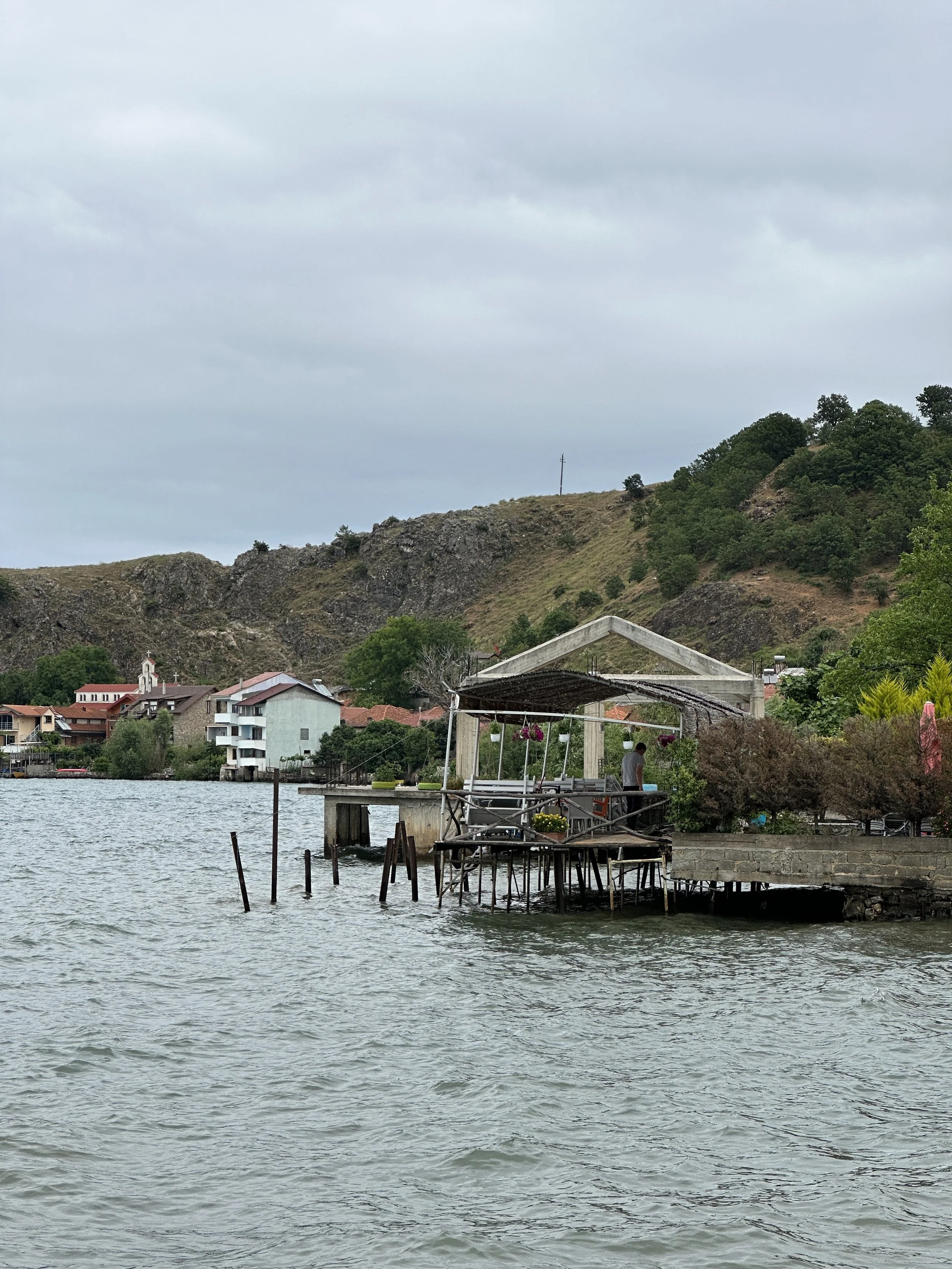
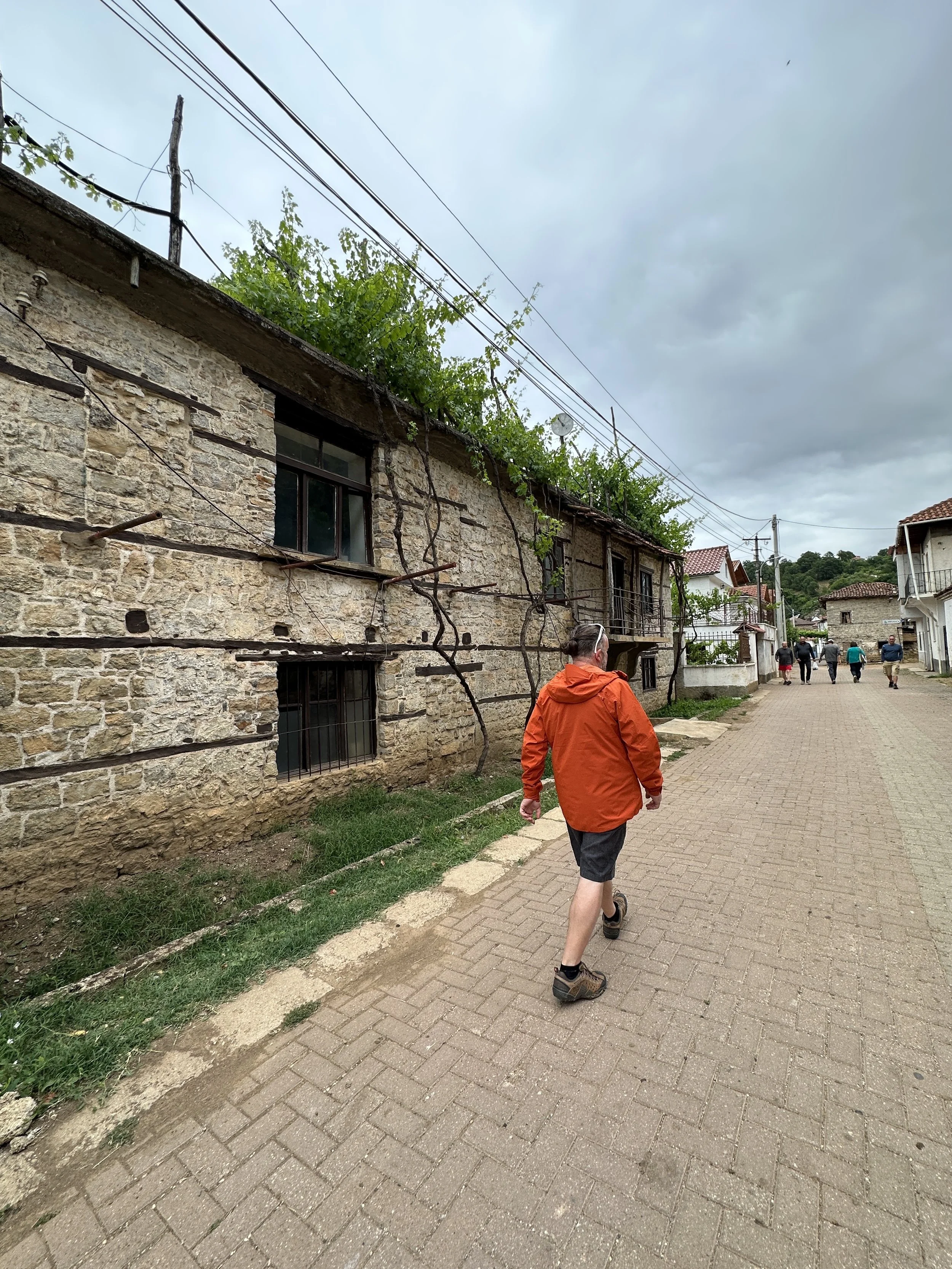
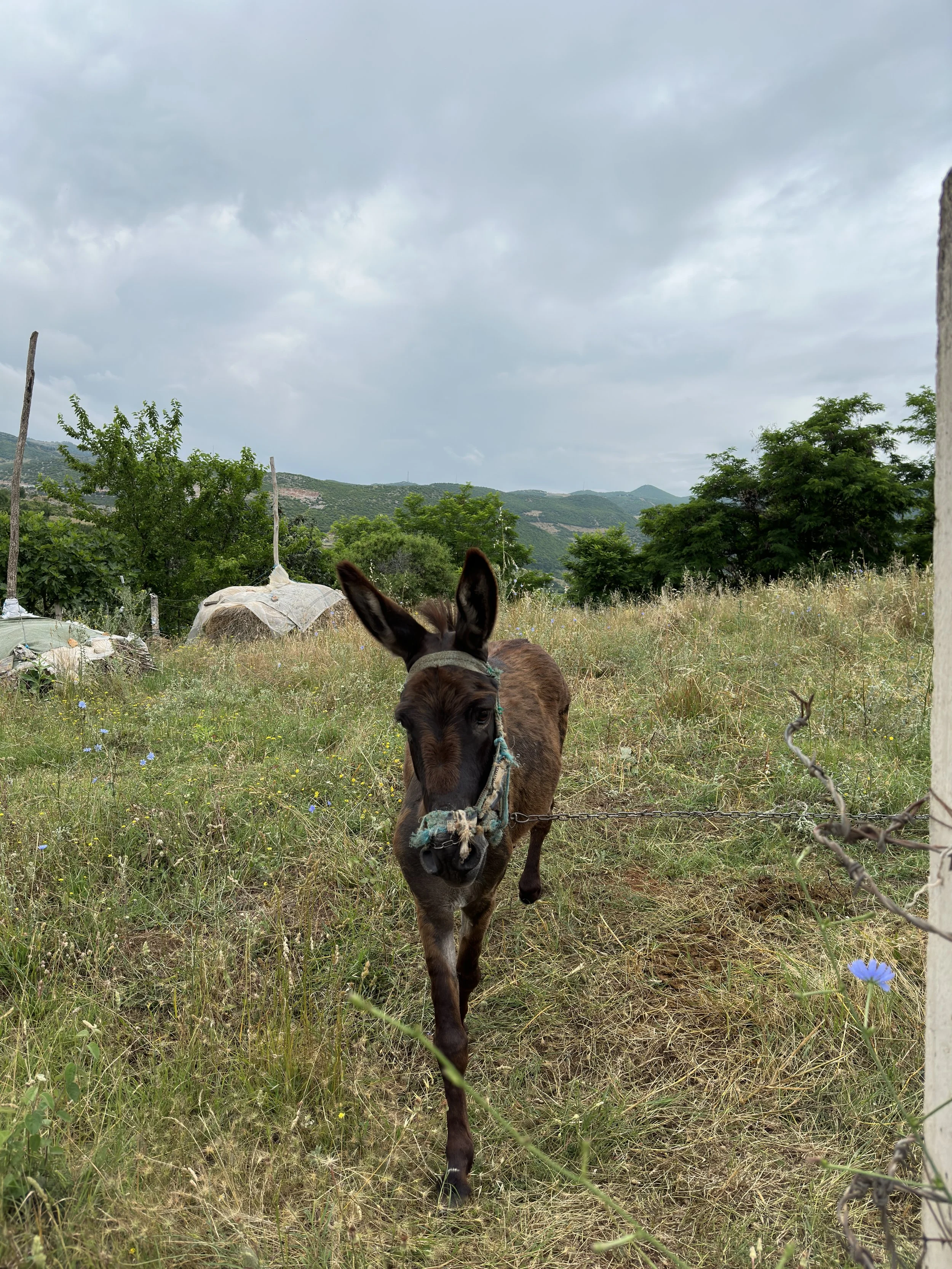
The walk through the village was interesting. Old stone houses sat beside newer ones. The streets were still. You could tell this was not a tourist place. A local guide or maybe the caretaker of the ruins met us. He spoke no English, so our Albanian team leader translated for the group. A village dog followed us as if it had been hired for the job. We passed a small meadow where a donkey was minding its own business.
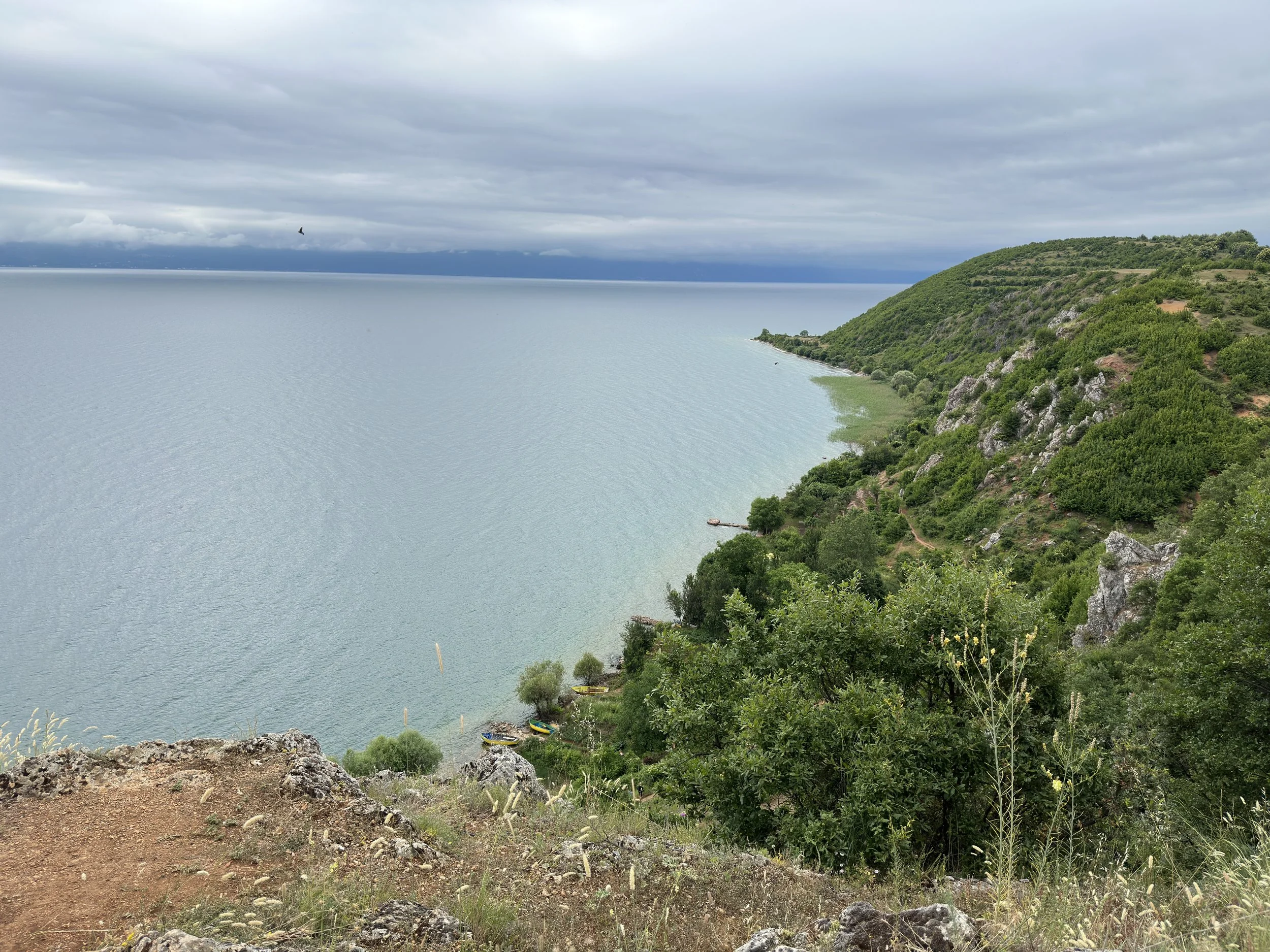
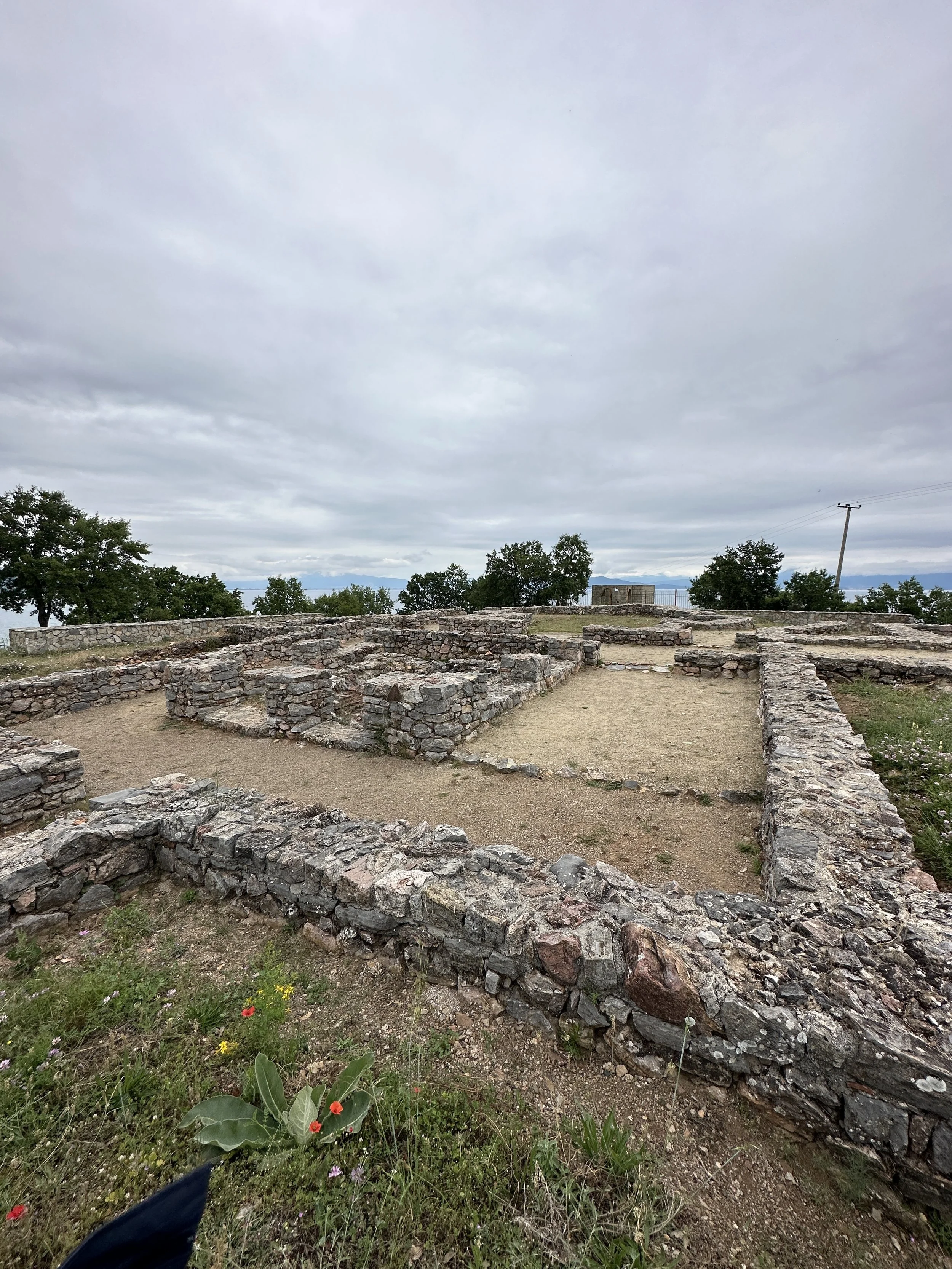
The ruins are fenced off. The grass was a bit overgrown. It looked nothing like the usual polished tourist stop. Maybe a few groups visit, but not many. We walked up the hill that overlooks the lake and the village below, stopping as far as the path would take us. The slope gave that quiet, open view you remember long after you leave.
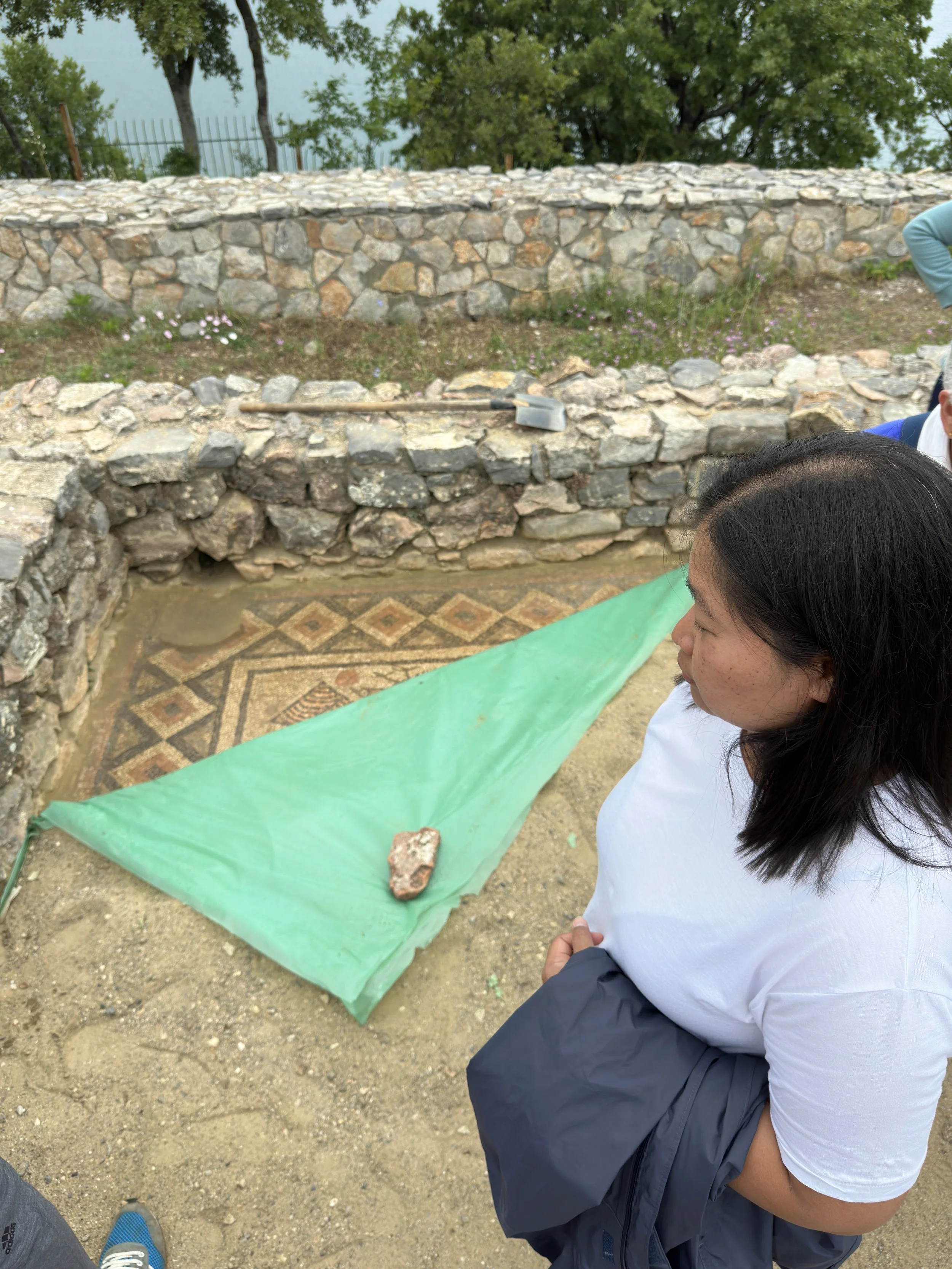
Back at the basilica, the caretaker brushed sand from a section of the floor and lifted the cover that protects the mosaic. The colours jumped out. The patterns were striking. It felt unreal to be standing in such a quiet place with something so old and so well kept. These are the moments that stay with you, the small surprises that make a trip feel special.
On the walk back the donkey greeted us. The village dog stayed loyal to the job. Down in the lanes, two grandmas sat outside their house talking. It felt like a snapshot of village life, simple and unbothered.
It was a short visit, but a memorable one. A calm pause at the edge of Lake Ohrid before we carried on with the journey.
Did You Know: Lin and its Mosaic
• Lin sits beside the oldest known lakeside settlement in Europe. Archaeologists dated the stilt village to about 8,500 years old.
• The basilica on the hill dates to the sixth century, built in the era of Emperor Justinian.
• The mosaic floor includes rare motifs for the region such as bees, fish, birds, lotus flowers, and braided borders.
• Many of the mosaic stones are about one centimetre in size, made from limestone, marble, brick, and glass.
• The church was likely destroyed by fire between the seventh and ninth centuries. Soil covered the mosaic for centuries, which is why the colours are still preserved.
• Lin is recognised by UNESCO for its traditional architecture and its role in the wider Lake Ohrid heritage area.
We left Lin with the lake still calm below the hill, the village settling back into its quiet rhythm. The road pulled us away from the water and into the folds of the mountains. Fields, small farms, and long empty stretches carried us across the country. It was a slow, steady drive that let the morning settle in our heads. By the time Tirana rose in front of us, the quiet of Lin felt like a small treasure tucked in the day’s pocket.
