
Bajram Curri: An Accidental Pause in the Accursed Mountains
Bajram Curri was not meant to be a stop. It was supposed to be a quick toilet break, maybe a chance to grab water and snacks before we drove deeper into the Albanian Alps. The place we were staying that night was far from any shop, so this little town was our last chance to stock up. But as it often happens on these trips, what started as a practical pause turned into something unexpectedly interesting.
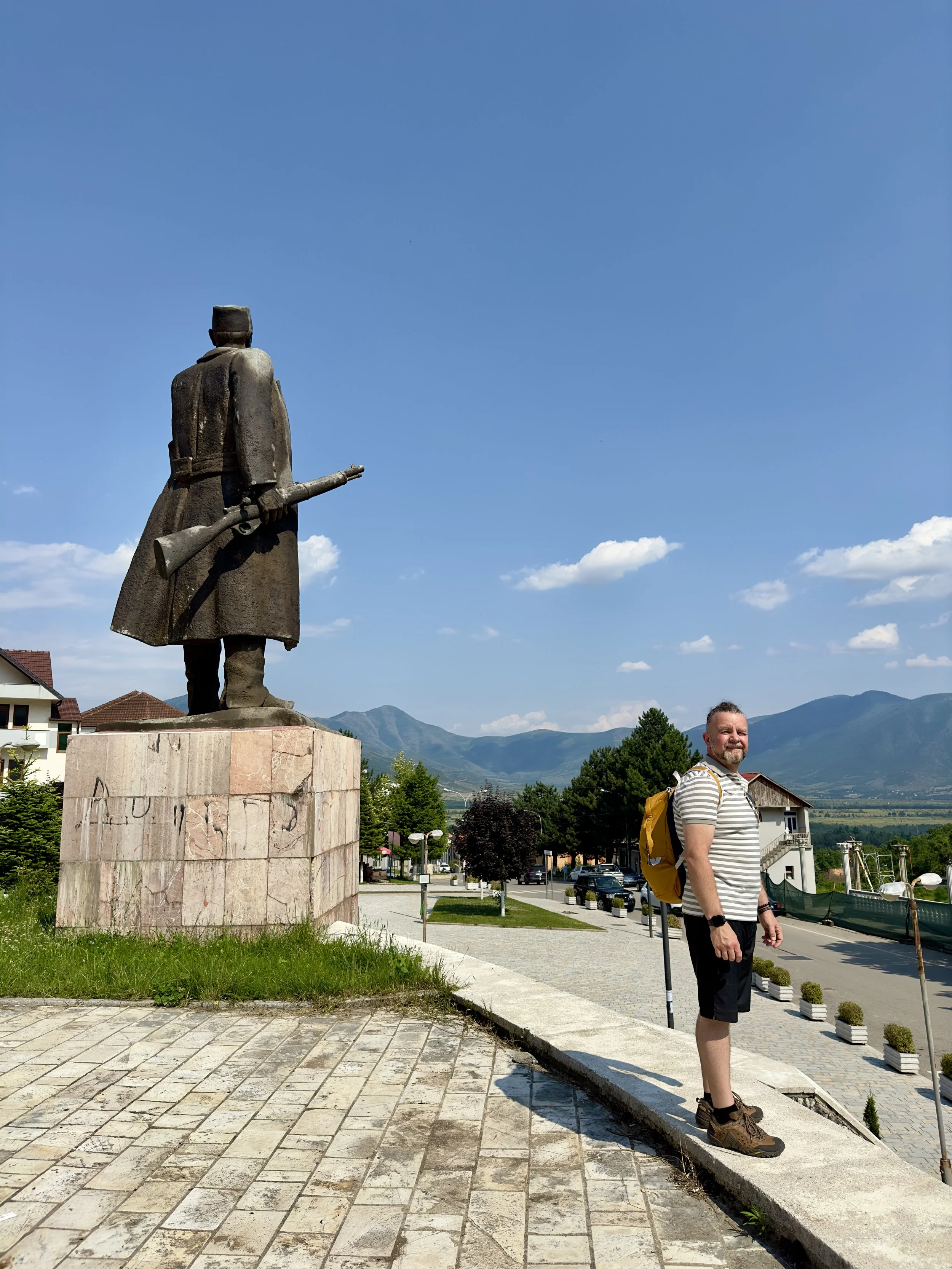
We stopped near the main square, watched over by the statue of Bajram Curri himself. He was a national hero, born in these mountains and remembered for fighting Ottoman rule and later resisting King Zog’s regime. The town carries his name, a nod to his fierce independence and tragic end. It is said that in 1925, rather than surrender, Bajram Curri took his own life in a cave near Dragobia, not far from here. His story is part of the rugged mythology of northern Albania, proud, stubborn, and bound to the mountains.
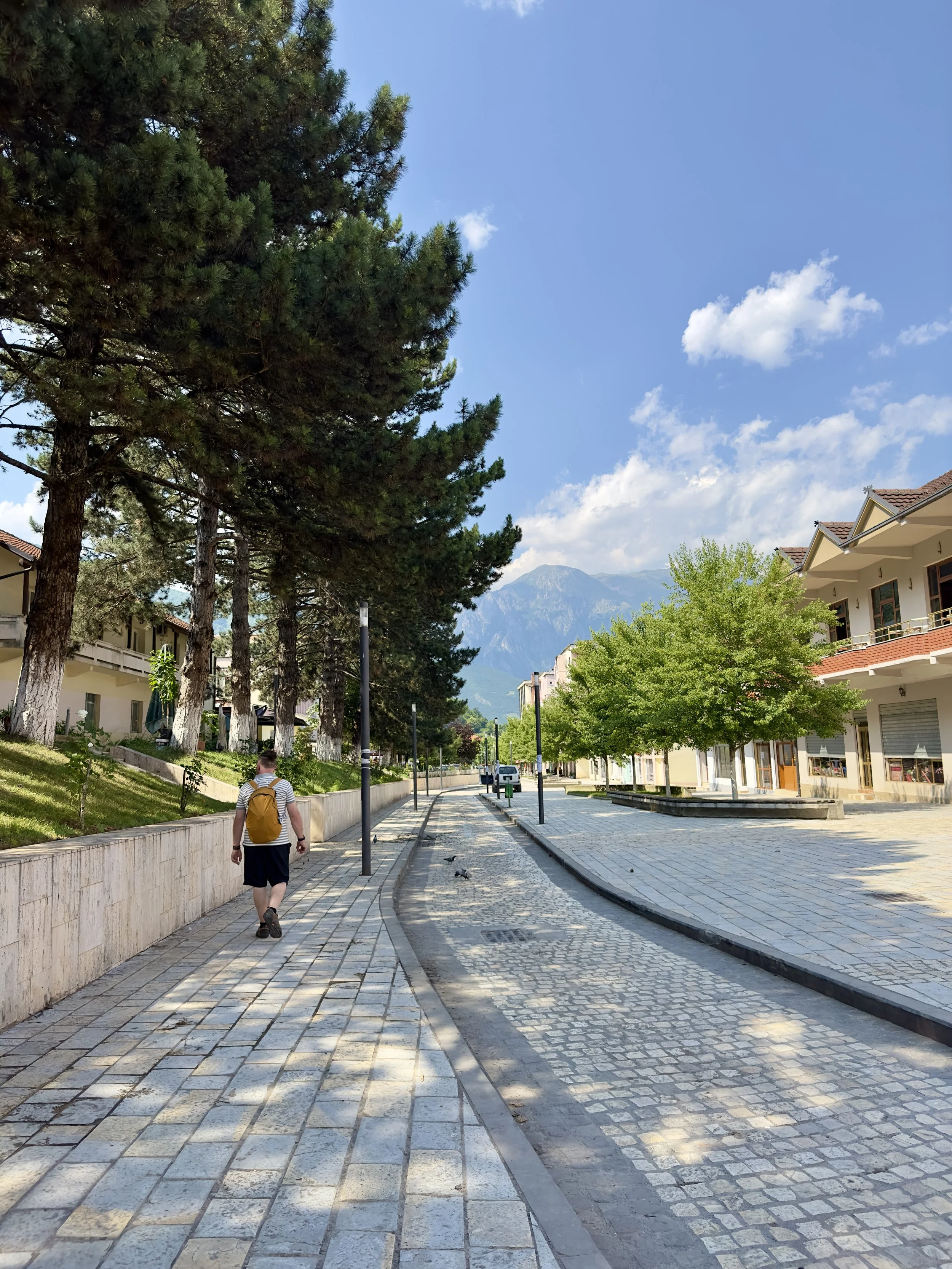
From the square, we wandered down a quiet street lined with pine trees. The midday sun hit the pale façades of the buildings, most of them solid, square, and unmistakably communist in style. There was a kind of symmetry to them, softened now by time and vines creeping up the walls. The air smelled faintly of pine resin and dust. A few locals passed by slowly, greeting one another with the unhurried rhythm of small-town life.
We finally found a café open, the kind with plastic chairs outside and a few cold drinks in the fridge. It felt like a small victory. We sat for a while, grateful for the shade and the breeze that drifted through the street. There was a stillness here that contrasted sharply with the restless movement of our journey.
From our table, we could see the surrounding mountains rising at the edge of town. This was the gateway to Valbonë Valley National Park, one of the wildest corners of Albania. Most travellers rush through Bajram Curri, treating it as a transit point between the ferry at Koman and the trails of Valbonë. Yet sitting there, sipping our drinks, it was easy to feel the pulse of the place, that mix of old revolutionary pride and quiet mountain calm.
There is something haunting about towns like this, built in a time of collective idealism and now left to find a quieter rhythm. The pastel blocks, the wide streets, the open sky above them, they all tell a story of a country constantly reinventing itself.
We didn’t plan to stay long in Bajram Curri, and true enough, soon we were back on the road. But as the minibus wound higher into the mountains, I kept thinking of that quiet street and the weight of history behind its name. The road ahead promised something else entirely, the wild beauty of Valbonë.
