Tarifa: Where Europe Ends
The drive south from Jerez felt like rolling toward the edge of the map. The land flattened, the air grew sharper, and the wind picked up the closer we got to the sea. Then Tarifa appeared, bright, white, and restless. This was Europe’s final outpost, the place where the Atlantic and the Mediterranean meet, and Africa waits just across the water.
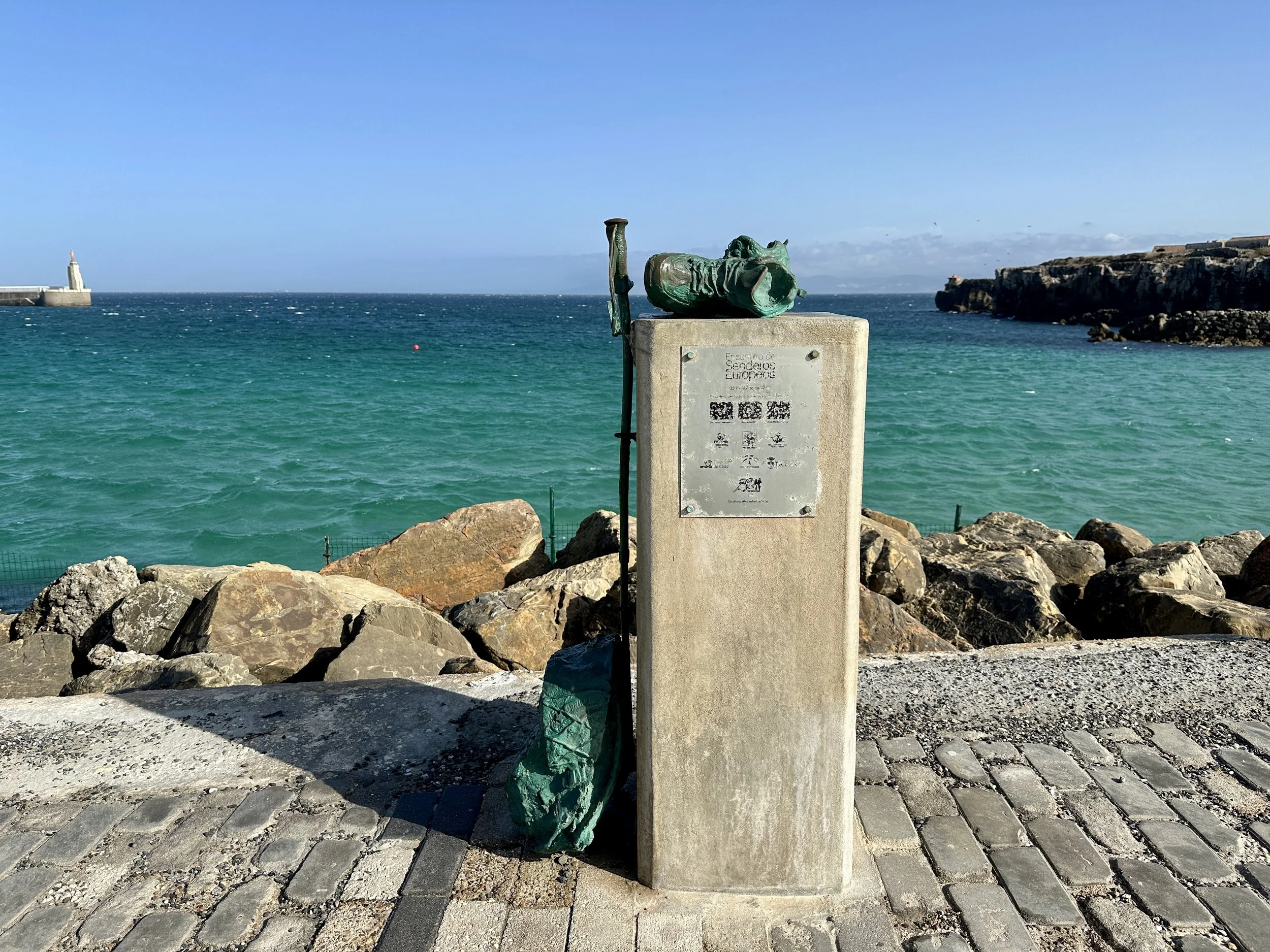
The mountains of Morocco can be seen from here
We arrived in Tarifa in the late afternoon. As we approached the town, we began to notice motorhomes lined along the coast, cars stacked with surfboards, and racks of wetsuits outside small shops. It struck me then that Tarifa was not just the gateway to Africa, but a place people came to chase the wind. I had never heard of it before seeing it on our itinerary, but it already felt different from anywhere else we had been, open, bright, and alive with motion.
The town looked white against the blue of the sea, its walls glowing in the sunlight. It felt like a frontier, a place balanced between continents.
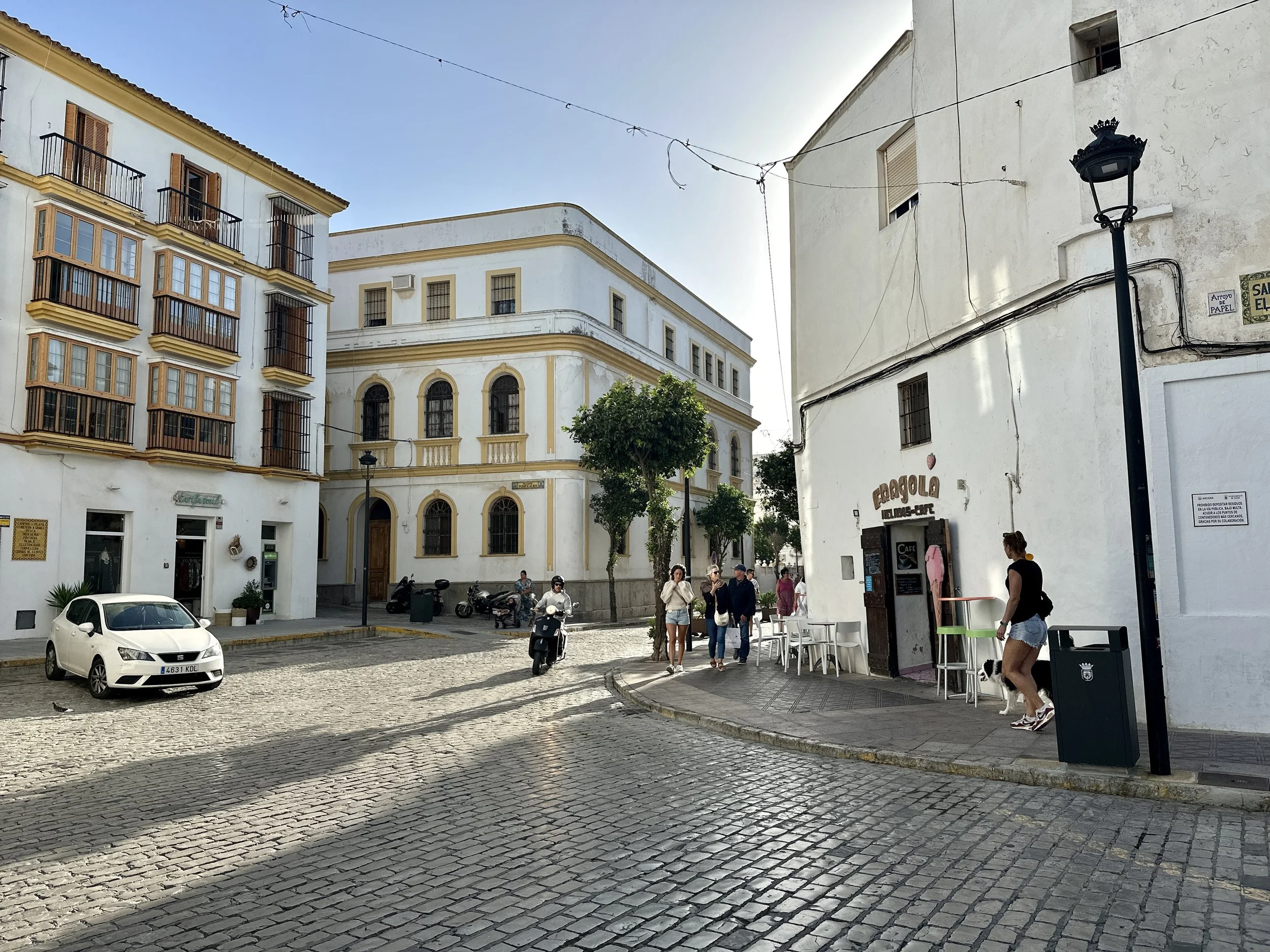
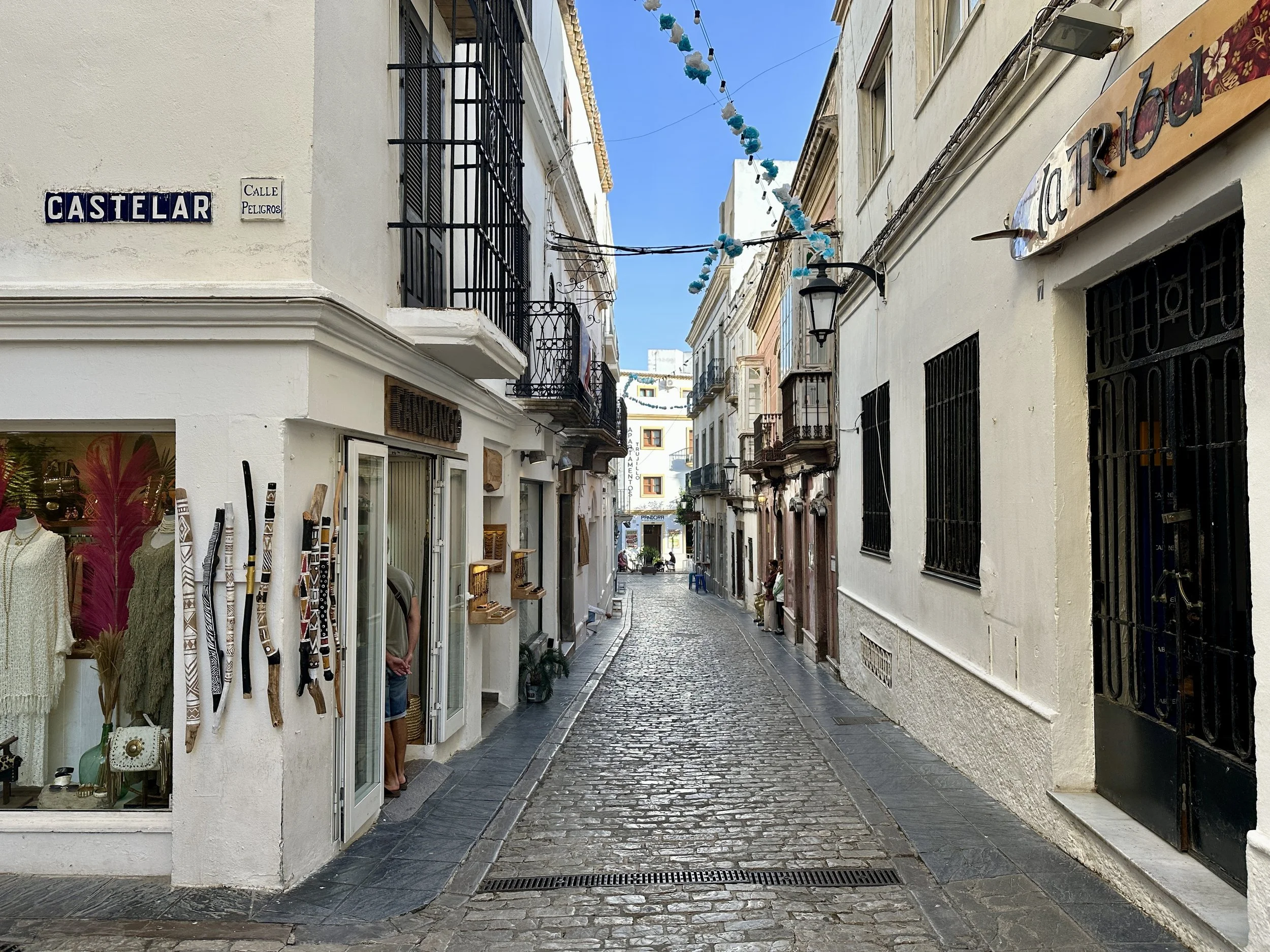
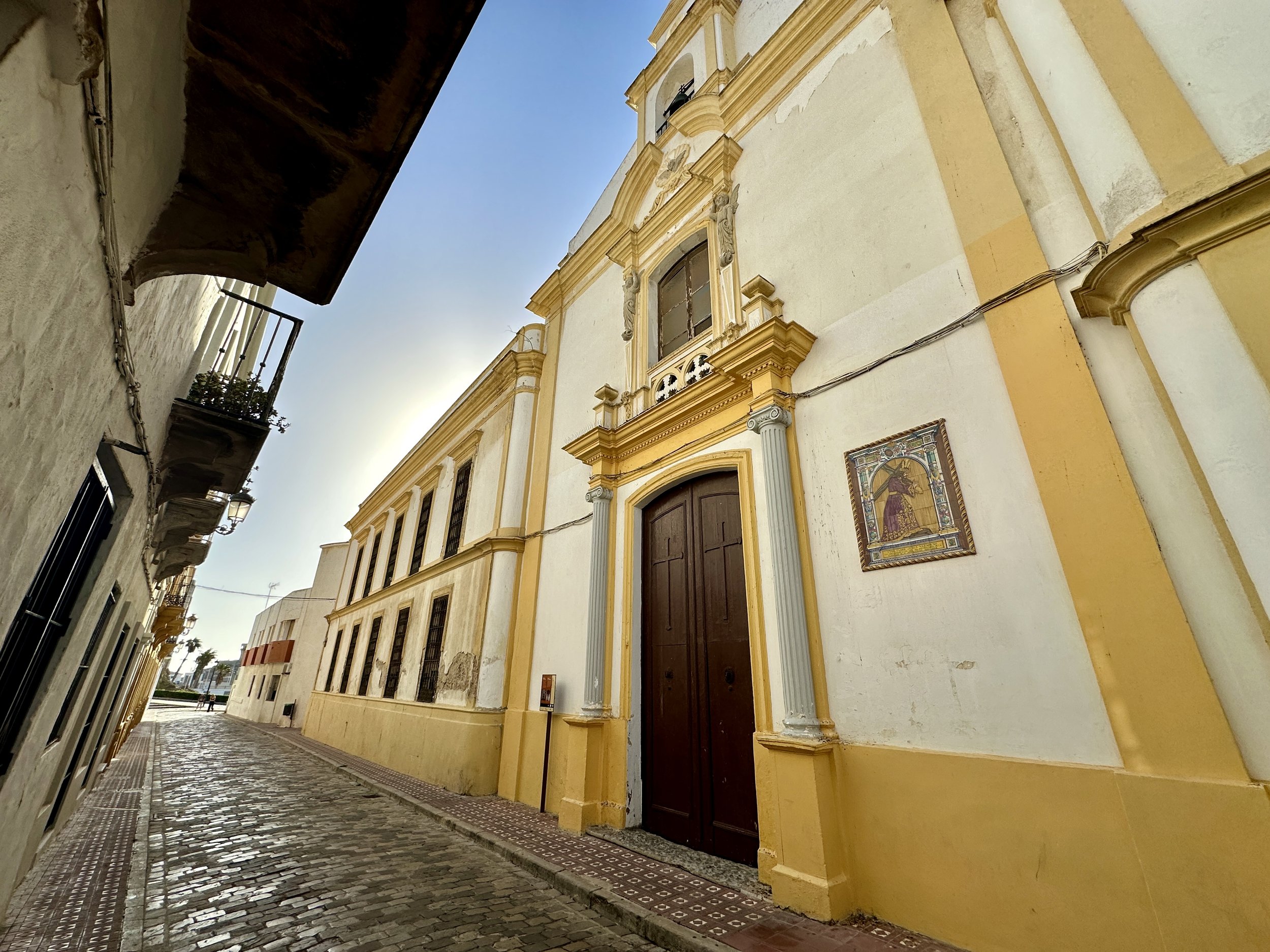
We started our walk at Puerta de Jerez, the northern gate into the old town. The streets were narrow and quiet, washed in white and gold under the soft sun. Inside the walls, Tarifa moved slowly. The whole place seemed built to resist the wind, its Moorish plan twisting through tight lanes that turned and folded upon themselves.
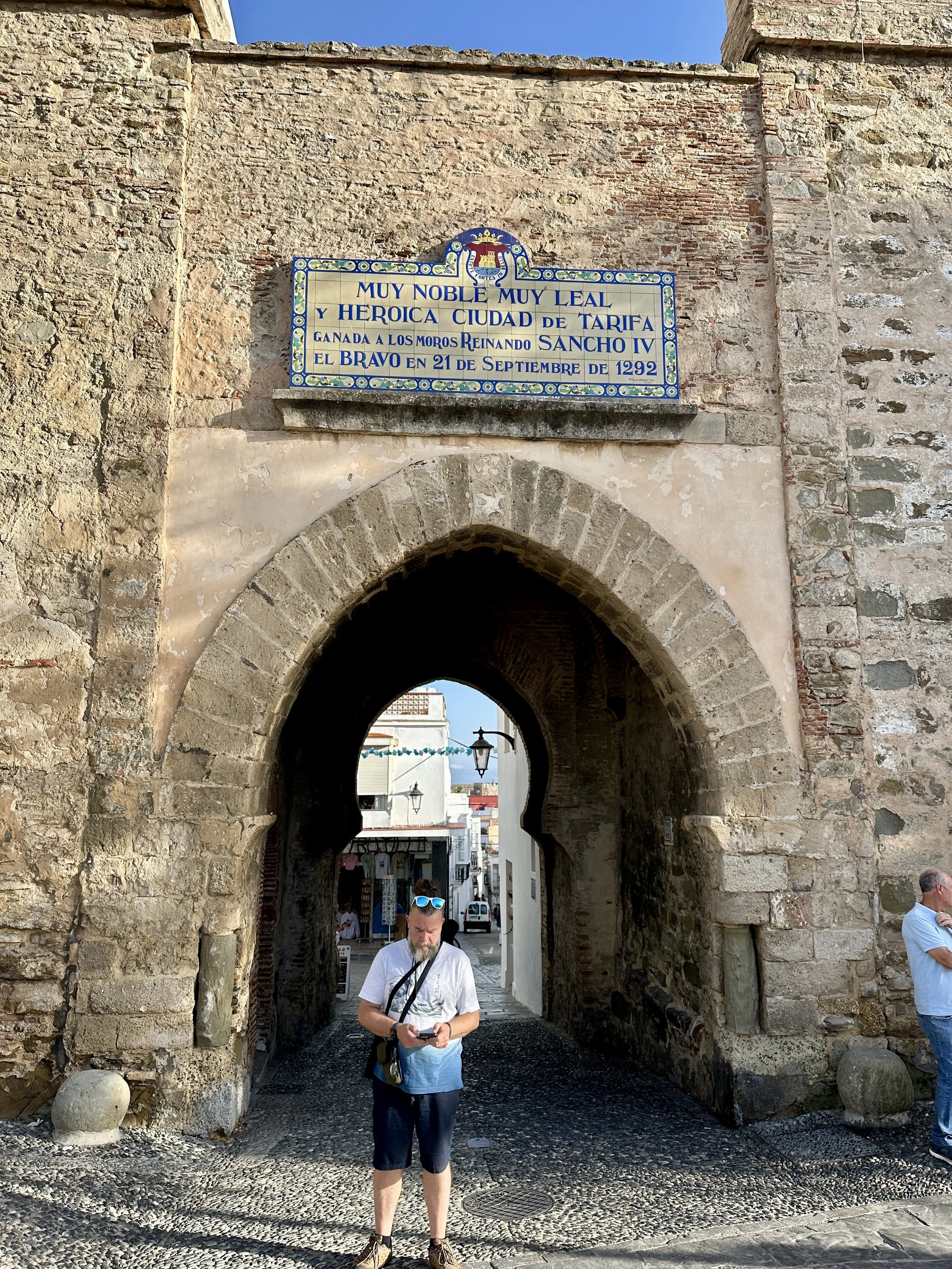
Puerta de Jerez, Tarifa
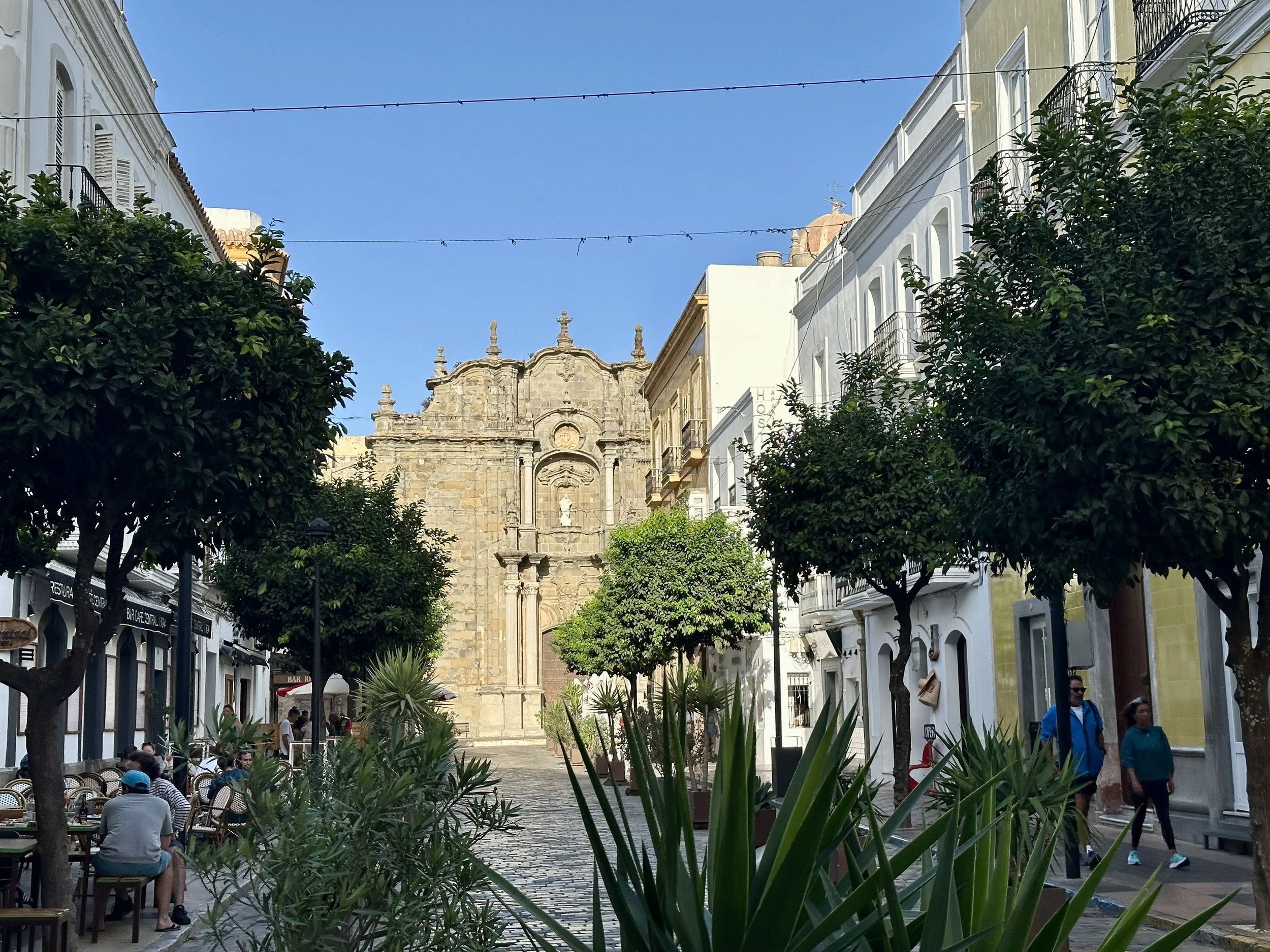
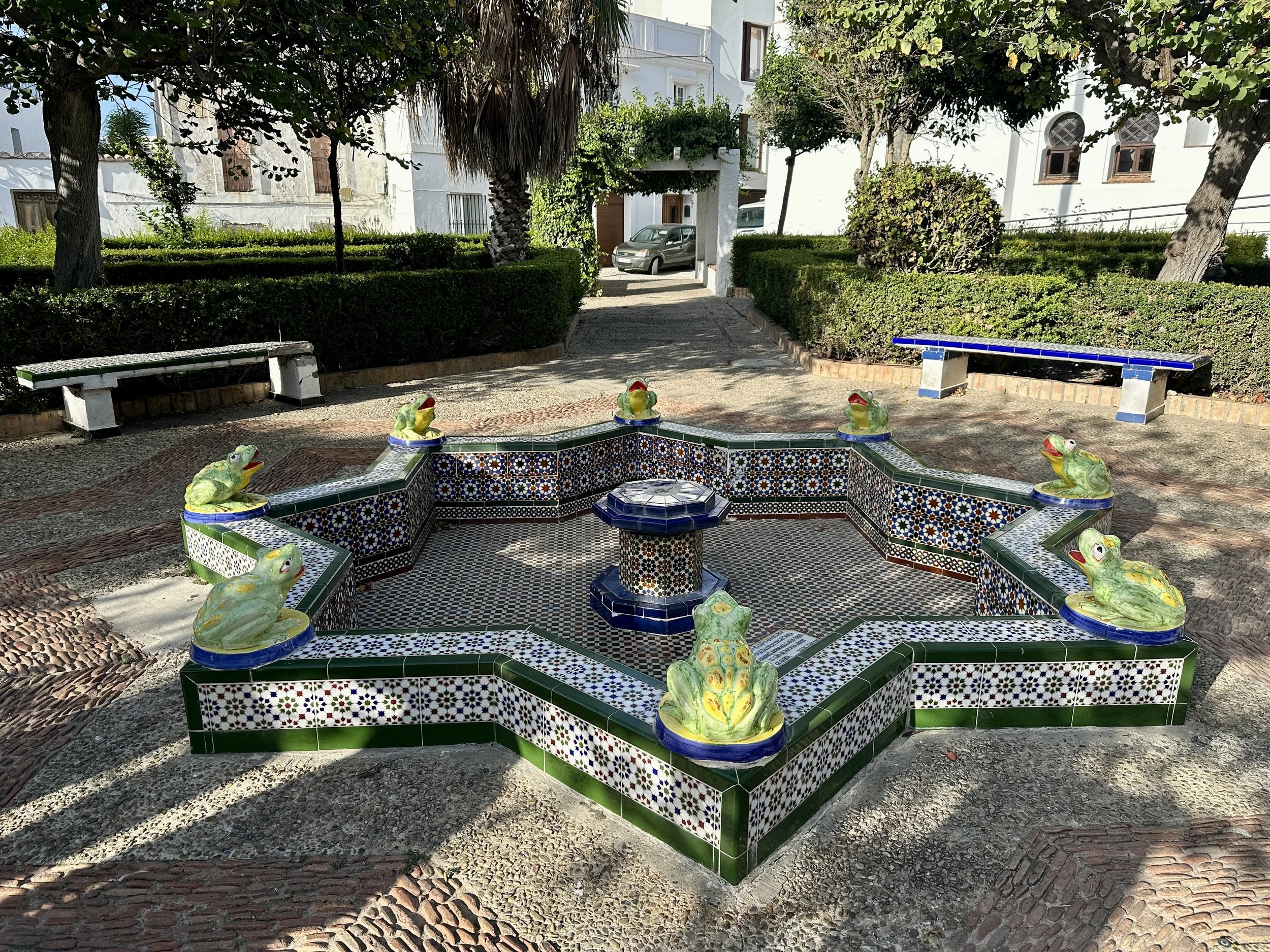
We wandered toward Puerta de Almedina, the old Moorish arch that once guarded the medieval city. Its stones still carried Arabic traces if you looked close enough. From there we reached Plaza de Santa María, a small square anchored by the Church of San Mateo. Built near or over the site of a former mosque, the church’s Gothic lines rose above the white houses, a quiet reminder of how the town’s faiths and empires once overlapped.
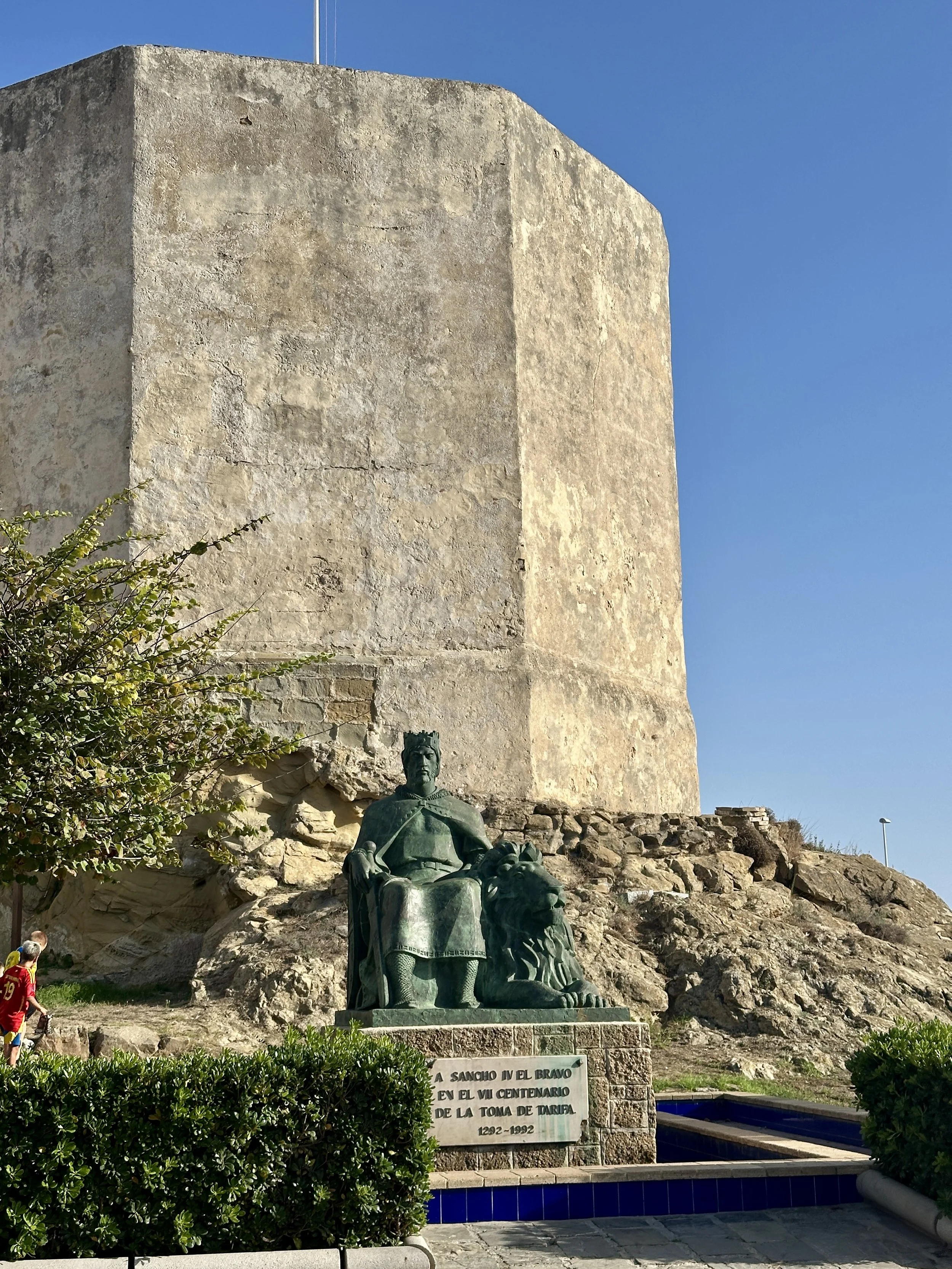
We could not go further up, so we turned back downhill toward the coast, passing the Castillo de Guzmán el Bueno. The fortress was closed, its gates locked for the day, but we lingered at the entrance. It was here in 1294 that Guzmán chose loyalty over family, refusing to surrender Tarifa even when his son was captured, a story that still echoes in Spanish history. Beyond its walls, the sea glimmered like steel.
We kept walking toward the end of the peninsula, where the land narrows into a causeway. On one side, the Atlantic crashed wild and grey; on the other, the Mediterranean shimmered blue and calm. We crossed to the gate of Punta de Tarifa, the southernmost point of continental Europe, but found it locked. The old 17th-century fortress on Isla de las Palomas stood behind its wall, silent and closed to visitors.
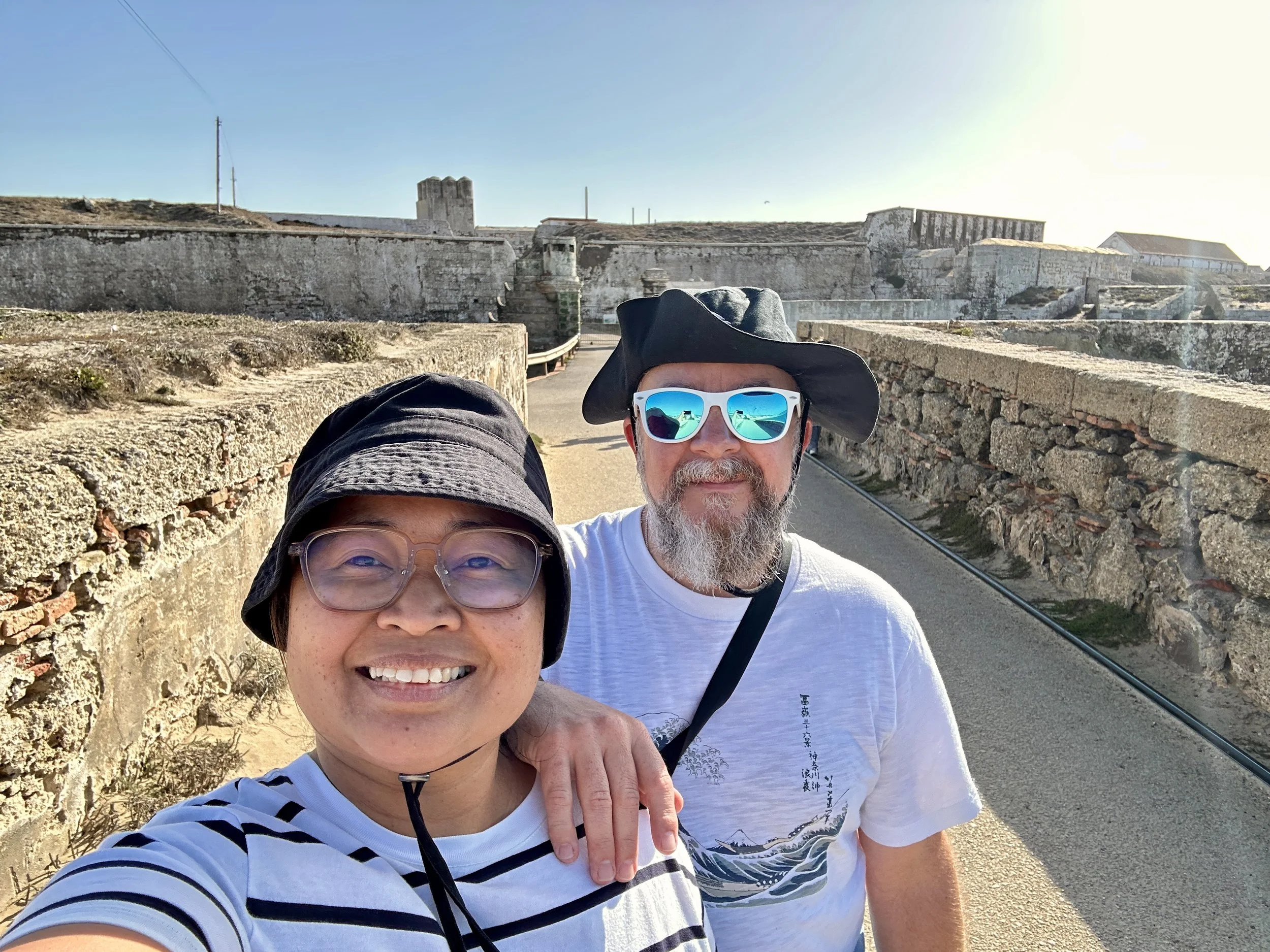
Standing there felt special, knowing we were at the very edge of Europe. It reminded me of Sentosa, where I once stood at the southernmost tip of continental Asia, two faraway points connected by water, both facing the open sea. We spent a few minutes watching the waves and the dark outline of Morocco rising across the strait. The distance looked small, almost within reach. The wind roared, and kitesurfers danced over the water, tracing bright arcs against the horizon.
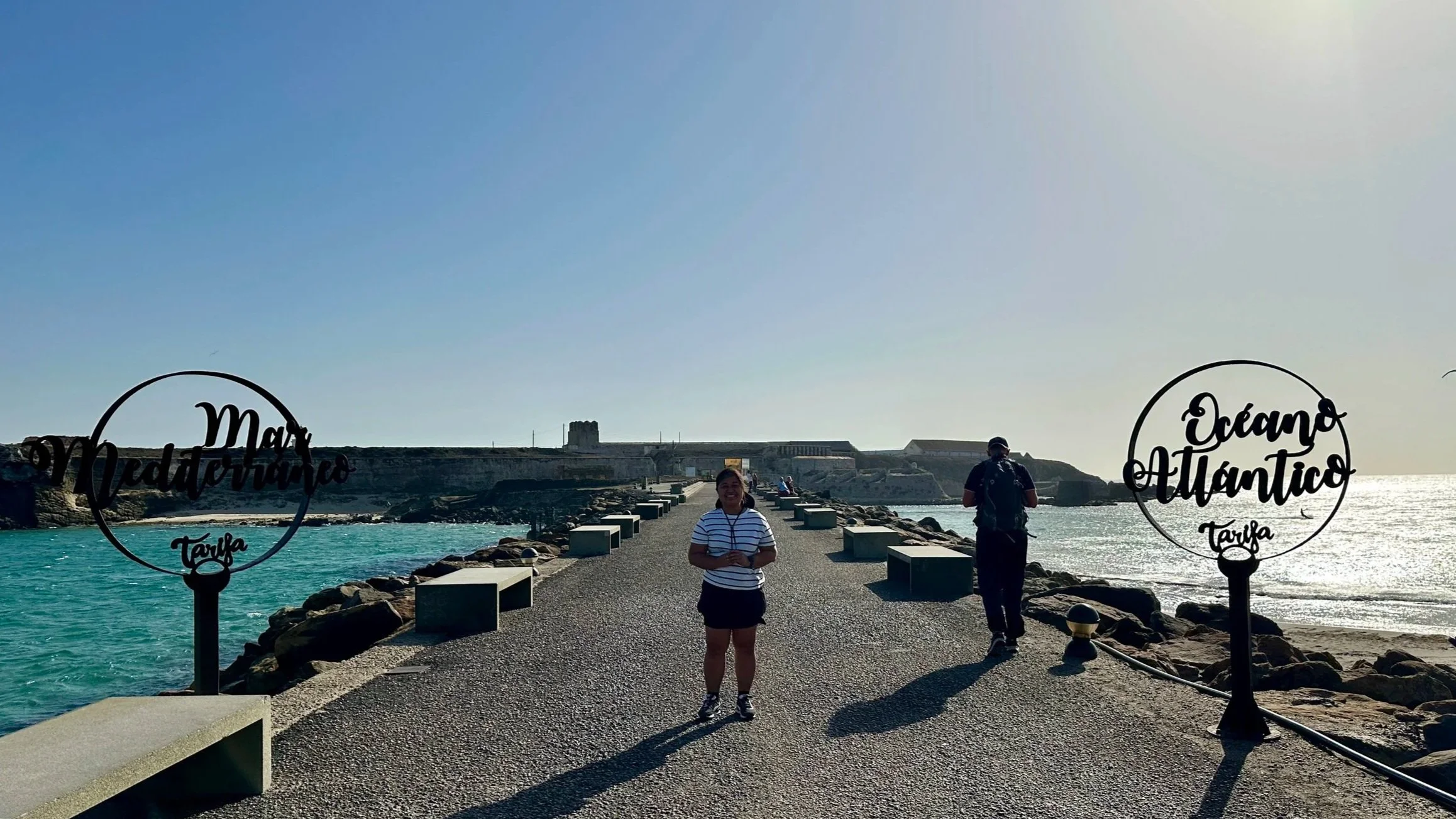
On the way back, we can see the ferry terminal, its ships moored and waiting. We wondered which one would carry us across tomorrow. Then, for reasons we could not quite explain, we climbed up to Castillo de Santa Catalina. From the beach side it looked open, so we followed the path up. Only when we reached the top did we realise it was off limits. For a moment, it felt like we had trespassed on history. We found our way down through a gap in the fence, laughing as we stepped back into the wind.
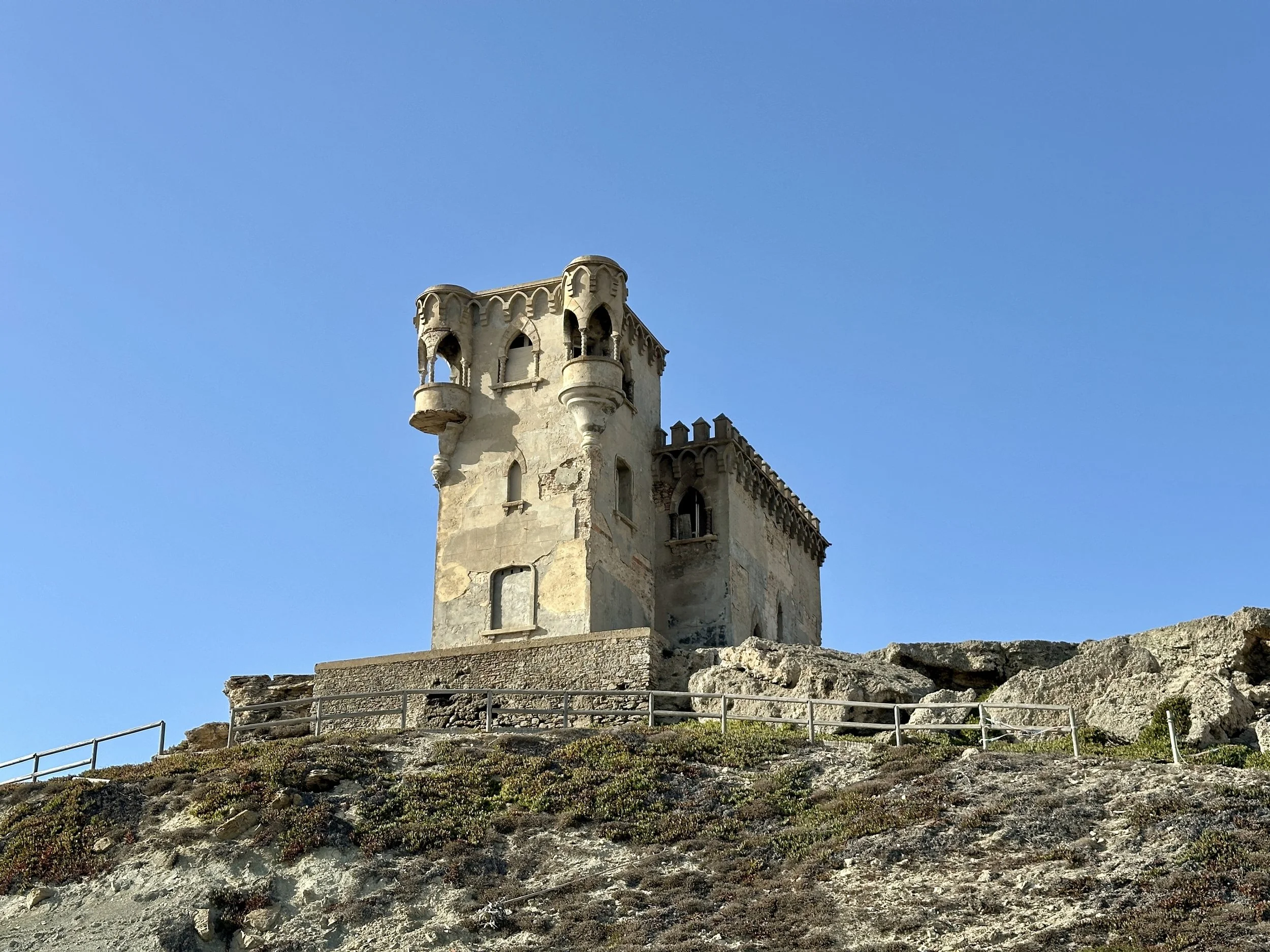
Castillo de Santa Catalina
By sunset, the old town glowed again, white walls turning gold, the air thick with salt. Tarifa felt like the end of something, and the start of something else.
That night, as we packed for the crossing, we felt a mix of sadness and excitement. Sad to part with our tour leader, but eager to see what lay ahead. Tomorrow, we would sail for Africa, a new country, a new continent, the final chapter of our journey. The distance was short, but it felt immense.
Morning came and we took the ferry across the strait, engines low and the sea salt sharp on our faces. By the time the Moroccan coast drew close, Europe had slipped behind us, and Tangier waited, loud, bright, and new.