
Sultanhani Caravanserai: A Step Back into the Silk Road
Driving from Pamukkale to Cappadocia, I had high hopes for the journey ahead. Our itinerary included stops in Konya and the legendary Sultanhani Caravanserai, but time forced us to skip Konya. That made our visit to Sultanhani even more special—a rare chance to walk the same paths once trodden by Silk Road traders, in one of Turkey’s most remarkable medieval roadside inns.
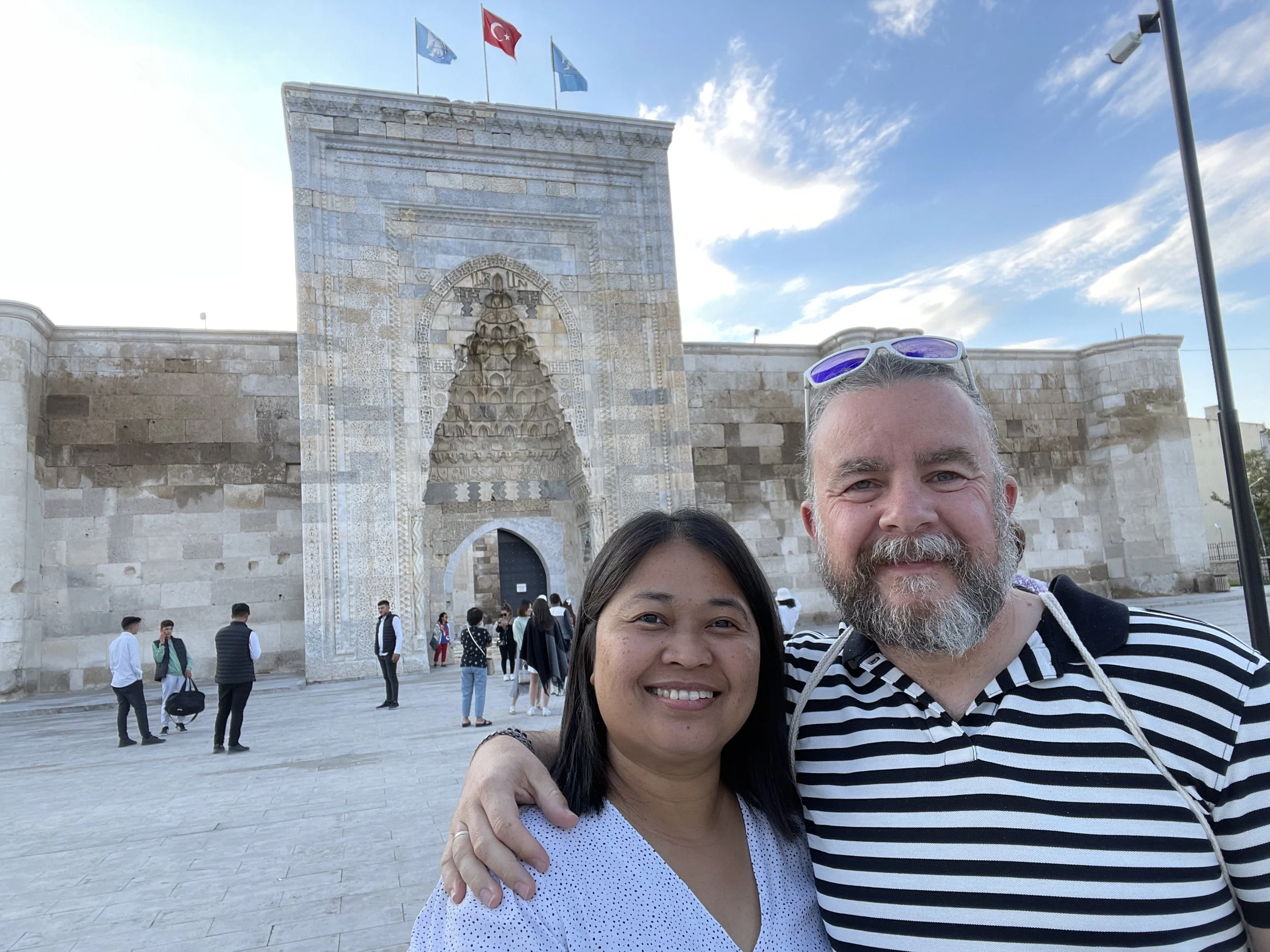
Sultanhani Caravanserai is one of Turkey’s most impressive Seljuk-era landmarks, built in 1229 by Sultan Alaeddin Keykubad I. Situated in Central Anatolia between Konya and Cappadocia, it was the largest and best-preserved roadside inn along the Silk Road. This huge fortress-like complex was a vital rest stop for traders and travellers crossing vast distances with their caravans, offering everything from stables and prayer rooms to guest chambers and secure storage for goods. Its thick stone walls and intricate Seljuk carvings tell stories of a time when merchants from across the region met here, trading not just goods but ideas too. Visiting Sultanhani today feels like stepping back into medieval history, when travel was tough and every stop had to be safe, practical, and a hub of culture all at once.
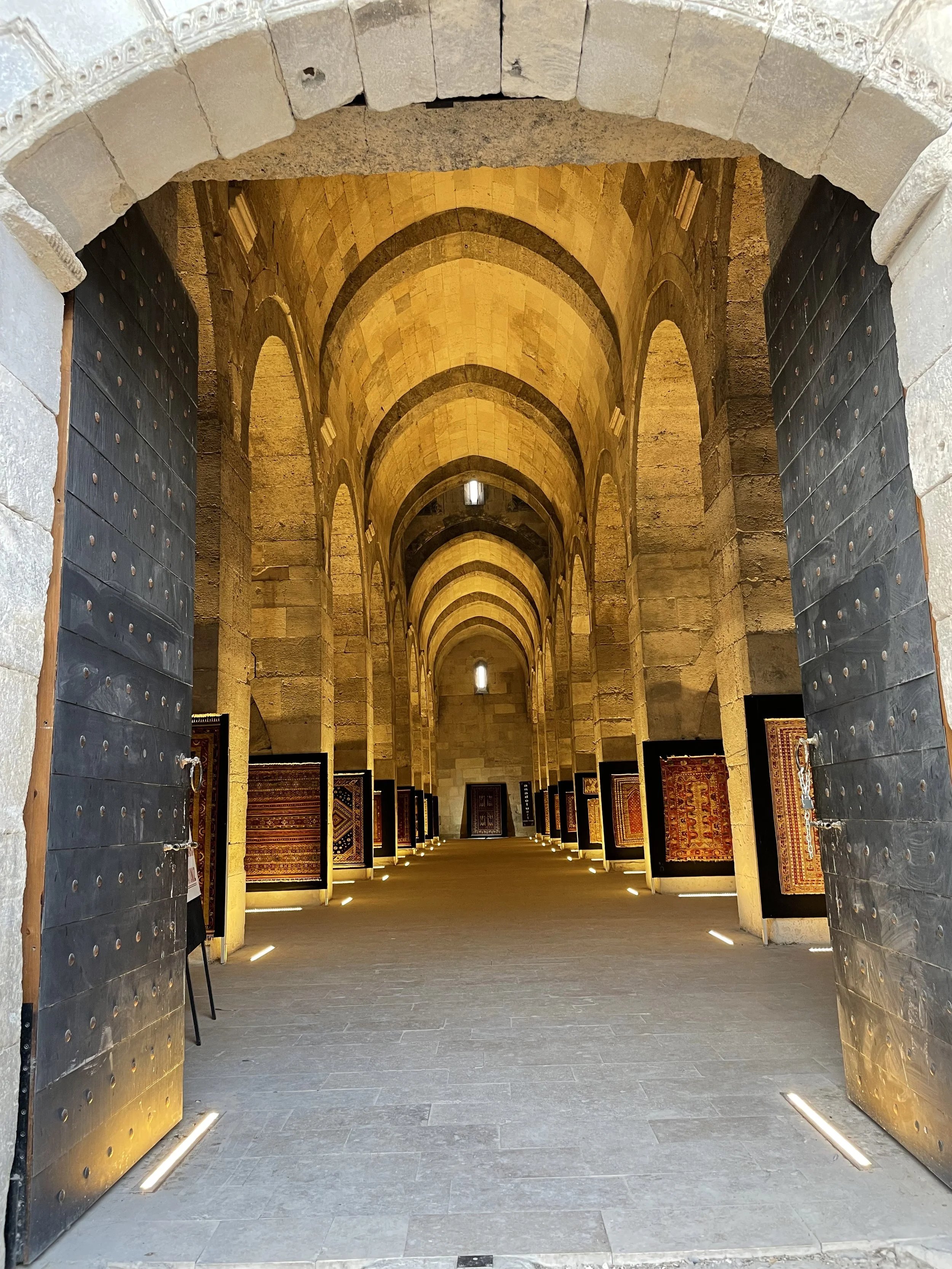
What hit me first was the sheer scale of the place. The fortress-like walls stand firm against time. Inside, the mix of practicality and artistry was clear: stables, prayer rooms, and guest chambers all designed with purpose, yet decorated with intricate Seljuk carvings that tell stories beyond stone. It’s a place that commands respect for the ingenuity and endurance of travellers who once relied on this sanctuary.
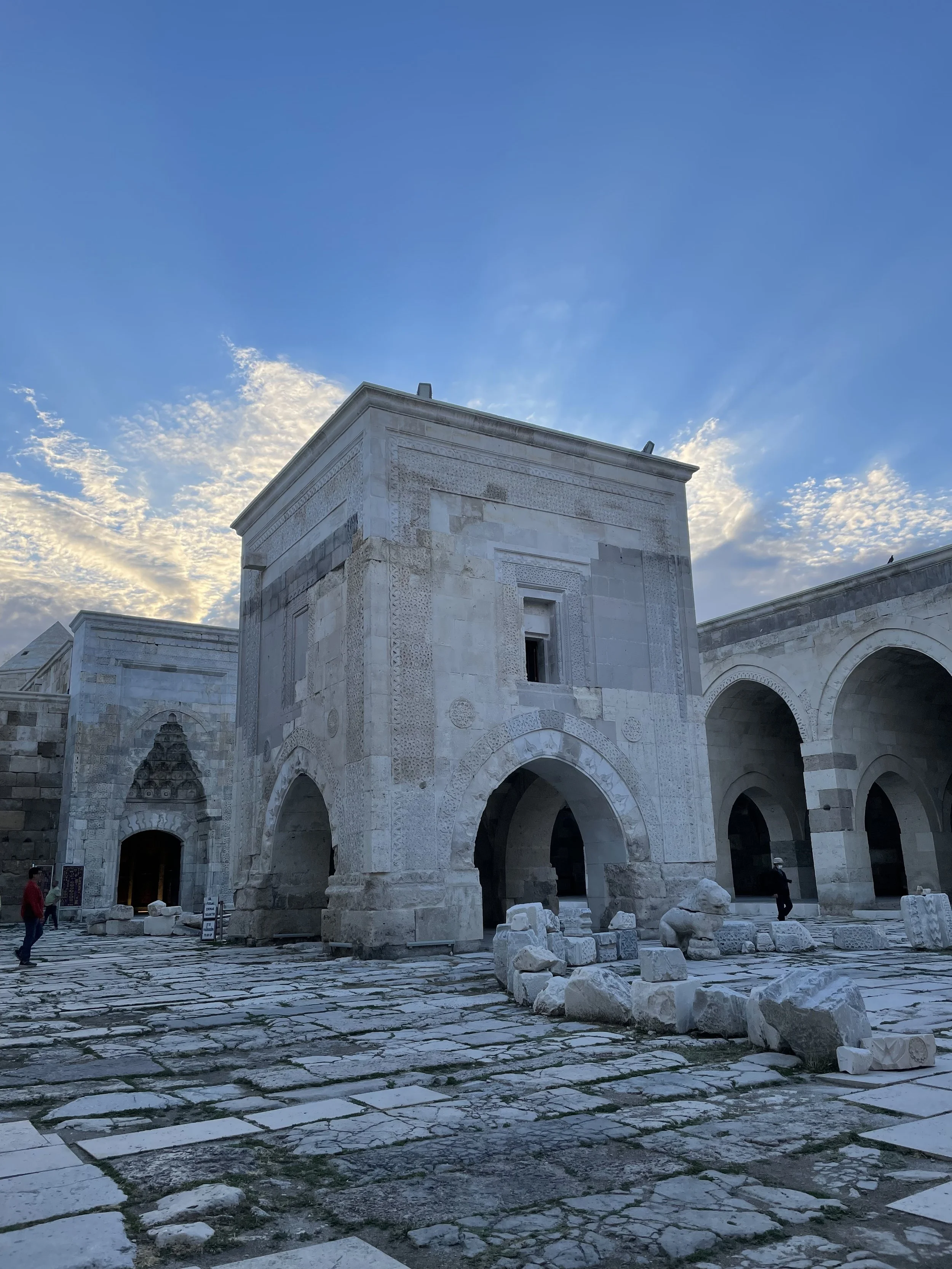
We walked in and immediately noticed a smaller building in the middle of the courtyard — the mescit, a humble prayer room. This sacred space was essential for weary travellers, offering a quiet spot for reflection and worship amid the bustle of the caravanserai. It reminded me that this was not just a resting place for bodies but for spirits too.
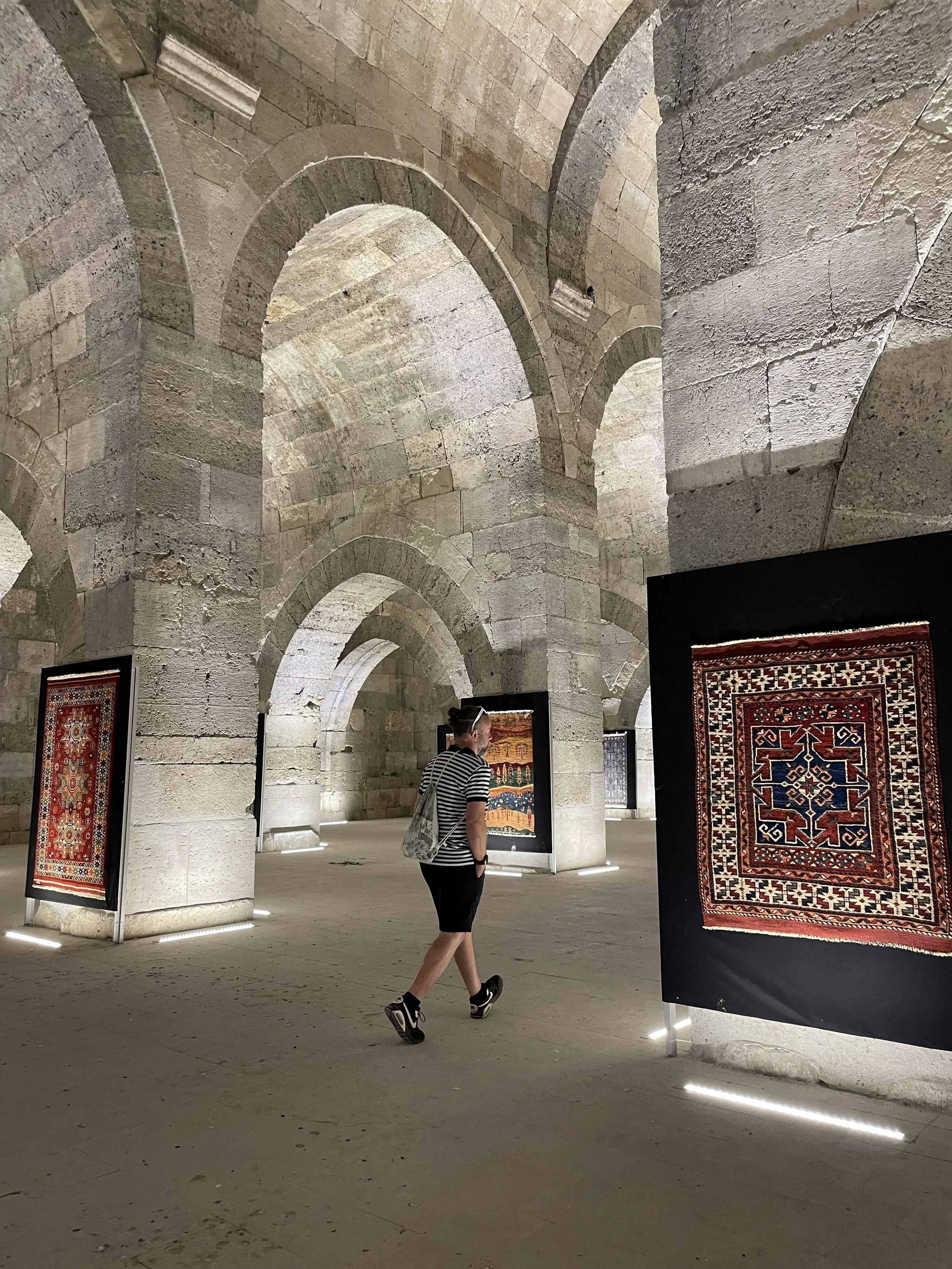
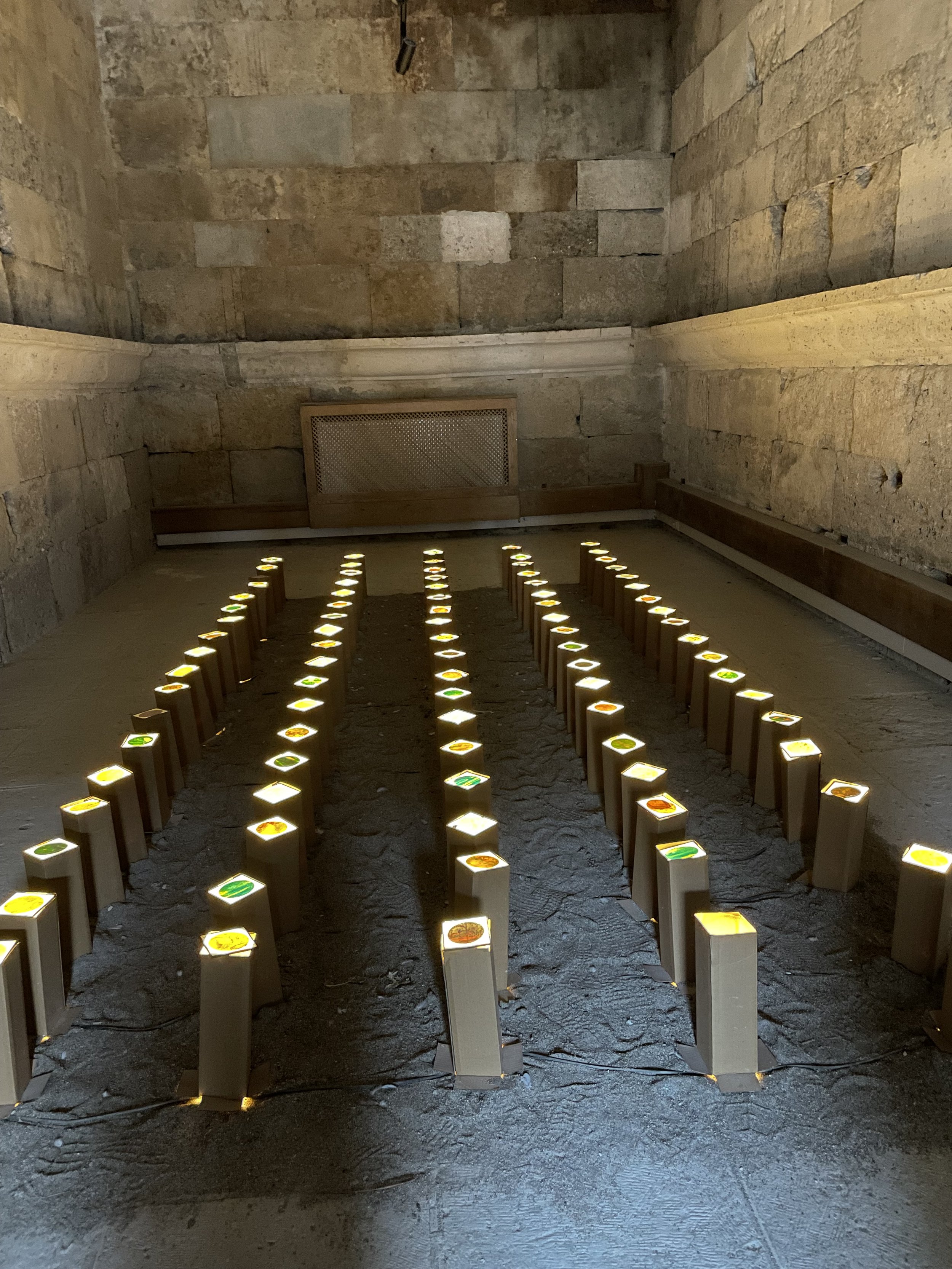
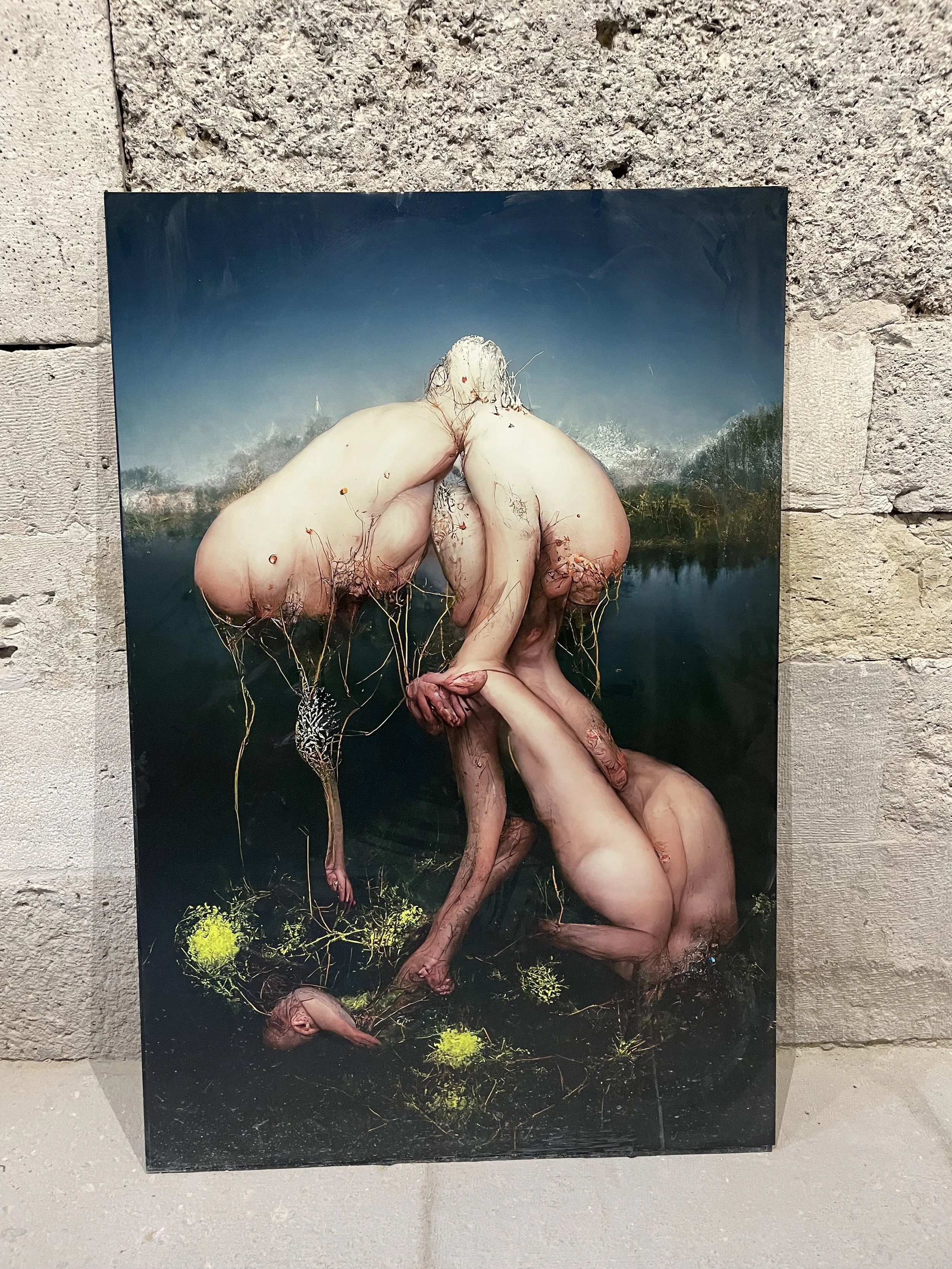
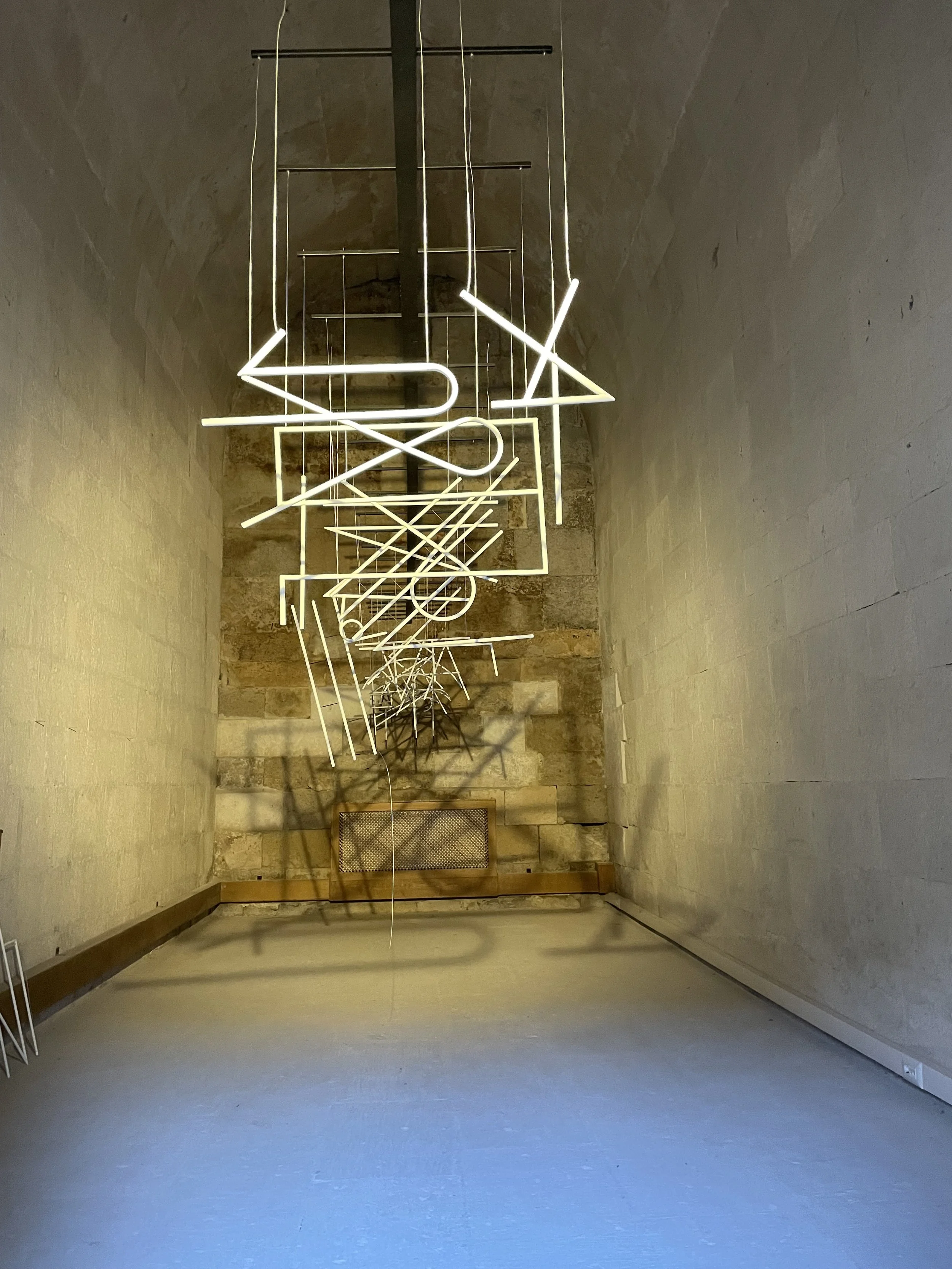
Inside, the caravanserai doubles as a gallery of sorts. Antique carpets hang proudly in the main hall, their rich colours and patterns weaving stories of Anatolia’s past. Smaller rooms showcase paintings and modern art, bridging history with today’s creative pulse. Around the corners, you might find traditional handicrafts — pottery, copperware, and textiles — proving this ancient space still hums with life and culture.
The caravanserai was built like a fortress — thick stone walls, towering gates, and narrow windows all designed to keep travellers and their goods safe from bandits and harsh weather. It’s a fortress and a hotel rolled into one, tough enough to stand guard over centuries of Silk Road journeys.
Standing inside, it was easy to imagine Sultanhani in its heyday — camels resting in the stables, merchants bargaining over spices, and travellers gathering in the courtyard after long dusty journeys. The fortress walls still hold echoes of stories, bustling trade, and the constant hum of life on the Silk Road.
It was a short stop, but I was glad to see something tangible — an enduring link to the Silk Road’s vast history right there in the stone and stories of Sultanhani.
If you plan to visit, give yourself time to explore the courtyard and side rooms at a relaxed pace. It’s a bit off the usual tourist routes, so arriving by car or organised tour is easiest. Wear comfortable shoes — the uneven stone underfoot demands it — and bring water, especially in warmer months. The site isn’t crowded, making it perfect for soaking up history without distractions. After wandering through this fortress-hotel, you’ll appreciate the vast distances and challenges Silk Road travellers faced.
Sultanhani is more than a stop. It’s a doorway to a time when trade, culture, and survival met on these very stones.
