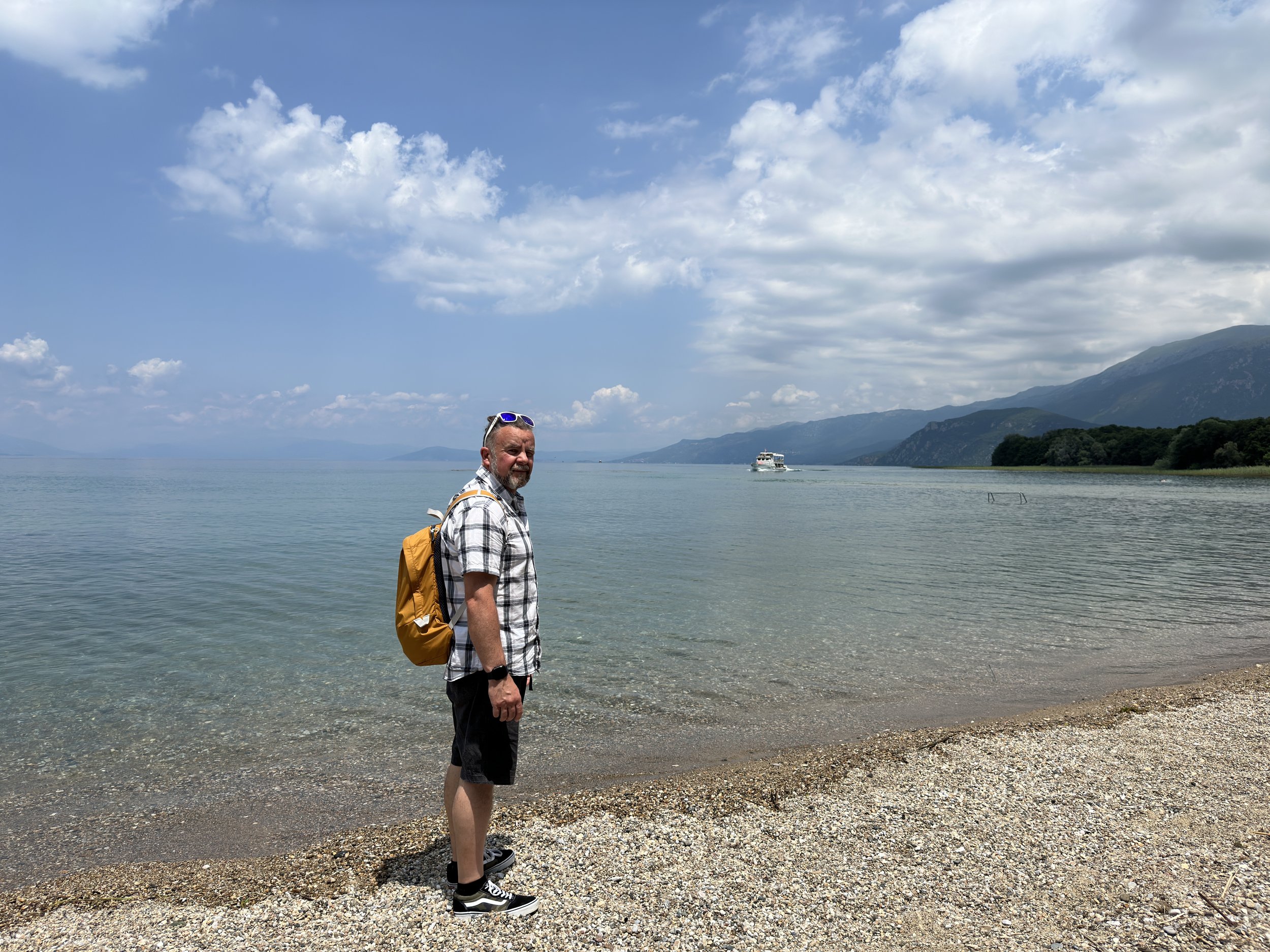
St Naum, Springs and Stillness on Lake Ohrid
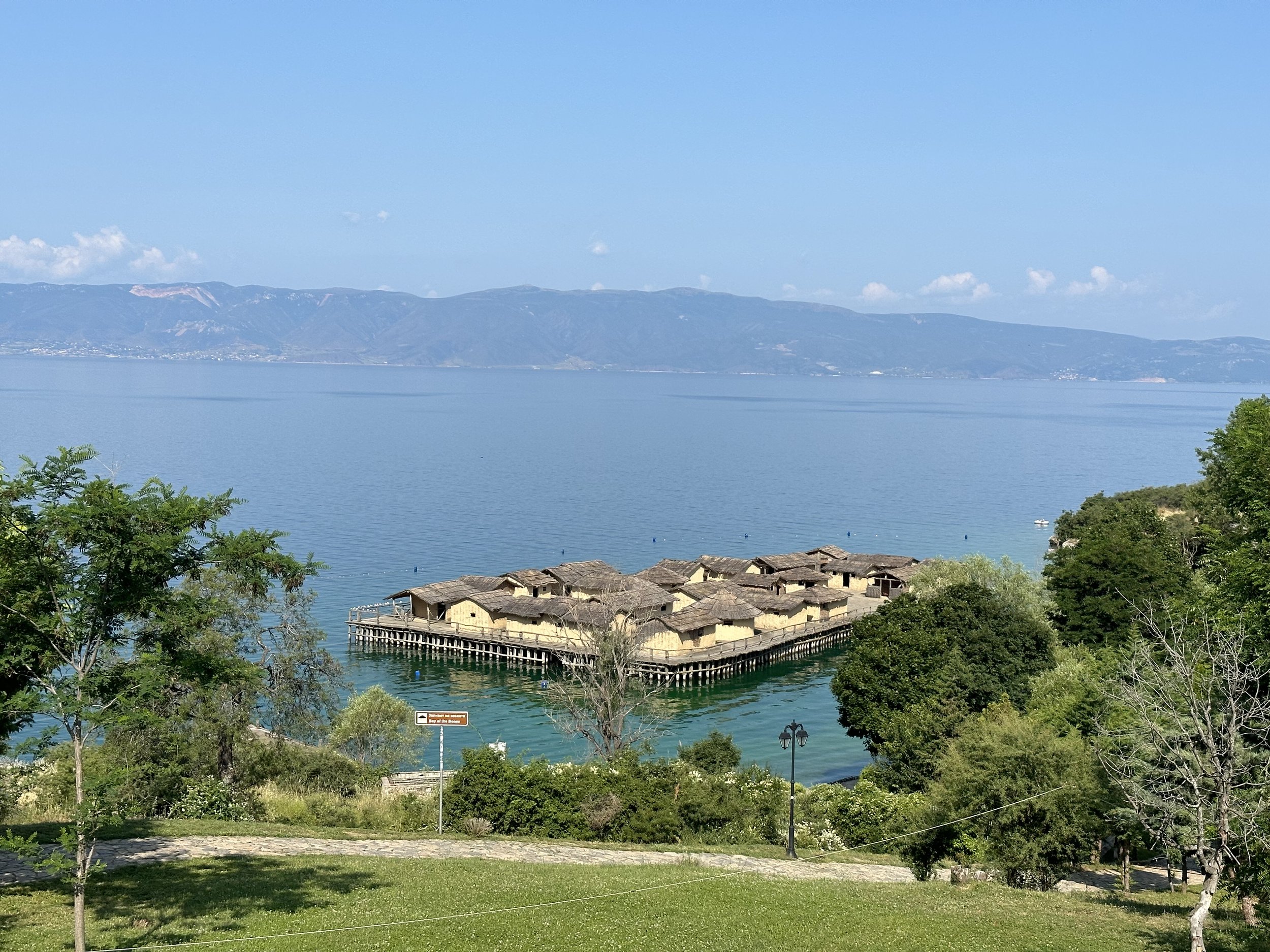
We left Ohrid early, the lake still quiet, the mountains on the Albanian side rising like a dim blue wall. The road south curved around the shore until the Bay of Bones appeared below us. From the roadside it looked almost unreal, the stilt houses tiny above water so clear it looked polished. No crowds, no noise, just morning light on a reconstructed memory. A short stop, a long look, then onwards.
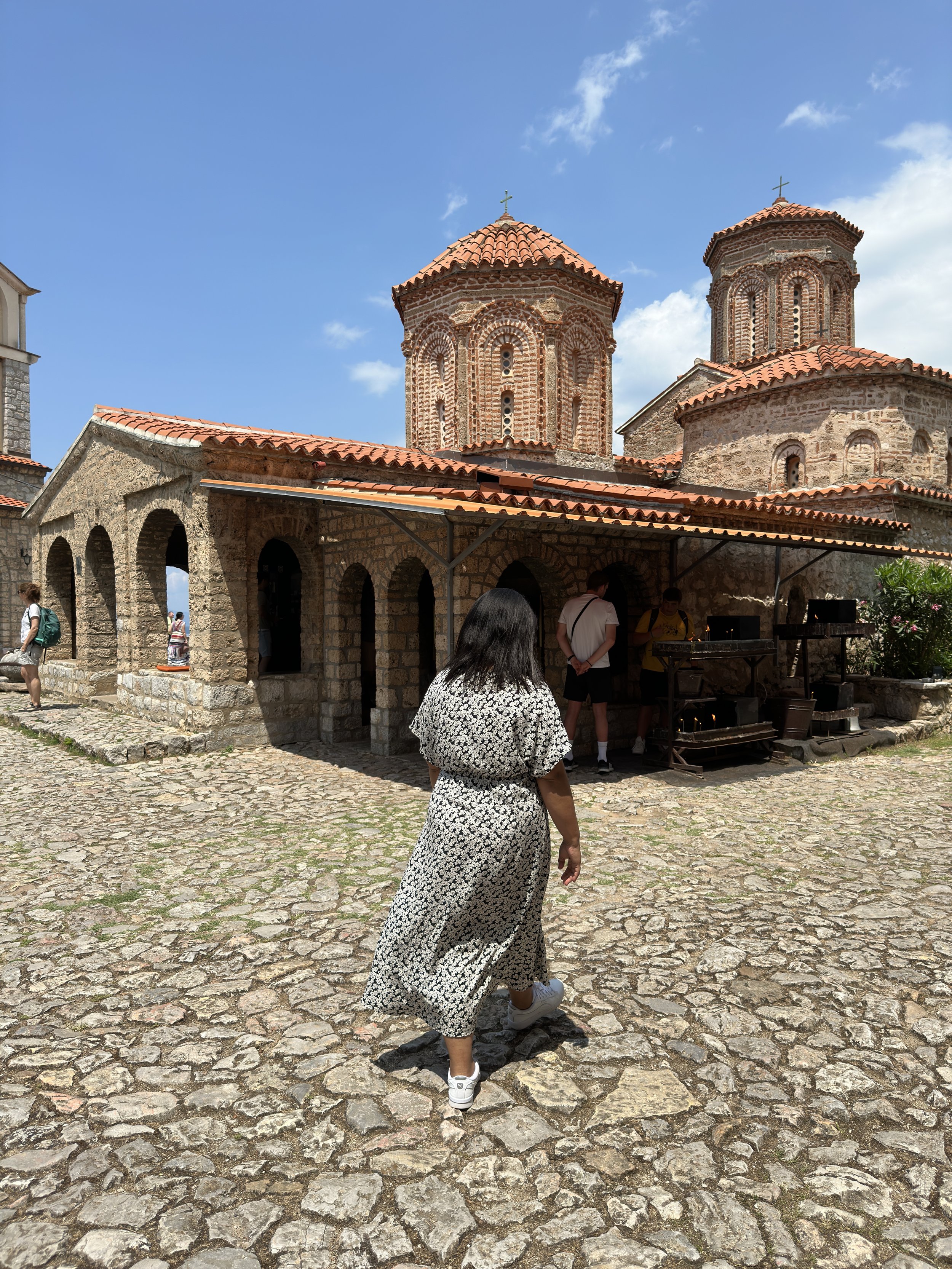
St Naum sits at the far end of the lake, a small world of stone, gardens, and water. The monastery appears slowly as you walk in. Red tiles warmed in the sun. Peacocks drifted across the paths like they owned the place. Everything felt calm and unhurried.
We stepped first into the Church of Saint Naum, the monastery’s heart. It is small and thick walled, built to hold silence. Inside, the frescoes glowed in the low light, deep blues and reds still sharp after centuries. Some date back to the sixteenth century. The air smelled of wax and stone. In the centre rests the tomb of Saint Naum, the ninth century monk who helped shape literacy in this part of the Balkans through the early Slavic scripts. People lean close to the stone to hear a faint rumble. Tradition says it is his heart. I cannot confirm this, but the belief is long held.
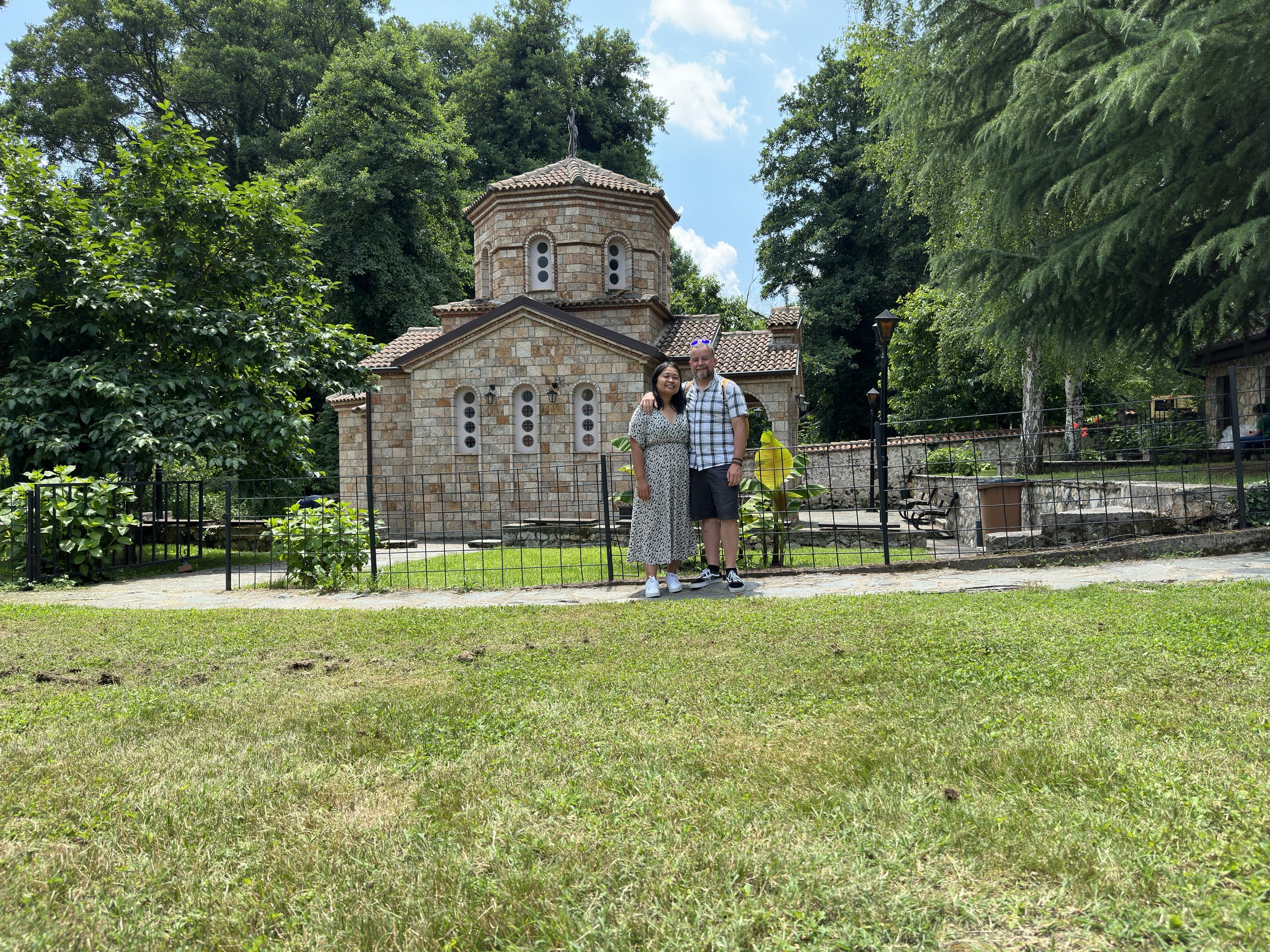
Lower down the slope sits the Chapel of Saint Petka, dark and cool inside. A narrow stream of spring water cuts through the floor. People come to wash hands, faces, knees, whatever aches. You knelt and rinsed your own knees, half teasing, half hopeful. The knees stayed the same. The moment stayed better.
Then came the boat saga. Prices floated with each new sentence, shifting like mist. Your tour leader stepped in before the haggling collapsed. When the price finally settled, the boatman handed us to his young apprentice. It was his first day. His hands shook a little. You got in anyway.
The springs were astonishing. The water rises from a karst network that runs under the mountains from Lake Prespa. It bursts through the lakebed in clear flows that shift from silver to bright turquoise. Plants swayed under the surface. Sand lifted and settled like slow breath. This fresh water helps keep Lake Ohrid one of the cleanest and oldest lakes in Europe. The science on the Prespa link is strong. I cannot confirm any exact volume the springs contribute, but the connection is well documented.
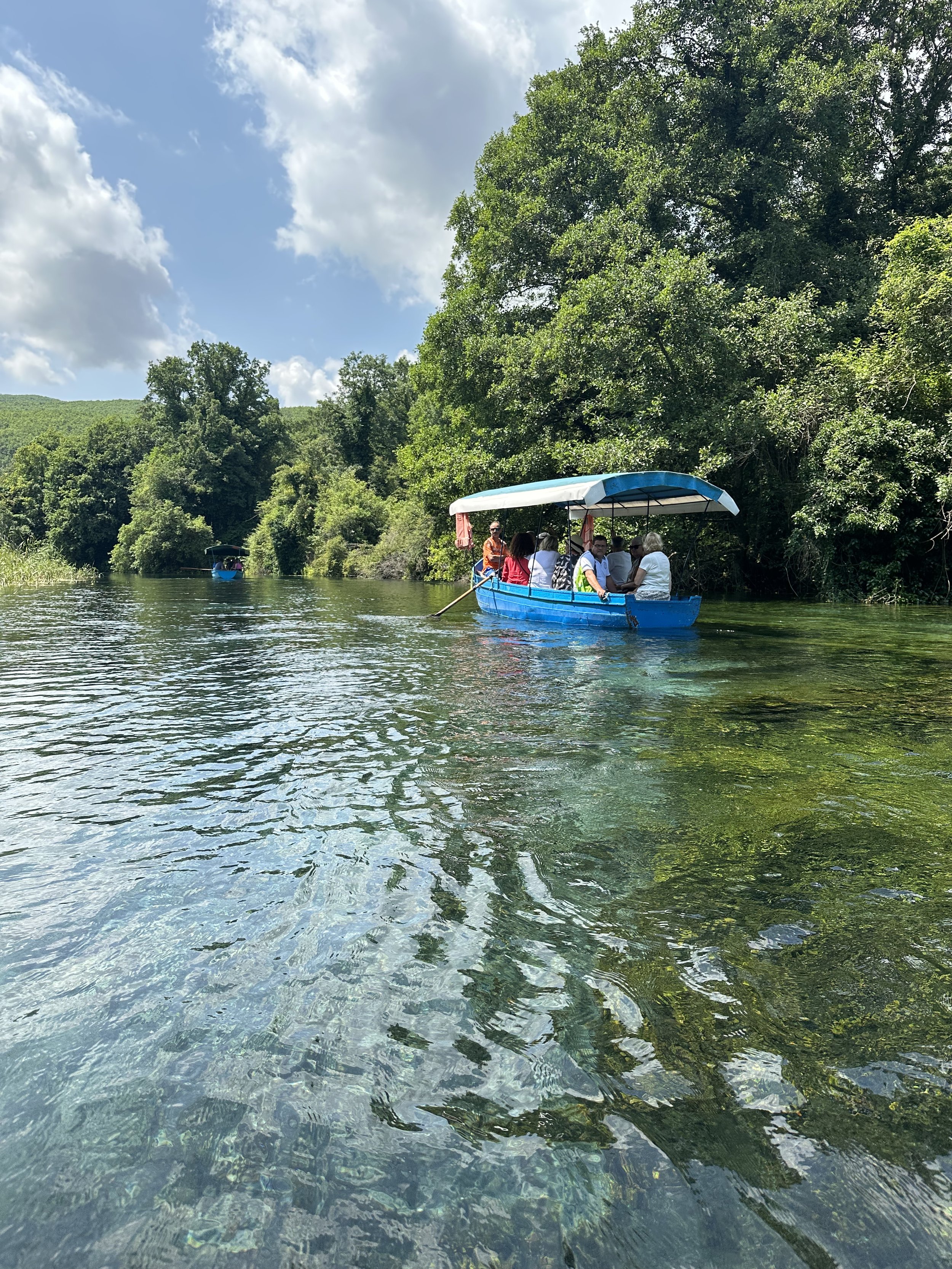
After the ride we walked to a restaurant by the springs. Wooden tables. Shade from the trees. The sound of water moving under the boards. We sat for cold drinks and used the toilets. Boats passed in slow lines, some steady, some wobbling like ours earlier. The apprentice rowed past once, still learning his rhythm. The whole stop felt quiet and peaceful.
We wandered back through the grounds, the sound of water fading, the monastery rising again through the trees. Stone. Water. Frescoes. Legends. A pocket of stories at the southern edge of the lake before the road carried us back towards Ohrid and its long sweep of shore.