
Ephesus, Turkiye (Turkey): Walking Through One of the Greatest Ancient Cities
Ephesus isn’t your usual ancient ruin. It’s sprawling, and somehow feels alive, even though it’s been silent for centuries. We turned up with a vague plan and ended up letting the city take the lead. Marble streets, grand theatres, and hidden corners all seemed to whisper secrets, like an old friend nudging you to listen closer. Whether you geek out on history or just enjoy poking around old stones, Ephesus sneaks under your skin and stays there.
I showed up at Ephesus half-prepared, loosely following our guide but mostly letting the place reveal itself in its own time. What hit me first was the scale of it. I wasn’t ready for just how far it stretched. As a UNESCO World Heritage Site, it’s recognised as one of the best-preserved ancient cities in the world, and walking through it, that quickly makes sense. Tourists buzzed about, but it was easy to picture the life that once filled it.
Curetes Street caught me off guard—the grand marble avenue that once formed the city’s main processional route, connecting some of Ephesus’ most important buildings and lined with statues, temples, and monuments. This was the artery of the city, where daily life unfolded in full view, where traders, citizens, and philosophers all crossed paths. Walking it now felt like catching a faint heartbeat beneath the stones, like the city hadn’t quite let go of itself.
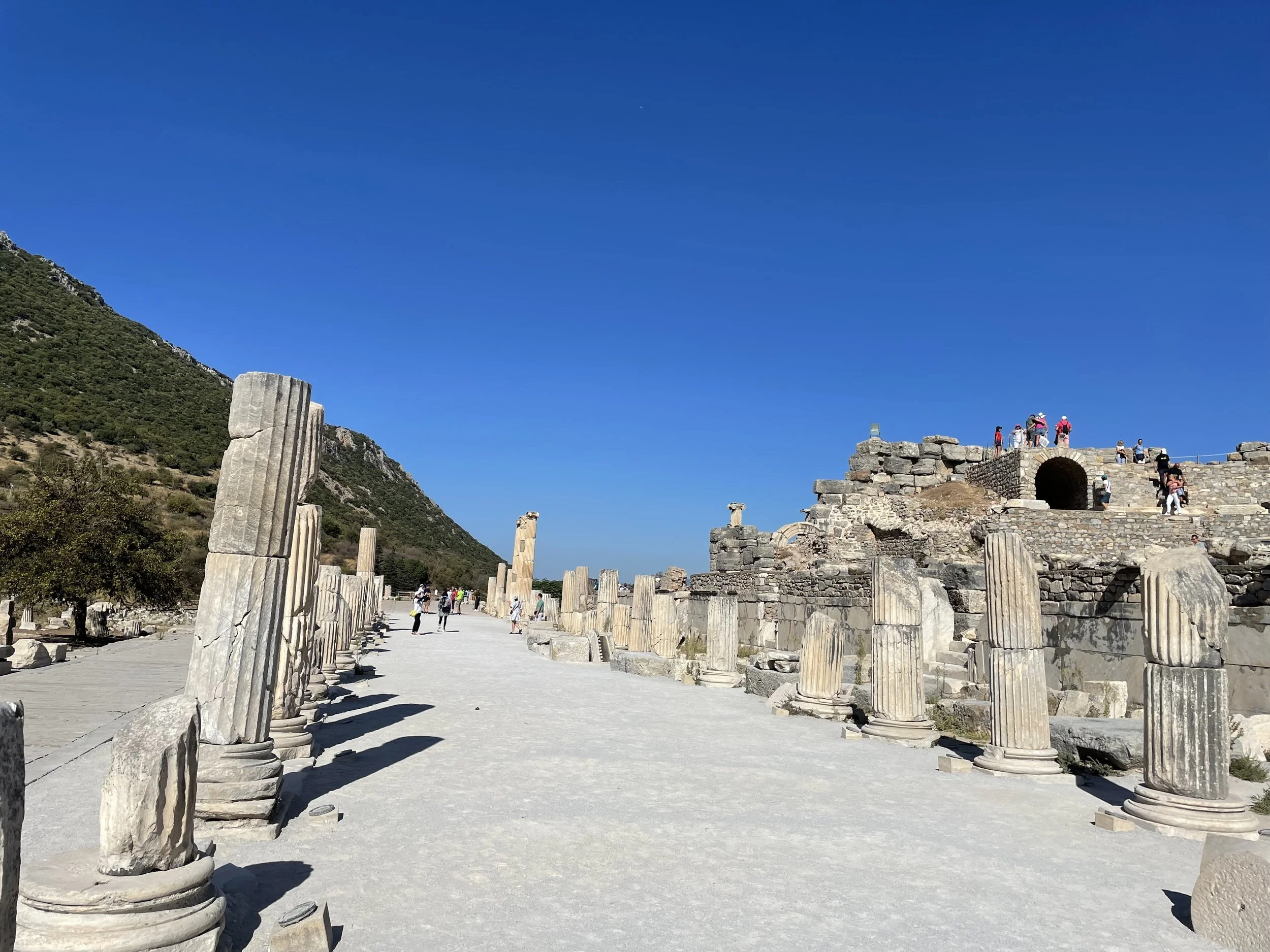
Curetes Street
We started at the Baths of Varius, a 2nd-century Roman bath complex where locals once came to unwind and socialise. Even now, those cool stone rooms and pools hint at a slower, rhythm-filled life. From there, we stepped into the Odeon, a small covered theatre used for city meetings and performances—more intimate, almost contained, especially compared to what we would see later.
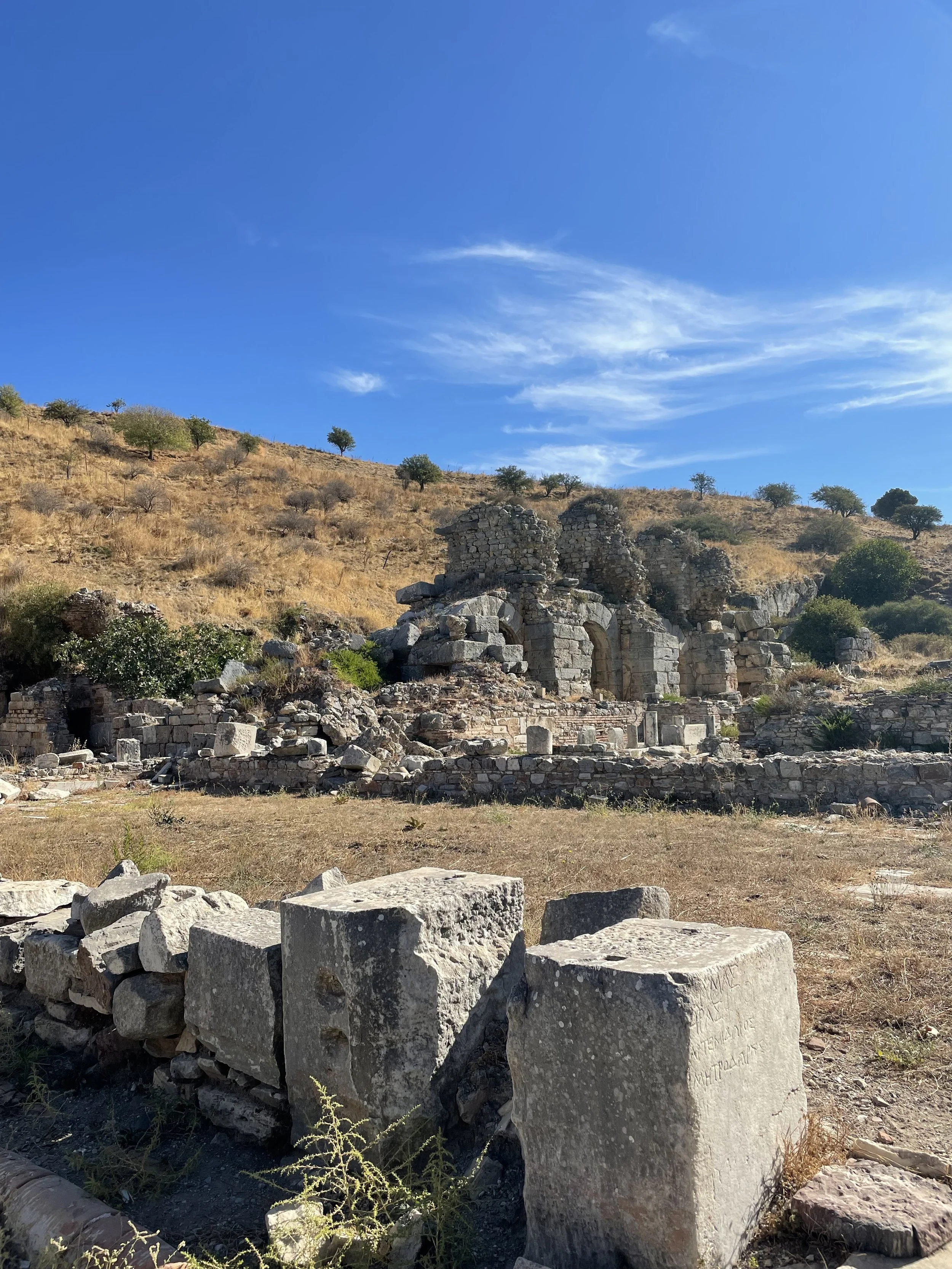
Baths of Varius
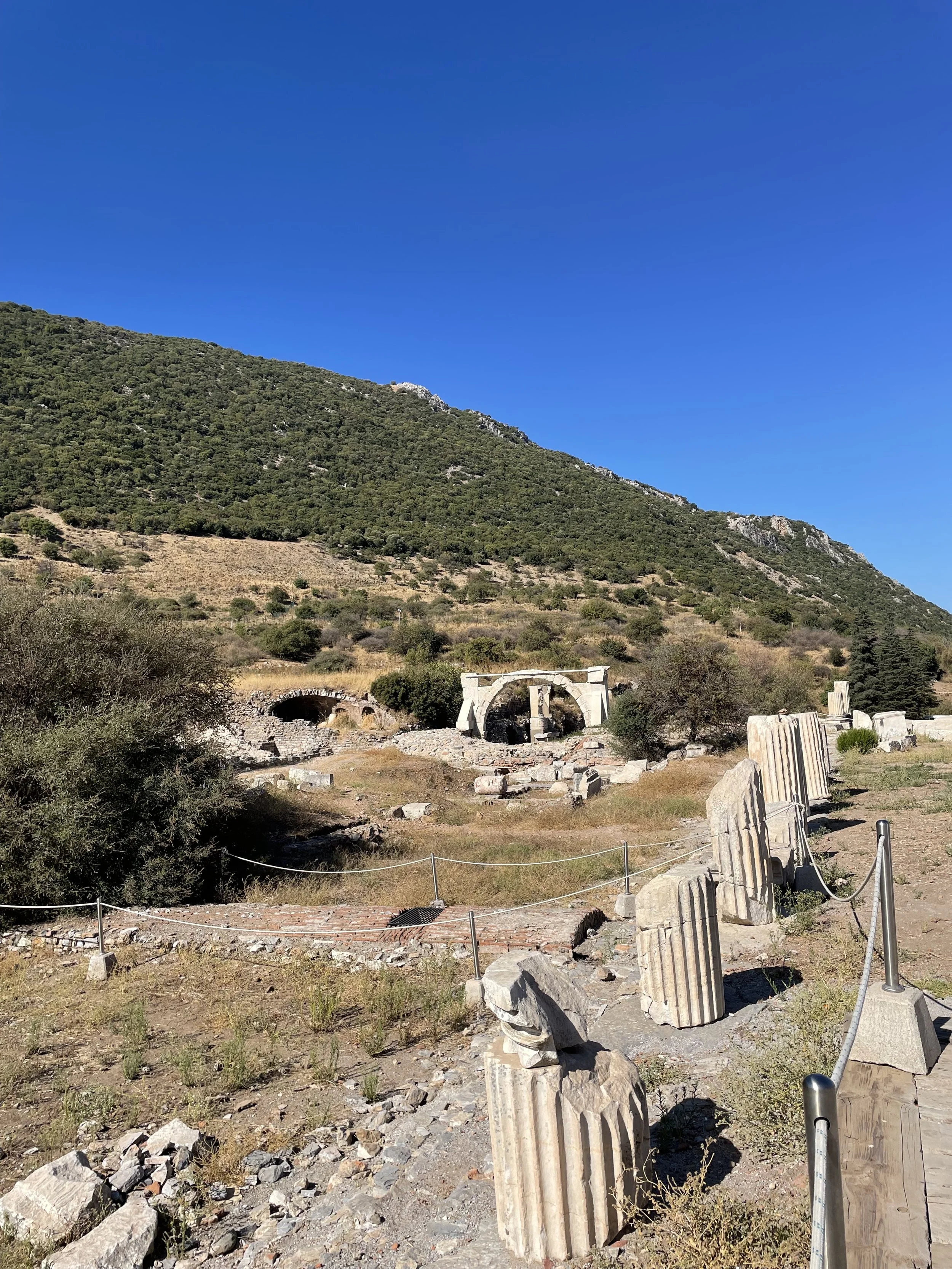
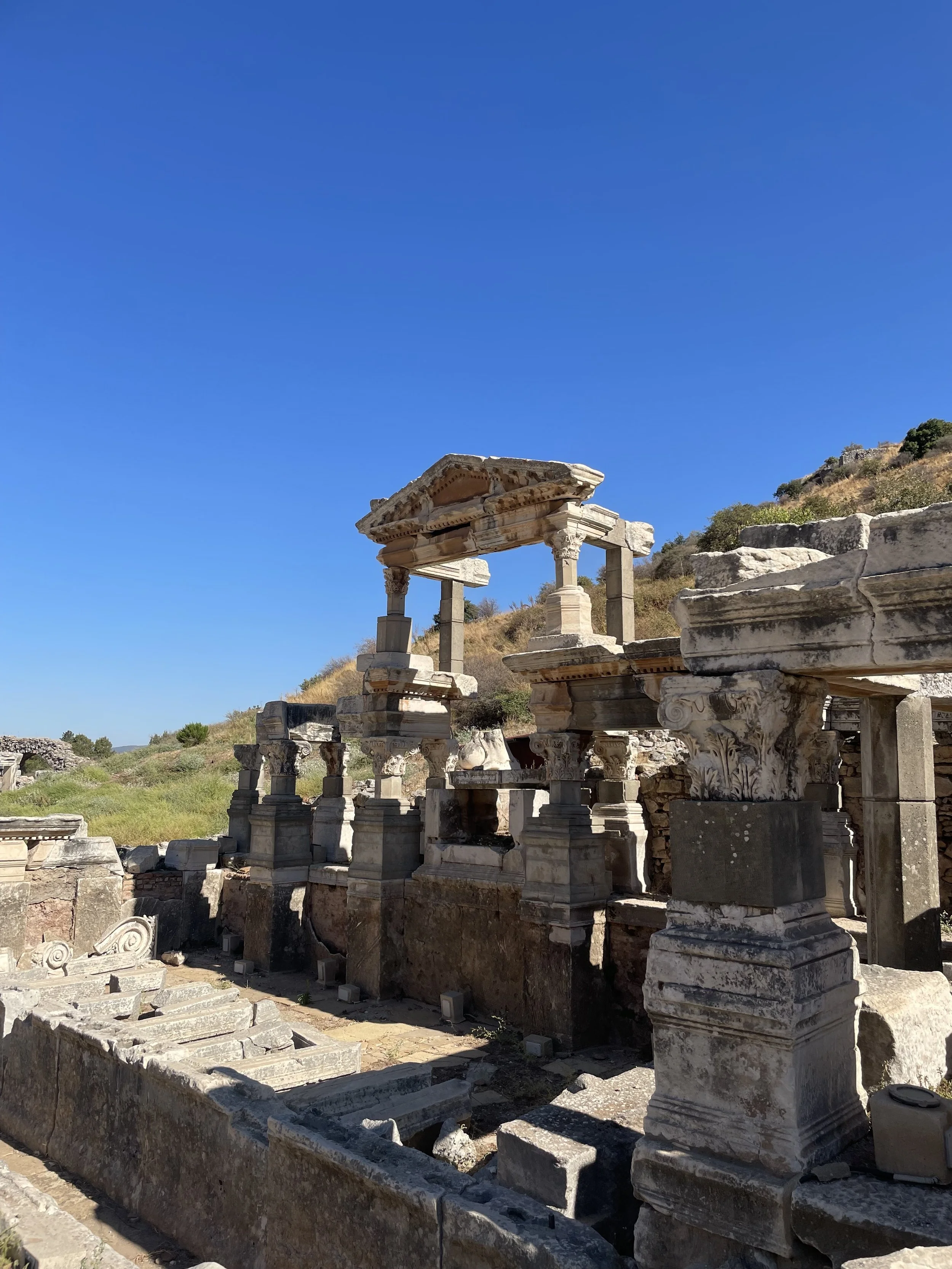
The State Agora followed, once the city’s political and commercial centre where business and governance overlapped. You can still imagine the noise of it—voices rising, deals being struck, people moving with purpose. Nearby, Trajan’s Fountain stood out with its decorative carvings, built in honour of Emperor Trajan and designed to project status and wealth. The Temple of Hadrian drew me in next, its arches and detailed stonework reflecting the elegance of Roman design. Even the public latrines made an appearance, a reminder that this wasn’t just a showpiece city, but a fully functioning one, down to the everyday details.
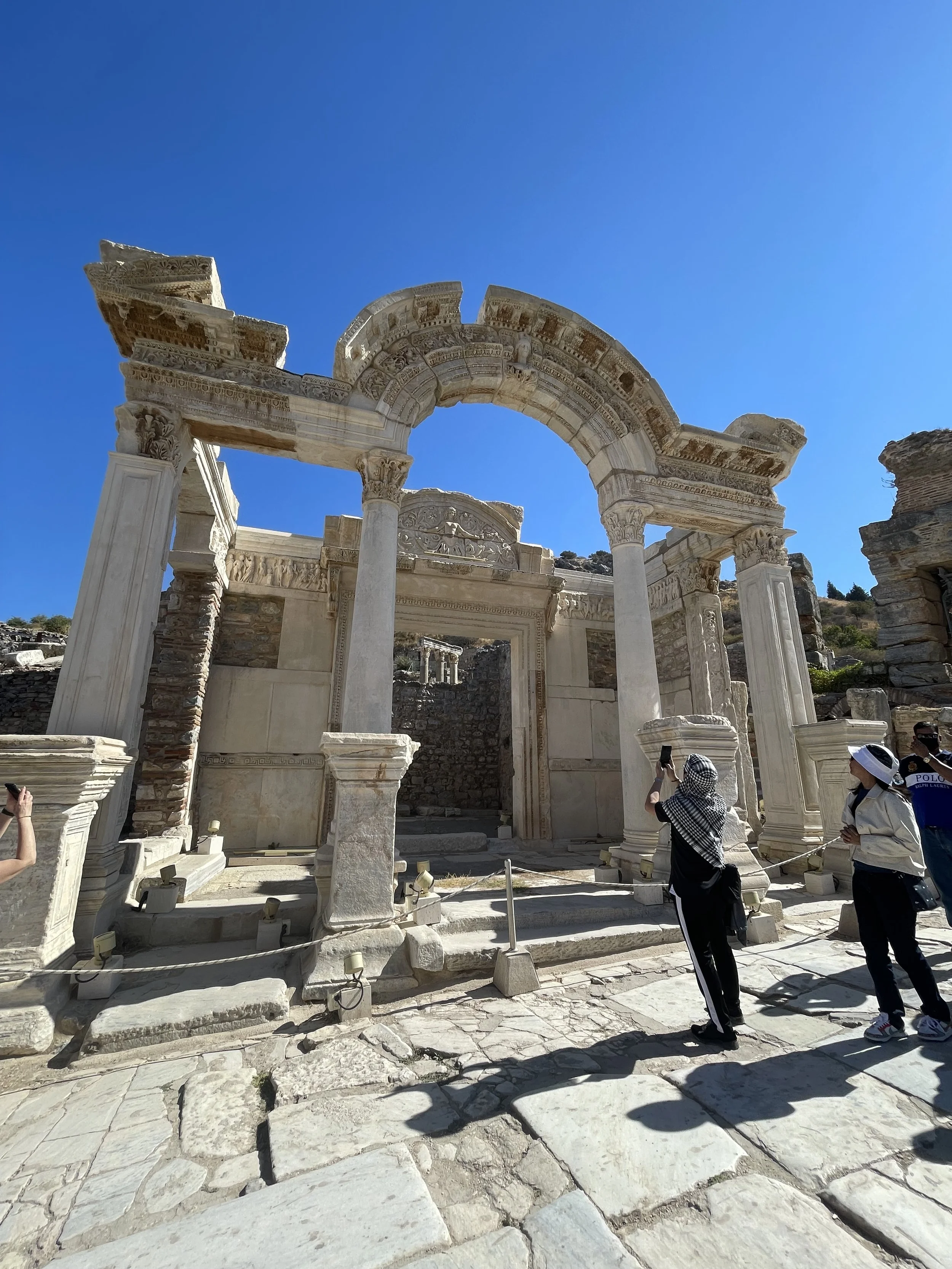
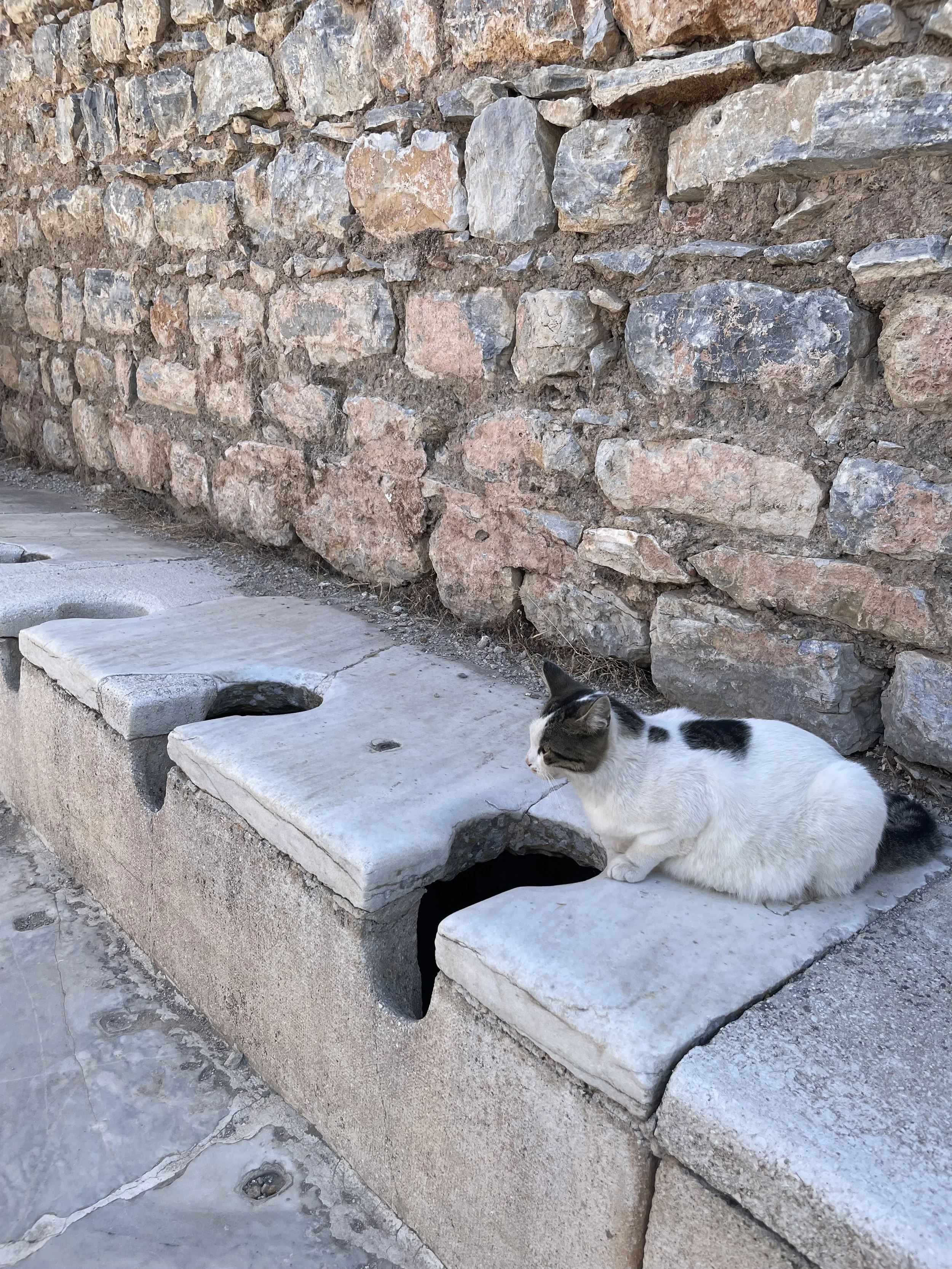
Climbing up to the Terrace Houses felt like stepping behind the scenes. These were the homes of Ephesus’ wealthiest residents, built into the slope and once filled with intricate mosaics and frescoes. What remains still gives you a sense of how refined life could be here, away from the noise of the main streets, where wealth showed itself in quieter, more personal ways.
From there, we made our way back down towards the Library of Celsus, built in the 2nd century AD as both a library and a monumental tomb for the Roman senator Celsus himself. It once held around 12,000 scrolls, making it one of the most important libraries of the ancient world. The façade feels almost theatrical in its symmetry, designed to impress as much as to inspire, and even now it stops you in your tracks without trying.
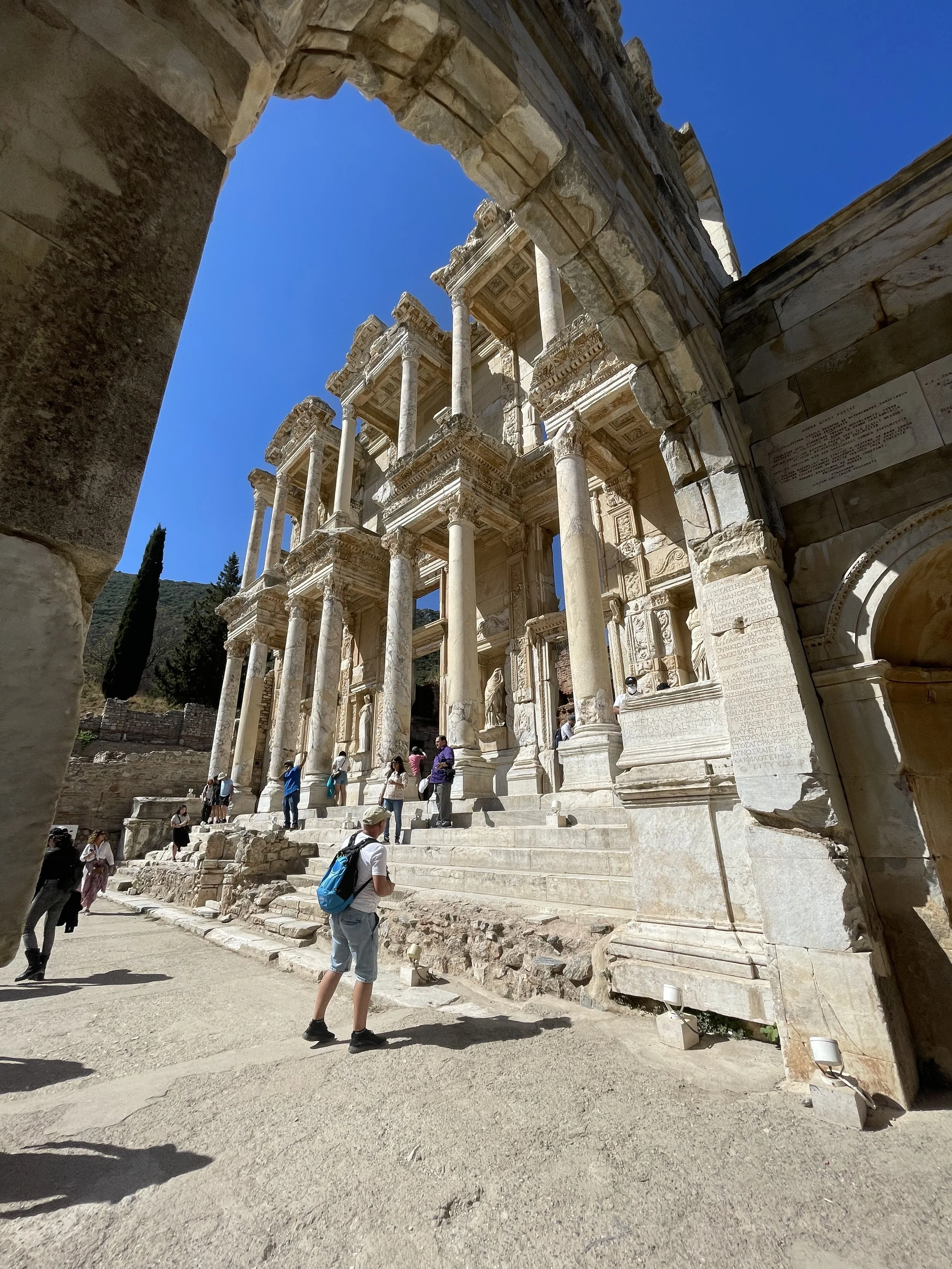
Library of Celsus
Just beyond it, the Great Theatre rises dramatically, carved into the hillside and capable of seating up to 25,000 people. This wasn’t just a place for performances, but where the city gathered, where announcements were made and spectacles unfolded. Standing there, it’s impossible not to imagine the sheer volume of it all, voices carrying, crowds reacting, the space alive in a way that’s hard to fully grasp now.
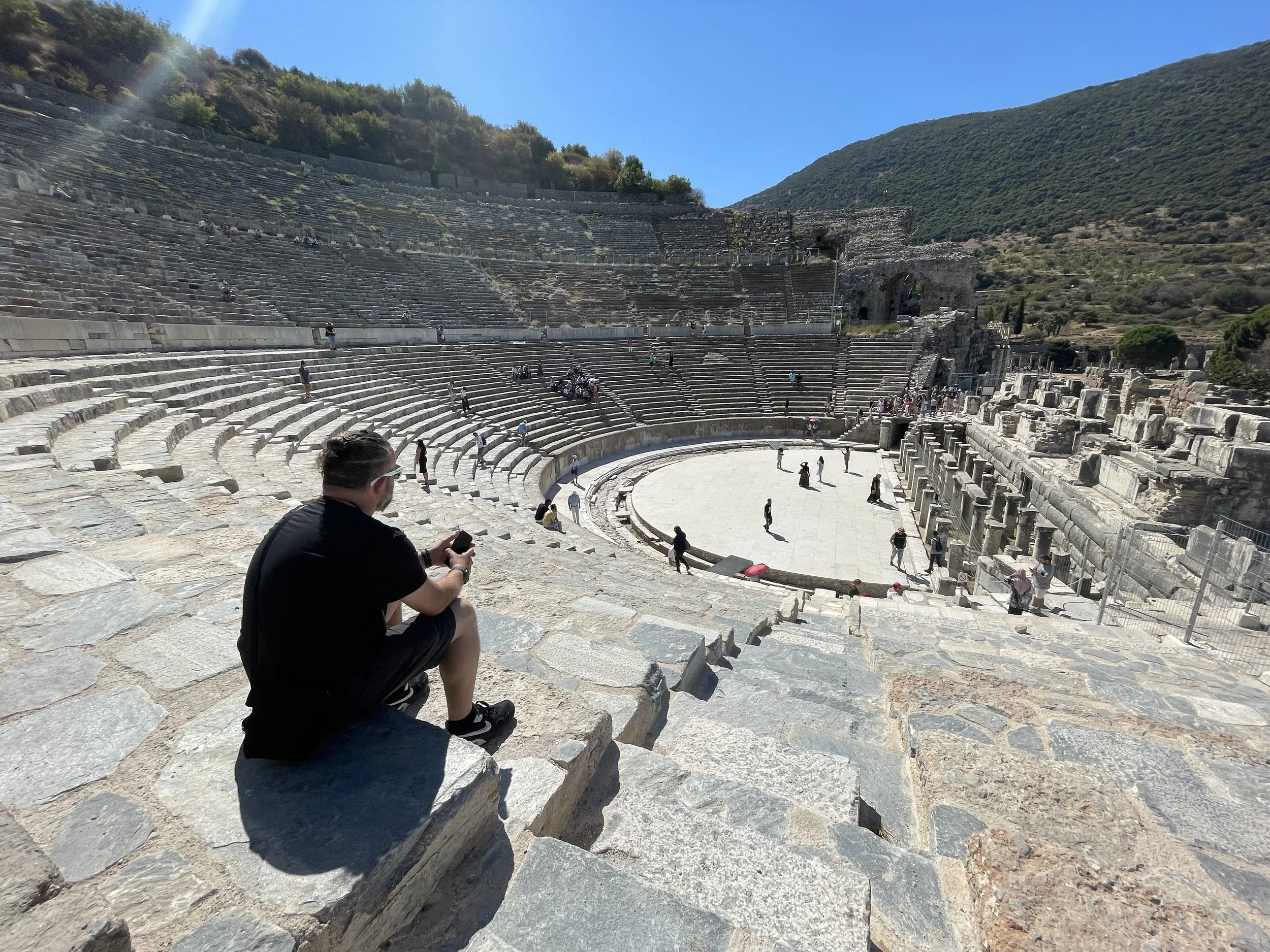
Ephesus isn’t just a collection of ruins. It’s layers of public spectacle and private life, all folded into one place. Take your time with it and let it unfold slowly. Because long after you leave, it’s not just the scale or the landmarks that stay with you, but the sense that the city never really went quiet—you just happened to pass through it at a quieter moment.
