
A Walk Through Historic Belfast City Centre
Belfast was gloomy the day we explored it, but honestly, that suited the city. The grey skies made the architecture look even more dramatic, and it gave the whole walk a slightly cinematic feel. This was a proper city-centre day on foot, where we didn’t need a strict plan. We just walked, explored, and let Belfast show us its layers.
One of the best places to start is Belfast City Hall, and I’m so glad we went inside rather than just taking the usual photo outside. Entry is completely free, and it’s one of the easiest ways to learn about Belfast in a way that feels accessible rather than heavy. The exhibits give you a proper grounding in the city’s story, from its industrial rise to the parts of its history that still shape the place today.
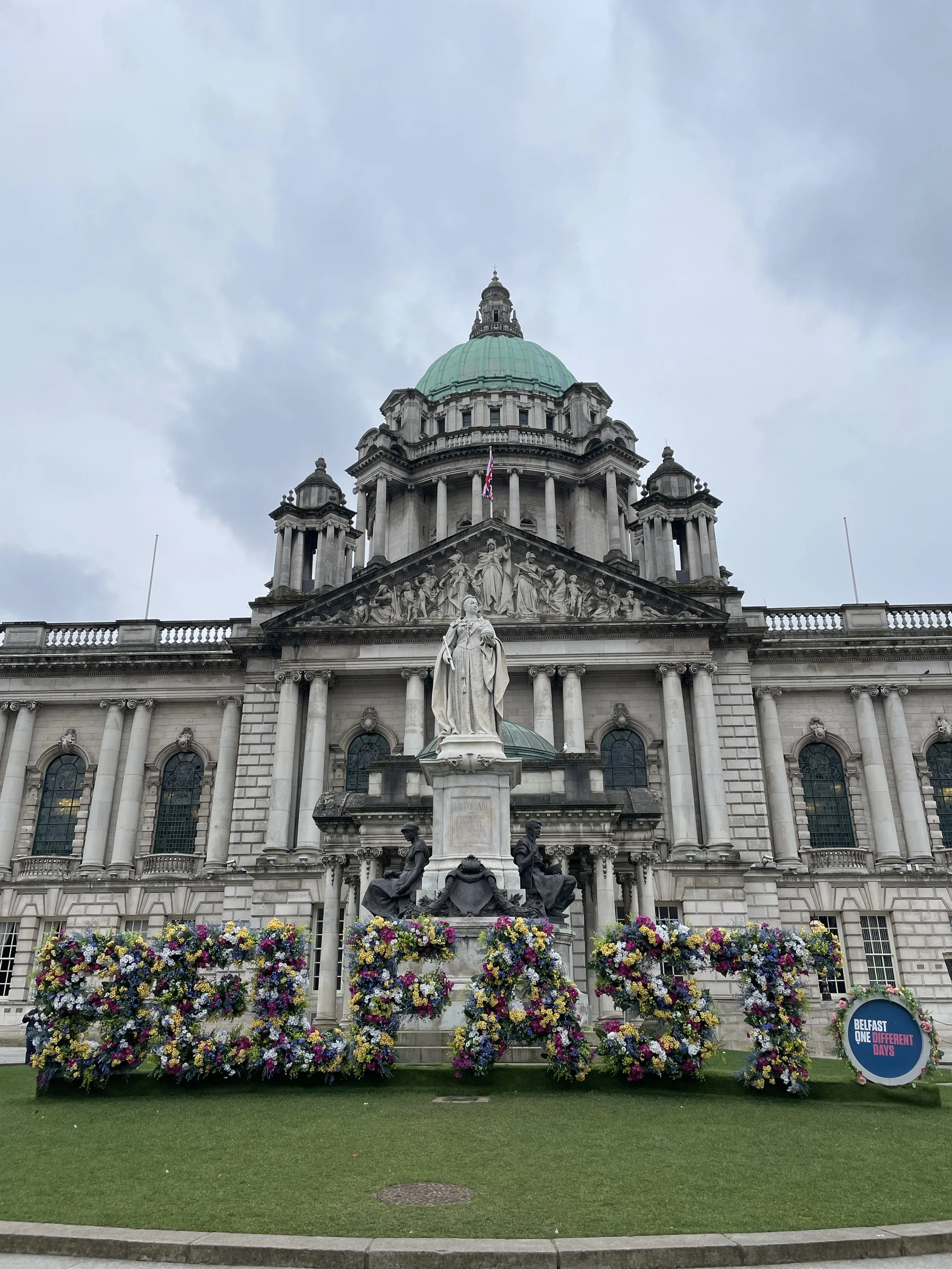
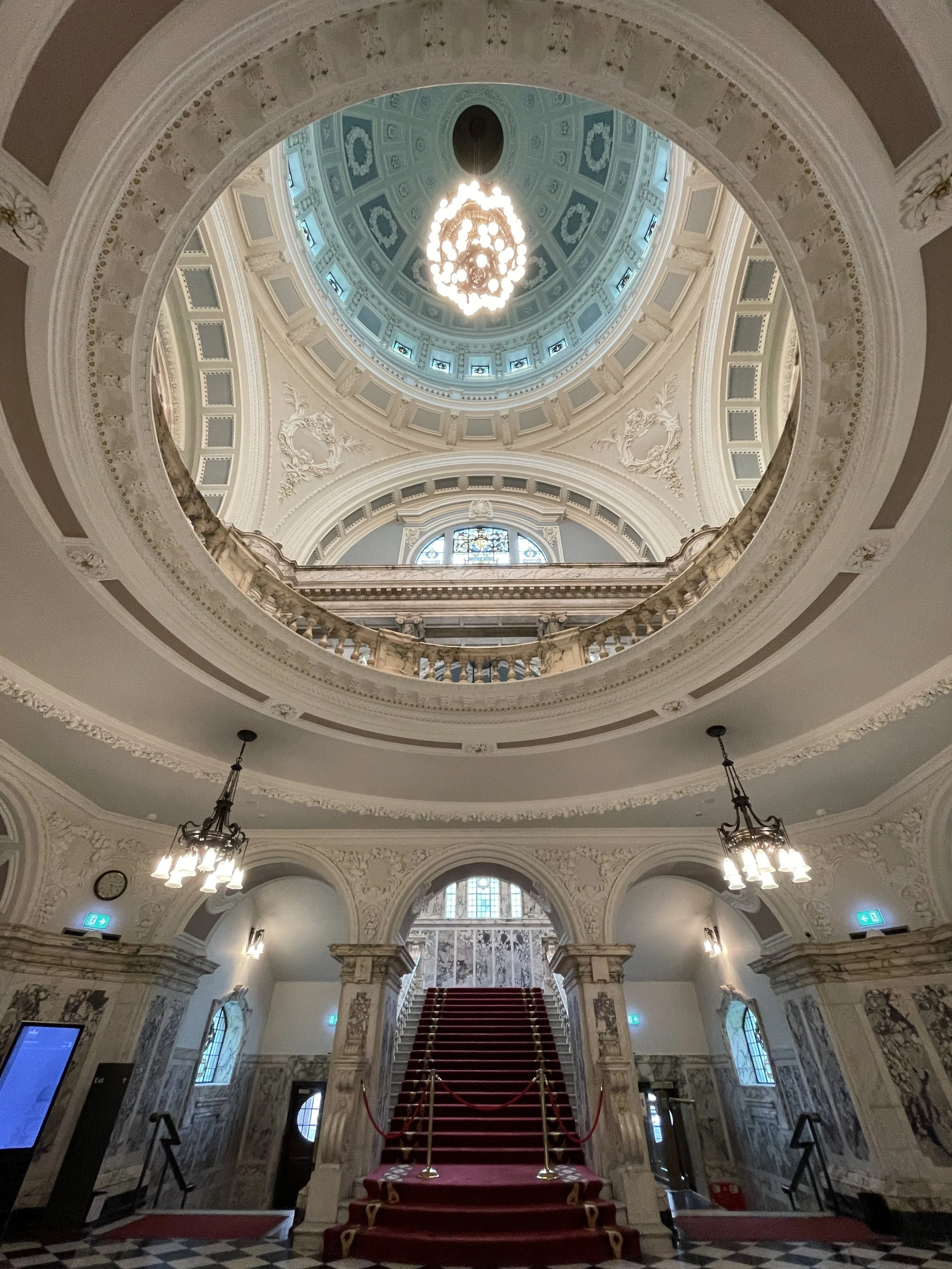
After City Hall, we wandered through the city centre streets, passing grand Victorian architecture and busy corners that feel very “working city”. Belfast doesn’t feel staged. It feels lived-in, and the centre still carries that sense of importance, like it was built to last.
We also made a point of walking along Waring Street, often recognised as Belfast’s oldest street. It’s a small detail in the middle of a modern city, but it makes a difference. You can feel the older Belfast here, the early version of the city before the grand buildings and big statements arrived.
Not far away, we passed the Albert Memorial Clock, one of Belfast’s best-known landmarks. It stands slightly off-kilter, and it’s exactly the kind of thing you’d miss if you weren’t exploring on foot. It’s one of those city details that makes you pause, look up, and feel like you’re properly in Belfast rather than just passing through it.
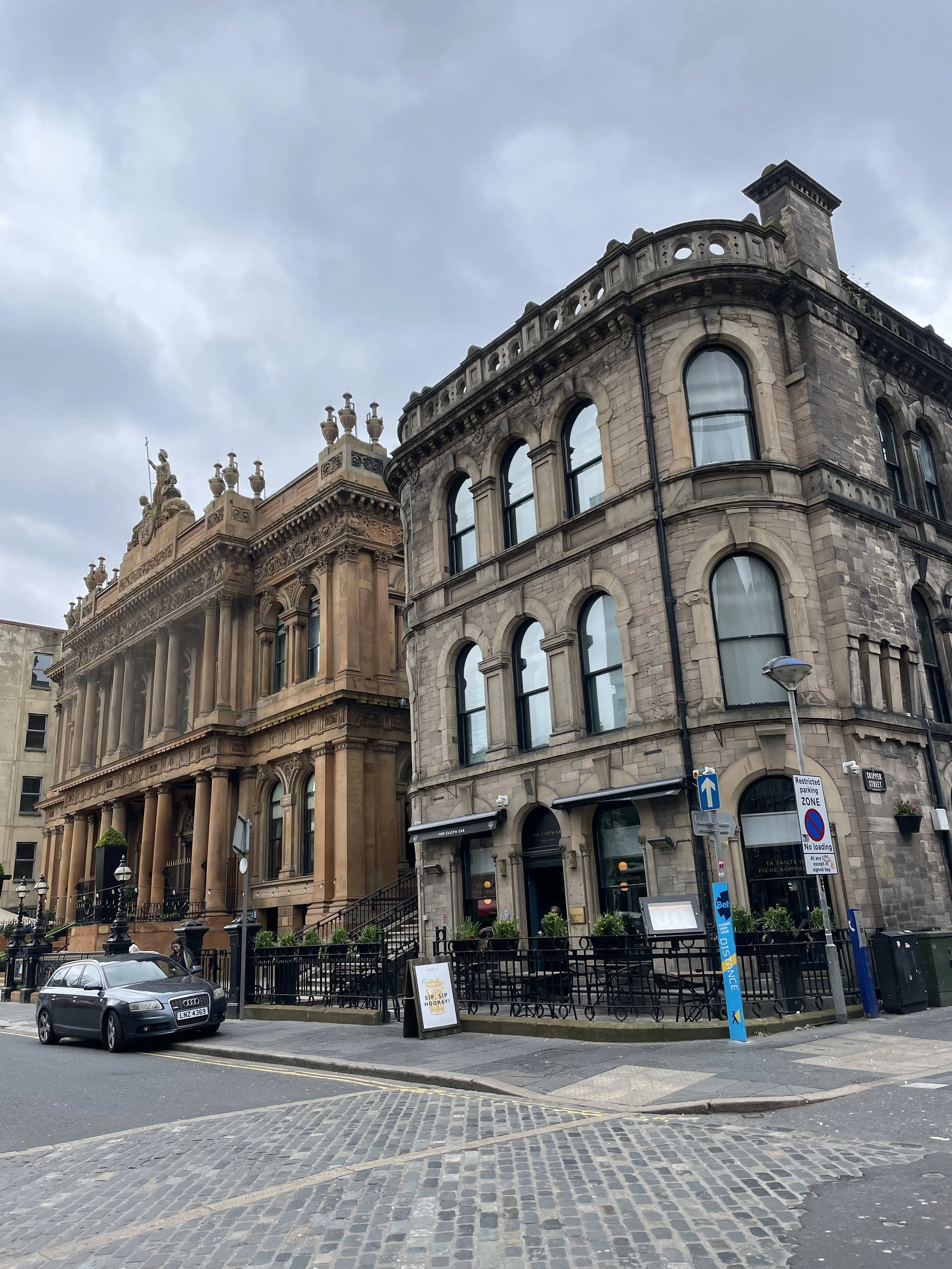
Another landmark that stayed with me was the Europa Hotel, famously linked to Belfast’s Troubles-era past and often described as the most bombed hotel in the world. It’s still a functioning hotel today, but knowing the history adds a completely different layer to what otherwise looks like a normal part of the city centre. Belfast has a way of doing that, where the history isn’t tucked away in museums. It sits quietly in plain sight.
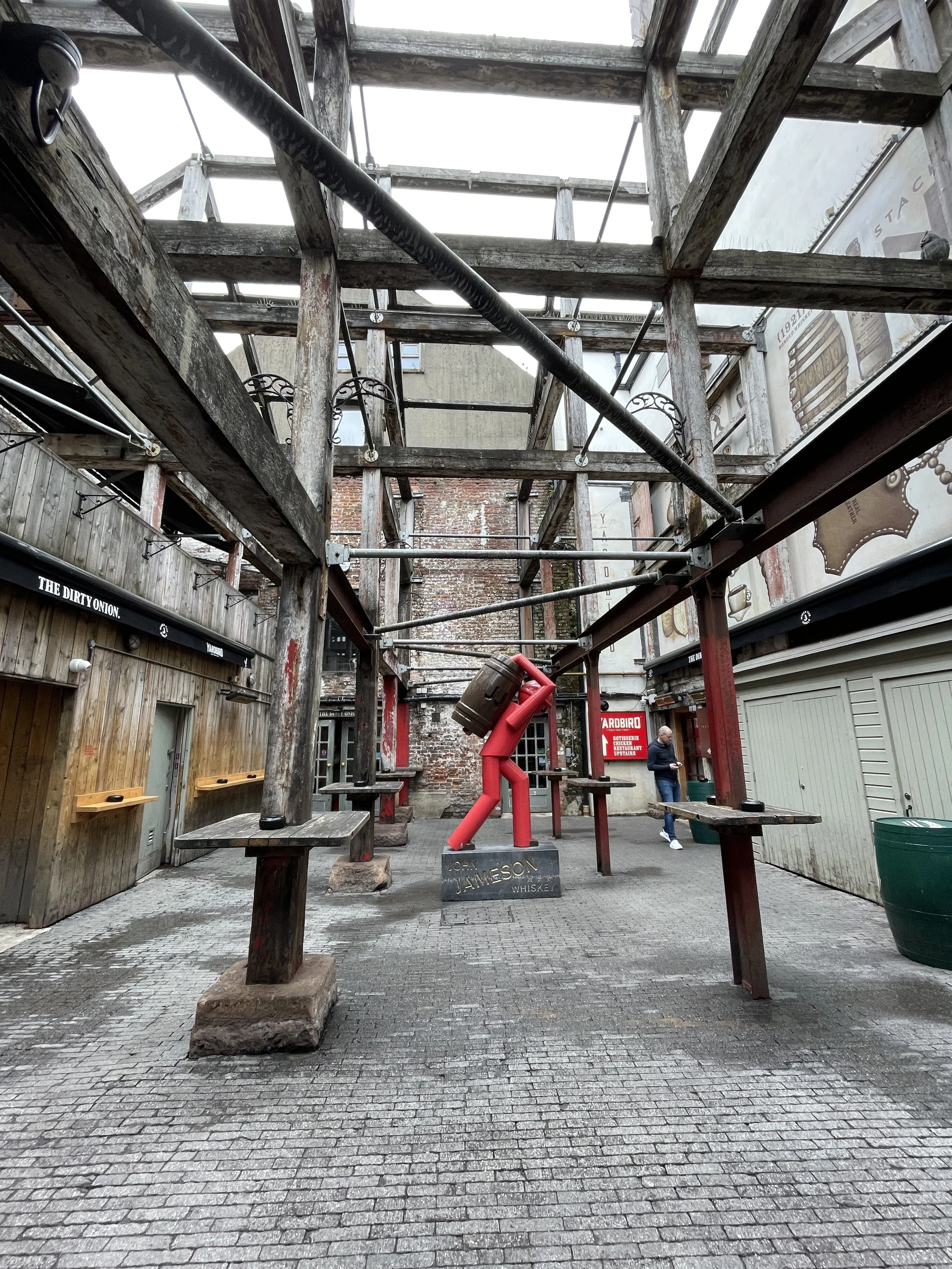
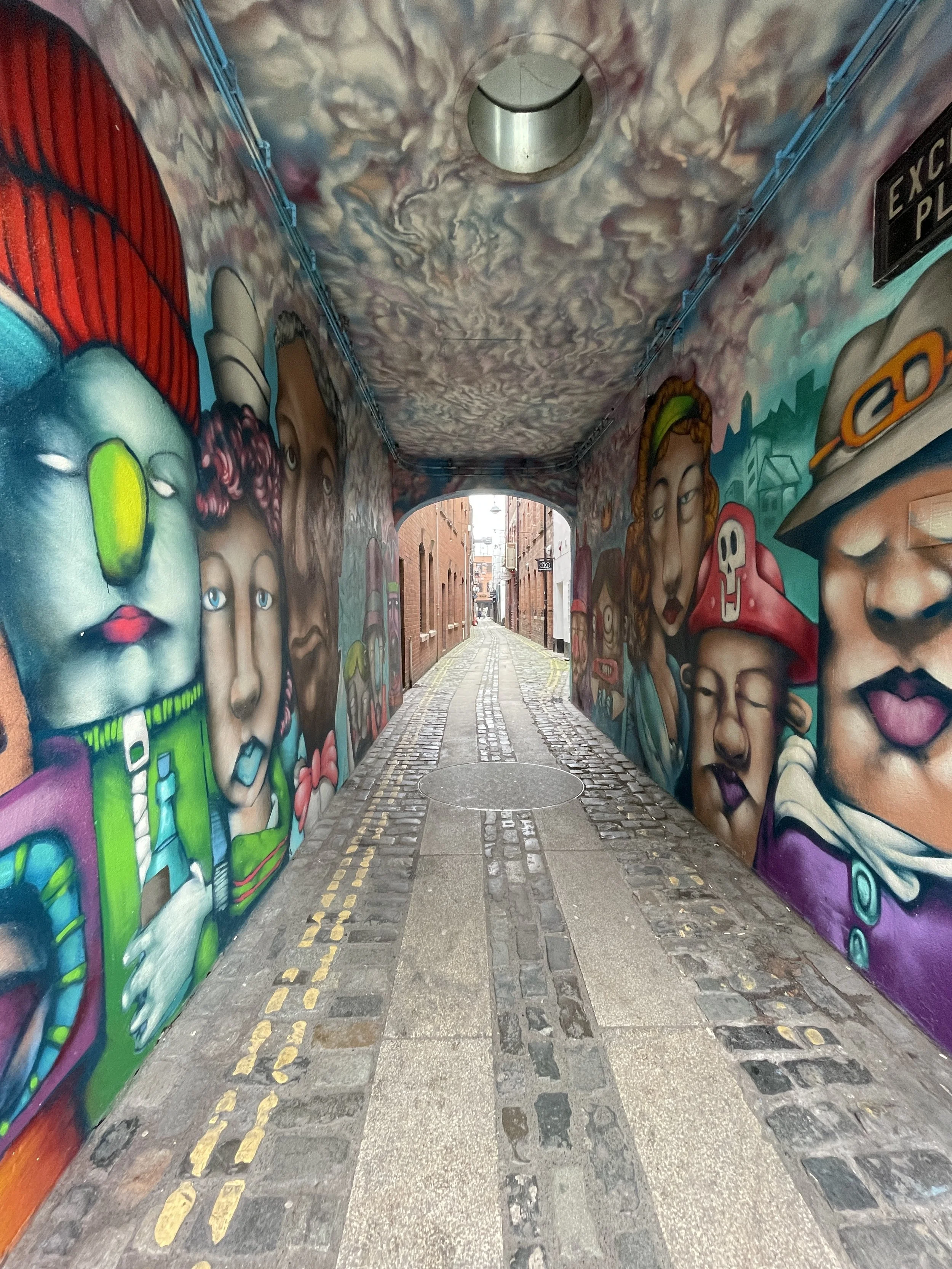
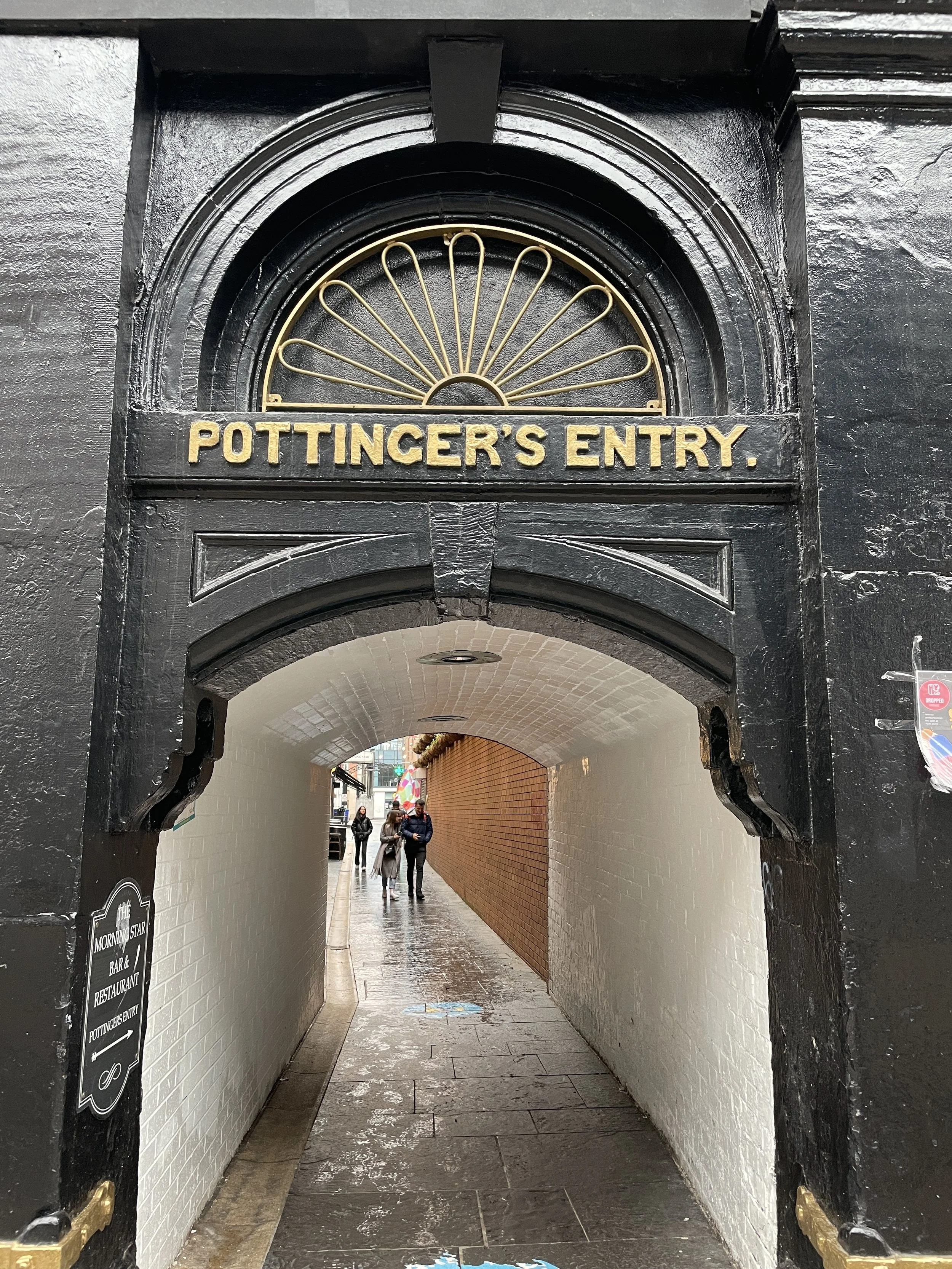
We finished by drifting into the Cathedral Quarter, one of the most atmospheric parts of Belfast city centre. With St Anne’s Cathedral, cobbled lanes like Commercial Court, and classic pubs such as The Duke of York, it’s the sort of area that feels historic without being stuck in the past. Even on a grey day, it had warmth and character, and it was one of my favourite parts of the walk.
Belfast city centre surprised me. It’s a place where you can enjoy the architecture and the pace of the streets, but you also come away understanding that this is a city shaped by resilience, identity, and history you can still feel as you walk.
